Governance: A handy handbook

Our first publication of 2015 is made all the more exciting by the fact that it has been desk edited by me! I am positively brimming with pride.

Introducing Commonwealth Governance Handbook 2014/15

GG cover 2011

Commonwealth Governance Handbook 2014/15 is the comprehensive guide to public sector reform and innovation in the Commonwealth.

The Commonwealth Secretariat, through its Governance and Natural Resources, Rule of Law and Political programmes, promotes effective, efficient and equitable public governance in member countries – a range of work that bridges the defining Commonwealth pillars of democracy, development and diversity.

Commonwealth Governance Handbook brings together Secretariat perspectives with those of partners in government; professions,
development agencies and the private sector. This edition covers:

  • Deepening democracy: electoral finance and e-voting technologies
  • Constitutional change, leadership and human resources
  • Open data, cyber security and governance of the internet
  • Human security: civic/ethnic considerations, cross-border issues and land tenure
  • Performance management in public services and contracting
  • Utilities, environmental risk and the ‘blue economy’
  • The Commonwealth Association for Public Administration and Management (CAPAM) Innovation Awards

The publication also contains 53 governance profiles of member countries as well as progress on the Millennium Development Goals and other indicators.

For more information or to purchase a copy of the publication please visit our website.

World Book Night – Amazon freebie!

In celebration of World Book Night I have teamed up with author N Caraway to offer you all the chance to read his novels for free on your kindles.

World Book Night is an annual celebration of reading and books that takes place in the UK on 23 April. Across the country volunteers give out hundreds of thousands pre-chosen books in their communities to share their love of reading with people who don’t own books or are unable to read regularly.

This years book list has some cracking reads on it – check out the World Book Night website for more information, and to locate participating venues.

And for those of your who can’t participate in any of tonight’s events head on over to Amazon, or Amazon UK, and grab yourself a free ebook to sink your teeth into instead.

Click on the book covers to get yourself a copy.

The Manneken Pis

maneA lonely old man is living out the last days of his life in Brussels, a city that alternates between small-town non-entity and extreme surrealist quirkiness, symbolised by the famous statue of a small boy urinating. Increasingly confused by the effects of a heart attack, he tries to find meaning in one last rational act of kindness before he dies.

Set in the capital of a rapidly ageing Europe, the second novel by N Caraway is a tragicomic study of solitude and growing old that also provides a surprising new take on the theme of the classic Frank Capra movie ‘It’s a Wonderful Life’.

The Humanitarian

51W+tDMNtgLAfter decades of civil war a peace deal is in the offing for the ravaged land of South Sudan, where the United Nations and a plethora of non-government organisations have come together to deliver emergency aid to the thousands of displaced and homeless people scattered in camps and villages across the vast wilderness of swamps and scrubland.

Richards is a UN official on his final mission, leading a small team to a remote region. For him it is not just the war which is ending, but the world he has come to inhabit. Detachment and isolation from all that is around him begin to take hold and memories of another life threaten to break through the thin walls he has built around himself. As he sinks deeper into inner darkness a chance meeting with a young priest seems to offer the hope of a way back to belief in humanity and meaning, but the road is rough.

The Whitehall Mandarin – Edward Wilson

“A murderer is less loathsome to us than a spy. The murderer may have acted on a sudden mad impulse; he may be penitent and amend; but a spy is always a spy, night and day, in bed, at table, as he walks abroad; his vileness pervades every moment of his life” ― Honoré de Balzac

the-whitehall-mandarinCritically acclaimed author Edward Wilson returns with another seething spy thriller to add to his repertoire. A teeming broth of secrets, sex and scandals, the Whitehall mandarin is sure to be a hit with mystery fanatics and long standing Wilson fans.

Wilson specialises in spy fiction, with a strong focus on the Cold War, and there is no doubt he is a master of his subject. His novels blend seamlessly between fact and fiction, and The Whitehall Mandarin is no exception. The books alludes to a phenomenal amount of research on the part of the author where the smallest plot detail has been unquestioningly scrutinised and researched.  Through Wilson’s novels the reader travels back in time to rub shoulders with the upper classes, and witness firsthand the scandal which occurs behind closed doors.

Edward Wilson hones in on the year 1957, the Cold War is full swing, and British intelligence unit MI6 are investigating a soviet spy ring operating in London. They call upon secret agent William Catesby to keep a close eye on American cultural attaché Jeffers Cauldwell, who is accused of leaking somewhat compromising photograph of British officials to the Russians. The book begins with Catesby, his boss Henry Bone, and MI5 investigator Jim Skardon crammed onto the roof of a building overlooking St James’s Park, London, observing a secret liaison between Cauldwell and an employee of the British Admiralty. The Whitehall Mandarin follows Catesby on his hunt to uncover the truth in an intricately developed web of secrets, a journey which takes him from the scandals of 1960s London to the muggy jungles of Vietnam.


How strange, thought Catesby, that when you look through a telescopic sight and see another human being fixed in the cross-hairs you end up looking at yourself. It doesn’t matter whether it’s the lens reflection or imagination. You try to concentrate on your target but find your eye superimposed over their eyes. Those other eyes, so blissfully unaware of your unblinking predatory stare, are no longer evil. You feel your hate drop away and realise you can’t do it. It was Catesby’s most shameful secret from the war: he had never been able to pull the trigger. But he had learnt to since.


The Whitehall Mandarin is an intricate and multilayered book with a number of interweaving narratives; the plot is complex, and full of twists and turns. This is not the sort of book you can pick up and put down halfway through a chapter – not if you want to stand any chance of keeping up with the plot anyway – but requires considerable concentration on the part of the reader. Let your mind wander for even a second and you could well find yourself having to reread whole chapters.

Wilson portrays the British upper class as a literal hotbed of corruption and sexual scandal. Before reading the novel I will admit to being clueless as to the different between furries and plushies – in fact in all my innocence I’d never heard of either of these things – I’m now something of an expert on the topic. Did you know, for example, that ‘plushies’ are a rather difficult target for ‘honey-trap agents’? In fact, the scandalous things which the upper classes get up to provide the backdrop for the majority of the plot – this is somewhat epitomised by the photograph of a steamy reconstruction of Poussin’s The Triumph of Pan.

The very nature of spy novels makes them incredibly easy to ruin, so I am wary of sharing much more. But to give you a flavour – expect sex, high speed chases, intricate plot lines, and a beautiful English lady who is not quite what she seems.

The Whitehall Mandarin is a page-turning thriller which will leave you desiring more at the end of each chapter. If you are a fan of spy novels then this is undoubtedly the book for you. It is masterfully researched, stunningly written and, most importantly, utterly believable.

I was sent a free copy of The Whitehall Mandarin by the publisher in exchange for an honest review.

Charlotte’s Web named best children’s book of all time!

“A children’s story that can only be enjoyed by children is not a good children’s story in the slightest.” ― C. S. Lewis

I was over the moon today to learn that Charlotte’s Web by E. B. White had been voted the best children’s book of all time.

The 1952 tale, about a lovable pig named Wilbur who is saved from the slaughter thanks to his unlikely friendship with a resourceful spider named Charlotte, was named number one in a list of 151 books chosen by critics in a poll by BBC Culture.

917FQerThOL

The initial selection was whittled down to a list of the 21 top books in children’s literature, a diverse selection of books which provides a charming glimpse into children’s literature of the past two centuries.

1. Charlotte’s Web – E. B. White
2. The Lion, the Witch and the Wardrobe – C. S. Lewis
3. Where the Wild Things Are – Maurice Sendak
4. Alice’s Adventures in Wonderland – Lewis Carroll
5. Little Women – Louisa May Alcott
6. The Little Prince – Antoine de Saint-Exupery
7. Winnie-the-Pooh – A. A. Milne
8. Charlie and the Chocolate Factory – Roald Dahl
9. A Wizard of Earthsea – Ursula Le Guin
10. A Wrinkle in Time – Madeline L’Engle
11. The Little House on the Prairie – Laura Ingalls Wilder
12. The Wind in the Willows – Kenneth Grahame
13. From The Mixed Up Files of Mrs Basil E Frankweiler – E. L. Koenigsburg
14. The Phantom Tollbooth – Norton Juster
15. His Dark Materials trilogy – Philip Pullman
16. Matilda – Roald Dahl
17. Harriet the Spy – Louise Fitzhugh
18. Pippi Longstocking – Astrid Lindgren
19. The Secret Garden – Frances Hodgson Burnett
20. Goodnight Moon – Margaret Wise Brown and Pat Hancock
21. The Hobbit – J. R. R. Tolkien

There are many books on the list I would have happily seen voted number one, but I think the most deserving book won. The Lion the Witch and the Wardrobe, and Alice’s Adventures in Wonderland, and Little Women are all firm favourites of mine, but they are books I came to love later on in life, whereas Charlotte’s Web was one of the first books I read on my own.

maxresdefault

I loved Charlotte’s Web as a child, and I find it just as enjoyable now as I did twenty years ago. So I am over the moon at it’s number one spot. Books which tell a story from the point of view of animals have always been popular among children, and E. B. White took this classic theme and created something truly wonderful.

I’d love to know what your thoughts are on this. Did your favourite children’s book make in onto the list? Do you think something else is more deserving of the number one spot? Let me know! 

Payday splurge! Bookish treats to get me though April

“Anyone who lives within their means suffers from a lack of imagination.” ― Oscar Wilde

It’s the end of the month, which means it’s finally time to treat myself after a few penniless weeks. Check out my haul!

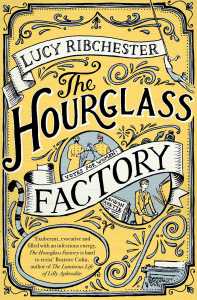
The Hourglass Factory – Lucy Ribchester

the-hourglass-factory-9781471139307_hr1912 and London is in turmoil…

The suffragette movement is reaching fever pitch but for broke Fleet Street tomboy Frankie George, just getting by in the cut-throat world of newspapers is hard enough. Sent to interview trapeze artist Ebony Diamond, Frankie finds herself fascinated by the tightly laced acrobat and follows her across London to a Mayfair corset shop that hides more than one dark secret.

Then Ebony Diamond mysteriously disappears in the middle of a performance, and Frankie is drawn into a world of tricks, society columnists, corset fetishists, suffragettes and circus freaks. How did Ebony vanish, who was she afraid of, and what goes on behind the doors of the mysterious Hourglass Factory?

From the newsrooms of Fleet Street to the drawing rooms of high society, the missing Ebony Diamond leads Frankie to the trail of a murderous villain with a plot more deadly than anyone could have imagined…

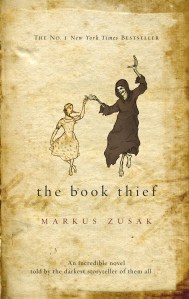
The Book Thief – Marcus Zusak

The-Book-Thief-cover1939. Nazi Germany. The country is holding its breath. Death has never been busier.

Liesel, a nine-year-old girl, is living with a foster family on Himmel Street. Her parents have been taken away to a concentration camp. Liesel steals books. This is her story and the story of the inhabitants of her street when the bombs begin to fall.

It’s a small story, about:
a girl
an accordionist
some fanatical Germans
a Jewish fist fighter
and quite a lot of thievery.

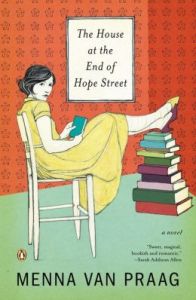
The House at the End of Hope Street – Menna Van Praag

9780143124948_p0_v1_s260x420When Alba Ashby, the youngest Ph.D. student at Cambridge University, suffers the Worst Event of Her Life, she finds herself at the door of 11 Hope Street. There, a beautiful older woman named Peggy invites Alba to stay on the house’s unusual conditions: she’ll have ninety-nine nights, and no more, to turn her life around.

Once inside, Alba discovers that 11 Hope Street is no ordinary house. Past residents include Virginia Woolf, Dorothy Parker, and Agatha Christie, who all stayed there at hopeless times in their lives and who still hang around – quite literally – in talking portraits on the walls. With their help Alba begins to piece her life back together and embarks on a journey that may save her life.

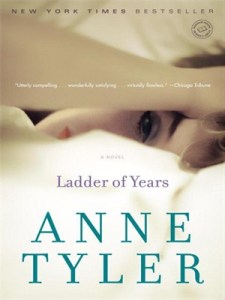
Ladder of Years – Anne Tyler

{D611CA94-A3E1-4F0E-AA1C-260F3312C980}Img400Forty-year-old Delia Grinstead is last seen strolling down the Delaware shore, wearing nothing more than a bathing suit and carrying a beach tote with five hundred dollars tucked inside.

To her husband and three almost-grown children, she has vanished without trace or reason. But for Delia, who feels like a tiny gnat buzzing around her family’s edges, “walking away from it all” is not a premeditated act, but an impulse that will lead her into a new, exciting, and unimagined life…

Did you treat yourself to any literary goodies this payday?

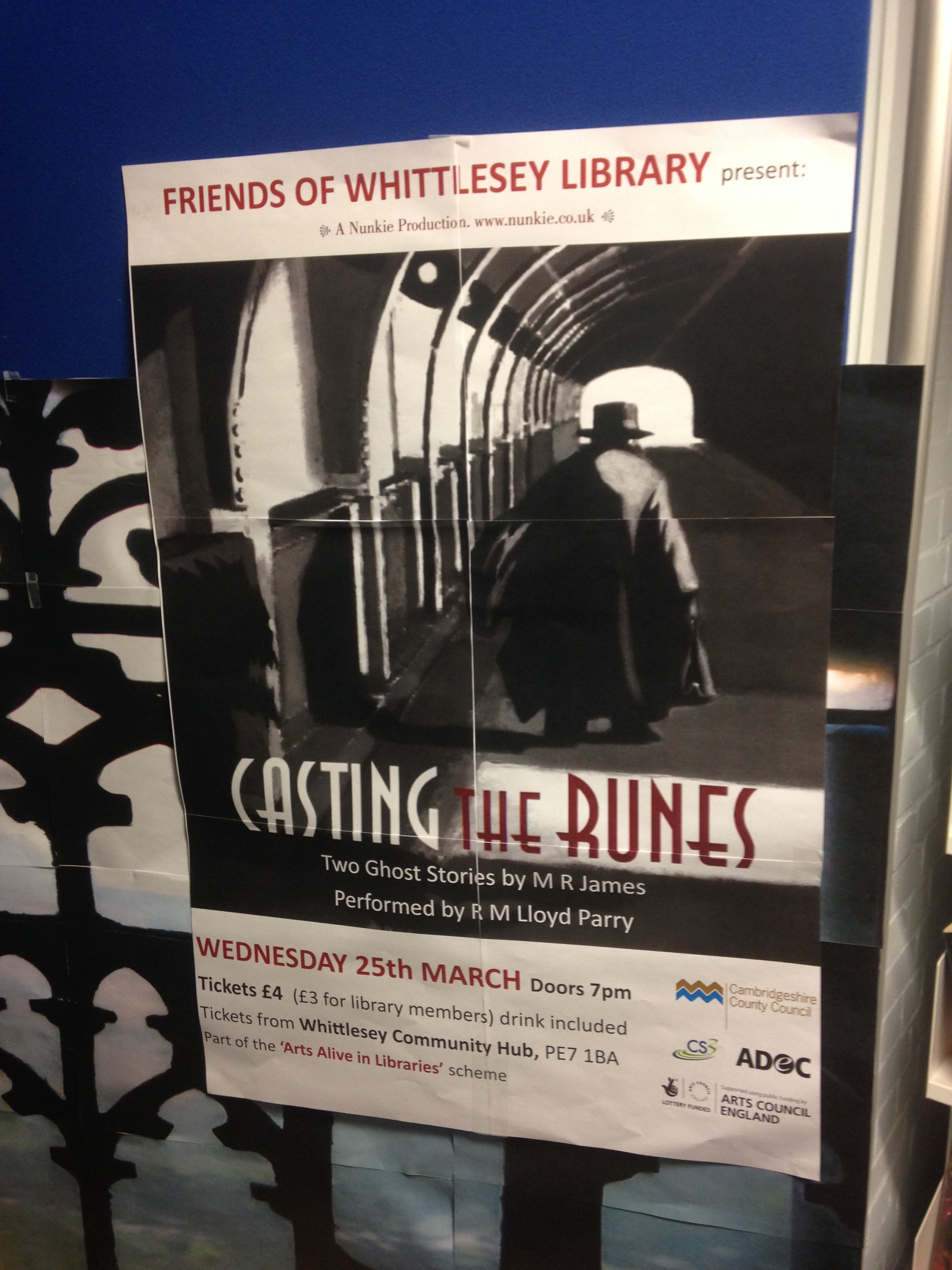
Casting the Runes: An Arts Alive production

“In one aspect, yes, I believe in ghosts, but we create them. We haunt ourselves.” ― Laurie Halse Anderson

25th March 2015 at Whittlesey Library and Learning Centre, 7pm

Robert Lloyd Parry as M R James

IMG_8302By now you will doubtless be familiar with my love of ghosts. So it will come as no surprise to know that I leapt at the opportunity to go to a ghost story reading. I was even more excited by the fact that the stories were those by none other than my favourite ghostly author, M R James. James’s Ghost Stories of an Antiquary is one of my bookshelf essentials. So I was simply quivering with anticipation from the day I was invited by my long-suffering best friend right up until the house lights went down and Robert Lloyd Parry took his place at the front of the audience.

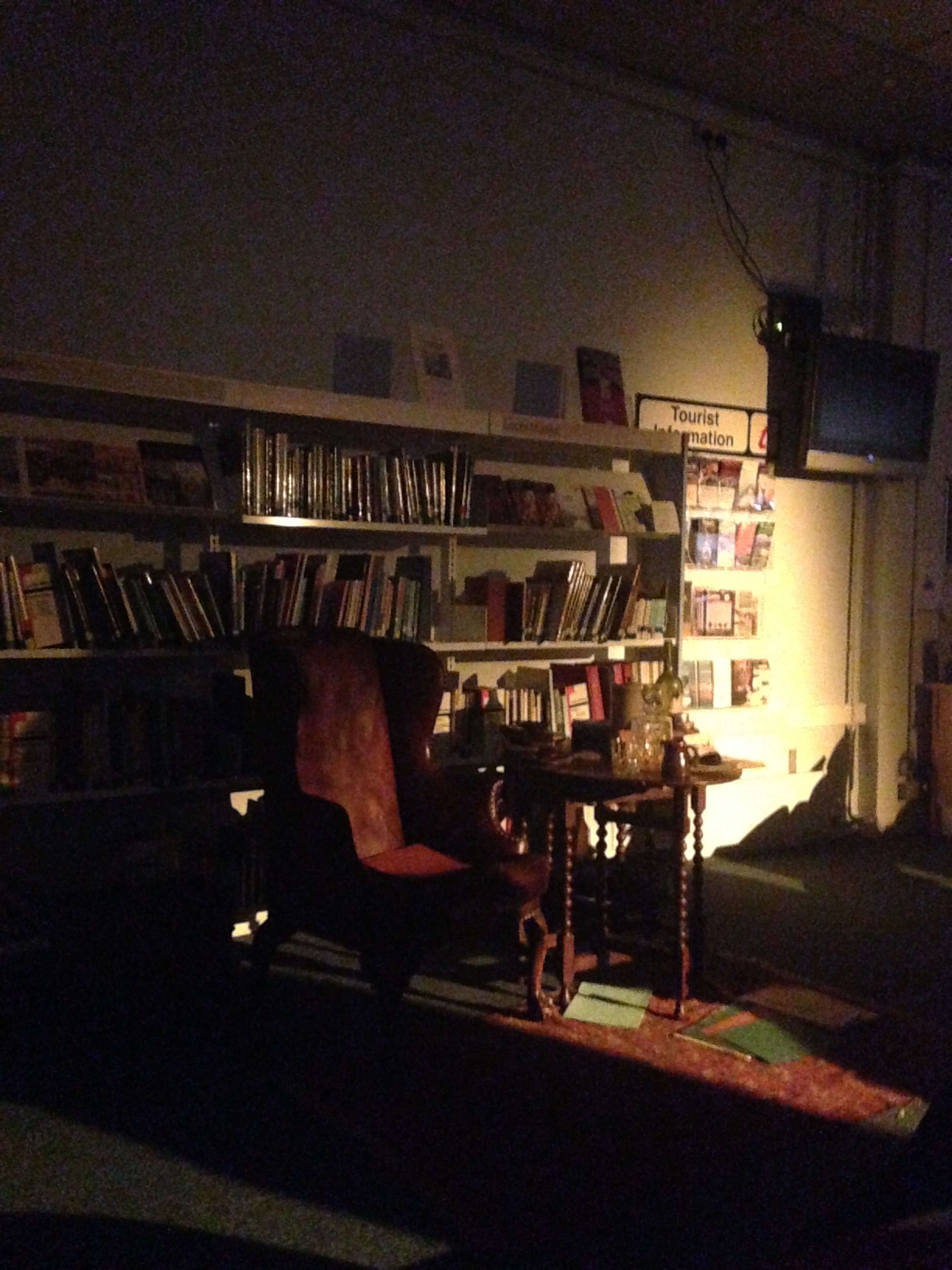
The setting itself was less than spooky, a 20th century community building in the heart of a fenland market town, but the Arts Alive team had done a great job of creating a certain ghostly ambiance. The lights were dimmed, the audience assembled around a single high backed chair, nestled cosily next to a small wooden table topped with a decanter of ‘whisky’, several ageing leather backed books, a handful of old photographs and some other dusty artefacts.

IMG_8300For those of you who are unfamiliar with M R James, there are so many reasons why you absolutely need to get hold of and read some of his short ghostly stories (I recommend to the highest degree possible Oh, Whistle, And I’ll Come To You, My Lad). James is nothing short of a master of the ghost story. His stories specialise in circumstance and the terrible events which can emerge from ignorant mortals meddling in the unknown. His writing is subtle, focusing on the small details; shadows, the voices of madmen and figures glimpsed out the corner of your eye. Like all great gothic writers, James allows his readers to create their own ghosts, existing only in their minds, and never once flitting across the parchment.

Robert Lloyd Parry did a stunning job donning M R James’s persona. The mind boggles at how he was able to reel off a 90 minute performance with such ease, never stumbling over his words or seeming to pause for thought. He expertly assumed not just James but each of his characters, never flinching or breaking character even for a second.

IMG_8303The first story – Casting The Runes – threw the audience back to 1903, and began by with the reading of a collection of letters. The letters informed an unknown character that a draft paper submitted for publishing in a programme was not to be included. These seemingly innocent notes paved the way for a series of strange and ghostly events including vanishing tram adverts, mysterious roadside leafleters, and unknown furry creatures lurking beneath bedclothes, all linked together by the passing of a cursed script. Parry told the story with remarkable ease, barely glancing even once at the audience, and framing the tale from multiple points of view.

When he came to the end of the first story, Parry rose from his chair for the first time and silently swept from the room, leaving the audience alone and awestruck. The house lights came up and we were able to mull about for a short time, enjoying a reasonably priced drink from the charity bar and discussing the past 45 minutes.

I was delighted to find that my other half – who before the event reported that he was ‘livid’ at my forcing him to come along to a ghost story reading – had thoroughly enjoyed the performance thus far. As, it seemed, had everyone else. I’d spent so long raving about M R James in the days running up to this event that I will confess to having been being slightly nervous that the performance would be met with anything other than pure wonderment.

IMG_8305After a short interval the house lights went down, and we were quickly ushered back to our seats. Parry once more slipped into his seat and immediately transformed once again into the evenings faithful host.

The second tale – The Residence of Whitminster – which was in equal parts mesmerising and chilling, was an 18th century tale of the supernatural destruction of a Whitminster residence, beginning with the arrival of a gaunt young man, the disappearance of a jet black cockerel named Hannibal and the feverish rants of a distressed child. Parry assumed the persona of no less than eight characters, slipping seamlessly from one side of a conversation to another, in a performance which had the eyes of the audience glued to his every move.

I was overwhelmed by Parry’s performance; I went to the event as a lover of all things M R James, and was delighted that one man managed to do his work so much justice. The most remarkable thing about the event is one I am not sure I can adequately put into words. I could compare Parry’s performance to the alcohol induced ramblings of an ancient figure propped against the bar of a public house; a one way conversation with a compulsive storyteller; or the confession of one whose secrets have been kept for too long.

The event, I feel, is something you will have to see for yourself in order to fully appreciate it. One of the ladies in charge of Arts Alive said that the events had been very well received, and I can see why. Lovers of ghost stories, fans of M R James, and those who were even slightly intrigued by the beginning of this review, I urge you look and see if Robert Lloyd Parry is performing in a library near you.

An almost wordless Wednesday

The cover of the decade’s most anticipated novel, Go Set a Watchman – Harper Lee’s follow-up to To Kill a Mockingbird, has finally been revealed. With less than less three months to go before the publication date (14 July) at last we have a face to go with the name. Isn’t it beautiful? 

go-set-a-watchman-harper-lee-cover-678x1024

Top Ten Tuesday! Literary quotes

I don’t know about you, but I’m finding this week to be a bit of a drag ― and it’s only Tuesday! I am well and truly tired of the bleak weather now. Seriously, where is spring? To cheer myself up, and hopefully bring a little light to your lives too, here are few of my favourite literary quotes for #toptentuesday. Enjoy!

“A tramp tramps, not because he likes it, but for the same reason as a car keeps to the left; because there happens to be a law compelling him to do so.” ― George Orwell, Down and Out in Paris and London

“And I know I can do this because I went to London on my own, and because I solved the mystery…and I was brave and I wrote a book and that means I can do anything.” ― Mark Haddon, The Curious Incident Of The Dog In The Night-Time

“Each day had a tranquility a timelessness about it so that you wished it would never end. But then the dark skin of the night would peel off and there would be a fresh day waiting for us glossy and colorful as a child’s transfer and with the same tinge of unreality.” ― Gerald Durrell, My Family and Other Animals

“How wonderful it is that nobody need wait a single moment before starting to improve the world.” ― Anne Frank, The Diary Of A Young Girl

“I think that the most necessary quality for any person to have is imagination. It makes people able to put themselves in other people’s places. It makes them kind and sympathetic and understanding.” ― Jean Webster, Daddy-Long-Legs

“Innocence is a kind of insanity.” ― Graham Greene, The Quiet American

“It is a truth universally acknowledged, that a single man in possession of a good fortune, must be in want of a wife.” ― Jane Austen, Pride and Prejudice

“Man, unlike any other thing organic or inorganic in the universe, grows beyond his work, walks up the stairs of his concepts, and emerges ahead of his accomplishments.” ― John Steinbeck, The Grapes of Wrath

“People aim for the stars, and they end up like goldfish in a bowl. I wonder if it wouldn’t be simpler just to teach children right from the start that life is absurd.” ― Muriel Barbery, The Elegance of the Hedgehog

“We are all in the gutter, but some of us are looking at the stars.” ― Oscar Wilde, Lady Windermere’s Fan

Some of my favourite fictional ladies, created by ladies

“Being a woman is a terribly difficult task, since it consists principally in dealing with men.” ― Joseph Conrad

Over the weekend #womeninfiction emerged on Twitter, so in running with the theme I’m here to share with you a few of my favourite fictional ladies.

Renée Michel

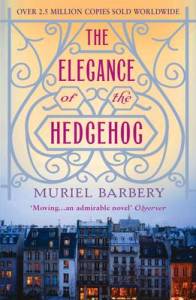
The Elegance of the Hedgehog – Muriel Barbery.

Elegance of the HedgehogRenée Michel is possibly my favourite literary lady of all time. She is a concierge, and self-confessed member of the lower class. Despite how she outwardly appears, she is in fact fantastically intelligent, but she knows her place, and sticks to it, stating that to be “poor, ugly and, moreover, intelligent condemns one, in our society, to a dark and disillusioned life, a condition one ought to accept at an early age”. Madame Michel prefers to lives a secret life, reading Russian literature in the privacy of her lodge while donning the air of a simpleton when speaking with the inhabitants of the apartment complex where she works.

In Renée, Barbery has created a fantastic female heroine for lovers of literature. I challenge anyone to read The Elegance of the Hedgehog and not feel themselves brimming over with admiration for the soft soul nestled within the prickly exterior of Madame Michel.

Petronella Brandt née Oortman

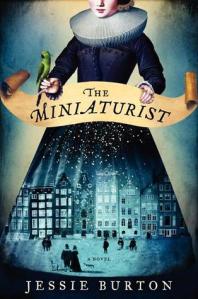
The Miniaturist – Jessie Burton

18498569Petronella is an 18-year-old Dutch girl whose family have fallen on hard times since the death of her father. She is married off to a wealthy merchant from Amsterdam, Johannes Brandt, but has a difficult time fitting into her new life. Petronella, who prefers to go by the name of Nella, attempts to be a good wife to her new husband, but is forever at the mercy of her stern sister-in-law Marin Brandt. Nella begins as a child, before all too quickly becoming a woman, when the crushing weight of her new family’s secrets is placed on her shoulders.

What is there to not love about Nella? In each stage of her growth she is simply delightful: innocent and charming, determined and strong, and finally, reliable and level-headed.

Jerusha Abbot

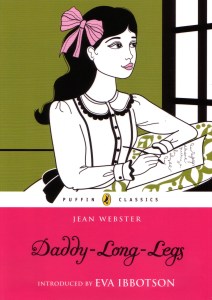
Daddy long legs – Jean Webster

9780141331119Jerusha Abbott, or Judy as she likes to be called, was brought up at the John Grier Home, an old-fashioned orphanage. At the age of 17, she find herself at a loose end, she has finished her education, and is no longer young enough to live in the orphanage without paying her way. Imagine her surprise when one of the John Grier Home’s trustees offers to pay for her to go to university. He will pay her tuition and also give her a generous monthly allowance; in exchange Judy must write him a monthly letter. Judy is told she will never know his true identity and must address the letters to Mr. John Smith, and he will never reply. Judy warms quickly to the trustee, gifting him the persona ‘Daddy Long Legs’, and writing warm, detailed letters each month. Judy dotes on her Daddy Long Legs, and, it appears, he on her.

Judy is an amazing character, gifted with the unique opportunity to turn her rags to riches. Read Daddy Long Legs and I’m sure you will find, too, that you fall in love with the little orphan girl and her extraordinary tale.

Geogianna Lennox

Dead and Buryd – Chele Cooke

dfw-cc-dab-cover-mid (2)Georgianna Lennox is a local medic on a foreign planet ruled by alien invaders, the Adveni. The native people, the Veniche, to whom Georgianna belongs, have become slaves in their own home. Georgianna is somewhat unique among the Veniche as her work allows her to tread within the realms of the Adveni forces, treating the sick and injured within the walls of the infamous Lyndbury prison. For Georgianna this is a way of treating her lost people, but it is not enough. When Georgianna’s friendship with a group of rebels risks putting her own freedom at stake, she is faced with a difficult decision – what will she choose to put first, her family or the freedom of her people?

Georgianna is a strong, determined character, but one I felt extremely comfortable getting to know. Cooke has created a character that is admirable, but also wonderfully human. I found her to be amazingly likeable and funny, despite her hard exterior.

Edwina

Now the Day is Over – Marion Husband

9781908381811-frontcover (2)Are you sick of me talking about Edwina yet? If you are, shame on you, you clearly haven’t taken the time to read the book.

Edwina is the spirit of a young woman trapped between the  early 20th Century, and modern day Britain. Since her death she has lurked the shadows of her former home, critically analysing those who take residence within the walls. In Now the Day is Over she takes the form of super-omniscient narrator, haunting the house which was once hers, commenting on the lives of the adulterous couple who reside within her domain, comparing their existence to the life that was once hers.

I love Edwina because she is so all encompassing. She is deliciously genuine, admirable, maddening, terrifying and somewhat detestable all rolled into one.

Intrigued by any of my lady loves? You know what to do.

Author Interview – Marion Husband

I am delighted to be able to share with you my exclusive interview with Marion Husband, author of Now the Day is Over.

Having read the book and gushed about it to all my friends (click here to see my review), I was over the moon to get the opportunity to learn a little more about the woman behind the words.


About the author

unnamedMarion Husband is a prize-winning author of poetry, short stories and novels, including the best-selling trilogy The Boy I Love, All the Beauty of the Sun and Paper Moon. She has an MA in Creative Writing and has taught creative writing for many years for the Open University and has lectured on Creative Writing MA courses in Newcastle and Teesside Universities. Marion is married with two grown up children and lives in Norton in the Tees Valley. Her sixth novel, Now the Day is Over, was published in October 2014.


To start with can you tell us a little bit about your most recent book, Now the Day is Over?

Now the Day is Over is a ghost story set between the present day and 1920. Unusually for me, this novel is told by one person – Edwina, a ghost. She is omnipresent – knows everything about everybody: an eye-of-god narrator, just the type of narrator I would discourage my creative writing students from using – too experimental, too liable to go wrong for all the questions the style begs: how does she know? Is she making up stories or telling the truth? But I did want to experiment with this novel, to toss it all up in the air. Now the Day is Over is also a love story, but is also about guilt, grief and suspicion. Edwina – the ghost – was a nurse during the First World War. She haunts the present-day house of Gaye and David (the house was once hers) and tells the story of their unhappy marriage, gradually telling her own story, too.

Where did your inspiration come from to write a book like this?

My inspiration for Now the Day is Over was the First World War and how men and woman survived the war’s aftermath. But I’m also inspired by places: the Victorian houses I grew up in; my home town of Stockton with all its cemeteries and parks and churches, its High Street and backstreets. Inspiration is a nebulous thing, I think; for me it comes mainly from what I’ve just written, whether the character is becoming interesting or not. I have given up on other novels because I’ve failed to convince myself that the characters are entertaining enough to keep me writing.

And what about Edwina? Can you give us an insider insight into your main character?

Edwina, the ghost, is mad: she was maddened by her childhood, by the war and by her marriage, but mainly by her brother who was also maddened by his childhood and his experiences in the trenches. Edwina never truly grew up – her mother’s death when Edwina was five petrified her – she remained that frightened child even as she nursed seriously wounded and dying men during the war. The reader has to decide if Edwina is mad or bad, a liar – a story-teller – or someone with special powers of mindreading…But then, she is a ghost and I have invented my own version of what ghosts can and cannot do.

How much research went into Now the Day is over? Does research play a large part in your writing process?

I researched Now the Day is Over by reading diaries and autobiographies of 1st World War nurses. I read many, many books about the war itself, including novels and poetry – research is about knowing your subject, looking things up when you have to. There are facts you must get right, the rest is interpretation.

Who is your intended audience for this book?

My audience? – everyone (although I know my own audience is largely women and gay men) – those men and women who read a lot, so much in fact to have come across someone as obscure as me. My honest answer re who my audience is? Me. I write to entertain myself.

The cover of the book is an interesting one. Who designed your cover? Why did you choose this particular image?

9781908381811-frontcover (2)The cover was designed by me – I wanted a picture of an angel standing over a grave in an over-grown cemetery – the kind of cemetery I played in as a child where there was an angel just like the one depicted – it would scare my brothers and me to death. The image came out as rather more glossy than I would have liked…Covers are problematic in my experience.

Do you have any interesting or fun facts about your most recent book you would be willing to share with us?

An interesting fact about the book – Edwina was originally Edward – my agent told me to change the sex as he thought I shouldn’t write another novel about gay men…


Edwina started out as Edward! I let that fact bounce around in my head for a little bit before moving on to some more general questions about Marion as a writer.


Which writers inspire you?

Writers who inspire me: Julian Barnes; Pat Barker; George Orwell (very much so); Sarah Waters; Hilary Mantel (the best living writer); Margaret Atwood; Philip K Dick. Too many to mention, really.

How long on average does it take you to write a book?

It takes me less than a year to write a novel – sometimes only three months. But afterwards there are the months and months of rewriting and despair.

How do you deal with the dreaded writer’s block?

I have writers’ block now – no ideas, no inspiration, nowt. I am not dealing with it now, but I used to deal with it simply by writing. I used to think there was no such thing as a block, but I was young then and on a roll…

What would you say is your interesting writing quirk?

If I have a writing quirk it’s trying too hard to be playful (a contradiction in terms?) I like flourishes and embellishments, allowing one thought to lead to another – a stream of consciousness, which is what Edwina’s narrative is, I think. I hope I won’t put off anyone reading Now the Day by saying this – I’m very definitely not James Joyce; I just like messing around with ways of describing a thing or conveying an emotion.

As a reviewer, I’ve noticed reviews tend to be a bit of a mixed bag, and often authors are less than happy to hear about potential problems in their work. What are your feelings towards good and bad reviews?

Good reviews buck me up for a few hours; bad reviews confirm all my own thoughts about my writing. On balance, though, it’s a bit like Kipling said – good or bad – Triumph or Disaster – both are imposters and for me they tend to cancel each other out.

What advice would you give to aspiring writers?

To aspiring writers I would say write a lot – a very great deal – write and write and write. But also read – read more than you write and soak it all up. I would say that you can only get good at something if you practice for many, many hours, but you also need feedback from a trusted source…In essence, write grammatically correct sentences and make sure your syntax is elegant, interesting and strong. Go easy on adjectives and adverbs; make sure the verb fits the action.

And finally, how can readers discover more about you and you work?

Discover more about my work on amazon, where all my books are for sale and where there are reviews and synopsis. Also I have a website – http://www.marionhusband.com, but it doesn’t always work properly, like me, and so I have a Goodreads Author page where all my blogs are. I also twitter links to blogs and reviews: @marionhusband.


Marion’s Latest book Now the Day is Over is available to buy direct from the publisher, Sacristy Press, or from Amazon for those outside of the UK. If this interview has piqued your interest be sure to check her out, you won’t be disappointed. I have another of her books sitting waiting on my bedside table, so there will be more to come from me too. Watch this space!

Many thanks to Marion for taking the time to talk with me.