The Crystal Gryphon – Andre Norton

“Never open the door to a lesser evil, for other and greater ones invariably slink in after it.” ― Baltasar Gracián

My first vintage paperback courtesy of the Prudence and the Crow subscription introduced me to the wonderful world of Andre Norton and the fantastical realm of the Witch World series. It was so much fun receiving, and reading, a book I probably would have never experienced without the help of Prudence and the Crow. I’m so glad I found the service, and so happy to have found a new author to explore.

I was as keen-eared as any child who knows that others talk about him behind their hands. And I had heard the garbled stories of my birth, of that curse which lay upon the blood of Ulm, together with the hint that neither was my mother’s House free of the taint of strange mixture. The proof of both was perhaps in my flesh and bone. I had only to look at the mirror of Jago’s polished shield to see it for myself.
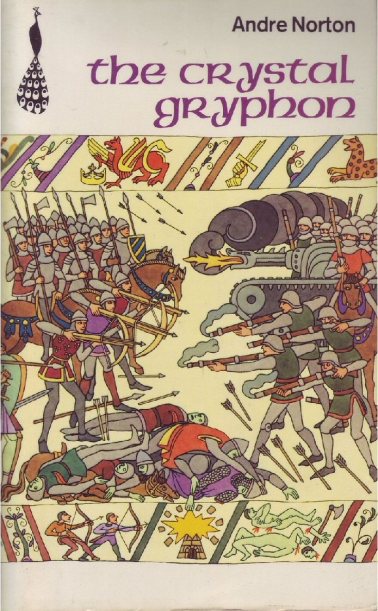
Crystal_Gryphon_1976_Peacock

The Crystal Gryphon is the story of Kerovan, heir to the throne of Ulmsdale, who, thanks to the circumstances and result of his birth, is set apart from the regular folk in the Dales. When Kerovan’s mother gave birth to him she did so sheltered in a ruin of the ‘Old Ones’, mysterious folk who once inhabited the Dales, and Kerovan was born with the cloven feet of cattle and eyes the colour of deepest amber. Kerovan’s mother, the Lady Tephana, swore she could never love such a creature, and Kerovan was forced to grow up living apart from his birth family, with Jago – a keepless man of good birth.

With Jago Kerovan learns the arts of war. But it is the Wiseman Riwal that nurtures Kerovan’s true passion; a thirst for knowledge of the secrets of the past. With Riwal Kerovan travels to places feared by the folk of the Dales, looking for answers. On one such journey Kerovan comes upon a mysterious crystal pendant, adorned with a gryphon, and feels compelled to send the relic to the wife he has never met, the Lady Joisan. Across the land,  Joisan treasures the relic, and dreams of the husband she will one day meet. But in the year of the Moss, when Joisan is due to take up her wifely duties, a bloody war sweeps through the land as the Dales fall victim to an invasion from the sea. The keep at Ulmsdale is betrayed and Kerovan sets off across the Dales to find his betrothed whose own home has been destroyed.

The developing relationship between Joisan and Kerovan forms the base of the main storyline and the chapters of the book alternate, being told by Kerovan and Joisan in turn. Despite having never met, Joisan and Kerovan each harbour a certain fondness for each other, each of them drawn, and warmed by the other. As though they are bonded by something stronger than the laws which connect them as husband and wife, a deeper presence draws them to one another. Even when Joisan mistakes Kerovan for one of the Old Ones, you can tell that she is drawn towards him, the strange ‘Lord Amber’, despite not knowing his true identity.

Norton uses Olde English-style dialogue, and a medieval-type setting to create a spectacular backdrop for a strange, dark and somewhat frightening fantasy world. From the start I was completely absorbed by the mystery surrounding the Old Ones. I can imagine the parts of the world that were inhabited by this mysterious race of beings appearing like a ghost town, deserted, but with an ominous presence alluding to troubled past. I am fascinated by old buildings and the remains of ancient civilisations, so the idea of there being such relics, buildings and ruins dotted across the countryside, which tell only part of the tale of a whole different existence is really quite mesmerising to me. I was so easily drawn into Kerovan’s travels, and got completely caught up in the mystery of his fantasy world. The whole way through The Crystal Gryphon I was desperate to know more about the Old Ones, and the world that they inhabited.

Thank goodness it is only the first of a trilogy! The Crystal Gryphon is a wonderfully mysterious and gripping tale, which combines the fantastical with the uncanny, and at times borders on the downright creepy. I don’t know what more to say other than I loved it and I can’t wait to see what the rest of the trilogy has in store.

The Unforgotten – Laura Powell

“One must still have chaos in oneself to be able to give birth to a dancing star.” ― Friedrich Nietzsche

Betty kisses Mother’s forehead but her insides prickle. The only days Mother talks this fast and wakes this early are the days before a crash; before her mood springs high and crumbles leaving her in bed for days, weeks sometimes, until she can pull herself upright.

Betty clears an empty gin bottle and lipsticked tumbler from the floor. She is wondering whether to ask Mother about them when a cough cuts in. She whips around. Gallagher is standing in the kitchen door staring at her.

B7I6geQCYAEN2IcIt’s 1956 and, while other fifteen-year-old girls are busy courting boys and thinking about the latest dance, Betty Broadbent helps her mother run the Hotel Eden, a simple bed and breakfast on the Cornish coast. Each morning she awakes, sometimes to the sounds of her mother singing in the kitchen, other times, groggy and sleep-deprived, to ensure the hotel guest get their breakfast, and clear the remnants of her mother’s late-night drinking binges.

Betty’s life has never been simple and it becomes even more complicated when a string of brutal murders in her hometown bring London’s press flooding to the scene. The Hotel Eden is overrun by leering reporters looking to cosy up to Betty’s flirtatious mother, or, at a pinch, Betty herself. In the chaos Betty finds herself transfixed by the one quiet individual – the mysterious Mr Gallagher.

As her mother’s moods become more and more erratic, Betty turns to Mr Gallagher for escape. An unlikely friendship blossoms between the pair, and Betty find herself living for the brief moments she spends with the man more than twice her age. But when Betty becomes accidentally entangled with the murders there is more than an age gap to complicate things, and she is forced to make an unbearable decision which will affect her life for years to come.

The first thing that drew me towards the book was not the subject matter, truth be told I had no idea what The Unforgotten was about until I started to read it, it was the stunning cover design. Simple, yet elegant, and deliciously mysterious, the cover is beautiful to look at, and alludes subtly to the content of the book. I loved the cover, so I read the book, and I loved that too.

The Unforgotten takes the classic murder mystery novel and gives it a contemporary makeover. There are certain things one automatically expects from such a book, to be tricked, led astray, captivated and surprised, Powell delivers on all these points. But it is her exploration of the ripples created by the murders which give the novel its contemporary twist. It is Betty who takes the centre stage – her mother, Mr Gallagher, the murder victims and the ‘Cornish Cleaver ‘all assume a side role.

Betty’s story is tragic, and her undying commitment to her, obviously bipolar, mother is evidence of the unbreakable, and sometimes devastating, bond between mother and child. Betty clings to the happy moments when her mum is on a high, the nights when she would make her cinnamon on toast. When things get difficult it is this memory she clings to, like curling up in the foetal position, revisiting happier times. At the same time she has a desperate desire to run away, to escape from the bad times when her mother crashes and burn, and the devastating reality is that her escape becomes the thing that traps her.

I was completely drawn in to Betty’s story, and within this, the hunt for the identity of the Cornish Cleaver. I know some people do not like when a book is split between two time periods, but I personally love it. It is wonderful to explore the far-reaching consequences of a storyline, and passing between the present day and the 1950s helps to tease Betty’s story out, allowing her true character to emerge. While there is not much in the way of physical description when it comes to Betty, her mannerisms, thoughts, and the way she interacts with those around her lead her to be an incredibly well-rounded and complex character, outwardly appealing, charming and so perfectly innocent.

The Unforgotten really spoke to me; but it is hard to say how this book will go down with other people. The storyline ventures into brave and hard-hitting territory which some people could find difficult to read about, exploring mental illness, unrequited love, death and destruction. Laura Powell, with her unique style and intricately-developed characters, is certainly an exciting new voice on the contemporary literature scene.

Reviews to come and things to smile about

Ok guys, I know I’ve been a little quiet the last few weeks. The truth is, I’ve been feeling a little under the weather and decided to take some time off. I’ve been doing lots of reading, but not so much writing.

The good news is I am feeling much better 🙂 and I hope to post a review or two very soon. You can expect some sci-fi, historical fiction and a little bit of mystery in the mix.

Also, my second Prudence and the Crow box came this weekend – and I love it!

IMG_20150711_112451903

Last month’s book, The Crystal Gryphon, was pretty incredible (review to come). I’ve got high hopes for this one, I do love a bit of mythology, here’s hoping it lives up to my expectations!

A fairytale weekend

“Fairy tales do not tell children the dragons exist. Children already know that dragons exist. Fairy tales tell children the dragons can be killed.” ― G.K. Chesterton

After being treated to these beautiful books by a good friend I spent an otherwise dismal weekend holed up in my new reading room indulging my inner child.

The Sleeper and the Spindle – Neil Gaiman, with illustrations by Chris Riddel

23301545The Sleeper and the Spindle is a great example of a children’s book made for an adult audience. Think Snow White meets Sleeping Beauty, with some dark magic thrown in. I love modern twists on traditional fairy tales, almost as much as I love traditional fairy tales, so this book was always going to go down well.

High in a tower in a kingdom far, far away a beautiful princess lies enchanted in her bed. Lately, the spell which keeps her slumbering has begun to spread, and the people of neighbouring villages have fallen victim to the sickness. Many brave souls have tried to reach the tower in the hopes of breaking the enchantment only to lose their lives, impaled on an impenetrable fortress of rose thorns. On what is to be the eve of her wedding, a young queen decides to set aside her matrimonial plans to rescue the sleeping princess. Accompanied by a team of crass dwarves, the queen takes up her sword and chain mail and travels deep into the mountains to reach the sleeping kingdom.

The Sleeper and the Spindle combines the traditional themes we all know and love with an exciting modern twist, to create an enchanting, yet ominous tale – as delicately unsettling as it is deliciously captivating.

Oh and the illustrations are nothing short of spectacular.

A1vDbflXiqL._SL1500_

25284718-c769-4a99-bf1a-11dde87b434a-2060x1236


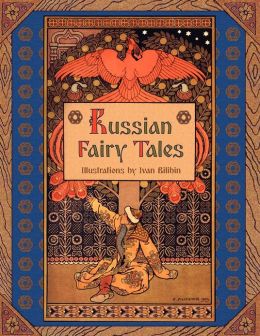
Russian Fairy Tales – Alexander Afanasyev, with illustrations by Ivan Bilibin

9781908478689_p0_v1_s260x420

If you saw my post about Children’s Stories from Japanese Fairy Tales and Legends you’ll no doubt be familiar with my fascination with foreign fairy tales. In fact, this interest does not apply just to fairy tales – myths, legends and ghost stories are also high up my list of interests. I find it really interesting to see how stories from different nations compare to those I grew up with and know so well.

This collection of tales was written, or rather, recorded by renowned Russian folklorist Alexander Nikolayevich Afanasyev in the mid-19th century. The book contains some of the best-known Russian folktales, including: Vasilisa the BeautifulThe Feather of Finist the Falcon; The Frog-Tsarevna; and Tsarevich Ivan, the Firebird and the Grey Wolf.

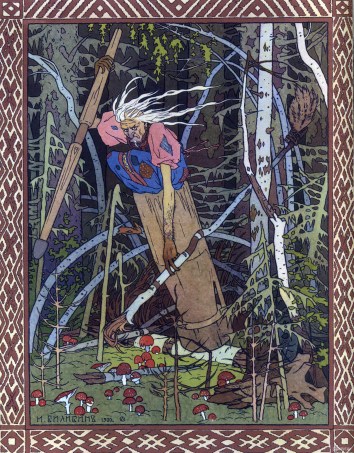
Of all the characters I came across in this volume, and there are a few who feature in more than one tale, I was particularly taken by Baba Yaga.

Bilibin._Baba_Yaga

Baba Yaga is a cannibalistic witch who lives in a small wooden hut at the edge of the forest. Now, this description may not seem so different from a lot of other witches in children’s stories, but Baba Yaga has so many fantastic quirks, the likes of which I would never have imagined.  Her hut stands on hen’s legs, and will only lower itself to permit entry when in receipt of a certain rhyme. It is also surrounded by a picket fence adorned with the skulls of Baba Yaga’s victims, the eye sockets of which glow in the night.  Instead of a broomstick, Baba Yaga travels through the forest in a giant mortar, driving herself forward with a pestle in her right hand, while sweeping the forest floor with a broom in her left hand. Oh and she is also often followed by spirits.

I love her.

Having no familiarity with Russian folklore prior to this, I feel the collection gave a good introduction to some of the most famous characters in Russian folk literature. It’s a beautiful volume, and some of the illustrations are so elaborate I feel I could have spent hours studying them.

d0bcd0b0d180d18cd18f_d0bcd0bed180d0b5d0b2d0bdd0b0_5

ruske-bajke-ivan-bilibin-4

Elizabeth is Missing – Emma Healey

“But the thing about remembering is that you don’t forget.” ― Tim O’Brien

What was it I came for? The loaded shelves frown down at me as I circle them, and the blue and white linoleum stares up, dirty and cracked. My basket is empty, but I think I’ve been here for a while; Reg is watching me. I reach for something: it’s heavier that I was expecting and my arm is pulled down suddenly with the weight. It’s a tin of peach slices. That’ll do. I put a few more tins in my basket, tucking its handles into the crook of my arm. The thin metal bars grind against my hip on the way to the counter.

EIM-pb-jacketMaud’s memory is not as sharp as it once was. She forgets to turn the gas off, eats endless amounts of toast, makes cup after cup of tea which line up, cooling on the side board, and has enough sliced peaches to feed an army – but still she buys more.

To help her to remember, Maud has a ‘paper memory’ – countless notes left by her carers, her daughter and herself. Notes fill her house, her pockets, and the gaps in her arm chair, instructions, reminders, recipes and phone numbers spill from every orifice. In Maud’s pocket, amongst the shopping lists and appointment slips is a note in Maud’s own handwriting that reads ‘Elizabeth is missing’. Elizabeth is Maud’s friend; the only friend she has left. She doesn’t remember when she wrote the note, but she knows that something is wrong. If only she could tell someone, if she could just make them understand.

Elizabeth is Missing is probably not what you expect. I asked a friend if she knew what the book as about, she looked at me in confusion and said, or asked, ‘some girl called Elizabeth who goes missing?’ – She couldn’t be further from the truth. This book is so much more than just a mystery.

Fifty years ago Maud’s elder sister went missing. In Maud’s mind lie the secrets to solving this mystery, and they are desperate to get out, but it’s difficult to solve a puzzle when you keep forgetting the clues. Maud can’t remember the relevance of her thoughts – there is definitely something important about planting marrows, but she can’t be sure what. She struggles to express herself, forgets the word she was just about to say, answers a questions asked hours before, and relives conversations from years past. It’s no wonder no one takes her seriously.

In Elizabeth is Missing the clues are slowly teased from Maud’s damaged mind. The reader is tossed between the present day, and fifty years in the past, reliving, day by day, the disappearance of Maud’s sister, before returning to the present to search for her ‘missing’ friend. The present is confusing, muddled and foggy, while the past is pristine and bright.

Maud’s memories: her parents’ house, the yard, the pantry, and the dusty bedroom floors – are all so clear and picture perfect. Emma Healey creates a rich, colourful background for Maud, clearer and crisper than the black and white photos of her past. The second Maud casts her mind back it is as though you are there with her in the kitchen, stirring the supper cooking on the stove and preparing the table; focus and you can hear the tinkling of tea into china cups, and the soft clink of the tea spoon.

Return to the present, and the scene is much more blurry.

In Elizabeth is Missing, Healey has taken a theme something that many people are incredibly uncomfortable with, and expressed it in a way that I have never seen before. Watching a loved-one grow old and lose their capacities is one of the most heart wrenching and terrifying experiences I have ever had, and it was incredible to view this from the other side. Elizabeth is Missing allows the reader to take on the role of the person whose mind is failing, to see the world through their eyes. The effect is unsettling, haunting and somewhat humbling.

Maud is an amazing character, she is funny, cleaver and mischievous, but her story is so incredibly sad. If you are an emotional reader, as I am, this one is likely to induce a few tear-filled episodes. There were also times when I felt so angry on behalf of Maud, I was furious with the people around her, those close to her who, it seemed, would ignore her, dismiss her, and neglect her. But of course, the events are portrayed through Maud’s mind, you do not see the other times. The times she has forgotten. It is difficult to describe the emotional rollercoaster that this book took me on – I laughed, I cried, and, in the end, I closed the book feeling completely overwhelmed.

Elizabeth is Missing is one of the most remarkable books I have ever read. Despite the games Healey played with my emotions, I loved every second of it. Each individual aspect of the book combines to create something truly unique and stunning. Even now, weeks after having finished the book I feel completely blown away by the sheer brilliance of it.

Would recommend to anyone and everyone, if you only read one book this year make it Elizabeth is Missing.

Prudence and the Crow – A vintage book subscription box

Is there anything more wonderful than treating yourself to a new book?

I think I may have found something.

Last month a friend introduced me to Prudence and the Crow, a little london-based company which offers monthly subscriptions of vintage paperbacks.

She pretty much had me at the Crow.

…I’m sorry, that was terrible.

Anyway, after visiting their elegantly designed website and learning a little more I wasted no time in signing up. A vintage paperback and extra SURPRISES for only £12 a month, seriously, you’d have to be an idiot, or some kind of book-hating weirdo, not to get in on this.

Today my first package arrived and I am fairly sure I have never been so excited in my entire life. The envelope alone was enough to get me to screaming like an excited school girl. A mystery book, selected especially for me!

IMG_20150618_194630957

Check out my haul!

IMG_20150618_194801744

The box was filled to bursting with all kinds of treats including a handmade book bag and bookmark, Prudence and the Crow library card, motivational mini postcard and a collectible tea card featuring an English spindle tree. I also got some interesting tea samples and a few sweets adorably packaged in a striped bag and sealed with a triceratops sticker.

I love every, single thing.

But of course the star of the show is my very own, handpicked vintage paperback – The Crystal Gryphon by Andre Norton

Crystal_Gryphon_1976_Peacock

I’ve never heard of Andre Norton, but I am super stoked to try this one out.

Kerovan of Ulmsdale is born different from other children: he has small hoofs instead of feet, and his strange eyes are the colour of amber. Fearful tales spread about Kerovan – but is he really a monster, or has he inherited some of the power of the mysterious Old Ones who inhabited his country long ago? And what about the potent magic of the crystal globe he sends to the bride he has never seen?

The blurb-cover combo on this book has me well and truly intrigued. I’m moving this straight to the top of my ‘to read’ list, so I’ll let you know what I think really soon!

In the mean time, get on over to Prudence and the Crow and treat yourself!

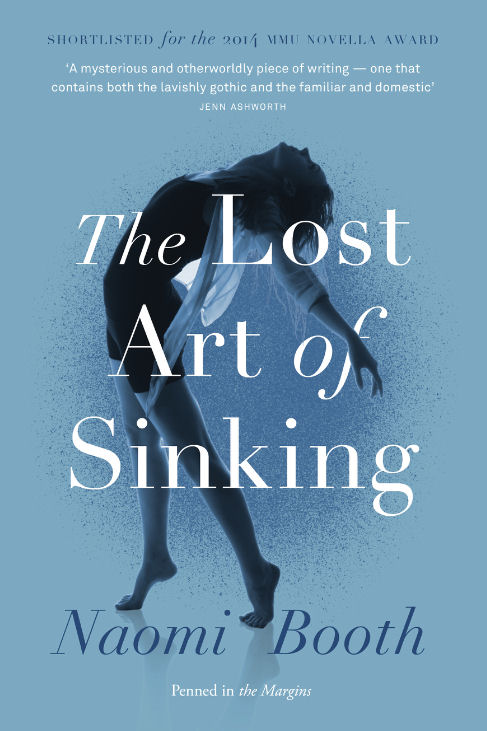
The Lost Art of Sinking by Naomi Booth – Book review and giveaway!

“The floor scooped me up where I stood, and I blinked as it hit me― M. Beth Bloom

sinking_sm

Have you ever played the Fainting Game?

The girls of class 2B have a new obsession – perhaps you know it as the Dying Game, or maybe Indian Headrush? The rules are all the same.

We had all agreed. We would secretly play the Fainting Game every day in assembly the following week. The winner would be the girl who passed out the most times. Or, in the case of a tie, whoever passed out in the most dramatic way. If anyone died, they scored an automatic win. If more than one person died, the winner was the girl who died in the coolest way.

When the decision-makers of class 2B decided it was time to play the Fainting Game, it was nothing more than that – a game. It was just silly ritual among adolescent girls, to annoy their teachers and try and get a bit of a buzz, something to quickly go through and leave behind.

They all grew out of it… or rather… they almost all grew out of it.

In her debut novel Naomi Booth explores the art of losing yourself, and the effects of taking obsession a little too far. The Lost Art of Sinking is a beautiful, yet unusual novella, as artfully striking as it is subtly unsettling. Prepare to be blown away, swept into the depths of obsession and addiction, a journey which begins, and ends in a mysterious room.

Esther cannot stop thinking about the game, a self-proclaimed ‘non-swooner’ she has never managed to successfully lose consciousness. She obsesses over what it would be like, the experience, to find out what she was missing. She wants to see the visions the girls in her class have boasted about. To see the strange and beautiful shapes, like ghosts, familiar, yet alien, which will your body to let go.

I thought it sounded like the most wonderful thing and I hoarded that possibility inside myself.

While all her friends move on, passing likes ghosts from her peripheral vision, Esther continues to experiment with different ways to pass out.

Her fascination is rooted in the memory of her late mother the beautiful retired dancer, who lived her final years locked away in her studio, like a butterfly with a broken wing. In her despair, Esther’s mother never stopped attempting the perfect swoon – curving, trembling, sinking and rising.

Utterly resolved to her fate Esther holds her breath, wills herself to fall and when that fails she snorts cleaning products. Later, unable to rid herself of her obsession she loses herself in the sights and sounds of London. Through the endless streets and houses she can feel her mother calling to her, saturating her body and mind, tilting her head, arching her back, begging her to let go.

Esther’s fascination with falling is so all encompassing that she neglects all other aspects of her life. She has no plan, drifting from one place to another, seeing where the wind takes her, always searching.  Her obsession blinds her, so much so that she misses a glaring secret hidden in her past – one which, if left untold, could be her undoing.

In Esther, Booth has created a strange and wonderful character. Her persona is mystifying yet utterly two-dimensional – defined only by her actions and her obsession. As a reader you are given access to her inner thoughts, but these centre only on her desire to sink away, to become one with her mother. Her relationships feel hollow; her fleeting encounters with men no more than another attempt to reach her goal. Each time she is with someone they are with her body only, her mind is somewhere else entirely.

While Esther herself is a bit of a mystery, those around her are artfully sketched. She outlines all those she encounters, pouring their descriptions onto the page, from an unpleasant-smelling gentleman on the tube, whose odour emanates from his body in ‘mustardy waves’ to the odd young man that is her father.

Through Esther’s obsession, Booth takes the reader on a beautiful and haunting journey – which is all at once unsettling, dark and strangely hilarious. The Lost Art of Sinking is exquisitely written, evoking, sensual and all encompassing – once I started to read I didn’t stop. I was blown away by the writing, absorbed by the ride and fascinated by Esther’s mind. This is definitely one for those of you looking for something fresh and new – Naomi Booth is not to be overlooked.

The Lost Art of Sinking will be released 1st June 2015 by Penned in the Margins.

I was given a free review copy of the book in exchange for an honest review.

****GIVEAWAY****

I have been given a copy of The Lost Art of Sinking by the publisher to give away to one lucky reader.

To be in with a chance of winning all you have to do is comment on this post. Be sure to enter your correct email address when posting so I can get in touch if you win. The giveaway will run until Friday 12th June – giving you plenty of time to enter.

Good luck!

The Guest Cat – Takashi Hiraide

“What greater gift than the love of a cat.” ― Charles Dickens
One shining, sunny afternoon, slipping through a crack in the open door, four bright white feet stepped softly onto the room’s insulated drain board, and with a well-honed curiosity rushing through her entire body, Chibi quietly surveyed its meagre interior.

Guest-Cat-2

A married couple in their mid-thirties live a solitary life in urban Tokyo, in a small rented guesthouse on the border of an estate owned by an elderly woman and her ageing husband. Both husband and wife work from home, freelance copy-editing, writing, and proofreading from their solitary desks – it has been a long time since either one has had very much to say to the other.

Late in the autumn of 1988 a small cat, tamed by a young boy who lives next door, invites itself into their humble kitchen and begins to explore its surroundings. The cat becomes a regular feature in the couple’s home, and brings warmth and love into their lives. As the cat comes and goes, seemingly set in her routine, the couple begin to talk about her, to anticipate her arrival and share stories about her. The arrival of the guest cat opens a door which had seemed closed forever.

In his New York Times Bestseller, Japanese poet Takashi Hiraide eloquently explores the remarkable bond between man and cat. When the guest cat enters the couple’s house, she brings with her a feeling of hope; suddenly life seems to hold more promise for the husband and wife, and their days are filled with a new kind of meaning.

It is not out of preference that I use the word fate – or should say, Fortuna – but as the young cat’s visits became more frequent, I came to feel that there were some things only this word could express.

I have been told that cats emit a certain type of pheromone which makes them more attractive to the people they are around. This, some say, is why so many people do not realise how much they love cats until they have one of their own. The husband, whose voice the novella is written in, describes himself and his wife as neither having a particular liking for cats. But this all changes when the guest cat first sets foot into their kitchen.

There’s a photographer who says cat lovers always believe their own cat is better looking than anyone else’s. According to her, they’ve all got blinders on. She also says that, though she too is a major cat lover, having noticed this fact means that she is now hated by all cat lovers, and so these days only takes pictures of scruffy-looking strays.

cat-in-a-tree

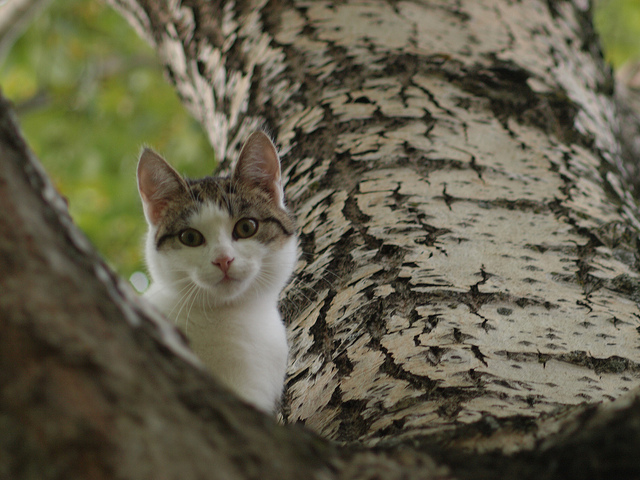
It is almost as though the cat fills the empty space between the man and his wife, a space perhaps reserved for a child. I imagine that the cat’s name, Chibi, which we are told means ‘little one’, alludes to her importance to the man and his wife. She is so much more than just a cat to the couple; she is a friend, a companion, something which gives their life meaning. With Chibi in their lives, the house, the garden, the zolkova tree and even the dark ‘lightening alley’ all have more light and colour. Everything brims with a new beauty created by the smallest of pleasures – watching the cat play with a ball, or hearing the gentle tinkling of her collar.

I was bought the guest cat by my father-in-law this past Christmas; he has clearly noticed that my two favourite things in life are books and cats. There was no doubt in my mind that I would enjoy the book –  my father-in-law is an excellent judge of reading material – but I didn’t anticipate just how much pleasure I would take from such a short piece of writing. The book is gentle, and beautiful, simply brimming with imagery and poetics. In just 140 pages Hiraide manages to speak volumes about the complexities of life and the existence of joy in the most unlikely places.

The writing has a stunning eloquence that fans of Japanese literature will admire. There is something I find so appealing about Japanese translations; the words seem to possess a unique flow, a beauty completely their own. The translated words stream effortlessly across the page, swirling into stunning imagery and deeply profound passages of thought, the result of which is a rare and wonderful treasure of a novella.

Needless to say, I would recommend this book. It is gentle and poetic, yet captivating enough to read in a single setting. This one is not just for cat lovers.

The Lovely Bones – Alice Sebold

“If you have a sister and she dies, do you stop saying you have one? Or are you always a sister, even when the other half of the equation is gone?” ― Jodi Picoult

the-lovely-bones-9781447275206I had wanted to read this book for so long. I would often find myself seeking it out in bookshops just after it was released, picking it up and stroking the cover, reading the blurb on the back for the umpteenth time

My name was Salmon, like the fish; first name, Susie. I was fourteen when I was murdered on December 6th, 1973. My murderer was a man from our neighbourhood. My mother liked his border flowers, and my father talked to him once about fertilizer.

But I never bought it.

I have obsessed over the idea of this book for the best part of a decade – a story told by the spirit of a murdered girl, however macabre it may sound, is right up my street. I am fascinated by anything to do with the paranormal and spirituality. I wanted to get to know Susie Salmon better; I wanted to read her story.

So when my good friend Kate over at The Little Crocodile bought me the book last month for my birthday I was over the moon!

The Lovely Bones is a haunting tale told by the spirit of murdered school girl Susie Salmon. Looking down from her heaven Susie observes her family and friends. She watches the devastation and destruction that her murder causes, rippling through her small town, and shaking the community to its very core. Susie watches her family as they struggle to comprehend life without her, leaving the porch light on well after they know she is no longer coming home. As time goes on, and Susie watches her siblings and friends grow older, she learns that she must let go of her anger to allow those left behind to heal.

This book is not for the faint hearted. I become much more emotionally invested in a book than I ever have in film or TV and this one really got to me. I’ve had unsettlingly emotional episodes with books in the past; I grieved for Sirius black after reading Harry Potter and the Order of the Phoenix and Anybody out there? by Marian Keyes threw me into the depths of despair for a good few weeks. This one was different though. Sebold’s writing gave me nightmares, and at some points I doubted whether I would actually be able to finish it.

That is not to say that I didn’t enjoy the book – I did. It was everything I hoped for, and a little more. The effect that this book had on me speaks of the power of Sebold’s words – I was upset by Susie’s death, horrified by the circumstances and devastated by the effect that this had on the family. But more than this, I was distressed by Susie’s position in all this, as an outsider looking in on the effect that her death had in her community. She was intercepted by her neighbour on the way home from school that cold winter’s day in 1973; she never made it home. Susie’s story is incredibly moving in that it details her spirit’s journey, still attempting to find her way home after so many years; she may be in heaven, but her true place will always be on Earth.

SEBOLD_ALICE_0316044938_1._V204759192_

Sebold has taken a story about a murdered school girl and completely turned it around, presenting an intricate analysis into grief and resolution. Fans of crime fiction may be put off to know that there is no secret as to who the killer is, you know him from the start, and if you begin the book hoping for a revelation in which Susie’s killer is brought to justice you will likely feel disappointed. But approach Sebold’s work with an open mind and you will be pleasantly surprised.

The Lovely Bones is beautifully written and hauntingly captivating and will leave you quietly contemplating Susie long after you have finished her story. It is difficult to say who I would recommend the book to – so I will simply say that if you feel intrigued by my review, then give it a go.

Has anyone else read this book? I’d love to hear from you to find out what you thought. Drop me a line or comment below.

To Kill a Mockingbird ten-day (re)read challenge

“I’d rather you shot at tin cans in the back yard, but I know you’ll go after birds. Shoot all the bluejays you want, if you can hit ’em, but remember it’s a sin to kill a mockingbird.” – Atticus Finch

Penguin Random House have today launched a ten-day social media campaign to get people to (re)read To Kill a Mockingbird, ahead of the release of Harper Lee’s highly-anticipated second novel Go Set a Watchman.

9d530ff5ee3031af2d95b62e86f3fa61

The ten-day challenge, which will run from 21–31 May, is described as a ‘a read-along for readers old and new, (re)discovering and discussing the book together to a loose ten day plan.’

‘We’ll together be reading this brilliant piece of work by Harper Lee in preparation for Lee’s second book, Go Set a Watchman, out on the 14th July.’

You can keep up with what’s going on by following the Twitter, Facebook, Instagram and Tumblr sites that have been set up for Go Set a Watchman.

‘During this time we’ll be releasing lots of Mockingbird material, like family tree infographics, story guides and our favourite quotes,’ A Random House spokesperson has said. ‘We’ll also be making a call-out for everyone to share photos of their well-loved copies of To Kill a Mockingbird and hosting competitions to win copies of Go Set A Watchman to be sent out to lucky recipients as soon as the book is published in July.’

I don’t own a well-loved copy, although I did buy a copy of the new edition a couple of months back in anticipation of the release of Go Set a Watchman. I’m just so keen that I jumped ahead of the game!

Haven’t got a copy yet? Click here to solve that problem.

Go Set a Watchman, which sees Scout from To Kill a Mockingbird return to Maycomb as an adult, will be released on 14th July.

****GIVEAWAY****

In keeping with the spirit of the campaign I’ve decided to give you a chance to win a copy of the 50th anniversary edition of To Kill a Mockingbird. So if you want to take part in the challenge, but don’t have a copy of the book here’s your chance to get one. Just comment on this post by Sunday 24th May to be in with a chance of winning. The winner will be selected at random.

Good luck!