
Wordless Wednesday
Reading is good for you!

I feel as though I am being inundated with pointless articles. Welcome to the internet amiright?
I’ve read, or rather glanced over, so many articles recently which highlight the benefits of reading. Sites such as Lifehack and the Huffington Post have outlined the wondrous effect that reading can have on a person’s physical and mental well-being. Urging people, who, in all honesty, probably found their site through a social network, to put down their mobile phones, get off Facebook and pick up a book.
Lifehack blogger Lana Winter-Hébert wrote one such article:
‘10 Benefits of Reading: Why You Should Read Every Day’.
‘When was the last time you read a book, or a substantial magazine article?’ She asks, ‘Do your daily reading habits center around tweets, Facebook updates, or the directions on your instant oatmeal packet? If you’re one of countless people who don’t make a habit of reading regularly, you might be missing out.’
The article listed the following ten ‘benefits’ of reading:
I have a few issues with this.
I love to read, but I’m not about to lecture anyone on why they should read. People have talked about the benefits of reading for a long time, but it is only recently that these odd attempts at quantifying the benefits of such practices have emerged.
Yes, reading can be beneficial, but so can eating organic produce, avoiding chocolate, giving up smoking, going for runs and abstaining from your morning coffee, and there are plenty of people who lack either the money, time or desire to do these things.
The article goes on: ‘There’s a reading genre for every literate person on the planet, and whether your tastes lie in classical literature, poetry, fashion magazines, biographies, religious texts, young adult books, self-help guides, street lit, or romance novels, there’s something out there to capture your curiosity and imagination.’
This is a little too presumptuous for my liking. Perhaps I am unique among book lovers in that I think there are some people who, as hard as it is to accept, just don’t like reading.
I think the main benefit to reading, and the main reason people should be reading, is because they enjoy it. Reading is a pastime, and it shouldn’t be made to feel like a chore.
If you enjoy reading, but rarely find the time to pick up a book then you could definitely do worse than to take half an hour at the end of the day to immerse yourself in a good novel. But if you don’t, then you don’t need to, and you shouldn’t feel peer pressured into doing so because of the supposed benefits.
Christmas is a time for reflection
As we come to the close of 2014 I am faced with the realisation that I have let a few things slip over the last 12 months. I started the year with so many good intentions as to books I would read and things I would get done, and although I have accomplished a lot this year, there are certain books I have really wanted to read which I have let pile up and gather dust. And so, as part of my end of year reflections I am going to give you a short review of three books I read this month, after realising I had put off the task, if indeed you can call it a task, for far too long.
The Thurber Carnival – James Thurber

The first book is one my beloved bought me for Valentine’s Day this year; I know a lot of thought went into choosing a book he knew I would enjoy. So this month I spent a few days curled up in bed with Mr Thurber and indulged myself in his musings, and what an experience it was.
As Thurber writes in the preface:
‘This book contains a selection of the stories and drawings the old boy did in his prime, a period which extended roughly from the year Lindbergh flew the Atlantic to the day coffee was rationed. He presents this to his readers with his sincere best wishes for a happy new world.’
If you have yet to read any James Thurber I cannot recommend him highly enough. The Thurber Carnival is an eclectic mix of short stories, essays, biographical snapshots, poems and anecdotes which give you a little bit of everything. As a first time reader you may find yourself laughing out loud at his work, while at the same time suffering slight confusion as to what exactly is happening – in this way Thurber’s work is full of unexpected and not entirely understandable surprises.
The book was put together by the author himself, adapted from some of his most colourful work, almost all of which was originally published in the New Yorker. Some of the better known parts of the book include ‘The Secret Life of Walter Mitty’ which was recently adapted on the big screen, but even the lesser known anecdotal sentences speak volumes about Thurber’s work. Each piece within the volume, down to the smallest of cartoons is worthy of publication.
Here is one of my favourite snippets from ‘The Owl in the Attic’, in which the author offers advice in the form of questions and answers from pet owners:
Q. We have cats the way most people have mice. – Mrs C.L Footloose.
A. I see you have. I can’t tell from your communication, however, whether you wish advice or are just boasting.
I also really enjoyed Thurber’s selection of fables which carry somewhat unusual morals. I think my favourite, and it was a difficult choice as they are all hilarious, was ‘The Very Proper Gander’, in which a goose who is very fond of singing to his family was accused of being a dangerous bird capable of spreading propaganda by a nosey hen and subsequently forced to flee his home. This tale carried with it the insightful moral ‘Anybody who you or your wife thinks is going to overthrow the government by violence must be driven out of the country’.
I spent many an afternoon doubled up laughing at Thurber’s anecdotes from ‘My Life and hard times’ including such gems as ‘The Night the Bed Fell’ and ‘The Night the Ghost got in’, in fact I spent many an afternoon laughing at just about everything.
The Thurber Carnival serves as a fantastic amalgamation of the very best of Thurber’s insights and observations, effortlessly presented and bound with a mix of effortless humour and the correct balance of subtle and obvious eccentricities. While highlighting Thurber’s much deserved reputation as a truly great humourist and storyteller, the book simultaneously unleashes upon the reader his second role as a truly profound thinker, philosopher and anthropologist. It has been a while since a book has made me laugh, and think, in quite this way. This collection has something for everyone, if the writing is a little out of your reach; you’re bound to appreciate the illustrations at the very least.
The Snow Goose – Paul Gallico
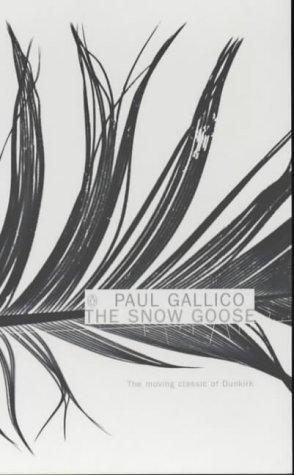
The second book was recommended by a man whose presence in my life was all too short, and this month sadly marks one year since he passed. Michael was a truly inspirational man, and I have many fond memories of the time I got to know him. He recommended that I read The Snow Goose on one of the last occasions I ever saw him and I am somewhat ashamed to say the book has been sitting by my bed ever since.
Set against the backdrop of World War II, The Snow Goose documents the touching, if somewhat unusual, friendship between Philip Rhayader, a disfigured artist living a solitary life a lighthouse in the Essex marshlands and a young local girl named Fritha. The unlikely friendship is born out of Fritha’s discovery of a snow goose, miles from its Canadian homeland and wounded by a gunshot.
The tale of the friendship between this unlikely pair is truly moving, and reminded me, in some respects, of the story of the Hunchback of Notre Dame. Rhayader is a beautiful soul who is so misunderstood given his outward appearance, but whose kindness emerges in his care those close to him. The story is so captivating that you will be forgiven for shedding a tear, as I did, with the outcome of the story.
Rhayader assists in the British retreat from Dunkirk, and succeeds in rescuing hundreds of men. The snow goose accompanies him constantly, flying circles around the fishing boat, a shining beacon of hope in the grey skies above the stormy channel, becoming somewhat of an omen to the men in Dunkirk.
When the snow goose returns briefly to the lighthouse, alone, Fritha sees it as vision of Rhayder’s soul coming to bid her farewell. It is at this point that the girl comes to realise that she loved her friend, and he her. When, shortly after, the lighthouse is lost to a German bomber plane, the only thing which remains of Rhayader’s artwork is a painting of Fritha as a young child, with the injured snow goose in her arms. This ending of this short piece is remarkably powerful, and the image of the painting, the one remaining piece of a life now lost, is something which will remain with me for a long time.
The Snow Goose is a simple, eloquently written, yet powerful tale of the power of friendship and love, which is in equal parts beautiful and devastating.
The Young Visters – Daisy Ashford.

The final book I have chosen is very dear to me. I was first given this book to read by my grandmother as a child, under the knowledge that it was written by a little girl. Unfortunately the knowledge of the book fell somewhere into the back of my mind, and when my grandparent passed away I realised I had forgotten the title. With no one to ask the book was lost to me somewhere within the household clutter that results from many lives well lived. I recently decided to try and find the name of the book and was surprised to find how simple the task was, such are the wonders of the internet. I treated myself to a lovely little second had edition and it seemed natural that this would make it into my Christmas list.
The Young Visiters was written by Daisy Ashford at the remarkable age of nine, and was discovered many years later in a notebook hidden amongst her mother’s possessions. The book was published in a completely unedited state, save for having the single block of text which makes up each chapter divided into paragraphs for readability. Needless to say, the book is truly extraordinary, as J M Barrie writes in his preface to the work: ‘It seems to me to be a remarkable work for a child, remarkable even in its length and completeness, for when children turn author they usually stop in the middle, like the kitten when it jumps.’
There is so much I could say about The Young Visiters; such is my love for this charmingly childish tale. Since rediscovering the work I have recommended it to so many, and have bought it as a Christmas gift for others. It makes a beautiful addition to any collection, and reading it is an experience I can guarantee you will enjoy.
I remember enjoying the book when I first read it, but reading it as an adult has afforded me a whole new appreciation of Ashford’s writing. When I was first given the book by my grandmother she interrogated me almost immediately, asking me if I had noticed anything funny about the book. I remember referring to the sentence ‘Then he sat down and eat the egg which Ethel had so kindly laid for him.’ I will confess does still afford a little chuckle from me, but I noticed so much more about the little girl’s writing this time round, the main thing being her fantastic perception of people and society. J M Barrie writes in his preface that had the author paid a visit to your house ‘I am sure that when you left your bedroom this child stole in, examined everything and summed you up.’ She has a certain way with words, expressing a character with all of the subtlety of a child: ‘My own room is next the bath room said Bernard it is decerated dark red as I have somber tastes.’ Can you think of any better way to sum up ones personality?
There is something so refreshing in reading something written by one so young, who has such a great understanding of life. The heroine in the story Ethel is forever powdering her face with ‘ruge’ for fear that she appears too pale and sickly, an ongoing theme in novels of the time, as stated most eloquently by Ethel : ‘I am very pale owing to the drains in this house’. It is an ongoing these in early 20th century literature that women are almost like china dolls, and liable to break at any moment, which one can pick up quite easily from reading a Jane Austen novel. God forbid a girl gets caught in the rain she is likely to have to stay in bed for the whole summer. Perhaps my favourite snippet from the book in this respect is when Ethel is so overcome with happiness that she faints. The gentleman she is with, Bernard, is very concerned that she is gravely ill, but the matter is soon resolved: ‘Oh no I am very strong said Ethel I fainted from joy she added to explain matters.’
I could delve further into the story, but really, I don’t feel there is any need. I don’t feel anyone is better equipped to tell the tale than the ‘smug’ – as J M Barrie refers to her – little nine-year-old who wrote it. I would highly recommend this book to just about anyone who enjoys reading. Buy it, read it, and pass it on, you won’t regret it.
I know I haven’t been posting quite as much recently. My ‘one review a week’ rule went out the window when my body decided to gift me a two-month spell of headaches and nausea. Now, don’t get me wrong, getting ill is never convenient, but this came at a really, really terrible time. We’ve been working on three books on top of one another at work, and there really hasn’t been much time for feeling sorry myself [although I will confess I’ve managed to fit a little of that in here and there].
Thankfully, last week was a bit of a turning point. Not only did one of the books go to press [Whoop whoop!] but I finally woke up without a nagging pain in the side of my face and a desire to crawl back under the covers. It really is amazing how good a couple of months of feeling awful can make you feel.
So to all of you reading this, I know some of you are waiting for reviews from me, don’t worry I haven’t forgotten you. I’ve got a mound of books to get through, but I am getting through them. The next one is coming, very soon!
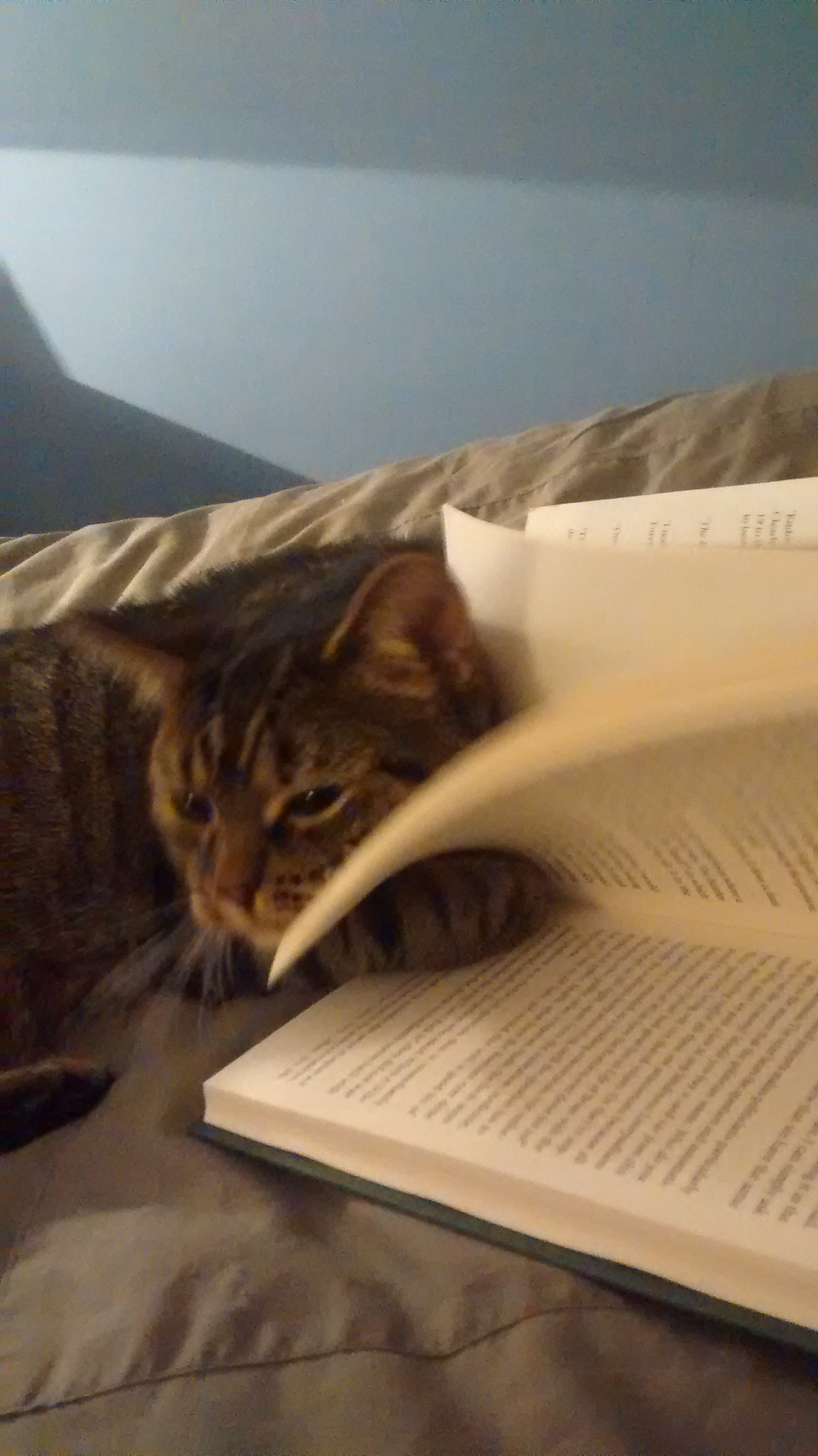
In the mean time, feel free to enjoy these pictures of Umlaut reading a book, and just be thankful you don’t need to use your own face every time you turn a page.


There are two sides to every story
The Confidant – Hélène Grémillon

Another truly beautiful piece of literature to add to my read list. ‘The Confidant’ was given to me by my partners godparents as a Christmas present last year, and sadly ended up hidden in the bottom of a box until a few weeks ago, one of the downsides of having moved house and never fully unpacked. Having just read and thoroughly enjoyed ‘The Elegance of the Hedgehog’ I was excited at the prospect of getting started on another piece of French literature, and potentially giving myself a nice topic of conversation for our next family dinner.
‘The truth lies hidden in the past’ is such a fitting tagline for this novel. Grémillon draws the reader into the depths of a long hidden secret, of longing, forbidden love, betrayal, and revenge. The novel achieves an almost perfect blend of historical narration, thrilling suspense and harsh reality, the result of which is truly stunning.
It is 1975, and in her apartment in Paris, Camille receives an anonymous letter, a letter narrating the lives individuals seemingly unrelated to Camille, surely the letter has been sent to her by mistake? The anonymous letters continue to fill the post box of Camille’s Paris flat, and a long hidden secret begins to unravel before her very eyes. As the story unfolds Camille becomes desperate to discover the source of the letters, before finally succumbing to the realisation that it is her own story which is being told. The story of pre war France, a young boy in love, a young girl eager to please, and a rich and lonely madame is inextricably linked to Camille’s unlikely friendship with the concierge of her apartment building, the recent death of her mother, and the future of her unborn child.
What struck me about this book was the profound effect it has on my emotions. As the secret unraveled I found myself taken on an emotional journey of empathy and hatred of Annie, and simultaneous hatred, and empathy for Madame M. There are two sides to every story, and Grémillon highlights this so perfectly, by the end of the novel I felt as though neither character did anything wrong. Their actions were inevitable, driven by emotion and instinct.
The story presents a fierce, raw examination of women, coupling motherhood and feminism with love, passion, and desire. In this respect there was one theme in particular that struck a chord with me, and that is Grémillon’s unrestrained examination of infertility.
Madame M’s yearning to have a baby is spoken of at length throughout the novel, and I find the way in which her desires are portrayed incredibly moving. The world around M seems almost super fertile, numerous women in Paris are falling pregnant, and the newspapers are awash with stories crying for the need for more babies:
‘Have more Children! Have more children, France must make up for her losses in 1914’.
M is described as going to all lengths to sure her infertility, even physically injuring herself in a desperate hope that someday she will discover a solution. She describes her constant consumption of an aphrodisiac made from wine and spices, resorting even to bathing in the concoction to the point where:
‘Over time my skin acquired a spicy scent that disgusted me’
Gremillon delves further into the realms of M’s depression, describing at length her dismay at her sudden transformation into ‘the infertile woman’. What I think is the most striking description of this comes during a dinner with her Husbands family, his grandmother makes an announcement that someone at the table is with child, and the guests begin to guess who it could be:
‘Every name except Granny’s and my own. Because it was no longer possible for her, and for me, it never had been.’
This seems to be time when M finally succumbs to the fact that she will forever be the elephant in the room, the person whom everyone must be careful around, who is looked upon with pity. I found reading the following passage quite emotional, my heart goes out to anyone, who is ever made to feel this way:
‘Suddenly her eyes met mine and she looked away at once, her broad radiant smile frozen on her face, and a moment of awkwardness spread round the table. Silence. The game had yielded to the weight of reality, my reality. At that moment I realised I had become ‘the infertile woman’ in the family, the one whose presence absolutely precluded any displays of joy , the one who was so unfortunate that the happiness of others could prove fatal. My shame was confirmed
M’s story touched on something I feel is shied away from far too often: the unspoken ‘shame’ that is placed upon infertile woman. I found myself asking why? Why is being infertile considered something to be embarrassed about? The following quote was taken from a comment on a feministphilosophers blog post ‘On Becoming Infertile – Part 1’:
‘I feel like I’ve often been treated like a faulty baby machine rather than a person. The guilt, the shame, the sense of failure, the indignation and the grief have all been a lot to deal with’ (Commenter: L Stokes).
The idea that anyone should be made to feel this way is incredibly sad. M’s story took place in the early 20th century, and this is an issue that is still felt today. I very much admire Grémillon for approaching the subject.
There is so much more I could say about this book, so many themes which could be explored, but I feel I have written enough for now. For anyone reading this who has not, I would urge you to read the book, it is a beautifully written, thought provoking read. You will not be disappointed as you read the final page, and see the secret of fully unraveled and laying before you in its entirety. The novel is captivating to read and satisfying to have read.
When I finished ‘The Confidant’ I felt the indescribable mix of sadness and fulfillment which accompanies the completion of a really fantastic novel.
Short and obscure
After Dark ― Haruki Murakami

Set in the witching hours between midnight and sunrise, Murakami explores encounters throughout Tokyo during this silent time. At the centre of the story lies Mari Asai, a young college student sat quietly reading and smoking in a 24 hour Denny’s, her sister Eri Asai a fashion model has been mysteriously sleeping for two months. Mari is troubled by the distance between herself and her sister, physically and emotionally, and is choosing to stay away from home. Mari is drawn out of her night time sanctuary and into the lives of the people who frequent Tokyo at night, Takahashi a jazz trombonist who takes an interest in Mari, insisting that they’ve met before, Kaoru the rugged female manager of a japanese “love hotel”, and a Chinese prostitute savagely beaten by a night-shift businessman.
Murakumi follows Mari and her counterparts, drifting through the city like ghosts. Mari learns about the lives of all whom she encounters, Takahashi, Kaoru, the love hotel staff, and the prostitute.
Marukumi also traces the evening of the mysterious businessman who attacked the Chinese prostitute – Shirakawa. Working late in the office of his company ‘veritech’, Sharakawa seems plagued by what he has done, what he ‘had to do’, and the thought of returning home to his family. On occasions he comes dangerously close to the furious ‘owners’ of the prostitute, literally within an inch of his life.
On several occasions the reader enters the room of the sleeping Eri Asai, who is sleeping ‘so very’ deeply, in the room ‘we’ adopt the view of what seems like a security camera, and are given strict rules to adhere to, ‘we can only watch’, although it is not apparent where exactly these rules come from. Slowly it becomes apparent that the TV in the room is on, and a man in a silicone mask inside the screen is watching Eri, Eri is transported in her sleeping state, awakening inside the TV. On the floor she finds a pencil with the word ‘veritech’ inscribed on the side, we are made to believe that Eri’s sleeping state is somehow, mysteriously linked to the businessman. By the end of the novel Eri has left the TV and is inside her room, sleeping once again.
The story is obscure, and extraordinary, on two occasions character stand and look in the mirror, only to leave their reflections behind when they walk away.
I can’t pretend to have fully understood what Marukumi was trying to express when he wrote this book, I imagine Marukumi to be the type of author who is never fully understood by anyone. His style of writing seems very abstract. I am tempted to have a look at more of his work in the hope of understanding it better.
The writing style is difficult to get on board with at first [partly, I assume, due to having been translated from Japanese], but once I got past the first chapter or so I found I had happily adjusted. The detail more than makes up for any difficulties with style. The reader often takes the position of some kind of security camera, and everything is taken in, Eri’s eyelashes as she sleeps, the glass of beer in the love hotel, Shirakawa’s pencil, the reader sees them all. For me the description seemed to go beyond the level you would normally see with your eyes. The best way I can find to describe it is like audio descriptions for the visually impaired on a DVD.
Overall while I don’t proclaim to have discovered Marukumi’s message behind this book, I definitely think it is worth a read, and I will seriously consider looking further into his work.
A fast, fun read
Miss Peregrine’s home for Peculiar Children ― Ransom Riggs
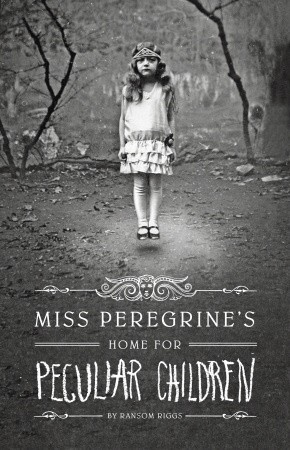
This book really isn’t the most innovative or inspiring piece I’ve ever read. However I absolutely love the idea behind the way it is written. The author Ransom Riggs began collecting photographs a few year ago, frequenting flea markets, and cheap second hand store where such items could be picked up for next to nothing. The more this hobby developed the more he wondered about the stories behind these intriguing photos, with no way of tracing these people and finding out he decided to create the story himself.
The story itself is quite good fun. The main character Jacob is a teenage boy, struggling to comprehend his life following the untimely death of his grandfather, who died in Jacobs arms having been mauled by a mysterious creature. Jacob is plagued by nightmares, haunted by his grandfather seemingly nonsensical dying words and finds himself falling into a deep depression. In an attempt to come to terms with what has happened to him Jacob travels to the only place he feels may uncover the mystery behind his grandfathers death, and puzzling last words. What follows takes the reader to an abandoned children’s home on a remote Welsh island, which on closer inspection turns out to be not so empty after all.
I don’t feel it necessary to go into any greater detail with this book as there is nothing, other than the photographs, that makes it really stand out for me. It was a rather fun way to spend a rainy afternoon, and I didn’t feel the need to give up reading part way through, but I don’t think I will be going out of my way to read other things by Riggs.
That said I think writing a story around interesting photographs is an absolutely genius concept, and I commend Riggs for coming up with the idea. I just don’t necessarily think he was the right man to write the story.
Overall it’s not a bad book, nor is it particularly good.
The making of a very thoughtful evening
The Little Prince ― Antoine De Saint-Exupéry

First published in 1943 this sweet little novella is the most famous work of Antoine De Saint-Exupéry, and has been translated more time than any other book in the French language.
This is another book I found nestled cosily amongst our bookcases one evening. It’s a tiny little thing so I decided to spend the evening getting to know the Little Prince hidden within it’s pages a bit better.
The Little Prince seems at first to be written for children, but there is a very obvious philosophical message behind the story. I feel that on this level the story has appeal to both children and adults, anyone sat reading this book with a child on their knee is sure to enjoy it just as much as the little one.
Saint-Exupéry tells the story of a very thoughtful chap, who as a child learned only to draw boa constrictors from the inside and outside, and was terribly upset to find no one else fully appreciates his artwork.
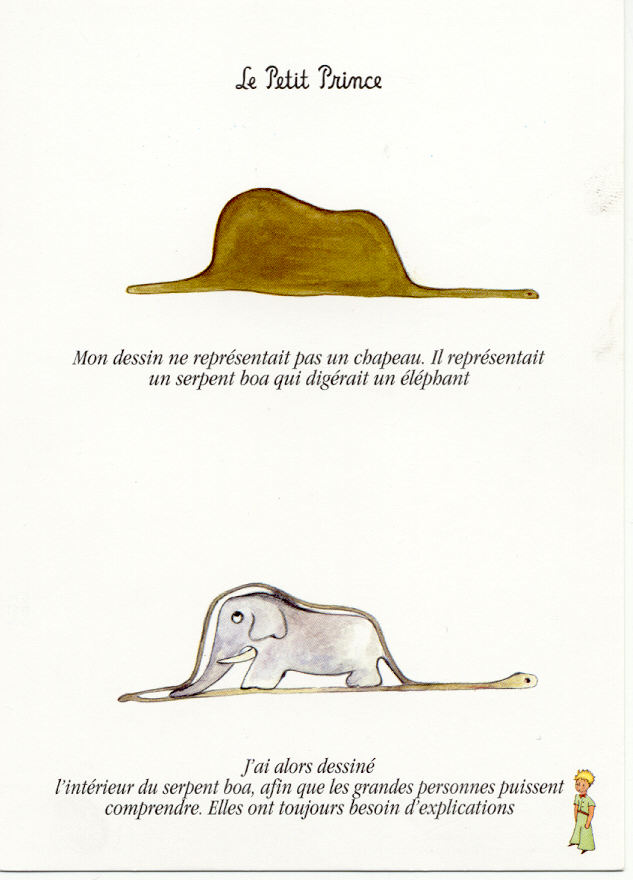
As an adult the voice of the story becomes stranded in the desert, and makes an unlikely friend. Someone who finally understands his drawings of so long ago – ‘the Little Prince’.
This charming little story traces the tale the Little Prince has to tell, of his travels across the universe, before finding his way to earth, and to our humble narrator.
The Little Prince visits many planets on his travels, mainly inhabited by a single person. Each character is more ‘odd’ than the last in the eyes of the Little Prince. A king – Obsessed with giving orders, A businessman – obsessed with money, A drunk – obsessed with drink and his own misery. The Little Prince continues on his travels, never fully understanding the people he has met along the way.
Behind Saint-Exupéry’s dear little story, there is an allegory of the human condition. The inhabitants of these planets are so preoccupied with the things that seem so strange to this innocent little mind. Not one of the people the Little Prince encounters is able to make a valid argument for the importance of his work. While the Little Prince cares only for doing what makes him happy, about asking questions, and caring for his possessions back on his own planet, including the love of his life -a beautiful rose.
Overall I found The Little Prince to be quite a satisfying read. It’s a short book, and can easily be enjoyed all in one go; in fact I found that once I started to read it I didn’t want to stop until it was finished. The book appeals to me on a many levels, I think it is a lovely little story for children ― I also think a fair few adults will enjoy the story for what it is ― but I also really enjoyed the allegorical side of the tale.
I’m fairly sure I said I will ‘try’ and upload one review a day. This one’s only 11 days late!
The Thirty-Nine Steps ― John Buchan

John Buchan published this little novel in 1915. The newest edition has been published as part of Penguin’s Great Books for Boys collection, and it really is a great book for boys. On a side note, I actually came across this hidden on my partner’s book shelf, a lovingly inscribed present from his grandfather.
I have heard elsewhere that everyone has an inner adventurer that will love books such as this. While this may be true for some, I think it is misleading to say everyone loves an adventure. If you do however, this is the book for you.
The Thirty-Nine Steps is set four weeks before the commencement of World War I. The story is that of Richard Hannay and his unlikely entanglement in a German plot to steal secrets from the British military. The story begins with Hannay lamenting on how boring life has become, and wondering if leaving the country would award him a more exciting life. This all changes when Hannay meets for the first time his upstairs neighbour.
The neighbour, Scudder, confesses to Hannay that he is in grave danger and in desperate need of a place to hide. Scudder is a US spy with knowledge of an assassination attempt, due to take place on June 15th, which if successful will ravage Europe. Hannay believes Scudder and decided to help him out. However, when the very next day Hannay arrives home to find scudder himself has been murdered, he realises just how much trouble he is landed himself in. With both the police and the killers after him, Hannay decides to go on the run until the assassination is due to take place, with the hope of stopping murder before it’s too late.
Hannay is chased through England to the harsh Scottish wilderness, pursued by a mysterious aeroplane, as well as the London police. The novel follows Hannay through exciting chase scenes and incredibly narrow escapes, all while Hannay tries crack the code in Scudder’s diary – the key discovering where and when the assassination will occur. Hannay discovers the kindness of strangers who prove invaluable to his journey. An adventure loving reader will be kept engrossed by the mystery of “the thirty-nine steps”, Hannay must discover the meaning of this riddle in a race against time.
While this book isn’t necessarily the sort of thing I would normally choose to read, I did actually quite enjoy it. Although I do feel it’s more of a boy’s book – I think it would make a fantastic gift for a young boy who loves to read. I won’t spoil the ending; nothing ruins an adventure like a spoiler.
One of the things I particularly enjoyed about this book was the attention to detail Buchan used when describing scenes and people. I love the way Hannay can go from looking like a fine upstanding gentleman, to a dishevelled traveller, to a weathered road worker, and back again while all the time his image is kept meticulously clear in your mind.
I cannot stress enough that this is definitely a book for adventure lovers, and I feel it may also be appropriate for those with an interest in World War I. Having been set around the time of the war itself it may be interesting to examine the novel in relation to history. Buchan is said to perfectly capture the feel of the time period.
 Jade the Obscure