Fardwor, Russia! A Fantastical Tale of Life under Putin – Oleg Kashin

“I predict we will abolish suffering throughout the living world. Our descendants will be animated by gradients of genetically pre-programmed well-being that are orders of magnitude richer than today’s peak experiences.” ― David Pearce

Fardwor,+Russia!+by+Oleg+Kashin+-+9781632060396
Translated by Will Evans, Restless Books, 12 January 2016, 224 pp, ISBN 978-1-632060-39-6 £9.99 paperback

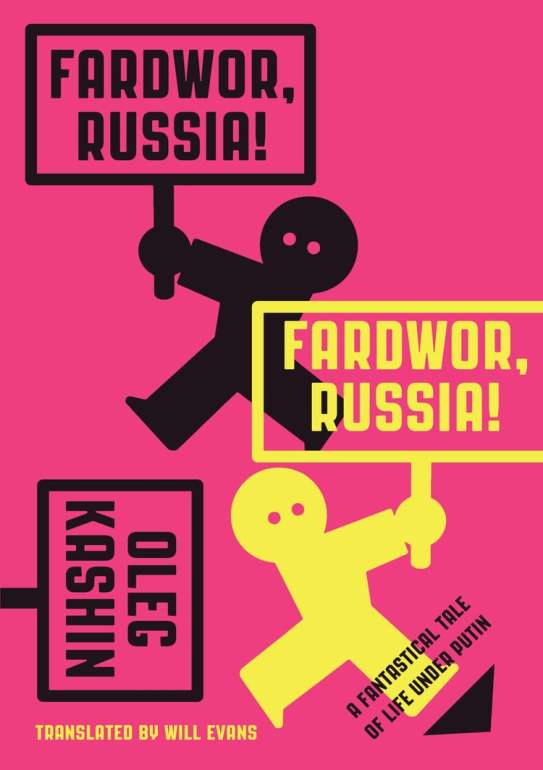
Oleg Kashin is a rather notorious Russian journalist whose open criticism of the Putin government may or may not have motivated unknown assailants to beat him to within an inch of his life back 2010. You’d think such an event would put the dampeners on a guy, but apparently Kashin was undeterred and returned full force to publish his first work of fiction, Fardwor, Russia! A Fantastical Tale of Life Under Putin, in Moscow, just two months later. Now, in a new edition translated by Will Evans, Fardwor, Russia! has been made available for international audiences with a taste for controversial political satire. The ridiculous sci-fi dystopia nestled within the garish pink cover bears more than a slight similarity to Russia under Putin and, with new stories of corruption in the Kremlin making the front page of international news sites each month, it has never been more topical.

The main protagonist of Fardwor, Russia! is Karpov, an enthusiastic young scientist who, with the help of his deceased grandfather, invents a revolutionary new growth serum that actually works. In an old wooden shack, which serves as a makeshift laboratory, Karpov spends his days experimenting on common sewer rats and creating unspeakable monstrosities, while his long-suffering wife, Marina, sits mournfully in their dusty apartment lamenting a life left behind in Moscow.

Delighted with his results, Karpov begins offering the serum to local farmers, promising fully grown livestock in exchange for new-born piglets and calves, before tracking down a circus midget. Unfortunately for poor, deluded Karpov he is wholly unequipped to deal with the full force of his discovery, and before he can reap any rewards all hell breaks loose. The meat industry is furious with the prospect of cheap meat resulting from an abundance of livestock; a dwarf oil oligarch makes use of the serum before running away with Karpov’s wife; and a giant cat goes on a rampage and eats a man’s face and heart. But it is not until the professional scientists get hold of the serum that things get really ugly.

Fardwor, Russia! is wonderfully strange and fantastically frightening, a gruesome yet hilarious tale of genetic engineering gone awry, combined with a grim political parable of the danger of power in the wrong hands. A ludicrous satire with a serious twist – Fardwor, Russia! is a must read those with an interest in Russian politics, or fans of science fiction that borders on the ridiculous.

This review was first posted on WordPress for E&T magazine.

Murder in Retrospect – Agatha Christie

“Nothing whets the intelligence more than a passionate suspicion, nothing develops all the faculties of an immature mind more than a trail running away into the dark.”
― Stefan Zweig

This is my first experience of Agatha Christie, courtesy of my good friends Prudence and the Crow. I will read just about anything, but and while I love a bit of mystery, murder mysteries don’t often cross my radar. Of course, I am familiar with Christie’s work – you can’t very easily go through life without hearing a thing or two – and have seen the odd film or TV adaptation of the famous Hercule Poirot, but that’s about it. In fact, it never even really occurred to me that I hadn’t read any of her work until I received this book. In signing up to PATC I wanted to widen my readership and force myself to discover new books, and this is exactly what I got.

2755981666_c9e5754e58_b

Amyas Crale was murdered, poisoned in fact, of that there is no doubt. But who placed the poison in his cup? This is the question Hercule Poirot is hired to answer, some sixteen years after Amyas’ wife, Caroline, was found guilty of the murder. The couple’s daughter, Carla Lemarchant, approaches Poirot to investigate after receiving a letter from her mother, written just before she passed away, protesting her innocence. Poirot willingly accepts the case, but soon fears that it may be just as clear cut at it originally appeared. All leads seem to point Caroline, but something’s not quite right. It’s up to Poirot to revisit the past, and solve a murder, in retrospect.

Murder in Retrospect was published under the name of Five little Pigs in the US, whether or not this changes your understanding of the novel I cannot say, but for me, at least, it was a bit of a dead end. The ‘five little pigs’, alluded to in the American title, are the five suspects in the murder case – Amyas’ good friend, Philip Blake; Philip’s brother, Meredith Blake; Amyas’ mistress, Elsa Greer; Caroline’s younger half sister, Angela Warren; and Angela’s governess, Cecilia Warren.  Each suspect is represented by a different little piggy from the well-loved nursery rhyme I’m sure you are all familiar with – and they vaguely fit into these roles, Elsa Greer, the greedy little swine with whom Amyas is said to be madly in love, is the piggy with the ‘roast beef’, for example.  “This little pig went to market, this little pig stayed at home…” Poirot mutters to himself, briefly profiling the different suspects, as Carla explains the background of the murder case. Really, this is as far as the Five Little Pigs analogy goes – it doesn’t really add much to the story, it’s more just comes across as an odd little mannerism of Poirot’s. There is, of course, no evil, murderous pig in the nursery rhyme.

When reading a mystery novel, half of the thrill is in trying to work out the answer for yourself, and generally speaking, it’s quite easy to spot the different motives characters might have for wanting knock off the murder victim. This book, though, is a bit different. From the very beginning it’s difficult to comprehend exactly how Caroline Crale could possibly be innocent – she was furious with Amyas, she threatened to kill him, she served him the beer which dealt the fatal blow, and, no one else really has a motive. The only thing which doesn’t add up is why, if she was guilty, Caroline would suddenly attempt to reclaim her innocence on her death bed. Why would she write a letter to her daughter asking for her to find the truth, if indeed she was guilty? It is almost infuriating to read, because it seems so obvious for Caroline to be the one who poisoned Amyas, but of course, no mystery novel is complete without a mystery, and so it must be one of the other five – but how?

The book follows the classic structure of a mystery, but with one key difference – Poirot never actually visits the scene of the crime, and relies instead on just the testimony of the suspects. As an inspector Poirot is perhaps best known for this. So, in this case, Christie chooses to exaggerate Poirot’s main character trait, by having him to solve a crime completely in retrospect, sixteen years after it took place, with only the, somewhat blurry, statements of those involved. This requires revisiting the day of the murder through the minds of the five suspects, and as such, the reader must reread the same story over and over again. I normally hate it when authors choose to write a book from two different points of view, with alternating chapter retelling exactly the same scenes – get on with it already! – but in the case of a crime scene I think it works really well. With each retelling of the story, another piece of the puzzle is added, creating a richer image of the scene, and leading the reader, as always, to the wrong conclusion, before the true murderer is finally revealed.

My overall opinions having finished the book are definitely positive; Murder in Retrospect is a creative twist on a traditional murder mystery novel which is sure to be a hit with fans of the genre. It took me right until the end to solve the puzzle, and I was lead of a marvellous goose chase throughout, falling into each and every trap that Christie set – what more could you ask for? I’m sure I don’t need to recommend Agatha Christie to anyone, if you are a fan of murder mysteries then you will undoubtedly like this one – but you already knew that, didn’t you?

I would be lying if I said I didn’t enjoy reading the book, but I’m not sure whether I will delve further into Christie’s vast repertoire. It is easy to see why there has always been such a strong following of murder mysteries and of Christie in particular – there is certain thrill in trying to solve a puzzle before the detective which can be somewhat addictive – but I’ve never really been particularly taken by the genre as a whole. On the whole, it was interesting to experience Christie’s work for the first time, but I think, for now at least, the case is closed for me.


Just Draw It! – Sam Piyasena and Beverly Philip

“Every child is an artist. The problem is how to remain an artist once he grows up.” 
― Pablo Picasso

I met up with Search Press at last year’s London Book Fair and they kindly sent me a copy of one or two of their books to review. Among those I received was Just Draw It! The dynamic drawing course for anyone with a pencil and paper. Get prepared for a rather lengthy, creative review!

51WV4N8s4sL

Just Draw It! begins with a short note, explaining the aim of the book, which serves as a beautiful insight into the background, as well as the dreams and aspirations, of the authors. In creating Just Draw It! Authors Sam Piyasena and Beverly Philip planned to help people revisit their childhood, and to rediscover and nurture their dormant creativity. They explain that they both loved drawing from a young age – “Both of us spent most of our childhoods bent over a sheet of paper with a pencil in one hand and a glass of lemonade in the other” – and that, for them, time spent with a pencil and paper served as a form of escape, as well as a way of making sense of the world around them. This, they suggest, is common in many children, but is often lost as a child gets older and the focus in school shifts towards reproducing the realistic, rather than exploring creativity.  At this point, that which once provided joy and freedom can be lost, and many people go through their adult lives thinking that they cannot draw.

In writing Just Draw It! the aim was clear – to provide a way of allowing people to reconnect with the simple, unadulterated pleasures of childhood, and learn to enjoy the simple act of making marks on paper.

Just Draw It! begins with the basics, exploring simple line and mark making, the ‘very heart of drawing itself’. A series of tasks explore making lines through different mediums, focusing on how the simple action feels. The artist is encouraged to draw using ink and sticks, make marks in the sand, draw on windows and create simple line images.

As the book progresses, light and dark, dimensions, form, movement and texture are all explored, allowing the artist to rebuild their knowledge of art by beginning with the very basics, and working up. The focus is never on the realistic – but on the process itself.

The final chapter is perhaps the most exciting, as it is completely dedicated to creativity. There are some amazing activities to be found nestled in the back of the book, graffiti, drawing from dreams, overlapping, sketching with your eyes closes, combining textures – there is so much to explore.

I had an amazing time using this book – it was so much fun to discover so many methods of creation that I’d never tried before, even as a child. I was also able to involve my friends in some of the activities, which was a definite hit during social occasions. I’m not the most artistic person in the world, but I do really enjoy getting creative when the opportunity arises. I can be quite shy, but if this book has taught me anything is that it is that it really doesn’t matter what my drawings etc look like.

So, I’ll share a few of my pictures with you.

The very first task in the book is to attach a large piece of paper to the wall and put on a piece of music to listen to, then, with your eyes closed, to allow the sounds to inspire your movement as you begin to make marks. Initially I didn’t have a large piece of paper so I used a page in my sketch book and a pencil, and then later revisited the task with a torn up paper bag and a box of oil pastels (they were always my favourite medium). I really loved having the freedom to just do whatever I wanted, and was actually quite pleased with the results of this task – I’ve even had a few guests comment on my art work, which is still pinned to the wall in my reading room where I first made it.

Another task in the lines and marks section was to create a simple line drawing and then trace over the lines with ink before blotting the original to make a copy. This task didn’t quite go according to plan – I think my initial paper was too absorbent – and I ended up with a rather smudged copy in my sketch book. The ink also passed through the pages and made another, fainter copy, which I then traced over to create a second copy. Even though this didn’t go as it was supposed to, I really like the result – and I absolutely loved using ink for the first time. There was something really satisfying about the fluidity of the pen nib and the ink and it passed over the paper.

I asked a friend if she wanted to accompany me down to the woods for this next task. We wandered down to my local nature reserve, armed with a huge sheet of paper and a pot of ink, and got ready to unleash our creativity. With the paper pinned to the uneven ground using dirty rocks, and with an assortment of sticks, twigs and other plant material at the ready, we let loose, doodling, stamping, splashing and dripping to our heart’s content. It was so much fun, and I now have another interesting piece of artwork to show my guests.

This next task was also carried out with a friend – ‘Just a minute’ – the idea behind this is to draw the profile of a person, with whatever medium you like, in just 60 seconds. My friend and I had spent an exhausting afternoon preparing for a dinner party before we sat down with a large glass of red and decided to draw one another – later on we drew one of the dinner party guests together, I started the image and she finished it.


The last piece I’m going to share with you is from the final, super creative section of the book, and was by far my favourite activity. This one involved using sharpies, or markers to deface, or add to, images in a magazine. Again, I sat down to do this with a friend, we actually managed to fill up an entire afternoon with repurposing (read – destroying) black and white photos from old copies of the New Statesman. Here are a few (many) of our creations.

It actually pains me to write this, given how much I love this book, but I do have just have one small gripe – this book is definitely not for ‘anyone with a pencil and paper’ as the titles claims. In fact, there are a lot of tasks which require some pretty specialist art equipment, the sort of stuff that art students and fanatics might have lying around, but those wishing to revamp their creativity probably won’t. Needless to say, armed with my tin of pencils and new sketchbook I was pretty ill equipped for what this book had in store for me. If you want to complete the book in its entirety you may find yourself having to invest in canvasses, sewing equipment, permanent markers, fine liners, polystyrene cups, Indian ink, paint, paintbrushes, conte crayons and a putty rubber (whatever that is).

On the whole, I think this book is something really special. If you want to revisit your childhood, and explore a lost love of art and drawing, or even if you are casually interested in drawing and want a fun project to complete, then this is definitely the book for you. I also think this book would be a good addition to any budding artist’s bookshelf; it is full of great ideas for exploring different mediums and methods of creation. I’ve said it before, and I’ll say it again, I had a great time trying this book out, and I am definitely going to keep using it.

I received a free copy of the book from the publishers in exchange for an honest review, all opinions are my own.
 

Short Works – Ross Tomkins

“Trees are poems the earth writes upon the sky, We fell them down and turn them into paper, That we may record our emptiness.” ― Kahlil Gibran

9780262162555However uninspiring the title, Short Works, may appear, this is much more than just a book of poems, translations and short stories. The work nestled within this simple cover, accumulated over five decades, is nothing short of a literary treasure trove. It makes me wonder whether there is perhaps something more to the title Short Works – is this just a literal description of the contents in its rawest form, or does it mean something else? The works are really not short at all. I would go so far as to say they are relatively ‘long’ works. While the reader could easily make short work of reading the book – I myself succeeded in a lazy afternoon – it is clear that the author took more than a little more time in writing the book. Perhaps I’m looking too much into this – but I like to think that the, perhaps somewhat dull, title has a deeper meaning, one which alludes to something of the comedian in the author’s personality.

The first half of this book is a collection of poems, past and present, which speak volumes as to the life of the author. Tomkins’ wonderfully melodramatic and fantastic younger years overflow with the essence of youth, while largely avoiding the embarrassment of childhood innocence. Later years fall into the metaphysical, the metaphorical, and the philosophical. The works clearly span not just decades, but continents, and more than one or two frames of mind, exhibiting a truly unique voice, at times jumbled and jarring, at others fantastically vivid, presenting creatures, settings, times and places that form and reform before your eyes, like images from the screen of Disney’s Fantasia.

The author’s words are at times beautiful:

Under an opal moon
Metallic scorpions scuttle

Toad winks, blinks, and gulps
Wings sticking tattered to damp lips.

At others morbid:

I remember hide and seek
And a dog dead under a bush,
Its pebble-teeth scattering the path,

But always, above all, vivid and resounding.

I was delighted by the section given over to ‘Poems from Poems’ – although I can’t be sure, exactly, what Tomkins means by this. I imagine this section is where translations and found poetry come into play*. I absolutely love constructing poetry from other poetry, it has a charm all of its own, and I like to think that the author shares and has explored this passion. A story does not need to have a meaning before it is written, sometimes, it is in the writing that a meaning is born. This section of the book goes to show just this.

The section of short stories is perhaps the most difficult to pass judgment on – with so much content, how can you give adequate coverage to everything? On the whole, Tomkins’ short stories are well-written – remarkably well-written in fact – concise, intricate, and beautifully flowing. The works really bring character and setting to life, with the imagery exhibited in the poetry brought to a whole new level, delivering a picture the reader can really see. The stories are so open to interpretation, leaving their mark and giving the reader something to think about long after they have turned the final page. The characters, each unique in their own way, have hidden secrets, desires and aspirations that the text can only allude to, a mystery which can only be imagined, a silent, niggling message which can never be fully understood. I love the power of the short story to make you think, fill out the characters and create your own story, within the verbal landscape of the author.

I was particularly taken by ‘The Sands of the Sea’ – although ‘Mr Lippstadt’s Holiday’ was certainly not without its charm – being drawn in firstly by the delicious descriptions of Ferdy’s newly found bookshop. I was delighted by the description of the books as living creatures, hopping from shelf to shelf, following Ferdy on his search, as though desperately excited at the prospect of purchase. The last book, however, is something more insidious, with the elusive work crawling through the bookcases before coming to rest, like some predator, to lie in wait, inconspicuously, silently, on a final dusty shelf.

“And what rough beast, its hour come round at last, Slouches towards Bethlehem to be born.”

Overall I found Short Works to be refreshing, thoughtful and surprisingly readable. While undoubtedly magnificently written, this book is not self-important or difficult for the sake of difficulty. The poems and short stories alike are sure to delight wordsmiths, and leave the reader with one or two things to think about.

* Explanatory note from the author: ‘What they are in fact are translations in the form of condensations where I hope I succeeded in cutting away fluff and padding to get at the raw heart of the poems – pushing towards the interplay of images and away from the explanatory.’

New year, new update!

Hi boys and girls!

I hope you all had an amazing Christmas and New Year with your loved ones.

I know, I know, I suck! I’ve been really rubbish the last month and haven’t posted a single update!

You see…

The run up to Christmas was insanely busy, what with 12-week reviews, gift shopping, chest infections, and preparing for a long-haul flight (which, it turns out, makes me rather anxious), and I very much needed to take a little time off – I do hope you will forgive my radio silence!

Excuses, excuses.

In other news, we’ve just come back from an amazing few weeks in Hong Kong!

In my time away I drank Champagne in the highest bar in the world, got purposely elbowed in the face by a Chinese woman, fell over – twice, saw a real life giant panda, and ate more strange things than I would care to admit (sea cucumber is definitely an acquired taste).

But you didn’t come here to read about my festive antics, did you?

You’ll be pleased to hear that in my absence I surmounted quite the pile of books to review, so I’m going to have a very busy start to the new year. It’s a good thing I am feeling so wonderfully refreshed 🙂

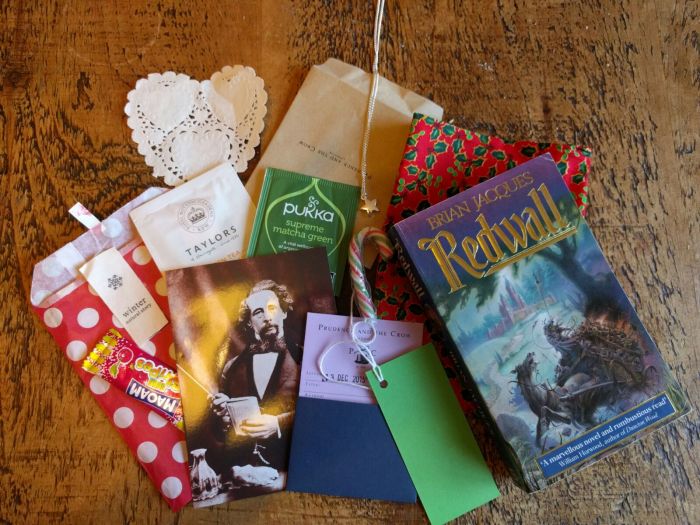
I also returned to some very welcome packages from my good friends Prudence and the Crow!

November’s box

IMG-20151120-WA0000

December’s box

IMG-20151227-WA0001

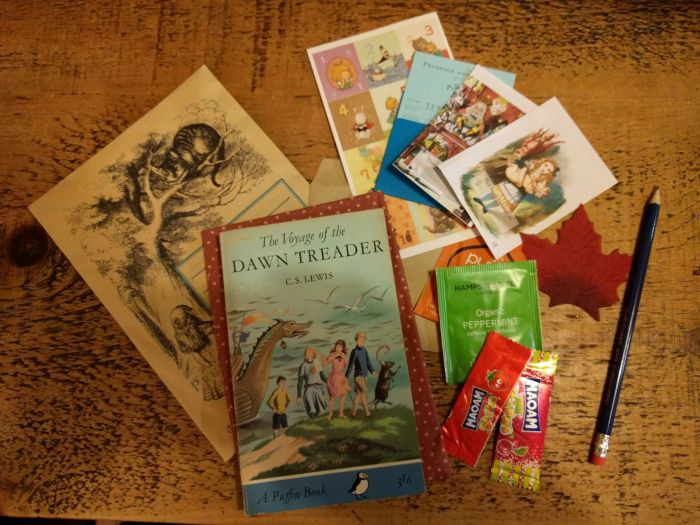
While I’m over the moon with both my books, I’ll be placing November’s choice on the bookshelf for now, purely because I reviewed all the Chronicles of Narnia not that long ago, but I can’t wait to get started on December’s choice:

Redwall – Brian Jacques

It is the start of the Summer of the Late Rose. Redwall Abbey, the peaceful home of a community of mice slumbers in the warmth of a summer afternoon. The mice are busy preparing for the great Jubilee Feast. 

Bust not for long. Cluny is coming! The evil one-eyed rat warlord is advancing with his battle-scarred mob. And Cluny wants Redwall. 

Needless to say, I am thrilled with the prospect of another vintage children’s book to sink my teeth into – especially as it comes with a personal recommendation from Prudence.

IMG-20151227-WA0000

Here’s wishing you all the Happiest of New Years 🙂

There will be many, many reviews to follow.

@War: The Rise of Cyber Warfare – Shane Harris

“The separation between the cyber and the physical worlds was disappearing. Cyberbullying was just bullying, and cyberwar was just war – the true age of cyber began when we started removing it as a descriptor.” ― Matthew Mather

isbn9780755365180-detail

In April 2009 Chinese military hackers intercepted the Pentagon’s cyber security systems and gained access to huge amounts of information on the US Defense Department’s costliest weapons programme ever, plans for the United States military’s most sophisticated fighter jet yet – the $327 billion Joint Strike Fighter Project. Known as the F-35, the jet was the most complex military weapons system ever devised, planned to ensure US’ continued domination of the airways for many years to come. But when the hackers struck terabytes of top-secret design information was compromised, and the US immediately lost the upper hand.

Welcome to the world of cyber warfare.

The spies had come without warning. They plied their craft silently, stealing secrets from the world’s most powerful military. They were at work months before anyone noticed their presence. And when American officials finally detected the thieves, they saw it was too late. The damage was done.

The world is changing – and it has never been more apparent. Now, the majority of transactions, be they monetary of otherwise, take place online, bringing forth a new realm which needs to be governed and protected. In the US, military protection is no longer limited to land, sea, air and space, but now cover a whole new fifth domain – cyberspace.

In this timely new release author Shane Harris provides a complete and comprehensive history of the rise of modern warfare in the US – a world where wars no longer take place just on the battlefields of Iraq and Afghanistan and soldiers are no longer limited to those brave souls risking their lives on the frontline. The United States no longer needs to protect just its physical assets, but a wealth of data stored online, and in government and military networks. The country’s military now employs teams of professional hackers capable of launching sophisticated computer virus attacks against enemy targets.

The ability of hackers to intercept communications and steal information is just the beginning – with the majority of civil infrastructure present online, nuclear plants, hospitals, banks and airports are all at risk. Now, cyber-attacks come in all forms, and carry the potential to grind the US economy to a halt, and endanger civilian lives – hackers can take down aeroplanes, shut down power plants and cause serious malfunctions in natural gas pipelines. It’s time to open our eyes to the fact that, with the rise of cyber warfare, the next 9/11 could well be a cyber-attack.

In @War Harris presents a gripping and exceptionally topical investigation into the rise of cyber warfare. The reader is thrown onto the frontlines of this new cyber war, as Harris explains the relevance of new cyber-security regimes, not just for global giants like the US, but for all those who spend their days connected to the Internet.

This review was first posted on WordPress for E&T magazine

A Tale of Two Families – Dodie Smith

“But these backwaters of existence sometimes breed, in their sluggish depths, strange acuities of emotion” ― Edith Wharton

I’d never heard of this book, or the author, before I was asked to review it. In fact, I will confess to having thought it was a modern novel – as so many I am requested to review are. So I was surprised, but also not, having read the novel, to discover it was written in the 1970s. I was taken by the language and setting, and thought the portrayal of the time was done very well, but I also thought that is had a slightly modern feel to it. This has led me to conclude that Dodie Smith was somewhat ahead of her contemporaries in her writing style.

A Tale of Two Families – Dodie Smith

‘This is going to be a long five minutes’ walk,’ said June.

May thought this possible as there was still no sign of any house, but she continued to find things to praise: the overgrown hedges, the tall, still-dripping trees, the brilliant green of the grassy verges, the freshness of the air. And after several more bends in the lane they saw a white wooden gate standing open. Once through this they looked across a large, circular lawn surrounded by a gravel drive. And now at last they were face to face with the house.

‘Much too large,’ said June.

51QWhoqlqpL._SY344_BO1,204,203,200_May and June are devoted sisters, married to equally-devoted brothers, George and Robert, and even after more than two decades of marriage the four still thoroughly enjoy each other’s company. So when May and her highly-successful husband commit to a five-year lease on a huge, decaying manor house out in the country it seems only natural that they should persuade June and Robert to accept, rent free, a cottage within the grounds.

The two families leave London and, once joined by two not-quite-stereotypical grandparents, and blessed by regular visits from their respective children, begin to thoroughly enjoy their new experiences. Any initial qualms about leaving the city are lost in blissful hours spent wandering through the lilac groves, listening to the birdsong of the resident nightingale, absorbing the country air and indulging in May’s excellent cooking. The only thing that could possibly distress this perfect equilibrium is the compulsory visit of dreaded Aunt Mildred aka ‘Mildew’. Eccentric, annoying and thoroughly too young for her age, Mildred delights in secret dramas, regardless of their truth, or the harm that they may cause.

First and foremost I was absolutely delighted at Dodie Smith’s portrayal of country living. There are few things I love more than day-dreaming of a blissful, quiet life somewhere remote, with only the smell of flowers, birdsong, and the thought of bare-footed, early morning strolls through dew-soaked grass to trouble me. Even though Smith’s portrayal comes through the eyes of a somewhat dysfunctional family unit it still felt to me like a kind of absolute heaven, although perhaps a less than traditional view of heaven . I was so taken by the setting, from the second May and June arrived at the manor house, on a day in which the house and ground were engulfed by a stereotypical English downpour. The rain could not put me off, there was a magic in the dripping of the tree-lined driveway, and the impression of the foreboding, unloved Dower house, standing cold and resolute against the elements, and when the washed-out introduction gave way to pure, unadulterated spring bliss I was smitten. The whole book is brimming with lilac groves, quaint woodlands, blossoms, sundials and mounds and mounds of asparagus and strawberries – I loved every single second of it.

This is a book where characters are really central to the plot, I know characters are important in any story, but here it is the development of the characters that drive the story forward. Smith clearly had a talent for creating quirky, yet believable characters. Each and every character that passes through the estate has some kind of secret, inner passion or frustration. From the sensual Corinna, who is well and truly tired of waiting for saintly Hugh to make a move on her, to the quietly frustrated Robert, who, try as he might, cannot get his next novel on paper. Mildred inspires the release of these frustrations, allowing characters true desires to take form, while undoubtedly an expertly crafter character in her own right, her primary role is to serve as a catalyst for development in others.

In this way the story is very much in the moment, and in the experience, of two families shared existence. The day-to-day happenings in the Dower house are all at once endearing, humorous, envy-inducing, and on the whole utterly ridiculous. Think about it, could you really imagine your parents moving in with your aunt and uncle? Or yourself moving in with your sister/brother and their significant other? Regardless of how close knit a family you come from the situation is really rather odd. The book reads like an extended summer holiday – beautiful in its own way but very much temporary. I get the impression that, in the end, both families might actually quite like to return home.

All in all I thoroughly enjoyed reading A Tale of Two Families, and would be interested to look up Smith’s other works in the future. I found the book to be a perfect, relaxing afternoon read – it left me feeling pleasantly fulfilled, and without the emotional torture than comes from a horrific book hangover. That said, if you like a bit more substance to your books, there is definitely potential to delve a little further into the hidden meanings behind characters’ actions. On the whole, would recommend, whether as a casual afternoon read or a more in depth book club selection.

I received a free copy of A Tale of Two Families from Hesperus Press in exchange for an honest review.

The Mouse and His Child – Russell Hoban

“A clockwork heart can’t replace the real thing.” ― Dru Pagliassotti

I received this book in my August Prudence and the Crow box, the book selection was a fantastic bit of luck, as I’d been really craving classic children’s literature – between you and me I’m becoming more and more convinced that Prudence and the Crow are able to read my mind. From the a quick look at the front cover and the name alone – I know, I know, never judge a book by its cover, right? – I was expecting story about a mouse that fell in love with a windup mouseling. I’m sure you get the idea, something similar to Pinocchio, but English – so, perhaps with afternoons spent playing in dolls’ houses pretending to drink tea. I could not have been more mistaken, but, far from being disappointed, I absolutely loved it.

The Mouse and His Child – Russell Hoban

“Where are we?” the mouse child asked his father. His voice was tiny in the stillness of the night.
“I don’t know” the father replied.
What are we, Papa?”
“I don’t know. We must wait and see.” 

the-mouse-and-his-childOn a cold winter’s evening a tin father and son emerge from a box to stand on display in a toy shop window. Outside the cold wind blows and tramp passes by, momentarily taken by the sight of the toys. Brand new, and confused, the mouse and his child struggle to comprehend what it means to be windup toys and the thought of the life that lays before them makes the poor child cry.

It is not long before they are swept away, bought by a family, destined for a life spent dancing beneath the Christmas tree – the life of a windup. It is a simple life, spent quietly fulfilling their duties; until they break the ancient clock-work rules and must face the consequences.

Discarded in the snow the mouse and his child begin a wholly different journey than the one written for them. They are rescued, repaired by a tramp, and chased by a terrible force that would see all windup toys turned to slaves. Through all that they endure the mouse and the child wish for only one thing, a place to call their own – a magnificent house, a mother, and a sister.

I wish I could say that I had read this book as a child. This is definitely a tale that will take on an entirely different meaning, and gain resonance as a person grows older. I spoke about the book with a colleague when I had just started reading it, and he said that he loved it as a child, but upon revisiting it as an adult realised, quite simply ‘wow, this is really deep stuff’. I could try and say it more eloquently, but that is the bare bones of it. The Mouse and his Child is an incredible tale of quest and determination for children, and when viewed with an adult’s mind it is absolutely brimming with philosophical thoughts, lessons, analogies, and big, gaping questions about life.

“All roads, whether long or short, are hard,” said Frog. “Come, you have begun your journey, and all else necessarily follows from that act. Be of good cheer. The sun is bright. The sky is blue. The world lies before you.” 

The humanity of Hoban’s characters is truly incredible. The authors has taken windup toys and elevated them to the next level. Each toy, however minor their role in the tale, has its own unique drive and personality: the once-proud elephant, now plushless, and with the missing ear and eye patch; the tin seal, long separated from her colourful ball; the sweet child, forever asking questions, always looking, and understanding; and even the donkey – the poor, poor, donkey – who once dared to complain. These creatures may be made of clockwork, but they are no less human than you and I. They are exhausted, frightened, frustrated, despondent, sentimental, joyous, hopeful, and forever working towards their goals. Life throws its hurdles, and each one is tackled, even if it does take a short lifetime. Can you imagine what it would be like to spends years at the bottom on a pond? Through all this, they grow stronger, never losing sight of their aims, growing, learning and interacting with all whom cross their path. Just one more step, they will get there in the end.

The mouse and his child, who had learned so much and had prevailed against such overwhelming odds, never could be persuaded to teach a success course… The whole secret of the thing, they insisted, was simply and at all costs to move steadily ahead, and that, they said, could not be taught. 

The Mouse and his Child is a truly phenomenal children’s book, which has just as much, if not more, to offer to adult readers. I feel really thankful to have discovered this book, and look forward, truthfully, to a time when I can share it with the children in my life.

Millroy the Magician – Paul Theroux

“We do not need magic to transform our world. We carry all of the power we need inside ourselves already.” ― J.K. Rowling

My fiancé (oh yes!) recently finished reading this book and passed it on to me, insisting I read it my first possible opportunity. It didn’t take me quite as long to finish, he seemed to take months and months over it, but I can definitely understand why it might take someone a while to get through. The book is, shall I say, a little bit tricky. This is not a book you would want to attempt in a single sitting; it’s definitely one to take your time over.

Milroy the Magician – Paul Theroux

Our cheering drowned the music, but Milroy did not seem to hear it. He looked dignified, holding the flapping eagle, and he turned to me, and stared as he had before, and leaned over to where I sat in the second row.

Popping my thumb out of my mouth made the sound of a cork being yanked from a bottle.

Even through the cheering crowds his voice was distinct, as he said, ‘I want to eat you.’

So I stayed for his second show.

51WXvY4gl2LJilly Farina was nervous the day she attended the Barnstable County Fair. It was a hot, sticky Saturday in July and she was all by herself. Her Dada was black-out-drunk, so she went on alone, sitting at the back of the bus, quietly sucking her thumb, and thinking about what the fair had in store for her.

She had seen Millroy the Magician once before, he was famous for making an elephant disappear, and had once turned a girl from the audience into a glass of milk and drank her. Jeekers! But when Jilly stepped into the wickerwork coffin during a performance she had no idea that he would transform her life into something magical, and a touch bizarre.

You see, Millroy was no ordinary magician. A magical, eccentric, vegetarian, health fanatic, Millroy was set on changing the eating habits of the whole of America – Millroy could sense the future, and he knew that Jilly had a big role to play.

I was supposed to meet my father at the Barnstaple County Fair, and in a way I did, though he was not Dada.

Paul Theroux presents Jilly as a girl who is very young for her years. The world which emerges through Jilly’s eyes is that inhabited by a scared, lonely child. As a reader you enter the body of Jilly, and stand, absent mindedly sucking your thumb and stroking your ear, while dreamily drinking in the world around you. As a reader, you grow to know Jilly intimately, to understand her innocence and naivety.

It is really no wonder that Millroy chose her.

Jilly’s relationship with Millroy is an odd combination of love and fear, sometimes one, sometimes both, and often shifting quickly from one to the other. The relationship is, on the whole, slightly awkward. While it is obvious that Jilly dotes on Millroy they remain entirely separate beings, always together, but forever apart. It is obvious that she fears him, or at least she fears his magic, but at the same time loves him, as a father or perhaps something more?

Even odder is Millroy’s relationship with Jilly. If Jilly dotes on Millroy, then Millroy obsesses over Jilly. Linked to this is Millroy’s own obsession with food – he is determined to inform the American public of the evils of the American food industry, but more than this, he is obsessed with feeding Jilly.

Food is an underlying and overlying theme. The whole book is brimming with pottage, homemade bread, green tea, broiled fish and herbage. Try reading the book without in some way succumbing to the desire to be regular – I’m sure it can’t be done. I developed such an appetite for leaves! Millroy is forever chewing, munching or gulping some delectable healthy snack, while preaching the importance of a clean, fresh, healthy, regular lifestyle. At the same time, Millroy obsesses over the dark side of food, the insidious nature of the American food industry, the sweating, drooling, gasping, jiggling American population, stuffed full of fat, chemicals, meat and sugar.

If the American food industry is insidious, what is even more insidious is Millroy’s interest in Jilly. Why is he so obsessed with her? Why does he want to be responsible for ‘everything’ that goes inside of her? And why does he fall to pieces at the idea of losing her? It is almost as though he is in some way dependent on Jilly, not just emotionally, but physically, as though he is feeding off of her.

This is one of the oddest books I have ever read. It left me with so many questions, which I’m not sure have clear cut answers: Who is Millroy? What is the root of his magic? Does the magic pass on? Does it destroy the bearer? So many questions, and so many potential answers.

Millroy the Magician is a strange book – but one that I very much enjoyed reading. It is absorbing, without much action, and tense, without real drama. Each passage speaks volumes, without relaying much in the way of actual events. I feel as though the story is more of a journey in itself than an adventure – sure, Millroy travels across America and achieves amazing things, but in the end has much changed? Are Millroy and Jilly much different? Or have they merely switched roles?

On the whole, would recommend.

And yes, he did propose ❤

The Hard Word Box – Sarah Hesketh

“She almost thought she’d said the words aloud, but she hadn’t. They remained trapped in her head, but not because they were barricaded by plaques and tangles. She just couldn’t say them aloud” ― Lisa Genova

The Hard Word Box – Sarah Hesketh

thwb_smI found this book on the Penned in the Margins Facebook page and was automatically drawn to it. A poetry book based on someone’s experience of time spent in a dementia care home is something I have not come across before, and I felt as though the book had the potential to be something truly amazing.

I realised that what was most important, was not that Maureen used to like jazz, or that Bill had once been a butcher, but that Jack tells great jokes, Phyllis likes helping others to the table – that’s who these people are now. They are still living their live, and these lives are what need to be represented.

‘What would happen if you placed contemporary artists in dementia care settings and asked them to create responses?’ – this is exactly what Sarah Hesketh strove to find out, and The Hard Word Box is the result.

The individual pieces within The Hard Word Box are a combination of poems, interviews, short stories and anecdotes. The poems are made up of words and phrases included on care plans and posters, as well as those words spoken to Hesketh by the residents of the care home. One particular piece contains every word a certain resident said to Hesketh during her time in the home. The piece, ‘Elizabeth’, is incredibly poignant, spanning several pages, with the words few and far between, casual phrases in a sea of silence.

Of the three interviews Hesketh published, it is the one with Marlene, the sister of a dementia sufferer, which I found to be the most moving. She speaks at length about the stigma of dementia – which is of course, something that those with developed dementia cannot do themselves – as well as the seven years she spent caring for her brother as his mental state declined. Marlene spoke of how isolated she became once her friends began to draw away because they could not cope with her brother, and this, she says, is something she will never learn to forget. People fear dementia, and they are embarrassed by it, but this only makes it worse for those for whom dementia is a reality. Getting old is terrifying, not just for those who grow old, but also for the people left behind.

Reading The Hard Word Box was an incredibly emotional journey for me. I was reminded of the time my own grandmother spent in a dementia home, before she eventualllost her battle with old age. She was once the most motherly of creatures, always there to make a cup of tea and offer a warm blanket on a cold day. Once in the care home she was a very different lady, she no longer spoke much, and liked to fuss around in the sitting area, rearranging magazines, dusting shelves and continually wiping the care assistants’ names off the white board.

I could draw so many parallels to the stories and poems, not just from my grandmothers own situation, but those of the people I grew to know in Nanna’s care home. Elizabeth, who didn’t like cats, and just wanted Blanchy (her daughter, who never visited) to put that ‘thing’ outside; Grace, who, at 103 years old had spent her entire life in care; and a group of ladies whose names escape me, who, every afternoon, could be found sat in the television room, happily singing along to the radio. I could see so much of these times in Hesketh’s work, the high-backed chairs, sterile bathrooms and regimental bedrooms somehow at odds to the colourful array of personalities nestled within the care home.

Through The Hard Word Box, Hesketh has given a voice to some of the most outspoken members of society. The individual stories and poems are so sad to read, but it is beautiful to see the words as these people have said them. For me, Hesketh’s work is ground-breaking not in what it says, but in how it says it.

I’ve never read a book before which touched me in the quite the same way as The Hard Word Box did. Elizabeth is Missing, with its presentation of dementia, came close, but I felt safe in the knowledge that the book was fiction – written to make you think, but ultimately, to entertain. The reality of The Hard Word Box is something which really struck a chord with me – these people and their stories, lives and words are real. Hesketh made me feel a terrifying array of emotions: I felt cold, lonely, frightened and – ultimately – ashamed. Dementia is such a difficult subject, one that a lot of people simply do not know how to deal with. I will be the first to admit that I find it difficult, but I am learning. The words need saying, but they are, indeed, hard words to say.