‘The Fourth Industrial Revolution’ by Klaus Schwab


By definition, revolution means covering new and unknown territory and the ‘fourth industrial revolution’ is no different. What can we expect and how can we best utilise the new technology at our disposal?

9781524757403

The ‘fourth industrial revolution’: everyone is talking about it, but no one seems to really know what it is. Hindsight is 20:20, of course, and maybe things will only really become clear once we’re hurled full force into the fifth industrial revolution, which I can only hope will in some way involve alien technology. If you’d asked the textile workers of the 19th century to define the industrial revolution they’d probably have struggled, too.

While previous industrial revolutions brought about mechanisation, mass production, computer control and automation, the fourth industrial revolution is thought to be fundamentally different. Rather than focusing on a specific development or technology, the fourth industrial revolution encompasses a range of new and existing technologies that bring together the physical, digital and biological worlds and will be felt across all industries and economies.

It is thought that this dramatic leap forward in industrialisation will be felt across industries and will change the way that we live, work and relate to one another. In The Fourth Industrial Revolution, Schwab introduces us to the key technologies driving this revolution and discusses the effect that these will have on governments, businesses and citizens as a whole.

The book serves as more than just an introduction to a conflated term, though, as Schwab seeks to address the many societal concerns over developments within industry, as well as outlining what can be done to ensure that we make the most of this exciting, but largely unknown, new phenomenon.

Intelligent machines play a big role in any conversation about the fourth industrial revolution. For many, this is one of the most concerning aspects of this new wave of industry, aggravating societal fears surrounding the role of the human workers in the workplace of the future. Schwab discusses this area in great detail, striving to dispel rumours that factory workers will inevitably be displaced by robotics, and instead looks into how industries are developing practical applications to work alongside traditional workers. The rise of intelligent machines does not mean that we face a man-versus-machine dilemma, he says. In fact, in the vast majority of cases, the fourth industrial revolution will serve to enhance human labour and cognition, meaning that leaders need to prepare workforce and develop education models to work with, and alongside, robotics.

The main concern that seems to arise from Schwab’s analysis is that of societal control of the new wave of industry. The fourth industrial revolution has the potential to transform the way we live and work, but success rests in the combined hands of organisations, citizens and governments. If organisations fail to adapt and governments fail to adequately employ and regulate new technologies, we see ourselves headed down a very different path. With this is mind, Schwab calls on leaders and citizens to “shape a future that works for all by putting people first, empowering them and constantly reminding ourselves that all of these new technologies are first and foremost tools made by people for people.”

Schwab’s message is one of collaborative growth and how to best utilise the new technology at our disposal, while simultaneously addressing the challenges that go alongside – a sentiment echoed in the billing of the World Economic Forum Annual Meeting 2016, which was held under the theme “Mastering the Fourth Industrial Revolution”.

The Fourth Industrial Revolution is a fascinating, comprehensive and enlightening dialogue highlighting the many different benefits and challenges that humankind can expect as we move further forward into a new and unfamiliar wave of industrial development. Those with an interest in where we are headed as a society, but who find themselves overwhelmed by the synonymous talk of ‘Industry 4.0’, ‘smart factories’ and ‘factories of the future’ can hope to find their questions answered and concerns addressed by this illustrative and informative new publication.

This review was first published online for E&T magazine

‘Pyjamarama Funfair’ and ‘Pyjamarama Fever’ – Barrier-grid animation from Michaël Leblond and Frédérique Bertrand

Pyjamarama Funfair and Pyjamarama Fever, two fun new books from Thames and Hudson, introduce children to the wonder of animation in non-digital form.

In response to changing times, and rather picky customers, children’s author Michael Leblond and acclaimed illustrator Frédérique Bertrand have released this dynamic book duo, filled with awesome, printed animations and interactive pages, as the ultimate solution for when you cannot prise your child away from their smartphone.

These exciting new publications utilise an old graphic design technique to create a swirling, fun-filled world of moving pictures, without a hint of technology. In Pyjamarama Fever and Pyjamarama Funfair Leblond and Bertrand use barrier-grid animation, an effect created by moving a striped acetate overlay across an interlaced image, to create an optically illustrated world for children to interact with, and explore.

The Pyjamarama series tells the story of a little boy who puts on his pyjamas and turns out the lights to go to bed only to fall into a magical, dazzling dream world filled with bright colours and flashing lights. In the past Pyjamarama has taken children across the world to the sights of New York and Paris, but the newest additions to the series stay a little closer to home.

In Pyjamarama Funfair, our little friend finds himself in a magical funfair, where bright swirling lights, rampant rapids, twisting roller coasters and rough dodgems dart and dance across the page. In Pyjamarama Fever the same little boy is sent to bed feeling a little under the weather, before succumbing to a strange but dazzling delirium filled with strange shapes, shimmering stripes, swirling spots, and pyjama-clad firefighting mums and carwashing dads.

As our pyjama-clad hero dreams, children reading the book are able to interact with the images. Sliding the acetate sheet, which comes included with each Pyjamarama book, across the page brings the illustrations to life: cogs turn, lights flash, dots dance and waves flow with just a slight turn of hand. The images flickering across the pages, however simply explained, are pretty cool to say the least.

These innovative books are highly interactive and a great way of encouraging children to rediscover the magic of the printed word. The illustrations, which in themselves are pretty mesmerising, are awarded a whole new level of awesomeness when combined with the acetate sheet. It’s a simple, effective animation technique that children, and the majority of parents and carers, are sure to love – they certainly proved popular among the E&T editorial team.

So if you are looking for a new way to keep your children occupied outside of school, with the added benefit of giving them a break from digital technology and a chance to rediscover the magic of books, then look no further than a little Pyjamarama fun.

This review was first published online for E&T magazine

‘Atari Age: The Emergence of Video Games in America’ by Michael Z Newman

A fascinating historical analysis of the emergence and development of video games in America.

9780262035712_0

Retro video games have developed a real cult following over the years. In a time when on-screen graphics are frighteningly real, the simple, blocky pictures and monotonic themes speak of an era when consoles, and times, were simpler. Or were they?

Each time a Space Invaders remake is announced, there are more than a few people who insist on focusing on the negative side of our digital friends. In Atari Age, author Michael Z Newman looks at the impact of early video games on the American culture they grew from, as well as their effects, both positive and negative, on society. The history unveiled by Newman is remarkably complex – an evolution in content, design and public opinion.

The story begins in penny arcades, where leather-capped youths lined up for the likes of the fortune teller and peep show, before progressing swiftly along to the days of pinball’s reign. The emergence of video games and their eventual move into the American home, Newman says, was a process of evolution which began within the arcade.

While penny arcades and pinball soon fell by the wayside, video arcades gained popularity, evolving from a media seen as unreliable, due to their liability to break down and difficulty to fix, to one which inspired, excited and enthused American youths. Indeed, arcade games became such an important aspect of popular culture that, during the height of the game’s popularity, a single establishment in Piccadilly Circus is said to have had 10 Space Invaders machines all in a row and no doubt constantly in use.

To explain their popularity, Neman points to the adaptive nature of the video game. Unlike pinball, a video game gets harder as a player gets better, and thereby encourages greater investment. Indeed, the medium itself continued to adapt to the point where it soon outgrew arcades, a feat that pinball and penny slots never achieved, and made its home right in the heart of the American family. With the release of the Magnavox Odyssey and Pong and 1972, the family television became the new arcade.

As video games evolved, so too did public opinion. Whereas games seem to have developed almost naturally, changes in societal understanding have been far more complicated. The Magnavox Odyssey was originally seen as a device for turning the TV in a participatory experience, but this idea was quickly joined by fears that spending too much time playing games could be harmful. This is a swing we have continued to experience today, as games have evolved to be more ‘active’, but still bear the yoke of technological fear.

Using original marketing and advertising materials, Newman weaves an image of a two-way development of video games and public opinion. The book highlights the ever-changing face of media in the eyes of the American public, as it moved from an enjoyable medium, to something to fear, and back again. Newman’s technological timeline says as much about the society that video games emerged in as it does about power of the medium itself.

There is something nostalgic – or is it regretful – about this book, as though you are viewing the past through sepia-tinted glasses. The pages conjure up images of American families huddled round the comforting glow of the TV, or, perhaps the dusty grey screens editorialised in George Orwell’s 1984.

This is a book for those fascinated by sociological viewpoints of American society, but will likely sit well with fans of retro video games, if only for the novelty of 1970s gaming advertorial.

This review was first published online for E&T magazine

‘The Essential Digital Detox Plan’ by Orianna Fielding

Being constantly connected to digital devices can sometimes be more of a hindrance than a help, as Orianna Fielding discusses in this elegant new publication from Carlton Books.

9781780979052

I once met a man who would send framed photos of himself to all his friends and family every year as Christmas presents. Weird isn’t it? Why would anybody want that as a gift? Not so strange, though, is the idea of sharing photos of yourself on social media for, presumably, the benefit of your many friends and followers. Remove the computer, though, and the whole thing gets really quite peculiar. Could you imagine yourself having just got back from holiday, picking up reams of glossy 4 by 7 prints from the pharmacy, slipping them into individually addressed envelopes and sending them out for all your friends to see? I’m willing to bet not, because that would make you seem more than a little overbearing, and possibly lead to a few restraining orders. So why is it ok, encouraged even, to do this online?

In The Essential Digital Detox Plan: How to achieve balance in a digital world, Orianna Fielding explores this concept, and many more, as she delves into the strange world of new social media, and offers advice for those who want to have more control over their digital consumption habits.

We have reached a stage, Fielding says, where connectivity permeates every aspect of our lives. Texting and reading on smartphones rather than conversing with those around us is now considered the norm, and we are constantly connected to our work and personal emails at the expense of missing out what is happening around us. It is important to realise, she says, that having access to the world in the palm of your hand also means the world has access to you. Eurphoria at the ability to be connected at all times can quickly be replaced with a debilitating dependence on being connected at all times.

The Essential Digital Detox Plan provides advice for how people can take control of their digital consumption habits, rather than allowing their digital devices to have control of them. The suggestions included in the text range from introducing phone-free meal times and tech-free zones in the house to taking unplugged time out at work to engage in a five-minute meditation ‘snack’. For the most committed out there, the back of the book serves as a step by step guide to full digital detox, from one hour to the full seven days.

The overarching theme of the book is not just about disconnecting from digital devices, but about adopting a slower, more conscious approach to life. Fielding stresses the important of taking the time to observe your surroundings and really ‘be’ in the present moment to indulge in experiences that, often, access to a smartphone or tablet can negate.

The steps, suggestions and advice included in the text stem from Fielding’s own journey to achieving a balance in her digital consumption habits. This gives a very personal feel to the text, but also means that at times Fielding’s style can see a bit self righteous, perhaps even presumptuous. But I think you are more likely to pick up on this or find it a little grating if you haven’t brought this book for advice.

It’s never fun to pick up on mistakes in reviews, but, for all the good I have to say about this book, I would not be a very good editor if I didn’t make mention of the glaring error in the preface. Fielding refers to the book by the wrong name (Unplugged), not once but twice. I assume, as this book was once serialised in a magazine, that it has been given one or two new lifelines along the way to full publication. No doubt at some point it was called Unplugged, but it isn’t now, and this really is something that should have been picked up prior to publication.

On the whole, though, I think The Essential Digital Detox Plan is a pretty good companion for those wishing to spend a little less time surrounded by technology, or take a more relaxed approach to their digital consumption. Even if you don’t want to go all out and commit to a full seven-day digital detox, the book contains a lot in the way of yoga and meditation exercises and other tips and tricks to help you take time out during your day.

This review was first published online for E&T magazine

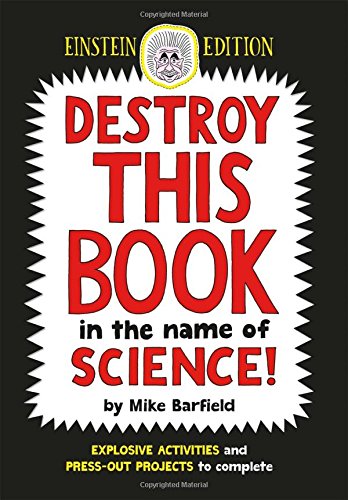
‘Destroy this Book in the Name of Science’ by Mike Barfield


Science is exciting and at no point is this more apparent than when viewed through the eyes of a child, as this fun-filled new publication from Mike Barfield goes to show.

51Vxelcs4pL

As an impressionable ten-year-old, mere mention of the word ‘science’ had me thinking about dissolving just about anything in huge beakers of acid. With real-world scientific knowledge limited to the realms of mixing salt in water and weird Brainiac-related science abuse involving walking on custard and testing out slippery socks, I just couldn’t wait to get to secondary school and discover what wonders awaited me in the teenage science lab. Who could possibly resist the temptation of flammable alkaline metals, fizzing rainbow-coloured liquids and sooty beakers tarnished by improperly adjusted Bunsen burners?

When I first visited my secondary school, the chemistry teacher set up an experiment to show that the colour of fire could be changed using different types of salt. I’ll never forget adding borax to the soft glow of a Bunsen burner and seeing the flame change to a vivid apple green. The teacher managed to feign delight at what was no doubt the same experiment he’d seen dozens of times already that evening, musing ‘I’d rather like a pair of trousers that colour’ as I happily trotted off for my next lab tour.

What’s the point of this weird childhood anecdote, you may ask? To show that children are impressionable and liable to be amazed by even the simplest feats of science. It’s a good thing, too, because we all know how important it is to get children interested in STEM from an early age. As a parent, older sibling, aunt, uncle or concerned observer, it’s never too soon to get the young Isaac Newtons in your life excited about the wonderful world of science – and what better place to start than in the home.

The good news is that hands-on, kid-friendly science doesn’t have to be limited to the chemicals, crystals and compounds in the average chemistry set. A solution comes in the form of Destroy this Book in the Name of Science, an entertaining new publication from author Mike Barfield, which proves the perfect literary addition to the lab/bedroom of curious children.

Complete with its very own cut-out Einstein mask, this book is filled with projects and tasks to push out and pull apart, with pages reserved for colouring, doodling, cutting, tearing and flat-out destroying – all in the name of science. With the help of a little glue and some determination, even the most fledgling of boffins can discover the physics behinds some exceptional magic tricks, build a working cardboard hoop glider to out-fly any paper aeroplane and race paper sea turtles with the help of just a little washing up liquid.

The comically illustrated book is a simple affordable method of awakening the latent scientist nestled within each young brain. I would recommend this book for adults wanting to engage children in a little scientific fun or, equally, tired editorial staff in need of a Friday afternoon pick-me-up.

This review was first published online for E&T magazine.

Book review: ‘The Fight for Beauty: Our Path to a Better Future’ by Fiona Reynolds

An enlightening journey through history’s many attempts to secure and protect what is beautiful in the world.

The-Fight-For-Beauty_9781780748757

Beauty is a complicated subject. We all know what it is, but as time goes by we become less comfortable with speaking about it, or so says author Fiona Reynolds in this stunning new publication from Oneworld.

Describing beauty of the natural world has become something sacred and very personal, where once it ran free within government documentation and legal literature, it is now replaced by more clinical attempts of ‘protecting biodiversity’ and ‘conserving habitats’. So much is the case that today, even while striving to protect natural beauty with climate change legislation and environmental protection orders, we do more than ever to ignore it.

Heeding the words of John Ruskin in the 19th century, Reynolds highlights the ever increasing drive for economic growth and desire for material possession in modern times. “Wherever I look of travel in England or abroad,” wrote Ruskin. “I see that men, wherever they can reach, destroy all beauty. They seem to have no other desire or hope but to have large house and to be able to move fast.” How much has changed since this time?

It reminds me of a recent news story about a real estate tycoon in the US who built the most expensive house to ever go on the market. The house is available for $250 million and comes complete with its own private cinema, massage parlour and luxury cars. What was the aim of this dwelling? To tap into the niche, super wealthy market of people willing to spend a quarter of a million dollars on a yacht, but who barely surpass $10 million when it comes to housing. A fantastic business venture if ever there was one – build a man a dream house and his friends will surely want one too – but it doesn’t do much to inspire hope in a future where consumerism isn’t everything.

Reynolds believes this state of economic affairs – where people strive for bigger and better possessions, and only things of monetary value have any real worth – makes it more difficult than ever to protect what matters, including the environment and our future.

In The Fight for Beauty: Our Path to a Better Future Reynolds collects words and aspirations of figures past and present who all endeavoured to achieve one thing: protection of the Earth and conservation of its natural beauty. The book examines ideas about nature, farming and urbanisation, explores mountain sides, secluded woodlands and protected heather-rich moorland, and delves into romantic thoughts and war poetry. Beginning with the impassioned minds of friends behind the Kyrle Society of the 19th century, whose calls for environmental protection gave way to the modern National Trust, Reynolds shows how definitions of beauty have been rearranged and reconsidered throughout history, before becoming somewhat lost within the fast-paced consumerist lifestyles of modern day.

The Fight for Beauty is at once intriguing, fascinating and incredibly moving. What could serve as an interesting account of the importance of the countryside throughout history is, on a much deeper level, a fervent call-to-arms to protect what, once gone, is gone forever. For Reynolds at least, inspiration from the past and from nature itself could provide an alternative path forward from human development, one where beauty is not forgotten.

This review was first published online for E&T magazine.

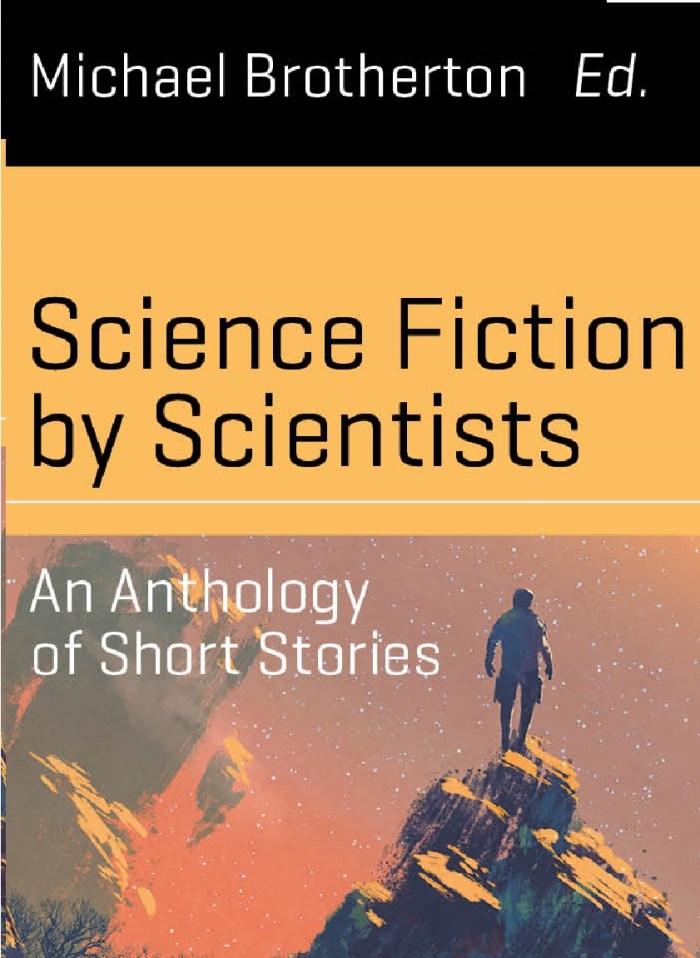
‘Science Fiction by Scientists: An Anthology of Short Stories’ edited by Michael Brotherton

Science and science fiction may seem like two sides of the same coin, but much of the genre gracing bookshelves and cinemas today is actually missing an integral piece of the puzzle – the ‘science’.

SF by Scientists (front cover)

Without science, says Michael Brotherton, sci-fi is little more than a western set in space, or a fantasy set in the future. As a lover of all things scientific and a trained astrophysicist, Brotherton characterises science fiction as providing a glimpse into amazing futures not outside the realms of possibility, or terrible and grotesque scenarios that we should try to avoid.

It may not surprise you to learn that many renowned sci-fi authors were trained in science – Isaac Asimov had a PhD in biochemistry, and Arthur C Clarke was known for his essays on space travel. Perhaps it is the accuracy, or indeed the believability of their fiction, the notion that these situations are not outside the realms of possibility, that makes their work so profound.

As editor of ‘Science Fiction by Scientists’, Brotherton introduces the latest generation of science-trained sci-fi writers, among them current researchers pursuing a love of fiction on the side, retired experts, or those who have set aside prosperous careers to write full time.

In ‘Down and Out’ by Ken Wharton, the reader meets Ogby, a strange, spiderlike creature living within the nutrient-rich oceans of a mysterious, ice-​encrusted land, with odd perceptions of gravity, sinking to the bottom of her habitat by filling one of her many gaseous bladders with air.

In ‘Supernova Rhythm’, Andrew Fraknoi writes of an optimistic young research scientist who discovers a strange pattern of exploding stars in galaxy NGC 6946, and so finds that there may be life forms billions of years ahead of us developmentally, whose actions we cannot possibly understand.

Alongside tales of obscure lands, terrifying futures and pending zombie apocalypses, the authors have taken time to explain a little of the science behind the sci-fi, unveiling origins of the tales and shedding some light on their motivation. In this way, we learn that Obgy is an alien lifeform from Europa, the ice moon of Jupiter, who scuttles upside-down upon the layers of ice enclosing the moon’s subterranean ocean; that a new musical piece created by a group of astronomers uses notes supplied by supernovae in far-off galaxies and that future scientists could theoretically sequence the DNA of hundreds of species of animals to be contained, and later deployed, within a single piece of fruit.

‘Science Fiction by Scientists’ is an interesting and intriguing anthology of short stories, which is sure to set the reader’s mind in motion a little better than the average collection of sci-fi shorts. Leisure is combined with learning to leave not just a sense of wonder and amusement, but also the desire to find out a little more about each author’s particular field.

For those interested in exploring further, a more challenging read comes in the form of ‘Murder on the Einstein Express and Other Stories’, also from Springer. This short anthology by assistant professor in mathematics and physics Harun Šiljak, touches on the realms of the theoretical, physical and computational to create obscure tales, including an Alice in Wonderland-type adventure set within the realms of mathematical analysis.

This review was first published online for E&T magazine
‘Man of Iron: Thomas Telford and the Building of Britain’ by Julian Glover

A new biography of one of Britain’s greatest engineers, whose work is still with us today.

9781408837467If ever a man could give hope to those of humble origins it is Thomas Telford. Born into a lowly shepherding family, in a ramshackle farmhouse in the hills of Dumfriesshire, Telford never knew his father, and at school succeeded in learning little more than the basics of the ‘three R’s’. Yet, despite this modest beginning, he went on to become one of Britain’s greatest engineers. So, what’s his story?
In ‘Man of Iron: Thomas Telford and the Building of Britain’, the first comprehensive modern biography of Telford, journalist Julian Glover draws on historical anecdotes, letters, records, reports and contemporary accounts to provide a strikingly clear portrait of the man who helped shape Britain. A simple, smiling boy from the south of Scotland, known affectionately as ‘Laughing Tam’, who despite his fame and success, never forgot his roots.

Born in 1757, a time when the industrial revolution was beginning to sweep through Britain, Telford left school at the age of 14 and was apprenticed to a stonemason. The piecemeal work of building new roads and farmhouses on a local estate inspired Telford’s initial interest in structural engineering. He began studying at night, determined to learn all there was to know about construction.

This passion formed a career that spanned almost eight decades. It helped create the basic building blocks of Britain, constructing roads, bridges and aqueducts, facilitating trade and renovating the country for a time of industrial transformation.

Among his most remarkable work was the design of the Menai Bridge in  north Wales, one of the first structures based on the suspension principle. It spanned 180m – the longest such bridge of the era. He was one of the first British engineers to trial such a procedure. At the time, his creations were considered some of the most remarkable in Europe, but perhaps what is most notable is that almost all of his work remains standing – and in use – to this day.

While his influence on the backbone of Britain is obvious, the person behind the engineer is less known, and for some, this may be the most interesting aspect of this book. Telford was a complex man, as his interests and talents were not limited to engineering. While contributing to the industrialisation of Britain, he was also fascinated by the natural landscape, and was actually a keen poet. In his musings, he wrote of the ‘artificial joy’ of towns, preferring the quiet solitude of the country. It may seem somewhat oxymoronic, but even as he built the structures that supported urban life, he did so with a passion to enhance the countryside, not replace it.

The influence of Telford across Britain is well recognised and celebrated. The Institution of Civil Engineers, of which Telford was the first president, continues to celebrate the legacy of his work long after his death. ‘Man of Iron’ keeps with this culture of recognition and celebration by revealing the history of Telford for all to understand and enjoy. It is a beautifully written biography, reading almost as a work of classic literature, rather than a piece of non-fiction.

Glover spares no words in greatly detailing every aspect of Telford’s life, from his poverty-stricken yet somewhat idyllic childhood in the green woods of the Scottish countryside to his vibrant life travelling and working across the British Isles. It is just as easy to envisage a grubby-faced but smiling young Telford stumbling over bracken-rich fields of Eskdale as it is to recall the wondrous unveiling of his remarkable works of civil engineering.

This review was first published online for E&T magazine.


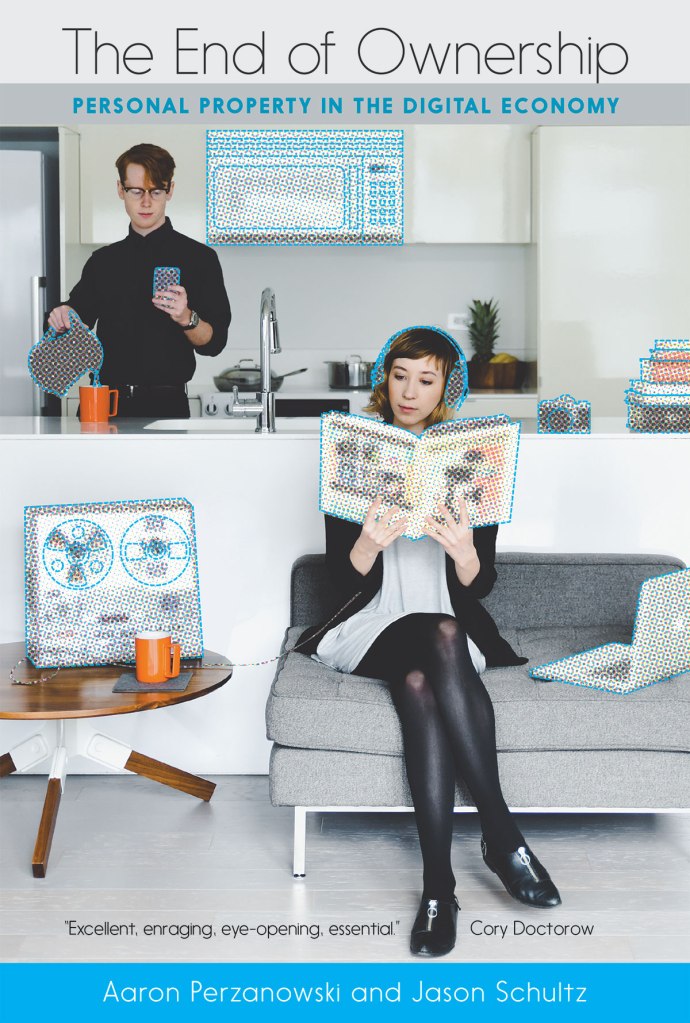
‘The End of Ownership’ by Aaron Perzanowski and Jason Schultz

If you buy a book at the book shop, you own it, and are free to do exactly as you wish with it. You might be surprised to hear that the same is not true of ebooks and other downloaded media. In fact, as Aaron Personowski and Jason Schultz discuss, the digital world is an incredibly complicated place when it comes to ownership.

9780262035019_1

Chances are if you own an iPod, Kindle or even a desktop or laptop you are no stranger to the world of the digital download. It is becoming more and more common to simply pay for a digital copy of a song, book or film, rather than worrying about cumbersome physical objects. Who even has time to wait for an Amazon delivery these days, anyway? The digital download has done wonders for the instant gratification of consumers, but at what cost? Like it or not, each time you click ‘pay now’ on a digital purchase, you are entering a new and confusing world, rife with rules, regimes and regulations that restrict how you interact with your downloads.

Authors Aaron Perzanowski and Jason Schultz use their book to delve into the complex, jargon-ridden world of the rights of digital consumers, to uncover the mystery of whether we can really be considered ‘owners’ of our digitalia. As the owner of a physical object you enjoy certain freedoms; if you have a collection of print books, you are free to annotate them, modify them, or even destroy them if you want to. The same however, cannot be said to the ‘owners’ of downloaded goods.

Every time you buy an ebook from Amazon or a song from iTunes you sign an end-user licence agreement (EULA) – let’s be honest, you have probably never read it – the contents of which are far removed from the freedom we enjoy with physical ownership. Consumers do not actually own digital purchases, they license them and have the permission to read, listen to, play, or watch them. Slightly more worrying is the fact that the company providing the software used to access these files effectively has control over a user’s digital library.

Here’s an interesting case. In July 2009 Amazon remotely, and without warning, wiped (irony of ironies) George Orwell’s ‘Nineteen Eighty-Four’ and ‘Animal Farm’ from all Kindle ereaders, following a dispute with the publishers.

Small fry, perhaps? Permissible collateral damage? Well, what happens when devices, or corporations, become obsolete? That’s what happened to HDGIANTS Inc, a former distributor of high-quality audio and video files. When it went bankrupt, its servers were switched off, and with that, portions of the digital libraries of thousands of paying customers evaporated.

So how content should consumers be with their content? A bookshop cannot, as Schultz and Perzanowski point out, creep into your house in the middle of the night and reclaim the contents of your physical shelves – so why can digital providers? Is it fair that book lovers and audiophiles are charged prices akin to a physical copy for a digital download that is completely at the mercy of publishers and licensers? What is the benefit to the consumer of opting for digital files? Are the benefits of reducing waste and getting instant gratification really worth it?

‘The End of Ownership’ presents the confusing world of the digital consumer in wonderfully accessible prose, replacing hideous jargon with the simplest of analogies, from thieving bookshops to the goblins from Harry Potter. It will answer the questions you have regarding digital ownership, and it’s inevitable that more than a few of them have never even crossed your mind.

In an increasingly complex world, plagued by unreadable (certainly unread) terms and conditions, it is more than a little refreshing to have something explained in good, plain English.

This review was first published online for E&T magazine.

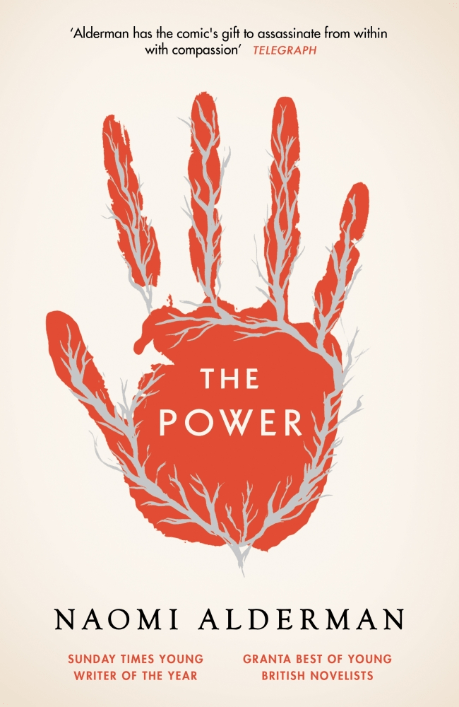
The Power – Naomi Alderman

cover-jpg-rendition-460-707

Equality, prosperity and power are just some of the aims of feminists past and present – but what would a world controlled by women actually look like? In her fourth novel, author Naomi Alderman inverts traditional gender roles to create a world where women quite literally hold all the power and men tremble at their feet.

Love it or hate it, utopian and dystopian fiction has a lot to say about how people live their lives and the desires, dreams and fears that lurk under the covers of society. Dystopic works throughout the 20th century have explored totalitarian states, brainwashing, societal complacency and overpopulation. They reflect societal fears of a future in which too much power has been lost to the state, through the wonderful world of science fiction.

This genre suits feminist complaints by questioning the conventional exercise of power between the sexes, often delving into frustrations of women in a patriarchal society. Previous works explored the prospect of women-led civilisations in which gender roles are reversed or worlds where women live alone, having somehow discovered the secret to asexual reproduction.

There is a reason you don’t get many all-male utopias, but I’ve often wondered why there aren’t more novels that explore what a world would be like where women not only ruled, but ruled with power. So many science-fiction novels strived to illuminate societal inequality through exaggeration and role reversal, or the creation of purer, softer societies where women rule each other with soft hands, but I have yet to come across a book which inverts the status to devastating effect.

‘The Power’ is just such a novel.

Naomi Alderman’s latest novel is a manuscript written 5,000 years in the future, documenting the rising power of a female elite. The story begins with the ‘Day of the Girls’, when teenage girls across the world wake with a strange new power. It starts as a subtle throbbing sensation between the collarbones and crackles across the skin, filling the air with electrostatic discharge and the smell of rain and rotten fruit, before emerging as a spark of light from the tips of the fingers.

What would the world look like if men were afraid of women rather than women being frightened of men?

A slight warning, while not fully divulged in this review, the book contains one or two themes that some readers might find disturbing.

Through the guise of a fictional future researcher, Alderman follows the stories of four characters and how they are affected as the world begins to change. We meet Roxy, a tough, foul-mouthed daughter of a London crime lord who is out to seek revenge; Allie, a dual-heritage girl from Jacksonville who, having suffered unspeakable abuse at the hands of her foster father, rebrands herself as charismatic faith-leader Mother Eve; Margot, the aspiring New England Governor along with her confused daughter Jocelyn; and Tunde, a plucky Nigerian journalist who strives to uncover the ugly truth behind the rising female power.

‘Men have evolved to be strong worker homestead-keepers, while women – with babies to protect from harm – have had to become aggressive and violent.’

A few videos emerge across social media platforms showing girls seemingly electrocuting men with their hands. The initial reaction is one of disbelief, but as more and more begin to appear, society is forced to attempt to address this strange new phenomenon. As childish tussles give way to deadly brawls and schools are forced to begin gender segregation, the very fabric of society unravels and young women are recruited to fight a bitter battle between the sexes that ravages Eastern Europe.

In Alderman’s present, electricity is no longer a thing of convenience, but a power to be held within the hands of women, to throw off the shackles of oppression. The future, however, is anything but bright, and all thoughts of equality are thrown to the wind. Ideas of a softer, more maternal society give way to hordes of women who rule with iron fists, as men are assigned their place on the bottom rungs of the ladder, forced into submission as slaves to the female race.

The storyline is complex and multi-layered, presenting a future where women have forgotten the male-dominated times of the past – the systems overthrown within the main body of text – and men are thought to be the fairer sex. This book is so much more than the latest attempt at a feminist dystopia. It is refreshing and insightful, combining a gripping storyline alongside an interesting analysis of societal ideas about equality and fairness within gender roles.

This review was first published on online for E&T magazine.