Myths of the Norsemen – Roger Lancelyn Green

“The reading eye must do the work to make them live, and so it did, again and again, never the same life twice, as the artist had intended.” ― A.S. Byat

Myths of the Norsemen – Roger Lancelyn Green

I received this book in my second Prudence and the Crow box. I’ve never read much in the way of Norse mythology, so I was eager to see what the book had in store for me. I signed up to Prudence and the Crow hoping to expand my reading list, so really I couldn’t ask for a better book choice.

In the very beginning of time, so the Norsemen believed, there was no Earth as we know it now: there was only Ginnungagap, the Yawning Void. In this moved strange mists which at length drew apart leaving an even deeper Gap, with Muspelheim, the Land of Fire, to the south of it, and Nifelheim, the Land of Mist, to the north of it.
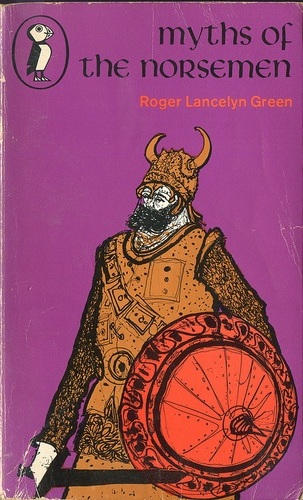
norseIn Myths of the Norsemen, Roger Lancelyn Green has taken the surviving Norse myths, collected from Old Norse poems and tales, and retold them as a single, continuous narrative. The entire Norse timeline is covered, offering a complete and concise history of the Aesir and their dealings with the Giants of Utgard, from the planting of The World Tree, Yggdrasill, right up to the last great battle Ragnarok.

This book is serves as more than just a story; it is a journey through the Norse lands, from beginning to end. Along the way the reader is introduced to famed Norse figures: the great God Odin, who wandered Norse lands seducing and impregnating women; the all-powerful Thor, just one of Odin’s many children; the mischievous, shape-shifting Loki; as well as brutal giants, scheming trolls, and bizarre creatures lurking in far corners of the Earth. With each passing saga the pressure in the book increases, signifying the approach of Ragnarok, and mirroring the battles fought by gods of Asgard. With each passing story the spirit of Ragnarok grows stronger, and the great serpent Jormungand begins to tremble, signalling the beginning of the end.

The tale stood out for me amongst all others was ‘Thor’s Visit to Utgard’, when the great god was challenged by the giants to prove his strength. Before the watchful eyes of the giants Thor failed to drink even a small amount from the king’s horn of ale, could lift only a single paw of the king’s pet cat, and fell to his knees at the hands of the king’s old nursemaid. While Thor lay ridden with shame at his failings, the giants sat in deadly peril, having witnessed the mighty Aesir drink so deeply from the sea as to cause the first ebb tide, come close to raising the Mitgard serpent, and refuse to fall before Old Age herself. This tale is so full of passion and emotion – the giants’ diabolical treachery, the ingrained fear, not just of the giants, but Thor himself, and the sheer power exhibited by the Aesir simply radiated from the pages. I couldn’t help but tremble at the thought of Thor unknowingly lifting the Mitgard serpent and bringing about Ragnarok.

The 15 tales in Myths of the Norseman will each speak to different readers. While I was moved most of all by one in particular, each separate saga has its own intrinsic appeal. I was fascinated by the -tale of beautiful Iduna and her basket of strength-giving apples, devastated by the death of Balfur at the hands of his blind brother, and increasingly infuriated by the impish yet malicious traitor Loki. There is so much to love about this book, and each of the tales nestled within its pages.

Overall, I thoroughly enjoyed Myths of the Norseman. The book is entertaining, enlightening, and exceptional readable, as a whole, and on a story by story basis. The tales collected and retold by Lancelyn Green present an excellent introduction to the ancient Norse myths, and a deeper understanding of how such tales helped to shape modern literature.

Kafka on the Shore – Haruki Murakami

“People think dreams aren’t real just because they aren’t made of matter, of particles. Dreams are real. But they are made of viewpoints, of images, of memories and puns and lost hopes.”
― Neil Gaiman

Kafka on the Shore – Haruki Murakami

Some time ago, after reading After Dark, I said I wanted to explore more of Haruki Murakami’s work, well I finally got around to it, and I’m very happy I did.

Earlier this year I read Norwegian Wood as a book club selection (review to come, our club has yet to meet due to a few members taking their sweet time to read the book!) and I loved it. I loved it almost as much as The Elegance of the Hedgehog, and you know how much I love that book! I don’t know what it is about certain translations (that they are beautiful maybe?) but I just can’t get enough of them. I was so taken by Norwegian Wood that I began to think that Murakami might actually be one of my favourite authors, but I couldn’t make such a decision based on two books, to find out for sure I needed to read more.

So, I set myself the task of actively reading more Murakami (to begin with I decided I’d read one book a month, but what with all my other commitments that is starting to seem like wishful thinking) and first on the list was Kafka on the Shore. Now, Norwegian Wood is said to be somewhat of an anomaly in Murakami’s portfolio, but Kafka on the Shore is quintessentially Murakami-esque – so I thought this could be the decision maker.

Where Norwegian Wood is a unique take on a classic tale of love, Kafka on the Shore is weird, wonderful and unashamedly unique!

It’s as if when you’re in the forest, you become a seamless part of it. When you’re in the rain, you’re a part of the rain. When you’re in the morning, you’re a seamless part of the morning. When you’re with me, you become a part of me.

kotsIn Kafka on the Shore storylines combine to trace the extraordinary journeys of two seemingly unrelated characters. Kafka Tamura runs away from home on the eve of his fifteenth birthday, haunted by the words of his father’s dark prophecy. Ever since the mysterious departure of his mother and elder sister Kafka’s life has been full of questions. Now his aim is simple, to travel to a far off place and live in the corner of a library. The journey, it seems, may hold the answers.

Elsewhere in Nakano ward, the dim-witted but amiable Nakata tracks lost cats and enjoys the simple things in life, like eels, and pickled vegetables with rice. But this is all set to change with the arrival of a tall man in a top hat and boots, whose interest in the neighbourhood cats is far from innocent. With his simple life turned upside down Nakata is forced to leave Nakano ward, and embarks on journey unlike anything he has ever experienced before, or his simple mind can even comprehend.

As Nakata and Kafka’s stories unwind and intertwine the remarkable interlaces with the ordinary and the world takes on a wholly unusual shape – fish and leeches fall from the sky, and cats converse with people, while WWII soldiers live, unageing, in the depths of unnavigable forest, and living ghosts lurk in the perimeters of consciousness.

Kafka on the Shore is a classic tale of quest and enlightenment, with a wholly unusual twist, which goes beyond the boundaries of classic literature. Murakami’s characters embark on a journey of stunning proportions, a voyage of self-discovery through inexperience. Neither Kafka nor Nakata know what it is they are looking for, but the answer is out there, and the journey introduces them to many strange and wonderful characters, with whom brief encounters prove to be life-affirming.

Anyone who falls in love is searching for missing pieces of themselves. So anyone who’s in love gets sad when they think of their lover. It’s like stepping back inside a room you have fond memories of, one you haven’t seen in a long time. It’s just a natural feeling. You’re not the person who discovered that feeling, so don’t go trying to patent it, okay?

Kafka on the Shore is strange – there is no getting around it. Weird and wonderful things occur and the reasons behind these occurrences are not immediately, if at all, clear. Each chapter harbours events which, however deep and profound an impact they may have, lack any logical explanation. Try and apply a logical filter to Murakami’s and you will no doubt find yourself disappointed and frustrated.

I found it useful, in having read Kafka on the Shore to try and get some insight into  Murakami’s own thoughts on his writing. Murakami has explained his writing process as similar to dreaming, rather than delving into the fantastical: “Writing a novel lets me intentionally dream while I’m still awake. I can continue yesterday’s dream today, something you can’t normally do in everyday life. It’s also a way of descending deep into my own consciousness. So while I see it as dreamlike, it’s not fantasy. For me the dreamlike is very real.”

Kafka on the Shore, then, can be seen as the amalgamation of two different worlds, the combination of the conscious and the unconscious. Think of the book as you would a dream, and suddenly things become much clearer. I was reminded, in reading this, of the talk I went to by Nigerian author Ben Okri last summer in which he spoke of exploring a new way of thinking in his writing, to show that text does not have to follow strict criteria. The world that you create, he said, can be sequential and logical, or circular and dancing. Kafka on the Shore falls firmly into the latter category.

Despite everything, it’s not a difficult book to read. The obscure and the philosophical, which may at times feel somewhat overwhelming, for me were lightened by Murakami’s abstract humour. Here I could give examples of the pimp dressed like Colonel Sanders, or Nakata’s continued reference to going for a ‘dump’ – but for me, the most hilarious part of the book, was Oshima’s fantastic shutting down of two women who refer to him as a ‘typical sexist, patriarchal male’.

My verdict – I liked it. But nowhere near as much as Norwegian Wood. I definitely need to read some more before I make a decision on just how much of a Murakami fangirl I am. The book won’t be for everyone – fans of the logical and sequential and those of you unsettled by violence against animals should steer clear of this one – but I’m certainly not done with my Murakami journey just yet.

The Book Thief – Markus Zusak

“In our hatred, we are like bees who must pay with their lives for the use of their stingers” ― Friedrich Reck-Malleczewen

“I hate the Führer,” she said. “I hate him.”

And Hans Hubermann?

What did he do?

What did he say?

Did he bend down and embrace his foster daughter, as he wanted to? Did he tell her that he was sorry for what was happening to her, to her mother, for what had happened to her brother?

Not exactly.

He clenched his eyes. Then opened them. He slapped Liesel Meminger squarely in the face.

“Don’t ever say that!” His voice was quiet, but sharp.

71h2sjik5al-_sl1380_This book just launched itself directly onto my list of favourite books of all time!

The Book Thief is narrated by Death – this is what first drew me towards it. The front cover depicts a young girl skipping hand in hand with the Grim Reaper – how could I not want to read this?

Despite my excitement I was less than enthused by the way the book began. The whole prologue had vaguely unnatural feel to it. I found it really difficult to get into and I worried that the whole book would continue in the same jarring, start-and-stop style. I knew I wouldn’t be able to force my way through the 500+ pages of text if Zusak didn’t grasp my attention soon.

Thankfully, my worries were in vain.

It was as though someone turned on a light, and I suddenly went from being vaguely uncomfortable to completely in my element. The rest of the book is written in a similar style, but whereas the prologue felt awkward and unnatural, the proceeding chapters click perfectly into place.

The book thief’s story begins in 1939 in Nazi Germany. Liesel Meminger is taken to Himmel Street in Molching, to the home of her new foster parents, Hans and Rosa Hubermann. Her communist parents have been taken away to concentration camps, and her young brother did not survive the journey to their new home.  On her first night in Himmel Street as she lies in her new room, the bed reserved for her brother lying empty next to her, she is plagued by nightmares of her brother’s death, and awakes screaming in a cold sweat. Her foster father, ‘Papa’, comforts her, reading to her from The Gravedigger’s Handbook – Liesel’s first stolen text.

As political tensions in Germany increase, Hans is called upon to fulfil a promise he made years before, forcing him to harbour a deadly secret, and placing the family constant danger. Despite their fears, relationships in the family grow stronger and each night Hans continues to read with Liezel. As her book collection grows, Liesel recognises the power of the written word and slowly begins to write her own story.

Zusak’s style, while perhaps slightly jarring at first, is wonderfully unique. The story is separated into small chapters, each focusing on a very specific point in time, with death drawing out the relevance of each occurrence to the wider story. The text is broken up with pictures, handwritten notes, and regular snippets of background information in amongst the main tale: brief statistics, information on Stalingrad, small observances, and even a pamphlet made from the painted-over pages of Hitler’s Mein Kampf, are all slipped into the flow of the text.

tumblr_mhxkst85nD1rnqtdko1_500

The presence of Death as a narrator is interesting, and works really well given the context of the book. Throughout the novel the shadow of loss hangs heavy over Nazi Germany and Death himself is a constant feature on every street corner. As a narrator, Death foretells of which characters are due to meet their demise. Zusak allows you to fall in love with characters you know are going to die. And no, this doesn’t ruin the ending, it adds to the overall tension which builds up over the course of the book. It is as though you are placed in the midst of the inhabitants of Himmel Street, knowing that war will claim some of those that you love. Waiting to find out when Death will strike is the real struggle.

The Book Thief is unique amongst WWII fiction as it tells the tale of war-torn Germany from a Nazi-child’s perspective. Liesel Meminger is a wonderfully-developed and complex character who is just beginning to form her own understanding of the world. She understands the importance of doing as she is told out in the street, of Heil Hitler-ing the lady in the sweet shop and attending Hitler Youth in a neatly pressed uniform. But inside, she conceals her own personal judgements and aspirations, harbouring thoughts that must not be spoken outside the walls of 33 Himmel Street.

The Book Thief is marketed as a book for young adults, but I struggle to see how anyone, whatever their age, could fail to enjoy it. If you are interested in WWII fiction, or, like me, in historical fiction in general, then this really is a must read.

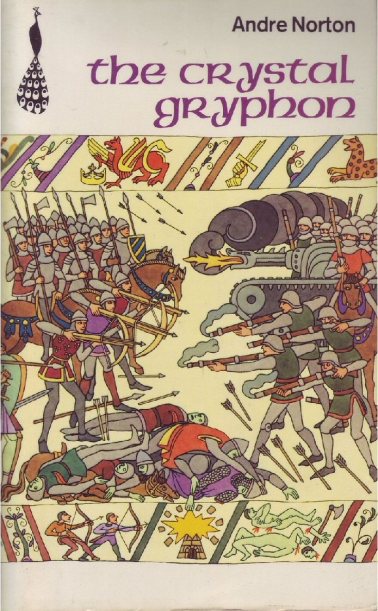
The Crystal Gryphon – Andre Norton

“Never open the door to a lesser evil, for other and greater ones invariably slink in after it.” ― Baltasar Gracián

My first vintage paperback courtesy of the Prudence and the Crow subscription introduced me to the wonderful world of Andre Norton and the fantastical realm of the Witch World series. It was so much fun receiving, and reading, a book I probably would have never experienced without the help of Prudence and the Crow. I’m so glad I found the service, and so happy to have found a new author to explore.

I was as keen-eared as any child who knows that others talk about him behind their hands. And I had heard the garbled stories of my birth, of that curse which lay upon the blood of Ulm, together with the hint that neither was my mother’s House free of the taint of strange mixture. The proof of both was perhaps in my flesh and bone. I had only to look at the mirror of Jago’s polished shield to see it for myself.

Crystal_Gryphon_1976_Peacock

The Crystal Gryphon is the story of Kerovan, heir to the throne of Ulmsdale, who, thanks to the circumstances and result of his birth, is set apart from the regular folk in the Dales. When Kerovan’s mother gave birth to him she did so sheltered in a ruin of the ‘Old Ones’, mysterious folk who once inhabited the Dales, and Kerovan was born with the cloven feet of cattle and eyes the colour of deepest amber. Kerovan’s mother, the Lady Tephana, swore she could never love such a creature, and Kerovan was forced to grow up living apart from his birth family, with Jago – a keepless man of good birth.

With Jago Kerovan learns the arts of war. But it is the Wiseman Riwal that nurtures Kerovan’s true passion; a thirst for knowledge of the secrets of the past. With Riwal Kerovan travels to places feared by the folk of the Dales, looking for answers. On one such journey Kerovan comes upon a mysterious crystal pendant, adorned with a gryphon, and feels compelled to send the relic to the wife he has never met, the Lady Joisan. Across the land,  Joisan treasures the relic, and dreams of the husband she will one day meet. But in the year of the Moss, when Joisan is due to take up her wifely duties, a bloody war sweeps through the land as the Dales fall victim to an invasion from the sea. The keep at Ulmsdale is betrayed and Kerovan sets off across the Dales to find his betrothed whose own home has been destroyed.

The developing relationship between Joisan and Kerovan forms the base of the main storyline and the chapters of the book alternate, being told by Kerovan and Joisan in turn. Despite having never met, Joisan and Kerovan each harbour a certain fondness for each other, each of them drawn, and warmed by the other. As though they are bonded by something stronger than the laws which connect them as husband and wife, a deeper presence draws them to one another. Even when Joisan mistakes Kerovan for one of the Old Ones, you can tell that she is drawn towards him, the strange ‘Lord Amber’, despite not knowing his true identity.

Norton uses Olde English-style dialogue, and a medieval-type setting to create a spectacular backdrop for a strange, dark and somewhat frightening fantasy world. From the start I was completely absorbed by the mystery surrounding the Old Ones. I can imagine the parts of the world that were inhabited by this mysterious race of beings appearing like a ghost town, deserted, but with an ominous presence alluding to troubled past. I am fascinated by old buildings and the remains of ancient civilisations, so the idea of there being such relics, buildings and ruins dotted across the countryside, which tell only part of the tale of a whole different existence is really quite mesmerising to me. I was so easily drawn into Kerovan’s travels, and got completely caught up in the mystery of his fantasy world. The whole way through The Crystal Gryphon I was desperate to know more about the Old Ones, and the world that they inhabited.

Thank goodness it is only the first of a trilogy! The Crystal Gryphon is a wonderfully mysterious and gripping tale, which combines the fantastical with the uncanny, and at times borders on the downright creepy. I don’t know what more to say other than I loved it and I can’t wait to see what the rest of the trilogy has in store.

The Unforgotten – Laura Powell

“One must still have chaos in oneself to be able to give birth to a dancing star.” ― Friedrich Nietzsche

Betty kisses Mother’s forehead but her insides prickle. The only days Mother talks this fast and wakes this early are the days before a crash; before her mood springs high and crumbles leaving her in bed for days, weeks sometimes, until she can pull herself upright.

Betty clears an empty gin bottle and lipsticked tumbler from the floor. She is wondering whether to ask Mother about them when a cough cuts in. She whips around. Gallagher is standing in the kitchen door staring at her.

B7I6geQCYAEN2IcIt’s 1956 and, while other fifteen-year-old girls are busy courting boys and thinking about the latest dance, Betty Broadbent helps her mother run the Hotel Eden, a simple bed and breakfast on the Cornish coast. Each morning she awakes, sometimes to the sounds of her mother singing in the kitchen, other times, groggy and sleep-deprived, to ensure the hotel guest get their breakfast, and clear the remnants of her mother’s late-night drinking binges.

Betty’s life has never been simple and it becomes even more complicated when a string of brutal murders in her hometown bring London’s press flooding to the scene. The Hotel Eden is overrun by leering reporters looking to cosy up to Betty’s flirtatious mother, or, at a pinch, Betty herself. In the chaos Betty finds herself transfixed by the one quiet individual – the mysterious Mr Gallagher.

As her mother’s moods become more and more erratic, Betty turns to Mr Gallagher for escape. An unlikely friendship blossoms between the pair, and Betty find herself living for the brief moments she spends with the man more than twice her age. But when Betty becomes accidentally entangled with the murders there is more than an age gap to complicate things, and she is forced to make an unbearable decision which will affect her life for years to come.

The first thing that drew me towards the book was not the subject matter, truth be told I had no idea what The Unforgotten was about until I started to read it, it was the stunning cover design. Simple, yet elegant, and deliciously mysterious, the cover is beautiful to look at, and alludes subtly to the content of the book. I loved the cover, so I read the book, and I loved that too.

The Unforgotten takes the classic murder mystery novel and gives it a contemporary makeover. There are certain things one automatically expects from such a book, to be tricked, led astray, captivated and surprised, Powell delivers on all these points. But it is her exploration of the ripples created by the murders which give the novel its contemporary twist. It is Betty who takes the centre stage – her mother, Mr Gallagher, the murder victims and the ‘Cornish Cleaver ‘all assume a side role.

Betty’s story is tragic, and her undying commitment to her, obviously bipolar, mother is evidence of the unbreakable, and sometimes devastating, bond between mother and child. Betty clings to the happy moments when her mum is on a high, the nights when she would make her cinnamon on toast. When things get difficult it is this memory she clings to, like curling up in the foetal position, revisiting happier times. At the same time she has a desperate desire to run away, to escape from the bad times when her mother crashes and burn, and the devastating reality is that her escape becomes the thing that traps her.

I was completely drawn in to Betty’s story, and within this, the hunt for the identity of the Cornish Cleaver. I know some people do not like when a book is split between two time periods, but I personally love it. It is wonderful to explore the far-reaching consequences of a storyline, and passing between the present day and the 1950s helps to tease Betty’s story out, allowing her true character to emerge. While there is not much in the way of physical description when it comes to Betty, her mannerisms, thoughts, and the way she interacts with those around her lead her to be an incredibly well-rounded and complex character, outwardly appealing, charming and so perfectly innocent.

The Unforgotten really spoke to me; but it is hard to say how this book will go down with other people. The storyline ventures into brave and hard-hitting territory which some people could find difficult to read about, exploring mental illness, unrequited love, death and destruction. Laura Powell, with her unique style and intricately-developed characters, is certainly an exciting new voice on the contemporary literature scene.

Reviews to come and things to smile about

Ok guys, I know I’ve been a little quiet the last few weeks. The truth is, I’ve been feeling a little under the weather and decided to take some time off. I’ve been doing lots of reading, but not so much writing.

The good news is I am feeling much better 🙂 and I hope to post a review or two very soon. You can expect some sci-fi, historical fiction and a little bit of mystery in the mix.

Also, my second Prudence and the Crow box came this weekend – and I love it!

IMG_20150711_112451903

Last month’s book, The Crystal Gryphon, was pretty incredible (review to come). I’ve got high hopes for this one, I do love a bit of mythology, here’s hoping it lives up to my expectations!

A fairytale weekend

“Fairy tales do not tell children the dragons exist. Children already know that dragons exist. Fairy tales tell children the dragons can be killed.” ― G.K. Chesterton

After being treated to these beautiful books by a good friend I spent an otherwise dismal weekend holed up in my new reading room indulging my inner child.

The Sleeper and the Spindle – Neil Gaiman, with illustrations by Chris Riddel

23301545The Sleeper and the Spindle is a great example of a children’s book made for an adult audience. Think Snow White meets Sleeping Beauty, with some dark magic thrown in. I love modern twists on traditional fairy tales, almost as much as I love traditional fairy tales, so this book was always going to go down well.

High in a tower in a kingdom far, far away a beautiful princess lies enchanted in her bed. Lately, the spell which keeps her slumbering has begun to spread, and the people of neighbouring villages have fallen victim to the sickness. Many brave souls have tried to reach the tower in the hopes of breaking the enchantment only to lose their lives, impaled on an impenetrable fortress of rose thorns. On what is to be the eve of her wedding, a young queen decides to set aside her matrimonial plans to rescue the sleeping princess. Accompanied by a team of crass dwarves, the queen takes up her sword and chain mail and travels deep into the mountains to reach the sleeping kingdom.

The Sleeper and the Spindle combines the traditional themes we all know and love with an exciting modern twist, to create an enchanting, yet ominous tale – as delicately unsettling as it is deliciously captivating.

Oh and the illustrations are nothing short of spectacular.

A1vDbflXiqL._SL1500_

25284718-c769-4a99-bf1a-11dde87b434a-2060x1236


Russian Fairy Tales – Alexander Afanasyev, with illustrations by Ivan Bilibin

9781908478689_p0_v1_s260x420

If you saw my post about Children’s Stories from Japanese Fairy Tales and Legends you’ll no doubt be familiar with my fascination with foreign fairy tales. In fact, this interest does not apply just to fairy tales – myths, legends and ghost stories are also high up my list of interests. I find it really interesting to see how stories from different nations compare to those I grew up with and know so well.

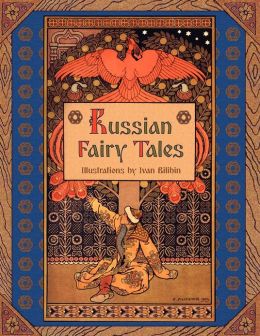
This collection of tales was written, or rather, recorded by renowned Russian folklorist Alexander Nikolayevich Afanasyev in the mid-19th century. The book contains some of the best-known Russian folktales, including: Vasilisa the BeautifulThe Feather of Finist the Falcon; The Frog-Tsarevna; and Tsarevich Ivan, the Firebird and the Grey Wolf.

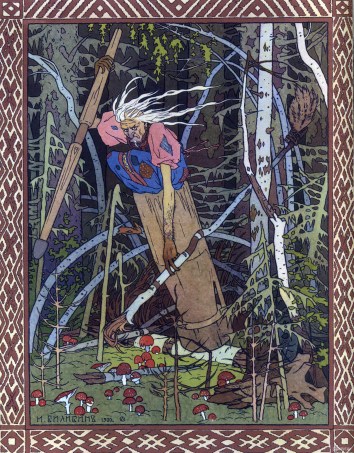
Of all the characters I came across in this volume, and there are a few who feature in more than one tale, I was particularly taken by Baba Yaga.

Bilibin._Baba_Yaga

Baba Yaga is a cannibalistic witch who lives in a small wooden hut at the edge of the forest. Now, this description may not seem so different from a lot of other witches in children’s stories, but Baba Yaga has so many fantastic quirks, the likes of which I would never have imagined.  Her hut stands on hen’s legs, and will only lower itself to permit entry when in receipt of a certain rhyme. It is also surrounded by a picket fence adorned with the skulls of Baba Yaga’s victims, the eye sockets of which glow in the night.  Instead of a broomstick, Baba Yaga travels through the forest in a giant mortar, driving herself forward with a pestle in her right hand, while sweeping the forest floor with a broom in her left hand. Oh and she is also often followed by spirits.

I love her.

Having no familiarity with Russian folklore prior to this, I feel the collection gave a good introduction to some of the most famous characters in Russian folk literature. It’s a beautiful volume, and some of the illustrations are so elaborate I feel I could have spent hours studying them.

d0bcd0b0d180d18cd18f_d0bcd0bed180d0b5d0b2d0bdd0b0_5

ruske-bajke-ivan-bilibin-4

Elizabeth is Missing – Emma Healey

“But the thing about remembering is that you don’t forget.” ― Tim O’Brien

What was it I came for? The loaded shelves frown down at me as I circle them, and the blue and white linoleum stares up, dirty and cracked. My basket is empty, but I think I’ve been here for a while; Reg is watching me. I reach for something: it’s heavier that I was expecting and my arm is pulled down suddenly with the weight. It’s a tin of peach slices. That’ll do. I put a few more tins in my basket, tucking its handles into the crook of my arm. The thin metal bars grind against my hip on the way to the counter.

EIM-pb-jacketMaud’s memory is not as sharp as it once was. She forgets to turn the gas off, eats endless amounts of toast, makes cup after cup of tea which line up, cooling on the side board, and has enough sliced peaches to feed an army – but still she buys more.

To help her to remember, Maud has a ‘paper memory’ – countless notes left by her carers, her daughter and herself. Notes fill her house, her pockets, and the gaps in her arm chair, instructions, reminders, recipes and phone numbers spill from every orifice. In Maud’s pocket, amongst the shopping lists and appointment slips is a note in Maud’s own handwriting that reads ‘Elizabeth is missing’. Elizabeth is Maud’s friend; the only friend she has left. She doesn’t remember when she wrote the note, but she knows that something is wrong. If only she could tell someone, if she could just make them understand.

Elizabeth is Missing is probably not what you expect. I asked a friend if she knew what the book as about, she looked at me in confusion and said, or asked, ‘some girl called Elizabeth who goes missing?’ – She couldn’t be further from the truth. This book is so much more than just a mystery.

Fifty years ago Maud’s elder sister went missing. In Maud’s mind lie the secrets to solving this mystery, and they are desperate to get out, but it’s difficult to solve a puzzle when you keep forgetting the clues. Maud can’t remember the relevance of her thoughts – there is definitely something important about planting marrows, but she can’t be sure what. She struggles to express herself, forgets the word she was just about to say, answers a questions asked hours before, and relives conversations from years past. It’s no wonder no one takes her seriously.

In Elizabeth is Missing the clues are slowly teased from Maud’s damaged mind. The reader is tossed between the present day, and fifty years in the past, reliving, day by day, the disappearance of Maud’s sister, before returning to the present to search for her ‘missing’ friend. The present is confusing, muddled and foggy, while the past is pristine and bright.

Maud’s memories: her parents’ house, the yard, the pantry, and the dusty bedroom floors – are all so clear and picture perfect. Emma Healey creates a rich, colourful background for Maud, clearer and crisper than the black and white photos of her past. The second Maud casts her mind back it is as though you are there with her in the kitchen, stirring the supper cooking on the stove and preparing the table; focus and you can hear the tinkling of tea into china cups, and the soft clink of the tea spoon.

Return to the present, and the scene is much more blurry.

In Elizabeth is Missing, Healey has taken a theme something that many people are incredibly uncomfortable with, and expressed it in a way that I have never seen before. Watching a loved-one grow old and lose their capacities is one of the most heart wrenching and terrifying experiences I have ever had, and it was incredible to view this from the other side. Elizabeth is Missing allows the reader to take on the role of the person whose mind is failing, to see the world through their eyes. The effect is unsettling, haunting and somewhat humbling.

Maud is an amazing character, she is funny, cleaver and mischievous, but her story is so incredibly sad. If you are an emotional reader, as I am, this one is likely to induce a few tear-filled episodes. There were also times when I felt so angry on behalf of Maud, I was furious with the people around her, those close to her who, it seemed, would ignore her, dismiss her, and neglect her. But of course, the events are portrayed through Maud’s mind, you do not see the other times. The times she has forgotten. It is difficult to describe the emotional rollercoaster that this book took me on – I laughed, I cried, and, in the end, I closed the book feeling completely overwhelmed.

Elizabeth is Missing is one of the most remarkable books I have ever read. Despite the games Healey played with my emotions, I loved every second of it. Each individual aspect of the book combines to create something truly unique and stunning. Even now, weeks after having finished the book I feel completely blown away by the sheer brilliance of it.

Would recommend to anyone and everyone, if you only read one book this year make it Elizabeth is Missing.

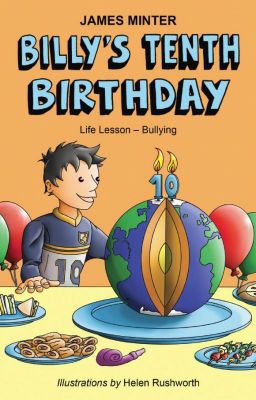
Billy’s Tenth Birthday – James Minter

 “If you’re horrible to me, I’m going to write a song about it, and you won’t like it. That’s how I operate.” ― Taylor Swift

21685402-256-k269886Billy’s Tenth Birthday is the first volume in James Minter’s new Life Learning Series. The story follows Billy, a young boy who turns ten on the tenth October – 10, 10, 10 – a once in a lifetime occasion. Billy’s excitement at his ‘big’ birthday perfectly encapsulates that of a child who is bordering on adolescence – each birthday seems so much more important than the last, and the move from single to double figures is one of the greatest of all.

On Billy’s birthday he is over the moon to be given a £20 note by his granddad. No more silly children’s toys, he can finally buy what he wants. At the age of ten this must seem like a huge amount of money – possibly more than Billy has ever owned. The options available to him seem countless. But things take an unpleasant turn when the local bully hears about Billy’s birthday present, and forces him to give it up – or else. Billy, like many other children his ages, agrees to the bully’s demands.

Billy is devastated to have lost his special birthday present, but he attempts to keep the situation a secret from his mum and granddad. He has nothing to be ashamed of but has convinced himself that the adults in his life will be cross if they find out what has happened. Like many bullied children he feels he cannot turn to anyone for help. Fortunately, luck is on Billy’s side, and a little bird finds out about the Bully and tells Billy’s granddad. Together they are able to hatch a plan to get the note back and to ensure the bully gets what’s coming to him!

Billy’s Tenth Birthday is a wonderful example of a story that young children can enjoy reading together with their parents. The book carries Minter’s trademark wit, and is well written and accessible, but it also deals with a serious issue that will affect many children as they grow up. Bullying can be a difficult subject for children to talk about, many may feel frightened or embarrassed if they fall victim to bullying. Minter’s book acts as the perfect icebreaker for adults and children to begin discussing these issues.

The message in Minter’s book is clear – you can’t rid the world of bullies but you can do something about how you deal with them.

Twisted Wing – Ruth Newman

“Nobody owns life, but anyone who can pick up a frying pan owns death.” ― William S. Burroughs

I was recommended this book by a gentleman I used to work with, he found out I liked to read horror fiction and said this one would give me a fright. Sadly he passed away the January before last, so this one’s for him. Thank you for the recommendation Michael, it saddens me to know I will never again read a book on your advice.

‘Jesus Christ,’ Denison heard Weathers say. He stood up, and as the paramedics and police officers and pathologists shifted position, he saw, between and beyond them, the boy that lay spreadeagled on the floor in a pool of blood, torn open, intestines dragged out and over the floorboards.

51kFwZLeM+L

Cambridge is known as a seat of academic excellence, home to one of the most prestigious universities in the world – but sometimes evil lurks in the most unexpected places.

Exams are over and the students of Cambridge University are celebrating, but for one college, the annual May ball takes a bloody turn when a female grandaunt is found brutally murdered in her chambers. Alongside her mutilated body are two further students, Nicholas Hardcastle, found holding the knife frantically stuffing the entrails of the victim back inside her body, and his girlfriend Olivia Corscadden, blood-soaked and completely catatonic. The  ‘Cambridge Butcher’ has struck again.

It is up to forensic psychiatrist Matthew Denison to attempt to draw the killer’s identity from the troubled mind of Olivia, one the most traumatised patients he has ever worked with. If anyone can hope to solve the mystery of the Cambridge Butcher it is Olivia, if only Denison can get her to remember.

She was a pretty girl, Denison thought, even with the black eye and the split lip. Not for the first time he wondered what had provoked this extreme response. Had she really witnessed the murder? Has she herself fought off the killer?
Was the identity of the Cambridge Butcher locked away in that broken mind?

Twisted Wing is as unputdownable as they come – I wasn’t particularly blown away by the calibre of the writing but the story-telling is second to none. Newman switches between the present and past tense, feeding the reader snippets of information about the Cambridge Butcher. While the novel begins in the present tense, the story itself begins four years in the past, when the Cambridge Butcher’s first victim is found.

The book seems to get off to a fairly average start, there are two people found at the scene of the crime, Olivia is sent for psychological analysis while Nick becomes the number one suspect. Having read murder mysteries before I thought it was pretty obvious neither of them would turn out to be the killer. It would be too simple, or so I thought. In reality, the book is far more complex and unexpected than I ever could have anticipated. It is more of a psychological thriller than a run of the mill murder mystery.

The murder case is an absolute mystery to the police, and it falls to Denison to work out the answers. The students of Ariel College seem to have formed into an impenetrable unified force; there is an ‘us and them’ mentality, and as such the police are struggling to crack the case. One thing is certain, the murders have been committed from within the walls of Ariel College – somewhere within the carefully guarded group is a dangerous psychopath. It has been four year since the first murder, and they are no closer to finding the killer. It is up to Denison to uncover the identity of the Cambridge Butcher, but he must first work out the true identity of Olivia.

I would love to tell you that I found the book scary, but the reality is that I didn’t – that said, I am a hard-boiled horror fan so it takes a lot to frighten me. The book is definitely unsettling, and there were times when I felt disturbed by what I was reading, but I personally didn’t get that much of a thrill from it – sorry Michael.

Even so, I consumed the book in a matter of days – only stopping to sleep and go to work. I would recommend you set aside a weekend to read it in its entirety, because you will want to keep reading at the end of each chapter.

If you’re a fan of murder mysteries and psychological thrillers I would definitely recommended giving Newman a look in – and if you don’t fall into one of these categories I think it’s fairly obvious this isn’t the book for you.


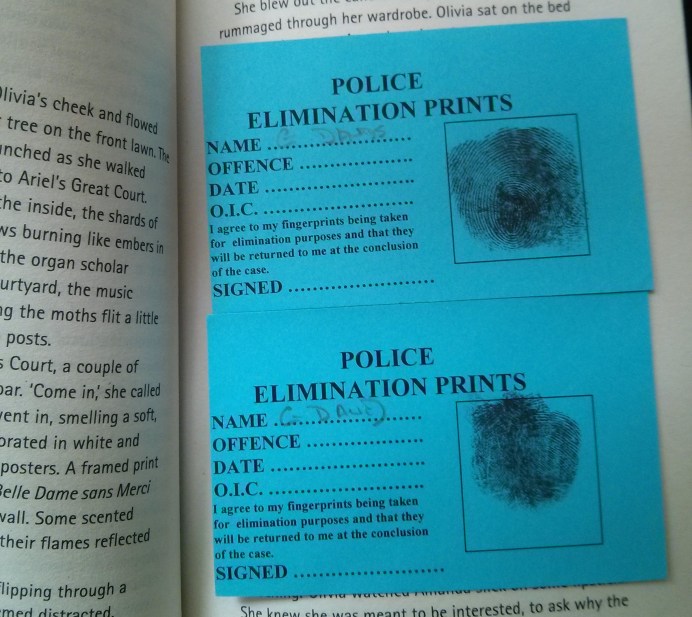
A slight caveat – I did get a little freaked out at one point when I was reading the book, but that was less thanks to Newman than it was to an unknown individual who decide to sell their second hand copy of Twisted Wing on Amazon. One night I was reading in bed when I felt something fall from between the pages of the book, I assumed it was my bookmark and thought nothing of it, until I went to put the book down and found these police elimination prints in my bed.

IMG_20150608_113506

Weird coincidence isn’t it? Why would these be inside a book? The creepiest thing is that they didn’t fall out until I was three-quarters of the way through; my bookmarks always fall out so why didn’t these? Perhaps the old owner put them in there as a bit of a practical joke, or maybe he was just using them as a bookmark (interesting choice). Either way it was unsettling – and slightly exhilarating finding them.