#savetheculture – book exchange!

If you are on social media you may have already heard about the #savetheculture movement. If not, never fear, I am here to tell you all about it.

Basically, it’s a way to share books with other booklovers in a sort of ‘pay it forward’ kind of way. You send out one book, and, depending on how many people get involved, you could receive several in return, and it all takes place using the power of social media!

Last week on of my Facebook friends posted a status asking if anyone wanted to get involved – obviously I jumped at the chance.

So here’s how it works:

When you respond to a friend’s #savetheculture tag, you get given an address to send a random book to, you then share the hashtag yourself, and anyone that responds gets given the name and address of your friend, they then do the same and share your name and address.

It’s that simple!

This slideshow requires JavaScript.

Head on over to google and give #savetheculture a little search and you’ll see there are loads of people doing it already. If somehow you don’t have any friends who are already taking part, then you can start it off yourself by giving out address of a random book-loving friend – but you should probably get their permission first!

I wasted no time in sending out one of my favourite books – a book I recommend to everyone, and have absolutely no qualms about sharing with a stranger – and I absolutely love the fact that no one knows who sent it 🙂

I know what you’re thinking, how can you be sure you will get any books in exchange for your kind deed? Well, you can’t. It all depends on other people getting involved, but to be honest, the prospect of sharing a book with a stranger was enough for me.

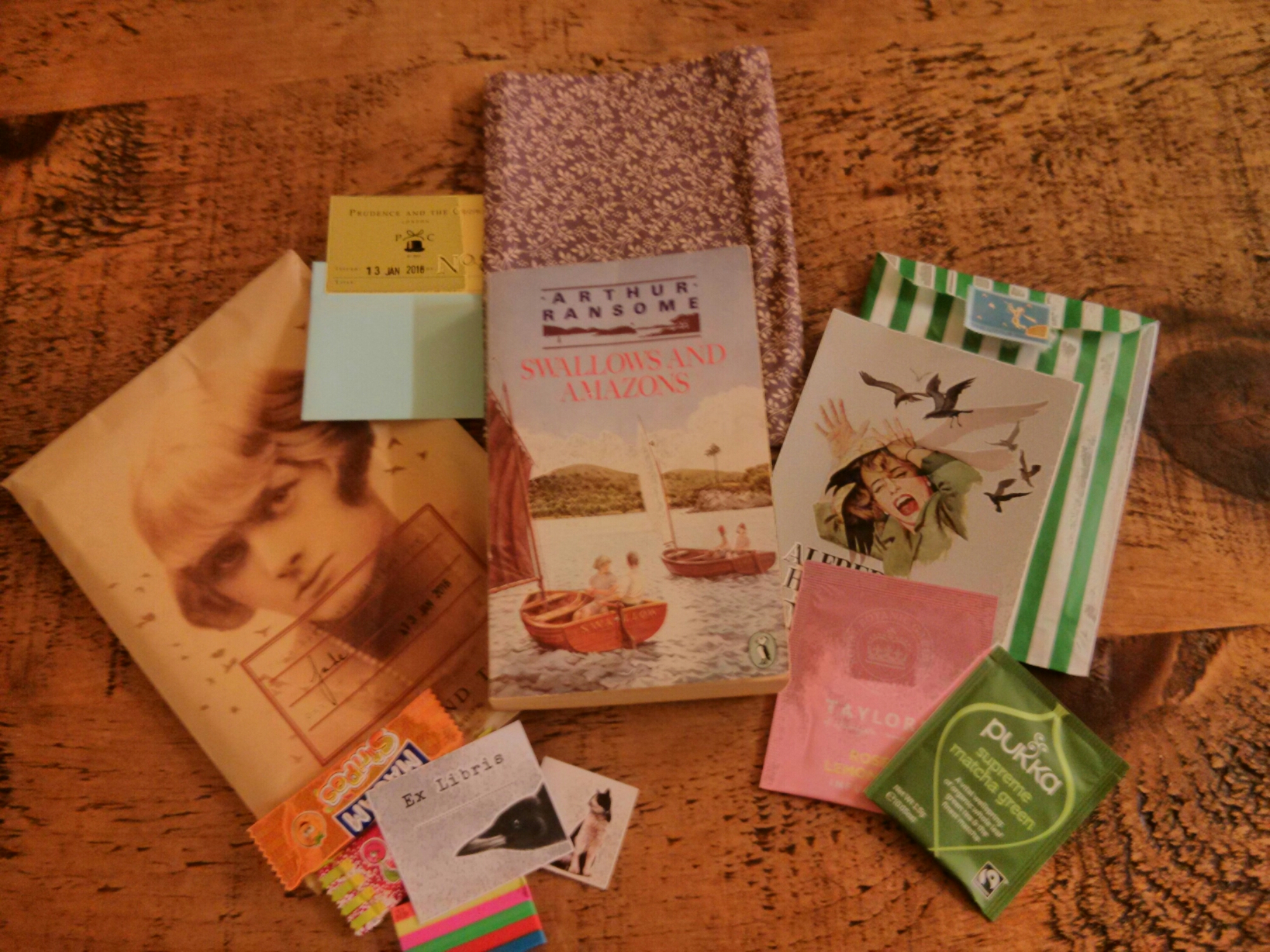
That said, I can’t deny I was pretty excited when today, a whole eight days after I added to the #savetheculture chain, I received a mysterious package in the post

This slideshow requires JavaScript.

I’m so excited to have recieved any books at all – two in one is an absolute bonus – and they are both books I’ve never read. Best. Day. Ever.

So there you have it, if, like me, you like spreading the word about really good books, then this is a great way to get your recommendation just that little bit future, and, if nothing else, it is sure put a smile on a fellow booklover’s face.

Now, get out there and #savetheculture!

The Winter Children – Lulu Taylor

“Writing a NYT bestseller was a delightful experience. But there are many books which are read by few that should be read and reread by many, as well as books bought by many that are hardly worth the ink.” ― Ron Brackin
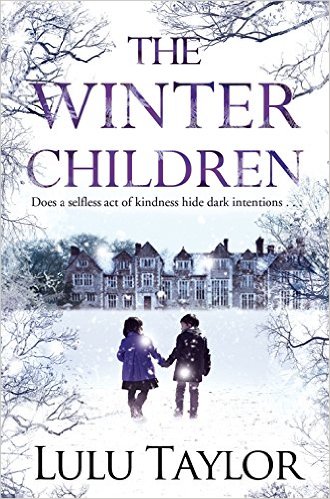
51ZdfG9dsRL._SX328_BO1,204,203,200_

I don’t enjoy posting bad reviews, I enjoy writing them – it’s incredibly cathartic – but I don’t enjoy posting them, so I’ll try and keep this short…

I was travelling to London one afternoon and regretfully forgot to pack something to read; terrified of the idea of a train journey without reading material I ducked into the station’s WHSmith and went to peruse the bestsellers and new releases. I found this one, and didn’t really give much thought to the blurb, silly I know, I guess I was in the mood for a winter’s tale.

I wish I had remembered to pack my book that day, or picked up something different when I went into WHSmith, or been late for the train and had to gaze out of the window for an hour and a half, and more than anything I wish I’d stopped reading this when I realised how much I disliked it, but once I started I felt compelled to keep going.

This book is about a childless couple, Dan and Olivia, who after years of trying to conceive decide to use an egg donor, in one final attempt to fall pregnant. The problem lies with Olivia, and using an egg donor is the only chance they have. Unfortunately, Olivia is married to a complete narcissistic arsehole, who openly admits he would not be able to love the child on someone he doesn’t know.  Luckily for Dan and Olivia, Dan has an old university friend, and borderline psychopath, by the name of Francesca, who is obsessively in love with Dan, and offers to allow them the use of her eggs. Sounds like a great idea doesn’t it? Of course Olivia cannot know, and this is where the story begins.

Fast forward a couple of years and Olivia and Dan, having been blessed with twins and after spending the first few years of the babies’ lives with Olivia’s family in Argentina, make plans to return to the UK – but they have nowhere to live. Meanwhile Francesca’s husband decides he wants to buy an enormous derelict manor house as a renovations project. Francesca, being the mentalist that she is, sees the perfect opportunity to have the twins nearby and invites Dan and Olivia to live onsite and look over things.

After they move in the house beings to ‘surrender its long held secrets’ – this occurs in the form of several chapters given over to a time in the 1950s when the hall was an all girls school. I held out hope that this part of the story would make the book more exciting, but it didn’t. There was nowhere near enough historical background to make up for the rest of the book.

I won’t bore you with more details, mainly because it is hugely predictable and I am sure you can see where this is going. So let’s just say Francesca makes a nuisance of herself and eventually all hell breaks loose.

So, aside from the fact that the storyline did absolutely nothing for me – I could have forgiven that and just put it down to not being quite my thing – it was the absolutely detestable characters which made the book unbearable.

I’ve already established that Francesca is mental and Dan is a narcissist. Sure, I didn’t like these characters, but I didn’t feel anywhere near as much outright hatred as I did for Olivia.

Olivia has absolutely nothing going for her, she is weak, one-dimensional, and just so horribly dull, add to this her over-emphasised obsession with food and you have the perfect recipe for the worst character of all time. When she isn’t thinking about, looking after or admiring her children, Olivia is thinking about food – it could be something as simple as thinking about giving her children a cracker or preparing them lunch, or a passing thought about the ‘indulgent creaminess’ of a cheesecake she has made, but it is relentless. Olivia is cooks a meal and it smells delicious, she serves the meal, she admires her work, she savours every bite of the food, or sometimes, just to jazz things up a bit, she neglects to taste the food, while somehow still managing comment on it, because she is so preoccupied with something else. I found this incredible annoying. I wouldn’t have minded as much if she was portrayed as an out and out foodie, but she isn’t. She’s just an incredibly boring woman who happens to think about food a lot.

I thought nothing could make me dislike Olivia more, but then I got to the climax of the story, the chapter when all hell breaks loose, and ordinarily you can’t bear to put a book down. In this scene, having found out Dan and Francesca’s deep, dark secret, Olivia is transformed into a ‘mighty goddess’ ready to rip the ever-living hell out of Francesca. This is the one time she does anything other than lie down and take a good shoeing from everyone around her, but, far from making her into a more believable character, the scene is so horribly clichéd and badly written that she just sounds ridiculous.

‘Let them go!’ cries Olivia in a terrible voice, full of strength and fury. She feels able to lift Francesca up and toss her against the wall. She feels she could crush her with her fingertips, she is so strong and fierce.

That’s right, Olivia is ‘strong and fierce’ with a ‘terrible voice’. You do not want to mess with her, and if you haven’t quite got that impression yet, then this next part will really drive home just how badass she is:

Olivia nestles both children to her chest, their bodies awkward against hers. They press into her, crying loudly. ‘Never, never touch these children again. They are mine do you understand?’ Her eyes are flashing and she is mighty, a mighty goddess who will destroy anyone who threatens her children. ‘They are mine and you can’t have them!’

So there you have it, I thought that this book was a waste of the paper it was written on. It was ill-conceived, predictable, sloppy, and above all badly written.

Let this be a warning to all of you who are so determined to have something to read on a train journey that you pick up something from WHSmith. You could find something fantastic – the last time I did this I discovered The Shock of the Fall and it made me reckless – but you could end up with a massive wet fish. Now I’m off to donate this thing to charity, or leave it on a park bench, or, more than likely, to cut out the middle man and send it straight to the pastry cooks on Duck Lane.
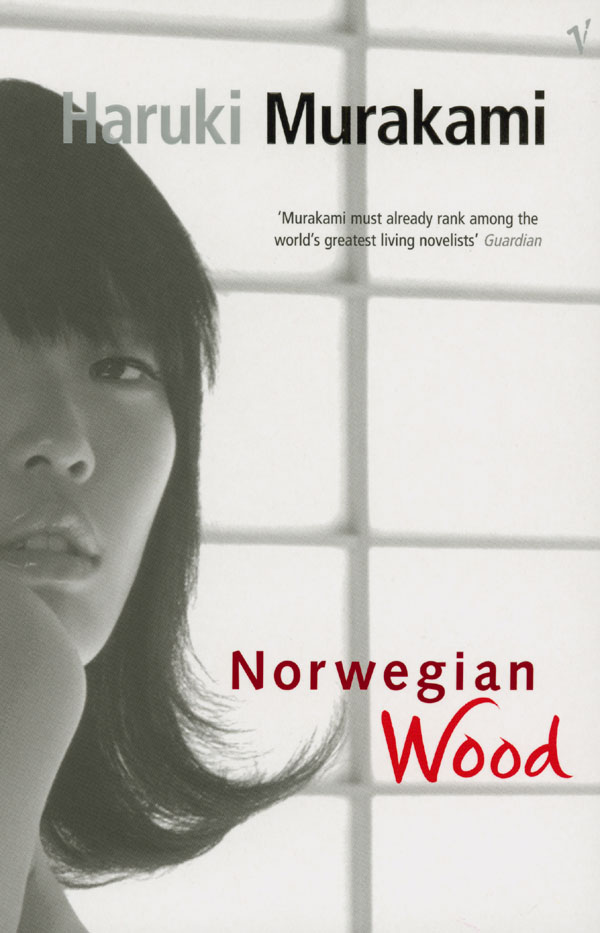
Cambridge Book Club – Norwegian Wood

HM-NorwegianWood(UK)Paper

This has been a very long time coming.

Norwegian Wood was recommended as a book club read about ten months ago, but our group fell into absolutely chaos not long after and we haven’t met since. Such is life in a university city, you can never pin people down. Today (what better day than World Book Day?) I officially give up hope that our book club will ever meet again, or discuss the novel, which, by the way, would have made for an incredible topic of conversation. So I throw the rope to you, fellow book clubbers, go out, buy Norwegian Wood, and get reading.

I once had a girl, or should I say, she once had me
She showed me her room, isn’t it good, Norwegian wood?

Music can carry memories, of a time, a place or a feeling. ‘Norwegian Wood’, the melancholy Beatles song, has this effect on Toru Watanabe, who, as he hears the first sad notes, is swept back almost twenty years, to his time spent studying in Tokyo.  A time filled with confusion and rebellion, student life in the late 1960s was rife with protests, social unrest, and nationwide movements against the establishment. For Wanatabe life is just as tumultuous – filled with strange encounters, casual sex, meaningless friendships, and an undying commitment towards a gentle but troubled girl from his childhood. Life is confusing, but monotonous, until an impulsive young woman, with wide-open eyes and an attitude to match, streams into Wanatabe’s life, and he finds himself forced to make a choice, the future, or the past.

I fell completely in love with this book and, I can safely say having explored some more of his work, with Murikami himself. I know one or two members of the club didn’t feel quite the same as I did, but as we foolishly kept our discussions to a minimum, choosing to save our thoughts for the meeting which never occurred, I was unable to discuss it at length with anyone. So, if any of you have read the book and want to discuss it, in the comment sections or via email, I would be more than happy.

In the meantime, here are a few questions to think about, or to discuss with your own book clubs:

What were your feelings towards the main characters, Wanatabe, Naoko and Midori – how do they differ?
What is the relevance of the song ‘Norwegian Wood’? Does this relate to more than just a song?
Wanatabe often draws on his love of the book The Great Gatsby , why do you think this is?
How do you interpret Wantabe’s friendship with Nagasawa?
How, if at all, do you think the sexual encounter between Wanatabe and Naoko influence Naoko’s mental state?
Why do you think Wanatabe makes his final choice? Does he, in fact, make a choice at all?
How do you interpet the novel’s ending? What is happening to Wanatabe during this final exchange?
The book begins looking back, and never returns to the original tense, why do you think this is?
What do you think Wantabes ‘current’ situation is? Where did he end up?
Norwegian Wood is considered to be the most autobiographical of all Murikami’s books – what elements do you think speak of autobiographical moments?


February cheer from Prudence and the Crow

I know, I know, February ended yesterday. In my defence I have been incredibly busy – there was this trip to Germany, multiple training courses and then I got obsessed with a computer game, it’s just been crazy!

This month’s – or rather last month’s – box of treats, as usual, did not disappoint. Prudence and the Crow have clearly picked up on my love of children’s literature, and are doing their best to introduce me to all sorts of wonderful names and stories.

IMG_20160216_180442

And, as luck would have it, this one came with another inscription!

IMG_20160217_175042

I wonder how old Trevor is now…

Perhaps I’ll ponder that over a cup of nighttime tea 🙂

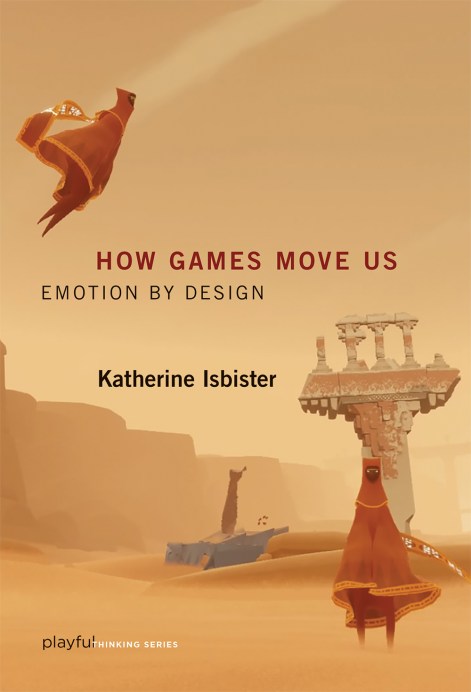
How Games Move Us: Emotion by Design – Katherine Isbister

“If I was feeling depressed or frustrated about my lot in life, all I had to do was tap the Player One button, and my worries would instantly slip away as my mind focused itself on the relentless pixelated onslaught on the screen in front of me.” ― Ernest Cline

9780262034265_0

What do you see when you hear the word ‘gamer’? If your immediate vision is that of someone pasty white, sat hunched over a keyboard, face lit only by the pale blue light of a computer monitor, insistently clicking away for hours on end with no real aim in mind, then get ready to re-evaluate your stereotype.

For years now filmographers and music researchers have analysed the emotional effect of film and music, while the computer game industry has been largely ignored as un-emotive. Katharine Ibister poses the question – why should games be any different?

In ‘How Games Move Us’, Ibister attempts break down the negative stereotype surrounding computer games and open up public conversation up to a more sophisticated approach to computer games as a cultural medium. The book serves as an exploration of the emotional experience of gamers, as well as how different games are used, explored and experienced by different people

“People talk about how games don’t have the emotional impact of movie. I think they do – they just have a different palette. I never felt pride, or guilt, watching a movie.” – Will Wright, designer of The Sims.

Far from being devoid of emotion, video games, Ibister argues, can actually elicit strong emotional responses in players in a multitude of ways, ranging from a simple feeling of anxiety in horror-based survival games (think Amnesia, or Silent Hill); to the inexplicable feeling of guilt which arises from spanking a pet Tamagotchi, or worse, letting it die. Delving further into the simulated world of gaming, Ibister also analyses how certain games create strong emotional bonds between players and non-player characters, and social connections among players in networked games.

Ibister analyses the techniques used by game designers to create these emotional responses, drawing examples from across the gaming industry. Ibister analyses games ranging from much-loved classics such as The Sims and Little Big Planet, to more obscure, one-off projects, including Anna Anthropy’s cooperative maze-navigation game Keep Me Occupied, and the once great massively multiplayer online role-playing game City of Heroes.

Many of you may take issue with a researcher attempting to define games as a whole – Ibister does not try to do this. The huge variety of games are not merely thrown into the melting pot labelled ‘computer games’ –  she differentiates but does not attempt to define, focusing on certain games within sub genres while acknowledging the partiality of her analysis.

How Games Move Us is an incredibly interesting, enlightening, and poignant read, and will no doubt evoke similar feelings in a reader as it strives to explain in a gamer. Ibister presents a new way of thinking about and understanding games, a medium which, though misunderstood, offers players

This review was first posted on WordPress for E&T magazine.

Bridges – Christian Menn


“In ancient Rome, the highest priests held the title of pontifex, which means builder of bridges. By providing a link between gods and men, these pontifices were indeed builders of spiritual bridges between heaven and earth.”– Christian Menn

Menn_Umschlag_TS_39L.p1.PDF
Scheidegger and Speiss, 1st edition 2015, 352 pp, ISBN 978-3-85881-455-5, £70 Hardcover

The humble bridge, while it may not strike you as one of the most exciting topics of conversation to introduce at a dinner party, is without a doubt one of the most significant early feats of structural engineering, which revolutionised travel dating back as far ancient Rome.

Of those involved in modern bridge design and construction, few are more noteworthy than renowned Swiss structural engineer Christian Menn, whose work spanned the latter decades of the 20th century, went on to inspire a generation of future bridge designers, and continued a long-standing tradition of Swiss excellence.

This stunning publication from Scheidegger and Speiss features more than 30 of Menn’s revolutionary designs, both built and unrealised, across 276 full colour and black and white images, with in-depth captions analysing the specifics of each project.

Menn’s text highlights his thinking and philosophy, approaching the circumstances and design process surrounding each individual project, demonstrating the passion and enthusiasm one expects more from an artist than an engineer. The book offers a fascinating insight into not just Menn’s experience as a bridge designer but also the art and history of structural engineering.

While many of Menn’s designs have become landmarks admired for their stunning design work and elegance, some of those displayed within the book will not take the layman’s breath away, instead appearing as those to be driven across and forgotten. Nonetheless each is a spectacular feat of design and engineering, a lifetime of work and passion, and years of combined construction, creating what is truly a work of art in its own right.

This review was first published on online for E&T magazine.

30-Second Meteorology – Adam Scaife and Julia Slingo

“The storm starts, when the drops start dropping. When the drops stop dropping then the storm starts stopping.” ― Dr. Seuss

30-second-meteorology-1-9781782403104-976x976
Ivy Press, 160 pages, ISBN: 978-1-78240-310-4, Hardback £14.99

Did you know that Horace-Bénédict Der Saussure invented the cyanometer? No? Do you even know what a cyanometer is? Well, having read 30-Second Meteorology I can tell you it is a quantitative scale by which to measure the blueness of the sky.

Want to know more? Read on.

The latest edition from the makers of the 30-second book series – 30-Second Meteorology: The 50 most significant events and phenomena, each explained in half a minute – will introduce you to the science behind, and the history of, the Earth’s most significant atmospherical phenomena in easy to digest, 30-second sections.

The book analyses weather from the basic, to the complex – from chapter one, The Elements, which focuses on the basic features of weather, in the form of air, clouds and rain, right through to the final, Extreme Weather, section which gives time to the wilder side of meteorology, exploring tornadoes, hurricanes, and the terrifyingly named ‘sudden stratospheric warming’, and everything between. Discover the nature of Earth’s atmosphere, the science behind weather forecasts and predictions, and the history of the aptly named trade winds.

If you are put off by the idea of a science book for dummies then rest assured that this book doesn’t just take the science behind meteorological events and cut down into bite-sized chunks

Complete with concise biographical profiles of the top names in meteorological history – including Svante Arrhenius, the man who first noted the link between atmospheric CO2 and the greenhouse effect, and Lewis Fry Richardson, the brain behind modern weather forecasting – and an historical look at the origins of weather systems and the technology used in measuring and predictive metrological events, 30-Second Meteorology is the perfect quick guide to the history of meteorology, which anyone can enjoy.

I don’t want to spoil the surprise, but crack this book open and you can expect to find out, amongst other general knowledge gems, which 17th century Italian physicist invented the barometer.

This book is also beautiful, and a snapshot of the cover image alone doesn’t do that justice. An ugly edition can spoil a good book, but this one does not disappoint – hardbound and fully illustrated with stunning vintage photomontage prints by Nicky Ackland-Snow the book is an actual pleasure to read. I could have spent hours studying the typography and design alone.

Overall, this is a really fun, interesting book to read – a sure-fire success with fans of weather systems and general knowledge alike. With a concise forward by Met Office Chief Scientist Professor Dame Julia Slingo, and contributions from top names in the field of meteorology, 30-Second Meteorology is the perfect book for anyone, outside of the field of academic meteorology, who wants a better understanding of weather systems and the history meteorology as a science.

This review was first posted on WordPress for E&T magazine.

A Stranger Came Ashore – Mollie Hunter

“I believe in everything until it’s disproved. So I believe in fairies, the myths, dragons. It all exists, even if it’s in your mind. Who’s to say that dreams and nightmares aren’t as real as the here and now?” ― John Lennon

9780863158834
Beautiful cover huh? It’s not mine though.

It was a dark and stormy night in Black Ness, the wind was cruel and the rain fell in harsh, icy sheets. All through the town not a soul could be seen, but down in the bay a lone figure made his way through the waves, the sole survivor of a merchant ship, dashed to smithereens on the sharp rocks. Late that night, as the town settled down to sleep, a stranger came ashore.

A Stranger Came Ashore delves into the myths of the selkie-folk – seals that can assume a human form, and are often seen with their heads bobbing just above the waterline, staring into shore with strangely human eyes. The myths are known most commonly in the Orkney Islands and the Shetland Islands – the latter being where this story takes place. While the myths of the selkie-folk vary from place to place, one thing is always consistent, in order to assume human form, a selkie must shed its skin, at which point it becomes instantly vulnerable, for if a selkie should lose its skin it cannot return out to sea.

I love to read up on local myths and legends, not only does it give a great insight to the culture of a place, but I find the thrill of the unknown absolutely irresistible. I like to look up local legends and famous haunted spots anytime I visit a new city – an odd quality perhaps, but there you go. So, basically, I was absolutely thrilled to discover this book.

I have heard of selkie-folk before, but the only stories I can recall are about the female selkie. These stories are often more tragic than dark: the woeful tale of a beautiful selkie woman lured onto land by a human man, who inevitably steals her seal skin and takes her for a wife. Typically, the woman in the story eventually reclaims her skin, usually because one of her children stumbles upon it, and flees back to her home beneath the waves never to be seen again. Tales of the female selkie are somewhat notorious for following this theme, as is eloquently summed up by Sofia Samatar in Selkie Stories are for Losers:

I hate selkie stories. They’re always about how you went up to the attic to look for a book, and you found a disgusting old coat and brought it downstairs between finger and thumb and said “What’s this?”, and you never saw your mom again.

A Stranger Came Ashore is different to the ‘selkie stories’ so abhorred by Samatar, however, and instead focuses on the insidious, manipulative side of the male selkie.

The male selkie when in human form is said to be a wonderfully handsome creature, with magical powers of seduction over Earth-borne women. In selkie lore, the male selkie enjoys nothing more than coming onshore, shedding his skin, and seeking out unsatisfied women, both married and unmarried, to satisfy his cravings. Indeed, according to 19th century Orkney folklorist, Walter Traill Dennison, selkie males ‘often made havoc among thoughtless girls, and sometimes intruded into the sanctity of married life.’ Scandalous!

Enter Finn Learson – the protagonist, and guest selkie, of A Stranger Came Ashore. Finn Learson appears to the Henderson family one dark and stormy night, knocking on the door of their simple butt and benn house to seek refuge from the weather. Assuming him to be a victim of a ship wreck, the family offer him a bed by the fire, and are quickly taken by the young man’s charms. Indeed no one is more taken with Finn Learson than young Elspeth Henderson, who, though she herself is bequeathed to the wonderfully eligible Nicol Anderson, is instantly bewitched by the stranger’s deep brown eyes. The only members of the family who are not fooled by Finn Learsons’s charade are Robbie Henderson, and his grandfather, Old Da – both of whom are horrendously outspoken, one for being young and impressionable, the other for being old and somewhat ridiculous. Soon after Finn Learson’s arrival Old Da’s health takes a sudden turn for the worse and he confesses his suspicions to Robbie. Informing the boy that Finn Learson is none other than the evil great selkie of Shetland legends, and he has come to take Elspeth.

Poor Robbie Henderson knows in his heart there is something wrong with Finn Learson but he is never to be believed by his family, who see only the polite young man that the great selkie wants them to see. The selkie-folk are nothing but a myth – and Old Da is guilty of filling Robbie’s head with fantasy. With no one in his family willing to listen, Robbie turns to the only person who might be able to help, a man who fills his belly with terror: Yarl Corbie – the local schoolmaster. Yarl Corbie is a brutal, terrifying and mysterious man, who agrees to lend a hand to Robbie, if only to fulfil his own personal vendetta.

On the night of Up Helly Aa – a pagan festival celebrated in the Shetland Islands – Finn Learson makes his move. As the daylight fades, the young men of Black Ness are transformed into the Earth spirits of old and a dreamlike state of merriment falls over the town. Finn Learson weaves through the celebrations, leading the beautiful Elspeth from house to house, while Robbie follows. The pair fly through the crowds, dancing in the moonlight and jumping from place to place like shadows in candlelight. There is mystical, almost spiritual feel to the festival, as though Robbie is chasing an apparition – in a blink of an eye all could be lost.

One moment he had the will-o’-the-wisp figure of Elspeth in full view as she danced ahead of him across the hill. The next moment, his weary eyelids drooped, and before he could blink them open again, the green of the northern lights had vanished behind one of the sky’s spells of total darkness.

As she slips through the crowds Elspeth is blind to her fate. Obliviously living out what could be her last moments on Earth; she dances closer and closer to the great selkie’s home beneath the waves.

This book is positively brimming with everything I love: myths, legends, premonitions, dark tidings, strange characters, and creatures that lurk in the shadows. It’s is a creepy, thrilling read, which also offers an insight into some truly fascinating culture. A Stranger Came Ashore would be the perfect novel for anyone with an interest in myths and legends, but would be particularly well suited to a young Goosebumps or Point Horror enthusiast who fancies sinking their teeth into something a little more substantial.

To beat the January blues…

January is by far my least favourite month, I try not to be so negative but, it really is just awful. It’s long and gloomy, and spring is still months away. I hate it.

I know material things shouldn’t make a difference…

But…

This really helped lift my spirits.

image

It’s like a little care package, with everything I need to hide away until spring (or at least February).

I know I get one every month, but they still make me smile and this month is extra special, as it contains one of my favourite things in the world: an inscription!

image

I’m quite pleased.

Now, if you’ll excuse me, I’m off to dream up all sorts of personalities for Rhiannon Parfitt.

Fardwor, Russia! A Fantastical Tale of Life under Putin – Oleg Kashin

“I predict we will abolish suffering throughout the living world. Our descendants will be animated by gradients of genetically pre-programmed well-being that are orders of magnitude richer than today’s peak experiences.” ― David Pearce

Fardwor,+Russia!+by+Oleg+Kashin+-+9781632060396
Translated by Will Evans, Restless Books, 12 January 2016, 224 pp, ISBN 978-1-632060-39-6 £9.99 paperback

Oleg Kashin is a rather notorious Russian journalist whose open criticism of the Putin government may or may not have motivated unknown assailants to beat him to within an inch of his life back 2010. You’d think such an event would put the dampeners on a guy, but apparently Kashin was undeterred and returned full force to publish his first work of fiction, Fardwor, Russia! A Fantastical Tale of Life Under Putin, in Moscow, just two months later. Now, in a new edition translated by Will Evans, Fardwor, Russia! has been made available for international audiences with a taste for controversial political satire. The ridiculous sci-fi dystopia nestled within the garish pink cover bears more than a slight similarity to Russia under Putin and, with new stories of corruption in the Kremlin making the front page of international news sites each month, it has never been more topical.

The main protagonist of Fardwor, Russia! is Karpov, an enthusiastic young scientist who, with the help of his deceased grandfather, invents a revolutionary new growth serum that actually works. In an old wooden shack, which serves as a makeshift laboratory, Karpov spends his days experimenting on common sewer rats and creating unspeakable monstrosities, while his long-suffering wife, Marina, sits mournfully in their dusty apartment lamenting a life left behind in Moscow.

Delighted with his results, Karpov begins offering the serum to local farmers, promising fully grown livestock in exchange for new-born piglets and calves, before tracking down a circus midget. Unfortunately for poor, deluded Karpov he is wholly unequipped to deal with the full force of his discovery, and before he can reap any rewards all hell breaks loose. The meat industry is furious with the prospect of cheap meat resulting from an abundance of livestock; a dwarf oil oligarch makes use of the serum before running away with Karpov’s wife; and a giant cat goes on a rampage and eats a man’s face and heart. But it is not until the professional scientists get hold of the serum that things get really ugly.

Fardwor, Russia! is wonderfully strange and fantastically frightening, a gruesome yet hilarious tale of genetic engineering gone awry, combined with a grim political parable of the danger of power in the wrong hands. A ludicrous satire with a serious twist – Fardwor, Russia! is a must read those with an interest in Russian politics, or fans of science fiction that borders on the ridiculous.

This review was first posted on WordPress for E&T magazine.