The Cambridge Phenomenon: Global impact – Kate Kirk and Charles Cotton

3-d_CPGITRANS_1024x1024.png

There’s a well-known saying, ‘it takes a village to raise a child,’ and in Cambridge, you could say ‘it takes a cluster to raise a company.’

For nearly 40 years, a technological powerhouse has been growing in the English countryside. Nestled on the southern tip of East Anglia, Silicon Fen, also known as the Cambridge Cluster, may pale in popularity to its older, wiser sibling – Silicon Valley in California – but is of no less importance locally and indeed, globally. Widely acclaimed as a centre of excellence for knowledge and education, Cambridge is ranked as the No.1 University in the world, but its contribution to technological development is less known.

It is remarkable to consider just how many life-changing technologies originated in a small city in the heart of the English fenland. From the discovery of the DNA double helix by Watson and Crick – the findings were announced in the Eagle pub, Benet Street on a cold lunchtime in February 1953 – to the first Acorn computer, the beige and black, blocky creatures loved by school children of the 80s and 90s. At the heart of the cluster you find the university, a place that nourished revolutionary academics including Isaac Newton, Charles Darwin and Lord Byron, whose fascination with the arts and science helped shape the romantic period. Still an academic centre of excellence, the university has transformed through the years into the advanced hub that it is today.

In their new book, The Cambridge Phenomenon: Global Impact, authors Kate Kirk and Charles Cotton attempt to highlight the influence that Cambridge has as a powerhouse for innovation and excellence – an influence that, according to the authors, has been largely underestimated. They argue that developments in Cambridge today and in the past have not only had a hugely positive impact on UK economy, but around the world in everything from computer chips to gene therapy.

Much of the technology we use is available thanks to Cambridge innovations, from the chips within a smart phone – the majority of which owe their existence to ARM – to anything equipped with Bluetooth technology. To date, some 4,300 knowledge intensive companies are located within a 20 mile radius of Cambridge, 15 of which are valued at over $1billion, two at over $10billion. 25 are the largest corporations in the world (such as Amazon, AstraZeneca and Microsoft) which have opened operations in the heart of the city.

In the forward to their first book, The Cambridge Phenomenon: 50 Years of Innovation and Enterprise, Microsoft founder Bill Gates wrote that the impact of Cambridge ‘reaches every corner of the globe’. In this year’s follow up publication, Kirk and Cotton advance on this point, highlighting the growth of the Cambridge cluster and the people and businesses behind this technological revolution. Cambridge is no longer just the birthplace of great technological advances, but a place to transfer knowledge and grow multinational business.

At the launch of the book, Kate Kirk commented in a similar vein that “the Cambridge phenomenon has reached a status of brain gain rather than brain drain. Instead of early-stage technology companies being bought up by overseas companies and taken away from Cambridge, we are now seeing multinational companies using acquisitions as a way of becoming part of the Cambridge ecosystem. These ‘sticky acquisitions’ are a major indication of Cambridge’s success.”

To this end, the book explores not just particular products and services that have emerged from Cambridge, but also the research institutes and technology sectors that are behind some of the city’s biggest successes. From life science and healthcare to inkjet printing, a wealth of technological innovation encourages competition and attracts talent to discover the potential of the Cambridge Cluster.

This book is important, not just in what it says, but in the work that it represents and the great minds that it credits. Much of the work within Cambridge gives birth to bigger and greater products and services. The effect that this small fenland city has in the wider world should not be underestimated.

This review was first published on WordPress for E&T magazine

Summer gifts from Prudence and the Crow 

Another month has passed, you know what that means? Not only are we over halfway through the year – scary huh? – but I have another bookish treat to share with you.

More splendid gifts from my friends at Prudence and the Crow, this time in the form of my old pal Paddington.

It’s not often that I take the time to revisit my much-loved childhood authors – although I will confess to having Beatrix Potter’s new release on pre-order – but I do so enjoy being given an excuse do so.

I was completely in love with Paddington when I was a little girl: bedsheets, teddy bear, fluffy bedroom rug – I had it all! His gentle, bumbling nature, toggled felt coat and somewhat magical stream of marmalade sandwiches hidden under his hat were a source of constant comfort to me. I only hope that as an adult I am still able to enjoy this delightful little bear as much as he deserves.  

Right now, with so many unpleasant things going on in life – let’s not mention them out loud, but I’m sure you know what I am talking about – I can think of nothing I want more than to curl up with a lovely vintage paperback, and a cup of rose lemonade tea. 

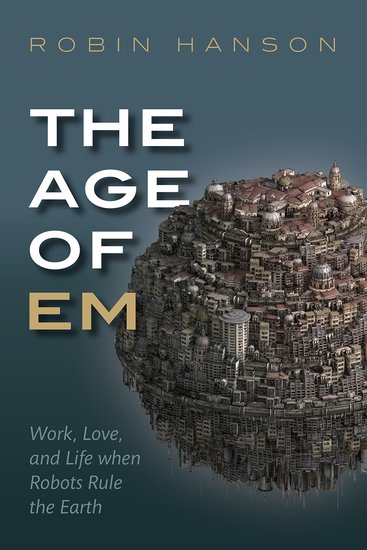
The Age of Em – Robin Hanson

9780198754626 (1)

Ever wondered what a world inhabited almost entirely by intelligent machines might look like? Or even, what smart robots might look like and what their uses, design, attitudes, strengths and weaknesses could be? If any or all of these questions are in the back of your mind, then The Age of Em could be just the book you are looking for. In this revolutionary new publication, economist Robin Hanson combines existing theories in physics, computer science and economics to create a realistic vision of a world dominated by robots.

Each day, advanced reports emerge of experiments in how artificial intelligence and robotics is revolutionising the way we live our lives, but the realisation of a truly intelligent machine still seems far over the horizon. What kind of robots could equal the actions of a human being? Hanson looks to the robotic brain emulation, or ‘em’ as a solution for a truly intelligent machine. The premise is simple enough; take a detailed scan of a human brain and then build a computer model that processes signals in accordance with the same characteristics as the brain. The result is a robotic brain, which can be trained to carry out tasks in the same way as a human baby.

A single brain emulation can be copied thousands of times, creating a literal army of robotic workers with human-like intelligence. The Age of Em serves as an in-depth portrayal of a future where this has become a reality –  ems are the norm and cities, streets, transport and leisure are all designed around these new inhabitants. The era of the em is as different from our own today, as we are from the lives of the farmers and foragers who came before us. Progress has changed once again, with further steps towards efficiency, rendering previous assumptions about life more or less redundant. Moral progress no longer holds such an important position at the forefront of society, with ems, the new master race, rejecting many of the values we hold dear.

It’s a strange world and one which many of you may find unsettling, but is no different than our present lives are from the eras that came before us. To most of us, our lives today may feel preferable to the work-intensive existence of our ancestors, we may even enjoy living as we do today. The em era is no different; it feels good to be an em.

Hanson’s work is revolutionary, not in what it says, but how it attempts to say it. While the majority of previous literary presentations of a world ruled by machines are firmly rooted in the realms of fiction, this text is hard-core theory, attempting to create a realistic image of what a world inhabited by future technology would look like.

Let’s not attempt to flatter the author or reassure the reader by saying that The Age of Em is an easy book to read. It most certainly is not. Those with little experience of economics, physics or computer science may well feel as though they are traversing a figurative Everest of text, but once over the peak, the expedition feels more than worthwhile.

This review was first published on WordPress for E&T magazine
 

Frankenstein – Mary Shelley, with an introduction by Francine Prose

Frankenstein,+by+Mary+Shelley+-+9781632060785

In June 1816 on a rainy evening by Lake Geneva a young girl created a story about an enthusiastic young science student who developed a technique to bring life to non-living matter, with devastating consequences. The resulting novel, Frankenstein, or The Modern Prometheus, went on to become one of the greatest novels of the 19th century.

This year, to celebrate the 200th anniversary of Mary Shelley’s fateful trip to Geneva, Restless Books has released a brand new edition of the acclaimed novel, with a new introduction by Francine Prose and stunning original artwork by acclaimed Mexican artist Eko.

Super Extra Grande – Yoss, translated by David Frye

Super+Extra+Grande,+by+Yoss+-+9781632060563

In the not-too-distant future, Latin Americans have pioneered faster-than-light space travel, as have six other ‘intelligent’ races – unfortunately – and the galaxy is awash is interesting interplanetary relations. Enter our protagonist, Dr Jan Amos Sangan Dongo, a colossal man with a face like an ogre, who prides himself in being the veterinarian of the giants – a huge chap with even bigger responsibilities. Elephants and blue whales eat your heart out: Dr Sangan specialises in the gargantuan. Think mountain-sized Amoebas, Tsunami-inducing sea snakes and titan leeches.

When a colonial conflict between two of the master races threatens to disturb the delicate balance of the galaxy, two super-sultry ambassadors embark on a teambuilding journey in a biodegradable spaceship – and invariably get themselves eaten by a mountain-sized space amoeba. Who ya gonna call? Dr. Sangan! To think he doesn’t have enough on his plate, what with the concern of having to administer laxatives to hoards recently cloned and a constipated Stegosauruses on planet Jurassia, Super Extra Grande sees Dr. Sangan having to save the galaxy and ensure the ‘intelligent seven’ remain in relative harmony.

There are only these small problems: the journey is secret, the mission is secret, he won’t get any credit for the job, he’s never worked with a creature of this size before and the two ambassadors just happen to be his competing love interests.

It sounds crazy doesn’t it? And it really is. This book is utterly unlike any other sci-fi novel you will have read before.

In Yoss’s future, the Latin Americans have reigned supreme and the entire world is united under a single language, a kind of English-Spanish mix – Spanglish. In fact, Spanglish has been adopted as the language, not just of the Earth, but the entire galaxy. This is largely down to human beings’ wholly unsophisticated ability to pronounce any complicated alien tongue. In running with this, the dialogue of the novel is written entirely in Spanglish, which is a thought-provoking, yet equally understandable decision on the part of the author. Language is obviously bound to change over time, but it feels like an incredibly brave move to commit to writing a whole novel in this way. That said, be warned that the novel might be a little hard to read if you don’t have a basic understanding of the Spanish language.

One particularly interesting aspect of the storyline, outside of the chaotic and often hilarious narration of the author, is the suggestion that there could be some kind of artificially intelligent super race hiding in the side-lines and overseeing the naïve and simple experiments of the seven ‘intelligent’ nations within their galaxy. It is mentioned almost in passing, but presented in such a way as to plant a seed of suspicion in the reader’s mind – what is going on outside of the novel? This could make an interesting and potentially terrifying story in itself. Perhaps he’s thinking of a sequel?

This book won’t be to everyone’s taste – it’s a little obscure and more than a little sexy at times, but it’s also very amusing and refreshing to read. The marvellous thing with writing about the future is you can really let your imagination run wild and Yoss certainly decided take full advantage of this poetic license.

This review was first published on WordPress for E&T magazine.

The Constant Nymph – Margaret Kennedy

5127hb9d+0L

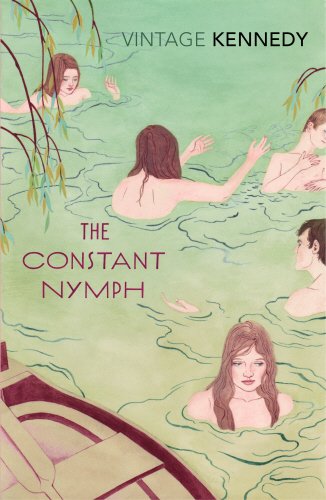
The first thing that attracted me to this book was the cover; I saw it on a vintage book website and fell completely and utterly into love with the artwork. There is something so natural and beautiful about the image, it is the essence of innocence, of fun, and beauty.

So, what’s the background of the image? Who are these young, carefree people swimming so leisurely in an alpine lake? They are the Sanger children, the brood of avant-garde composer Albert Sanger, and this is exactly the situation that their uncle finds them in when he comes to rescue them following the untimely death of their father. Swimming naked, like heathens, in the crystal clear water.

The Sanger children live in a quaint yet somewhat disorderly life in a small chalet in the Swiss Alps, surrounded by an ever moving stream of their father’s admirers, who come and go with ease. The family and their life are chaotic, full of arguments, quests for attention, childish follies and trips of pleasure, but each visitor to the strange dwelling falls under a kind of spell. Step foot inside the Sanger chalet, and all claims of respectable life or upbringing are sure to fall away, swept away by the beauty of free spiritedness, the alpine breeze, and the musical tolling of cow bells.

When I think of the Alps there are many things that come to mind – alpine milk, pine trees, lush green grass, snow capped mountains and the sound of birdsong to name but a few – but with individual characteristics set aside, I am left with an overall feeling that I find rather difficult to describe. Imagine trying to describe how it feels to fill your lungs with cool, crisp air, or to listen to the wind blow through the trees. It’s not just a sound, or a physical feeling, but something more. With The Constant Nymph, Margaret Kennedy somehow captures the emotion of a secluded Alpine dwelling, bottling the pure essence of the Sanger family’s existence and transporting the reader straight into mountains, to experience the sights and smells for themselves.

“They paused for a moment to look over the valley and saw empty air in front of them, and, far below, the tops of tree and little cows and their carriage crawling back along the valley road. Cow bells rose very faintly like single drop of music distilled into this upper silence.”

Within the chalet, life is less typically idyllic. Sanger is not what you would necessarily call a good role model – if fact, he’s a pretty terrible father. He neglects the children, leaving them to be brought up by their eldest sister, and to live more or less by their own devices. But with neglect comes an incredible amount of freedom, an experience unlike no other, the ability to do exactly as they like, and to live with almost no restrictions. The freedom and prosperity of the children is refreshing – they live a life of new age hippiedome, long before the swinging sixties.

“A large barn of a place with very little furniture… the entire wardrobe of the young ladies lay about the permanently in heaps on the floor amid books, music, guitars, cigarette ends, cherry stones and dust.”

The life of Sanger’s circus in the Alps is certainly unconventional, but it is the unconventionality of the situation that makes it so enchanting. It is untreated, natural, and unashamedly beautiful – I am almost sad to say that the book does not continue in this vain, but all things must end.

Sanger’s death, though a shock to the inner workings of the alpine household is not wholly unexpected on the part of the reader, as it is subtly foreshadowed by a sudden change in one of Sanger’s many children, Tessa.

“Teresa said nothing but crouched at the top of the stairs, brooding disconsolately, her thin arms round her knees. Suddenly she had become intensely miserable. She stared down into the darkness of the hall, cut in two by the moonlight which streamed in through the door. She could not bear it. She jumped up with a little cry of exasperation.”

Tessa’s sudden and intense misery is like a predomination of her life to come. After the death of their father, the children are thrown into disarray. With no money, no education, and no parents to support them, the circus is forced to split up and each, once carefree, affiliate to attempt a more conventional way of life. A once perfect existence stripped away, leaving nothing more than the bitter aftertaste of a life once lived.

As much as I loved the picture of the Sanger family up in the hills, it is the time that follows which really makes the novel – the characters are stolen from their isolationist existence in the mountains and plunged face first into a bitter, cold, hard reality.  It’s difficult for everyone, but none more so than the delicate Tessa, the constant, once-carefree, nymph, for whom the bells tolls the sound of tragedy.

It’s difficult to put into words how I feel about this book. I could say that I liked it, or even loved it, but I don’t feel that adequately encapsulates the emotion behind reading a book like this. It is both tragically beautiful, and beautifully tragic, beginning as a carefree skip through a lush green valley, and culminating with a scene so gut wrenchingly tragic that it will give you a book hangover to end all book hangovers. Once nothing more than a captivating image on a computer screen, The Constant Nymph has made it firmly onto my shelf of books to recommend.


Anniversary update!

Well hello there friends. Today marks exactly three years since I decided to put my love of reading to good use and start a book blog. What started with a fairly mediocre review of Jude the Obscure, has seen me through good books, bad books, self published novels and classic texts, and I wouldn’t change it for the world.

There seemed like no better day to break my recent radio silence – I won’t make any excuses, you know the score, I’m a busy lady – and bring you a little update, the bad news is that I don’t have a review to share with you today, for that you’ll have to check back tomorrow. I start as I mean to go on!

But I can give you a little taste of what’s to come over the next few months, as I’ve recieved a few little treats while I’ve been gone.

I’ve got two, yes, two, awesome new book boxes from my dear friends Prudence and the Crow. As always, they are marvelous. I am particularly excited by April’s offering, The Kingdom of Carbonel, which, if the cover is anything to go by, promises to be wonderfully spooky.

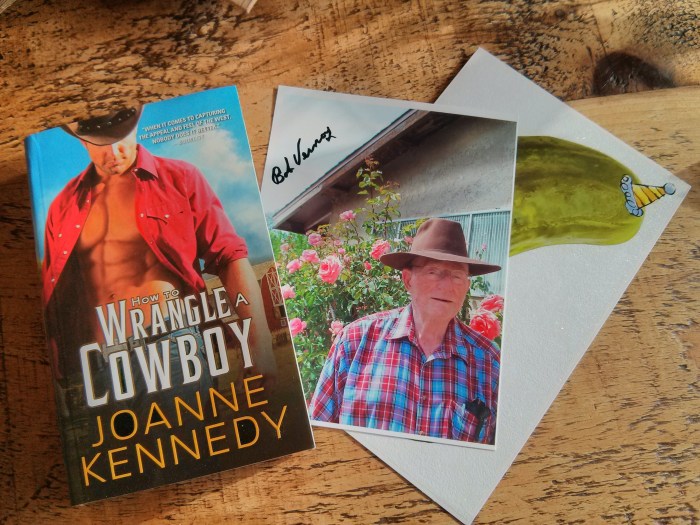
But PATC aren’t the only ones who have been sending me a little book-shaped gifts. I also recieved this delightful little care package from my super-awesome friend Jacleen, a tiny little taste of life in California.

IMG_20160418_174253

Yes, ladies and gentleman, that is a signed photo of a real life cowboy alongside a book about how to secure yourself a your own personal wildwest stud muffin, what more could a girl ask for?

Nothing, that’s what.

Don’t get too excited though, you’ll have to wait a little while before you can read my thoughts on all these sexy cowboys and ghostly goings on. For now, get ready for tyrannical rats, magical circuses, tragic nymphs and little women.

Over and out.


Hollyweird Science: From quantum quirks to the multiverse – Kevin R Grazier and Stephen Cass,

Hollyweird_Science

There was a time when being called a ‘nerd’ could have been considered an insult, but today what was once considered nerd culture – think thick glasses, spaceships and battlebots – has become not only accepted, but celebrated and embraced. We have this to thank, in part, for the rise of the sci-fi blockbuster, which, while perhaps never reserved for nerds alone, has never been more popular than it is today. But popularity, of course, brings the inevitable risk of critique.

While the general public might not bat an eyelid at most scientific inaccuracies in sci-fi flicks, the boffins and nerds among us often have a love-hate relationship with these big blockbusters – thrilled by the ride, but incensed when the science is obviously wrong.

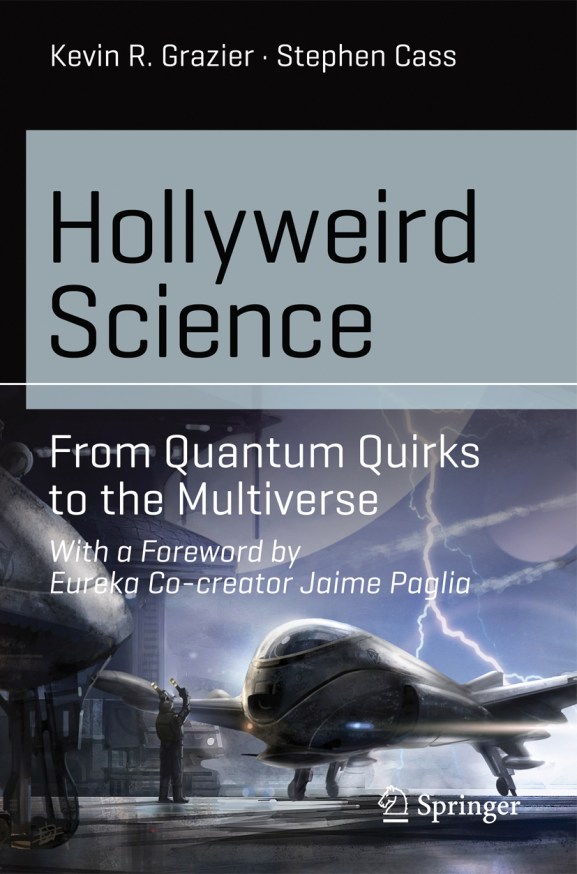
In response Kevin Grazier and Stephen Cass, two self-proclaimed science fiction nerds, have set out to celebrate the wonderful world of science fiction by examining the scientific success and failures behind the scenes in a fun and quirky bookshelf edition, sure to delight dedicated sci-fi fans and quantum physicists alike.

“Our primary goal,” the pair explain, “is not to excoriate the creators of movies and shows for errors but to celebrate when they get it right.” That said, the book does not avoid criticising where Hollywood has got it wrong, and significant space is given to examining some of the most extreme sci-fi cock-ups. Hardcore fans of Jon Amiel’s ‘The Core’ – revered as one of Hollywood’s most spectacular scientific failures – might want to give this a miss.

Science fiction is a difficult genre to get right – too much fact and the film becomes a lecture, but focus too much on entertainment and you risk the viewer becoming disconnected. People do not look to sci-fi for information or facts – that’s left to news and documentaries. They want to be entertained, but it has to be believable.

In ‘Hollyweird Science’, Grazier and Cass attempt to analyse the delicate balancing act that is sci-fi, and isolate what makes a great sci-fi flick. How do directors and writers ensure that the viewers emit a delighted “Oh, wow!” at an incredible on-screen adaption of scientific mastery, rather than an exasperated “Oh, please!” at a storyline that is incorrect, far-fetched, and ultimately unbelievable?

It’s harder than it seems. For example, it’s widely known that sound doesn’t travel in space, but who would want to watch ‘Star Wars’ without the sound effects? Battle scenes would have been far less audience-pleasing if the TIE fighters were silent – and Ben Burtt would have had no use for his elephant-call-cum-car-driving-on-a-wet-pavement mashup. So sound travelling in space, while scientifically inaccurate is generally considered acceptable in the commercial world of Hollywood.

But other errors, such as the gravity-defying train journey through the Earth’s core featured in the 2012 remake of ‘Total Recall’, or the huge nuclear explosions that pushed the Moon out of orbit in the pilot episode of British television series ‘Space’, are less acceptable. Directors who commit such science crime should prepare for a veritable cataclysm of criticism from angry movie-goers.

Over the years there has been a lot of trial and error when it comes to science fiction, and of course, directors and writers alike call on the assistance of scientists to try and make their films believable. Despite years of practice, some films do miss the mark and get it oh-so-wrong, but on the whole, Grazier and Cass suggest, Hollywood isn’t doing such a bad job.

This review was first published in print for E&T magazine.

Sister Noon – Karen Joy Fowler

“Much unhappiness has come into the world because of bewilderment and things left unsaid.” ― Fyodor Dostoyevsky

Sister noon.jpg

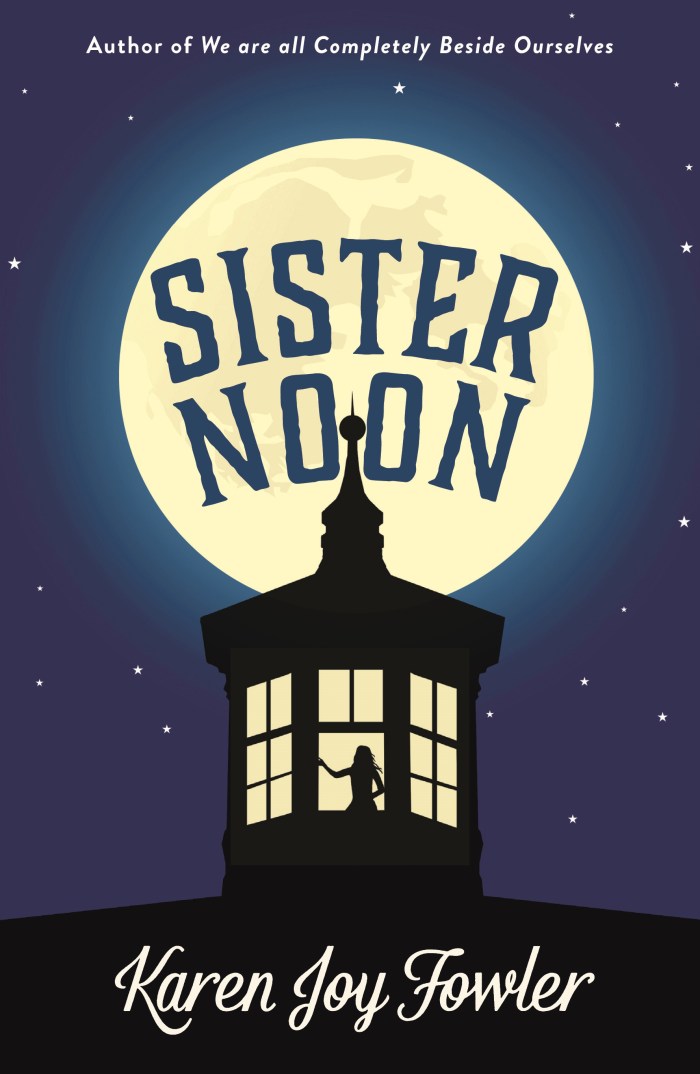
Let me start by saying that I have not yet read We are all Completely beside Ourselves. It is on my to-read list, but unfortunately someone ruined the twist for me. So I am currently holding onto a vain hope that I might forget and be able to actually enjoy the book one day, because I have heard good things about it.

This book, on the other hand, I had heard nothing about. I picked it up at the same time as We are all Completely beside Ourselves – having subsequently heard good things about the latter, but prior to having it spoiled for me. It was one of those books that I bought without having much intention of reading straight away, I’m sure you know exactly what I am talking about….

Tsundoku: n. The constant act of buying books, but never reading them. Specifically, letting books pile up in one’s room so much that the owner never gets a chance to read all of them.


Anyway, I finally turned to this book one day when I was struggling to choose what to read next, with so much choice before me, I opted for a book which was actually quite low down on the list of things I wanted to read.

Bookworms are strange people.

As it happens, I took this book to Hong Kong with me just before Christmas, and, truth be told, if it hadn’t been the only book I had with me I mightn’t have finished reading it, but by the time I got back to the UK, and my beloved book shelves, I was committed.

It’s not that the book is bad as such, it’s ok, and that’s about it. It certainly did not blow me away.

The book is set in San Francisco in the 1890s – a town of contradictions, apparently. Lizzie Hayes is introduced as the main protagonist, she’s a slightly plain, inconspicuous, but well-off woman who volunteers as the treasurer for the Ladies’ Relief and Protection Society Home, or the Brown Ark as it is also known. It is very much implied that Lizzie is just sort of drifting through life, waiting for something to happen: she never married, she doesn’t socialise much and she has a decent allowance from the estate of her late father and doesn’t have to work. She is just Lizzie, plain, predictable, well-reputed Lizzie.

This all changes when the affluent, well-connect but highly ill-regarded Mary Ellen Pleasant shows up at the Brown Ark with a small orphan girl in tow – little Jenny Ijub. Lizzie finds herself drawn to Mary Ellen, and by extension, to little Jenny. She feels as though Mary Ellen gave the child to her for a reason, and seems desperate to find out more, this is only exacerbated further when other people being asking questions about the girl. Just who is Jenny Ijub? Why was she brought here? As she attempts to uncover the secrets of Jenny’s past, as well as those of Mary Ellen, Lizzie begins to discover things about herself. It is as though Mary Ellen, with her mysterious past, holds the key to Lizzie’s future, wherever that might lie.

The book isn’t badly written, as such – there are no grammatical errors, spelling mistakes, or clumsy paragraphs – but it feels somehow incomplete, as though the author skipped speaking to an editor and sent the text straight to the proofreaders.

The style is dreamy, and almost mystical, as though the writing itself has been clouded by Mary Ellen’s mysterious tea blend. In principle, I think writing in this way is a great idea – what better way to get the reader to connect with the main character than to have them go though the same experiences? That said, I don’t think the story itself is strong enough to support this type of writing style. The dreamy nature, far from making things feel magical and alluring, left me feeling more than a little confused, and unsatisfied. I was desperate for something to exciting to unfold out of Lizzie’s trips to the Pleasant house, and wanted to so badly know more about the life of Mary Ellen, but in reality, every time I was vicariously permitted access into the mysterious household, the tension was built up, as though something really shocking was about to happen, only for everything fall completely flat. I was left with so many unanswered questions and unfulfilled desires.

When I first read the blurb of the book – which was, admittedly, after I bought it – I was quite excited by the historical nature of the story, as apparently many of the figures are based on real historical figures from San Francisco around this time. I love a bit of historical fiction, and feel you can really feel when the author has done their homework, even if you have more or less no background knowledge of the gilded age of San Francisco (guilty!). I can’t really suggest how ‘truthful’ to events and people the author remained, but I will confess that I found it rather difficult to follow at times, as though a lot of information was included just for the sake of it, and this suggests to me that the historical nature of the book has not been pulled off effectively. There are a great many background characters thrown into the story who seemed on the whole to be quite unnecessary, and I am sure I not the only one who got to the end of the book and couldn’t quite grasp what, exactly, the point in all of it was.

Overall, I wasn’t overly taken in by this book. The storyline felt confused and posed far more questions than it answered and I found it really difficult to submerge myself or to connect with any of the characters on a personal level. I felt more like a distant observer of confused goings on, rather than having any real connection with the book, and was more than happy to finally close the last page and call it a day.

Spring treats from Prudence and the Crow

Another month, another treat!

This month brought with it the beginning of spring. I know storm Katie has given the countryside a battering this weekend, but between the wind and the rain there have been burst of blissful sunshine, during which I have felt full of the joys of the season.

N.B. Cambridge is currently experiencing a rather windy spell and I am actually curled up with my reading room with a pot of tea, wearing long johns and a thermal vest.

I was delighted, as always, with my haul from Prudence and the Crow, and, even though I am currently still reading, and loving, January’s book, I can’t wait to get started on this month’s book!

This month I have been treated to Green Smoke by Rosemary Manning – a delightful, or so I’m told, tale about a young girl called Susan who goes on holiday to Constantine Bay in Cornwall: the best place in the world for a holiday. One day, while climbing on the rocks, and exploring the bay, she stumbles upon something nestled in one of the many, mysterious coves – an extra-special secret, in the form of a big green dragon. As luck would have it, he’s a rather friendly creature.

Now, if you’ll excuse me, I’m off to read some more of Swallows and Amazons, and maybe to take a little nap – it is Easter weekend afterall 🙂