Only Planet – Ed Gillespie

I wouldn’t call myself a climate enthusiast – mainly because I find the term itself a bit troubling – but low-carbon energy and sustainability are high up my list of work-related interests. As I find myself creeping towards middle age, I am increasingly concerned by the world we may be preparing for future generations.

Gillespie’s talk didn’t offer any earth-shattering revelations, but it was humbling and thought-provoking, serving to highlight just how terrifyingly unknown our path really is. Our future on Earth, Gillespie said, is “volatile, uncertain, complex and ambiguous” – no one can know what will happen to the world as temperatures increase. They are rising, though, despite what climate change denialists might say, and something needs to be done about it.

“Climate change will see a displacement of people that is going to be biblical.”

There are a whole host of factors contributing to changes taking place across the world, but rooted at the core of all of these is consumption. Analysis shows that consumer spending and GDP have almost doubled since 1970, while life satisfaction has stayed the same. We are, however, seeing a strange shift in spending habits in some cases, where people are encouraged to opt for low-carbon alternatives using the most bizarre and contradictory of methods. A perfect example is Tesco encouraging customers to buy low-energy lightbulbs in return for air miles – somewhat defies the point, don’t you think?

“Our approach to climate change is like turning up to an earthquake with a dustpan and brush.”

We are suffering, Gillespie proposed, from the so-called bystander effect, a strange situation where, when there are a lot of people involved in a particular problem, the average person just hopes that someone else will do something about it, rather than taking matters into their own hands. You’ve probably done it before – how much do you really think your own carbon footprint matters? It’s everyone’s problem, though, and it will take combined efforts to find a solution.

As an environmental entrepreneur, Gillespie has undoubtedly gone above and beyond what the average Joe could achieve in a lifetime. He founded sustainability firm Futerra and sits as a non-executive director for Zero Carbon Food. He is also a London Sustainable Development Commissioner, an investor in Foodtrade and has helped fund numerous eccentric and sustainable business models.

It’s a crazy amount of work, and no one is expecting everyone to commit their lives to combatting climate change, but the message is to do something, rather than waiting for someone else to do it. One of the easiest positive choices we can make in the fight against climate change is a choice to curb our own consumption. In fact, I think Gillespie’s most impressive feat, and indeed the one we can take the most inspiration from, is giving up flying.

In his talk at Savoy Place, Gillespie recounted what he saw as the hypocrisy in preaching climate change while still opting for the quick, easy method of travel that is flying. “I couldn’t justify it,” he said. “So I gave it up.”

Giving up flying doesn’t mean giving up travel, however.

In 2007, Gillespie embarked on an epic year-long round-the-world trip, opting for slow trains, cargo ships and body-filled buses over aviation. His first book, Only Planet, the story of this remarkable journey, was published by Wild Things Publishing in 2014.
51aewht2cwl-_sx258_bo1204203200_

A round-the-world trip without planes – how does that work? Obviously, after listening to this enlightening talk, and vowing to do more to reduce my carbon footprint, I had to find out for myself.

The book begins at the end, with Gillespie and his girlfriend Fiona on the last leg of their trip, playing table tennis with Vadim, an ex-heavyweight Ukrainian boxer, and the steward of the Horncap, the cargo ship that was their refuge above the oily black waters of the Sargasso Sea. Amid anecdotes spouted from mouths of cargo-ship cruisers from the bar side, Gillespie recounts his reasons for setting out on his extraordinary journey: to experience the voyage itself, not just the destination.

Forsaking planes and their associated destructive carbon emissions, we’d set out to rediscover the joy of travelling though the world, not just over it. We’d wanted to experience the intimate transition of landscape, culture, people and language, soak up the sights sounds and smells of the journey and not just bunny-hop around the globe in an aluminium sausage.

Over the next 300 pages, the reader is taken all the way from the Bay of Biscay, to Puerto Limon in Costa Rica, experiencing culture, practices and locals far removed from the blinding white cliffs of Dover. Gillespie is feasted upon by bed-bugs in Prague, drinks fermented yaks’ milk in Mongolia, and receives the gift of a large pink sausage from a Chinese gentleman upon the waves of the Bohai sea. Border arrests and drug searches do little to impede the travel – with little to no onward plan, what’s wrong with a little communication with the locals? However intrusive it may be.

This isn’t just a book about travel, though. The central running theme is that of sustainability. Throughout the journey, Gillespie delves into the philosophy of often slow, low-carbon travel by reconnecting with the communities in the countries he travels through. In just over a year, Gillespie and Fiona covered more than 40,000 miles and passed through 31 countries. They discovered the impact of over-consumption in the furthest corners of the earth, from the effect of the new, harsh winters on the nomadic people in the deserts of Mongolia, to the over-fishing of tuna in the South China Sea.

At its heart a book where the often-conflicting worlds of sustainability and travel meet, Only Planet serves to do more than whet the appetite of the wannabe traveller or so-called climate enthusiast. Liberally illustrated with dramatic photography and awash with the most hilarious of first-person anecdotes, the book shows just how far removed we have become from the traditions of community and experience, swept away in a sea of over-consumption and instant gratification. A truly inspirational and riveting read – with the occasional spelling mistake it has to be said – this book will likely change the way you look at travel, from both an ecological and spiritual point of view.

This review was first published online for E&T magazine.
Pinpoint: How GPS is Changing Our World – Greg Milner

GPS is changing the way we live our lives, with more people using satellite technology to find their way around, track daily workouts and even catch fictional creatures out in the wild. In this new publication from Granta, Greg Milner traces the history of GPS and uncovers how it came to conquer the world.

41gsabhQ9AL._SX320_BO1,204,203,200_.jpgMost people reading this review will no doubt be doing so with their trusty mobile phone not too far away. Chances are that phone is also a smartphone equipped with Global Positioning System (GPS) capabilities. Your phone works like as a GPS receiver, communicating with a network of satellites that orbit the Earth at fixed points, transmitting signals that carry time codes and geographical data. These satellites make it possible for you to pinpoint your exact position, speed and time anywhere on the planet.
Of course, this is nothing new – GPS technology has been around for decades, so much so that, for many of us, using Google Maps is almost second nature. In fact, GPS is more far reaching than you might realise; your phone can not only help give you directions, it can also pick up data from nearby businesses. Ever walked past a shop and had Google ‘ask’ you to submit some information? This is GPS at play, used for somewhat questionable data mining. You might be surprised to learn just how many aspects of life involve elements of GPS. In his new book, ‘Pinpoint’, Greg Milner traces GPS’s extraordinary history and paints a startling picture of a world saturated by its use.

First developed in the 1950s as a bomb-guidance system and one of the pinnacle technologies of the Cold War, GPS was made available for public use in 1983 and is one of the world’s most widely used technologies. Indeed, GPS goes much further than navigation and catching digital creatures with Pokémon Go. Information from GPS satellites helps to anticipate changes in global weather systems, predicts earthquakes and hurricanes, locates natural gas and oil and is becoming increasingly popular in overseeing agricultural production – the list goes on.

However, Milner warns, while GPS has opened up a whole host of new information about our environment and created opportunities across every sector, there are questions involving its effect on human behaviour. As a population, we could be finding ourselves too reliant on GPS. Milner points to the startling new phenomenon of ‘death by GPS’ – people who have been killed by blindly following the instruction of satellite navigation systems. Even more concerning are the explanations given by those who experienced a close call with GPS. “It kept saying it would navigate us to a road,” a group of Japanese tourists in Australia explained, after driving their car into the ocean. Research has suggested that reliance on GPS could actually rearrange the grey matter in our heads.

Milner takes these concerns further and explores the potential issues with widespread GPS use, not just by individuals, but by whole societies. A single GPS timing flaw, he suggests, could bring down the electricity grid, take over electronic devices and cause havoc in the world financial system. Take into account that such ‘flaws’ could just as easily be malicious as accidental, and you have a whole new problem on your hands.

‘Pinpoint’ unearths with surprising detail the history of GPS as a technology, from its conception during the Cold War, up to its position at the forefront of technology today. Milner goes back to basics, tracing the ways in which humans have understood and navigated their own physical space throughout time, and applying the theories to the development of advanced technological systems. This book offers a striking anthropological analysis of how we, as humans, understand the world around us.

This review was first published on in print for E&T magazine

Mars: Making Contact – Rod Pyle

With Nasa’s new lander, InSight, due to launch in 2018, and the Mars 2020 Rover set to touch down just two years later, all eyes are on Mars. Rod Pyle traces the history of the Red Planet in this stunning new publication from Carlton Publishing Group.

519q2nj3sl-_sx258_bo1204203200_The universe can be a pretty lonely place. What are we but a pale blue dot, orbiting an insignificant star, in one of any number of solar systems, in an unquantifiable amount of galaxies that make up the universe? For generations humankind has hoped to one day discover life beyond our world, to finally know that we are not alone in the universe. Of all the planets in our solar system, there is one which will forever encapsulate the human desire to discover alien life, that dull red dot flickering in the distant night’s sky – Mars, our, not-so-identical, twin sister.
For millennia, Mars has held a special place in the human psyche, fascinating explorers enamoured by its dull red appearance and unusual celestial motions across the night sky. In the past, the relative closeness of the Mars to our own home seemed to hold the promise of hardy plants, animals equipped to handle long cold winters, and a whole new world of secrets and history. Over the years, however, we’ve come to learn quite a lot about our distant neighbour, and the truth is far from appealing.

Multiple flybys, orbiters and landers throughout the years have awarded us a deeper understanding of our sister planet, and opened our eyes to the truth of that which once lay just beyond our grasps. The first fleeting images of Mars, awarded by the success of the Mariner 4 flyby, revealed a hostile frozen desert – similar to Earth in terms of geology and physics, but cold, dry and lacking in any kind of atmosphere that would allow for the development of life.

Mars: Making Contact traces the history of Mars here on Earth, as the lonely red sphere in the night’s sky evolved from an otherworld entity, to a place, and as the secrets of Mars continue to unfold. Author Rod Pyle reveals the many human interactions that have occurred with our sister planet, and lays out the hope of more to come, as we move towards the first human mission to the hostile red sands of Mars.

This review was first published on online for E&T magazine

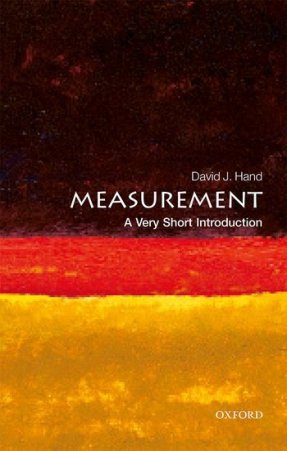
Measurement A Very Short Introduction – David J. Hand

9780198779568

Measurement may not sound like the most exciting topic to sink your teeth into as it takes a certain type of person to become excited by a ruler. Yet this book has much more to offer than just a history of centimetres (cm) and inches. Rather, it serves as a brief, but comprehensive glimpse into a social construct that boasts a history that is inextricably bound with the many great leaps forward of civilisation. In Measurement A very Short Introduction, author David Hand traces the origins of measurement back to the beginning of civilised human society, with the birth of agricultural production.

Original units – which relied largely on basic physical objects to quantify length and weight – were of course hugely variable, depending as they did on physical objects. Of course, if there is nothing fundamental leading to the choice of object, other systems of measurement can be adopted. It’s hardly surprising then that a huge number of different systems have been adopted – today we have grams and kilos, pounds and ounces and the dreaded American ‘cup’.

When you take into account the history of units of measurements, measurement itself seems like a fairly vague thing – but this couldn’t be further from the truth. What is a cm? You could say that it is 10mm, or 1/100th of a metre, but how can it be defined on its own? The history is complicated and points toward the need for a unified method of measurement. This became especially important with the rise of scientific experimentation in the 20th century. It’s been a long time coming, but with the birth of the metric system we are getting close, although there are a few stubborn nations who insist on holding on to their outdated ways.

Of course, measurement is not a purely scientific thing, but can also be used to understand social aspects of society. Far from a scientific concept, it spans the entire range of human society, from the purely physical to the wholly abstract. Economic progress can be measured, but it requires a much different system measuring milk or grain – it is something that cannot be conceived with a basic unit of inflation. This, Hand says, is the difference between representative measurement and pragmatic measurement, a wholly different and complex school of thought which is becoming more important to our understanding of society.

Measurement A Very Short Introduction offers the reader a wonderfully accessible route into a hugely complex subject that spans the fields of science, sociology, history and anthropology. From the simple grains and fathoms of old, to GDP, GNI and the modern-day World Happiness Index – the history of measurement has a lot to say about the development of society. Hand has taken a topic that spans almost the whole of human existence and condensed it into a book which the avid reader could easily conquer in an afternoon.

This review was first published on WordPress for E&T magazine

Dear Data – Giorgia Lupi and Stefanie Posavec

Dear Data UK jacket.jpeg

When they first met at an arts festival, Giorgia Lupi and Stefanie Posavec realised that they had been living oddly parallel lives:. Both were residing in a foreign country – Giorgia had moved from her native Italy to New York and Stefanie, originally from Colorado, was living in London.  They were the same age were both only children and, most importantly, they were both obsessed by data.

Stefanie and Giorgia have spent their lives collecting and organising information from the world around them. As a child, Stefanie delighted in filling in scorecards with her father at baseball games, while Giorgia collected and organised anything she could get her hands on, from buttons to small stones. As they got older, they both realised that they were collecting data and went on into careers as visual designers, creating data illustrations.

From a chance visit at an arts festival, Stefanie and Giorgia decided to try and get to know each other by sharing data. Having only met once, Stefanie and Giorgia began exchanging postcard-sized letters that described what had happened to them each week, but instead of writing what had happened, they drew it. The resulting project spanned a year, 52 weeks and covered 52 themes, from smiling at strangers to smells and sensations. Each week, Stefanie and Giorgia would collect, collate and share data with one another, often containing information about the most private aspects of their lives such as touch,  envy and desire.

This slideshow requires JavaScript.

Dear Data is an amalgamation of the project that unfolded from the chance meeting of two strangers who went on to become intimate friends, revealing oddly personal pictures of each woman’s life. Often, aspects of life that would not necessarily be revealed through the simple act of writing can be seen through data. By looking at each other’s infographics each week, Stefanie and Giorgia got to know each other, noticing themes and patterns in each other’s drawings. The resulting works tell a story about the person behind the data. We learn that Giorgia is a control freak, and Stefanie enjoys more than the occasional drink and apologises far too often.

This slideshow requires JavaScript.

Dear Data will make you pause and think about what data can reveal about a person. It makes you realise that you don’t need an app to tell you anything new about yourself. Every one of us is a walking data collection, from the money in our bank account to the calories we consume in any given day. Each time we glance at the clock on our office wall, apologise, or take a walk, we are inadvertently adding to a huge data collection that is our lives. This book is a wonderful illustration of just how data-heavy the average person is. As a project, an exhibition and a book, Dear Data is fascinating, beautiful and a treat for the eyes and mind.

This review was first published on WordPress for E&T magazine

The Tale of Kitty-in-Boots – Beatrix Potter

It’s today! It’s today!

917XNylWC9L

I was unbelievably excited to wake up this morning to an email informing me that The Tale of Kitty-in-Boots would be waiting for me when I returned from work. Obviously I would have preferred to wait by the front door for the postman, but somehow I managed to get through the day at work. I then tore home, dived into the book and had it finished before supper time.

I’ve always been a huge Beatrix Potter fan. My childhood box set was always a prized possession of mine and was subject to more than one show-and-tell session back in primary school. The Tailor of Gloucester was always my favourite and I still love to pull the book out and watch the BBC adaption around Christmas time. If there is anything more magical than animals behaving like humans it is animals behaving like humans in the snow. Simpkins in his snow boots is one of my favourite images of all time.

When I heard there was a new book by Beatrix Potter being published I was over the moon. To think that the manuscript remained hidden for over 100 years, only to emerge to celebrate the 150th anniversary of Beatrix Potter’s death – it is almost as though she had planned it. I couldn’t wait to see what this story, written ten years after all her other much-loved tales, had in store for me.

The newest addition to the collection tells the tale of a very serious, well-behaved black cat by the name Catherine St. Quintin who likes nothing more than to sneak out at night and poach animals with her air gun. Like all of Beatrix Potter’s tales it is filled with funny escapades with the characters falling into one or two unfortunate scrapes, before ultimately learning a rather valuable lesson. Diehard fans of Beatrix Potter will be delighted to encounter a ‘stout buck rabbit in a blue coat’, who bares more than a striking resemblance to a mischievous young bunny once seen stealing radishes from Mr Macgregor’s garden – it looks like Mrs McGregor never did get her winter coat – as well as one or two other familiar faces and more than a few news ones.

Of course, half of the delight in a children’s book is in the illustrations and while I will admit I was slightly surprised when I saw that Quentin Blake was illustrating the book,  I think the result is absolutely stunning. Who better to illustrate a book by one of Britain’s most-loved children’s authors than one of Britain’s most loved children’s book illustrators? His drawings are nothing like Beatrix Potter’s, but I wouldn’t have liked to read a book where Beatrix Potter’s style was mimicked. Blake doesn’t attempt to fill Beatrix Potter’s shoes, he merely pays homage to her work, and does a remarkable job of it. The illustrations are perfect, wonderfully encapsulating the action and humour in Beatrix Potter’s latest tale.

What’s more Blake’s illustrator’s note, where he hopes that Beatrix potter would have approved of his work and speaks of his pride at being given the opportunity to illustrate such a book, is so sweet and endearing. I truly think he has done wonders with the text and brought the book to life in a way that none other than Beatrix Potter herself could have. My one slight disappointment is that the few drawings that Beatrix Potter did create to accompany the story could not be included in the publication.

Overall, however, I think this book is a real delight to read, filled with Beatrix Potter’s classical charm, but with slightly more adult escapades than the previous publications. There is also a subtle, perhaps satirical ribbon running through it which suggests that what is natural does not always come naturally.

There is no doubt that it was written by the Beatrix potter we all know and love, but the style is  different to her earlier works. Not worse, just different. Of course, we can’t know whether there was a deliberate attempt on the part of the author to change her writing style, or if the book was left in a somewhat unfinished state. Whatever the case may be, it is a truly charming read and I will happily place it alongside my other Beatrix Potter books, and no doubt look on it time and time again.

I know the publication is a couple of months too late, but happy birthday Beatrix, may you continue to delight us, and future generations for many, many years to come.


Astrophotography -Rhodri Evans

astrophotography

For millennia people have been fascinated by the stars, looking up to the sky at night to search for answers, look for peace, and predict the future. As human beings we often forget our place within the wider universe, and nothing will better remind you of your relative unimportance than looking up at the night sky. It is worth noting however, that the stars above us, while intoxicating to view outside of the city lights, are just a small snippet of world outside our atmosphere. Astrophotography by Rhodri Evans serves as homage to the beauty of the space beyond our atmosphere, presenting some of the most breath-taking astral photos ever taken.

We begin with a reminder of the insignificance of our tiny home planet. Important, because it’s our home, because it is the only known place that possesses life and yet it barely registers as a miniscule blip on the radar when it comes to the wider universe. The billions upon billions of galaxies that exist beyond us got to show just how tiny we really are. This photo, taken from 6 billion kilometres away, sums up everything you have ever known, everyone that you have ever and will ever know, and the whole of human history in less than a pixel in a camera’s array. Do you feel small yet?

P3
A tiny blue dot – Earth seen from 6 billion kilometres away [NASA/JPL]
Part one of this pictorial tour through outer space stays close to home with a summary of our solar system. From our closest neighbour, the moon, round the sun and past the seven other planetary bodies that all call the solar system home, stopping along the way to look at neighbouring moons, and the satellites, shuttles and space craft that made this book possible. Those of you who can remember the golden years between 1930 and 2006 will no doubt rejoice at the inclusion of everyone’s favourite non-planet, Pluto, who was devastatingly demoted to dwarf planet status just ten years ago.

With each sequential part of the book, Evan travels further into outer space stopping next at the Milky Way, and all those that call the deliciously named galaxy home. The book explores the likes of the Orion Nebula, the Pillars of Creation, and, at the very centre, an elusive super massive black hole. A little further out takes us to the local group, the ‘neighbourhood’ of galaxies of which the Milky Way is part. Enter Andromeda, the large and small Magellanic Clouds, and the distant Pinwheel Galaxy. Further still and we reach the outer galaxies that lie in our immediate neighbourhood – galaxies of many shapes and sizes, distinct from the two spiral galaxies that dominate our local group. Some located 100 of millions light years away, these galaxies take the largest telescopes to explore.

The last stop on our astronomical tour takes us to the every edge of the universe. At which point we are, quite literally, looking back in time. The light from the far reaches of the universe has taken so long, some up to 13 billion years, to reach our tiny earthborn telescopes that we are viewing the stars as they appeared at just a few hundred million years old.

This book is not merely a stunning collection of photographs of the enormous cosmos of which we are just a tiny part, it is a homage to the astronomers, the physicists, and the multiple probes, spacecraft and satellites that are forever pushing further into the realms of unknown. Leaving no astrological stone unturned, from Europa, the ice moon of Jupiter, to the distant Sea Horse Nebula, Evan’s presents the most breath-taking astrophotography available, alongside the physics of the object itself, and the photo encapsulated in the book. Astrophotography interlaces hard science alongside stunning photography to give the reader a glimpse of the science behind the photo.

This review was first published on WordPress for E&T magazine

Head in the Cloud – William Poundstone

Head in the Cloud_9781786070135.jpg

It is often cited that we are living in an information age. Gone are the days of trawling through text books and library archives to find the material to complete your latest homework assignment. The internet possesses all the information you could ever need – and then some. Pick up your smart phone or connect to your computer and you have a wealth of data available at your fingertips. While it’s true that it is incredibly easy to look up facts on Google, it’s not so easy to remember any of them. Some have argued that having such a wealth of information available to us is making us stupid.

In his new book, Head in the Cloud: The Power of Knowledge in the Age of Google, William Poundstone turns this theory on its head. Being better connected doesn’t necessarily mean we are better informed and the internet is not making us stupid. Rather, it is making us less aware of what we do not know. We’re living, Poundstone argues, in the golden age of rational ignorance. People are more interested in the lives of Kim Kardashian and Kanye West than bothering to learn who painted the Mona Lisa and millennials use acronyms such as BTDTGTTAWIO (been there, done that, got the t-shirt and wore it out), but are unable to recall the single word uttered by the raven in Edgar Allen Poe’s famed short horror story. So what does being well informed actually mean? Does it really matter?

Speak to any self-proclaimed gamer and you will likely tap into a wealth of information that is missing from the mind of the average Joe. Perhaps you don’t have a clue what processor lurks within your PC, or how to overclock the latest Nvidia graphics card, and why would you? Unless gaming happens to feature high on your list of priorities, you’ll probably never need to know this random information. Equally, some of you reading this review will have got through life just fine without ever having known the catchphrase of Poe’s raven. If someone was to ask you who invented post-it notes, what year Tinder was developed, or what the fastest land mammal on earth is, you could retrieve the answer from the cloud within a fraction of a section of clicking ‘search’ on Google. This poses the question – ‘What’s the point of knowing anything when facts are so easy to look up?’

Interestingly, it turns out that the benefits of staying well-informed stems much further than being everyone’s go-to teammate in the monthly pub quiz. In Head in the Cloud, Poundstone reports results of internet surveys analysing the rate of public knowledge, with outcomes suggesting that better informed individuals are, on the whole, healthier, happier and quite significantly wealthier. Not only this, but factual knowledge is heavily correlated with personality traits, including political opinion. Did you know, for example, that those who are able to locate a country on a map are less likely to be in favour of invading it? This is just the very tip of the iceberg when it comes to ill-informed voters.

Head in the Cloud is hilarious, humbling and brutally honest and will likely make you doubt yourself, and everyone around you. This book is not merely a declaration of the woes of an ill-informed public, it also serves to highlight the benefits of broadening your horizons, offering insight and advice on how to best use today’s media to stay informed. If you take only one thing away from this book, let it be the knowledge that there is no such thing as irrelevant information and that you could probably benefit from a little more time spent with an atlas, encyclopaedia and Oxford English dictionary.

This review was first published on WordPress for E&T magazine

Computer Science: A Very Short Introduction – Subrata Dasgupta

51s6vpHzRKL

Computer science as a discipline first emerged in the 1960s and was perhaps somewhat neglected as a field of study, hidden as it was behind the shadow of the Iron Curtain, surpassed by the civil rights movement, and outdone by feminists fighting for equal rights. Yet the emergence of a new science – the science of a machine that would go on to revolutionise the 20th century – is arguably of no less important than many of the great things happening in this era.

The computer is one of the defining features of modern society, having revolutionised the way we live and work. The invention of the first electronic computer in the 1940s was without a doubt one of the most important developments of the 20th century. As I sit here typing this, I am accompanied by a chorus of colleagues tip-tapping at their laptops. Enter any office building and you will experience the same – nothing is done via pen and paper anymore. The majority of us own and use a computer and possibly even a smart phone and tablet. Yet despite this, the science behind the machine is less understood outside of the professional science community.

InComputer Science: A Very Short Introduction, Subrata Dasgupta offers the intellectually curious reader an understanding of the fundamental nature of computer science. This concise, enthusiastic and wholly-accessible overview of the topic was written to enrich the public understanding of this influential, yet strange new field of study, and, above all, to answer the question: what is computer science?

This review was first published on WordPress for E&T magazine

Materials: A Very Short Introduction – Christopher Hall

51WLqju+LJL

In its rawest form, a material is simply useful matter, which pretty much includes anything that can be utilised in some way, ranging from steel and concrete used in construction, through to gas, food and fertilisers used in production, and stretching as far as ivory and porcelain sold in small indigenous marketplaces. In its simplest form, a material is a material as soon as somebody uses it – simple enough, isn’t it?

While the concept of a material may be easy enough to understand, more complex is their effect of the societies that use them. Materials shape the cultures that apply them and advances in new technology depend on innovation in materials. Think about the exciting new improvements spreading in the news surrounding graphene production and utilisation. Without new materials, there are limits to how far technology can progress, and so how far a society can grow and adapt.

In Materials: A Very Short Introduction, Christopher Hall introduces new readers to the history, progression and development of material production, from the early days of gold, sand and string, through revolutions in industrial production, and into more modern issues of sustainability. If you want to learn more about how societies develop and adapt, then this is the ideal book to add to your collection. To understand change, you need look no further than the materials behind the scenes.

This review was first published on WordPress for E&T magazine