‘Criticism, that fine flower of personal expression in the garden of letters’ — Joseph Conrad

Before I begin with my review, I wish to emphasise that I like crime novels and have absolutely no issue with drug use in literature. Death, violence, sex, filthy language are not things which bother me in the slightest. If well written, and presented in a meaningful and well researched context, graphic description adds a crucial texture and descriptive element to prose. As I have told the many authors who have contacted me over the last few weeks, I can see the merit in a lot of writing. I’m no longer 14, but I’m happy to read young adult fiction and critique it as though I were. I’ve worked with children, and have younger siblings to whom I used to often read, so I can give an honest opinion on children’s books. While I do not purport to be the biggest fan of every genre, I can offer an open review of the things that I read. I started this blog to review books, not to make authors feel good about themselves. If you would like to read more about the importance of honest reviews for independent authors, you might be interested in reading Why do Independent Authors Need Honest reviews? By C G Ayling.

I recently offered to review a book for an author I connected with through Twitter. Unfortunately, having spent a few days reading the book at my leisure I was forced to admit that I really didn’t rate it very highly. Somewhat more unfortunate however, was the reaction of the author when I said I didn’t like it much. Needless to say I caused a bit of stir.

Anyway, enough of the back story, here is my review:

Poisoned Saints – Ben Coulter

The first thing that struck me about this book was the unnecessary and irrelevant level of graphic detail the author went into in the most peculiar situations:

“He let out a long satisfied moan, and then unashamedly went straight for his still-erect penis. The elasticated snap of rubber, and a smiling glance in its direction, indicated his sperm being safely locked away in their ballooned prison. He then tied a slippery knot and slung it down gracelessly on the floor next to him.”

I do not personally think that there is any need for this level of detail in such a situation. The whole scene takes place following the sexual encounter, and seems sloppy and a little absurd to me. It doesn’t add anything to the scene, it is pure vulgarity detached from any real substance or relevant context.

Still I tried not to get put off by this rather abrupt opening scene (this quote is from the first paragraph) and decided to give it the benefit of the doubt. After all, the author had a lot of positive reviews on Amazon.

I’m sad to say that I do not think it gets any better. The whole book reads as though the author went through with a thesaurus and added verbs to every noun he could find.

The characters are some of the most unlike-able I have ever encountered. Even the ‘good’ guys are utterly repugnant. The level of misogyny emitted by these men is absolutely astounding and makes for a very unpleasant read. One of the most obvious examples of this is in the description of a so called ‘lady of the night’ of whom it is said that “her hair extensions and leopard print bra” were “the most noticeable giveaways to her profession”. This is one of the most bizarre descriptions of a prostitute I have ever read. I would say the most notable giveaway to the lady’s profession would have been the fact that she was ‘snuggled’ in the arms of a man who, really would have to pay a fair amount to get a woman to show him any sort of affection. I felt a strange mixture of embarrassment and repulsion when, the same ‘man’ was depicted shadowboxing to Tina Turner’s ‘The Best’ – it really was one of the most embarrassing scenes I have ever read through. The idea of dangerous drug dealer man jumping up in front of his friends and behaving like this seemed absolutely ridiculous:

“Everyone in the room giggled quietly, like naughty children, but keeping their eyes firmly on the madman that was Billy Marine. He shadowboxed away, each jab in time with the next synth beat, singing along, having the time of his life, the thoughts entertaining his irate mind. Not for the faint-hearted.”

I will go as far as to say that I disliked every character in the book for one reason or another. In fact the only person who seemed to me to be even slightly pleasant at first was the hippy ‘Che’, but I could no longer even take this character seriously, after he declared ‘I’m a lover, man, not a fighter’, yet still chose to get involved in a prearranged fist fight. It was even suggested that all that needed to be done to make him violent was to keep him away from his weed for half an hour. This doesn’t sound like any self proclaimed pacifist I’ve ever met.

Not only did I find them unlikeable, but the characters also seemed far too exaggerated to be taken seriously. Each one appeared as a flat and ridiculous caricature, too muscular, too violent, too beautiful, too handsome, too grotesque or too greasy, the list goes on. They just didn’t even begin to seem like real people, and in a novel which attempts to convey something as real and ugly as drug use and addiction, there really needed to be some real characters.

The storyline itself was also rather disappointing. I’ve read a lot of crime fiction, and in my experience most successful novels will feed the reader tiny bits of information at a time, keeping them interested, but not fully alluding to the entire story until the very end. Part of the satisfaction of reading these sorts of novels is coming to the right conclusion on your own, with the assistance of the author. Poisoned Saints has none of this. The reader is given almost all the information about the crime at the beginning of the book, and then must spend the rest of the time wading through the main character’s vendettas, and his desperate attempts to remain free from the police, before finally being awarded with a, frankly, rather disappointing conclusion. The entire story culminates in a rushed final chapter. The ending, to say the least, is rather abrupt, so much so that the rest of the chapters seem to serve only to set up for a climax which is almost non-existent.

I also feel that there are a lot of issues within the book which could have been dealt with more fully. The harrowing nature of drug use, addiction, and even sibling rape are all glazed over and pushed to the side. The severity of drugs, which in itself is a central theme of the  book, is almost completely lost amongst the binges, blocks of cocaine and ridiculous fight scenes. Even the characters don’t seem to think drug dealing is a very serious business.

In summary, this novel in many ways attempts to be a Tarantino movie with over the top graphic and exaggerated characters, fights and sex scenes. However the novel lacks any of the wittiness and intelligence that underlies the accompanying plot. For these reasons the author failed to captivate me in the slightest and has left me with a sour and unpleasant after taste!

‘There are two kinds of idiots – those who don’t take action because they have received a threat, and those who think they are taking action because they have issued a threat.’ – Paulo Coelho

Hello there new visitors and followers. I can’t help but notice that my blog hits have gone up somewhat today, over 900% actually, but who’s counting?

I’m sure most of you can already guess what this post is going to be about.

I started reviewing books because I love to read, and I am always keen to practice my writing. To begin with it was just a hobby, something to fill up an empty evening. I only reviewed books I specifically wanted to read, which was great, but I started to want more.

Recently reviews have become a much bigger part of my life. I have started reviewing books for the publishing house where I work (check out issue 17 of Global magazine). I have also been offering my services to authors, when requested. My experience on the whole has been very positive. Reviewing for people gives me a chance to widen my connections, and most authors are happy to receive some honest feedback.

Note – most authors.

Today I had a very unpleasant experience with one author who had gifted me a book to review. After reading what was, on the whole not a very successful novel, I attempted to relate my honest opinion to the author in question. I was met with verbal abuse, and threats that if I published my review I would be ‘destroyed’.

Any author should be prepared to encounter tough criticism to begin with. First, second, and even third novels are often not met with the reaction that an author desires. George Orwell’s first few novels were very badly received, and it was the process of rejection which eventually led to the successful publishing of Down and Out in Paris and London.

I am an open, honest and fair critic and thus some reviews, particularly of first time authors, can seem a little discouraging. However, all of my reviews are conducted with respect for the time and effort put into any novel and with particular sympathy to first time authors. While I may at times be tough, I am never nasty.

The purpose of this post is to emphasise that no amount of abuse will stop a reviewer from saying what they feel. I will continue to give an honest review of any book I read. Any author who asks for a review should be open to the prospect that not all comments will be positive.

Threatening behaviour helps no-one and achieves nothing.

“And above all, watch with glittering eyes the whole world around you because the greatest secrets are always hidden in the most unlikely places. Those who don’t believe in magic will never find it.” ― Roald Dahl

A promising first novel

Aether Warriors ―Dean Ravenola

Image

Book one of the Aether Warriors series was published by Dean Ravenola when he was just 18. That is enough on its own to impress me. Just putting pen to paper and getting your first book out there can be a very daunting task, and having completed the first step of this journey at such a tender age is no mean feat. The resulting book is a really good example of young-adult fiction, written by someone who clearly knows their reader. It has all the appeal that young-adult fiction should have.

Ordinarily, this is not the type of book I would choose to read, and I will confess I struggled with it a little at first. It took me a while to get into the flow of things, and I eventually realised I was looking at the book the wrong way. So I took a step back, and approached the book as I would have at the age of 14, when I was, like many other teenage girls, obsessed with Harry Potter and Philip Pullman’s Dark Materials. Once I had done this I found I got on much better with the book. It has been a while since I have read something made for a younger audience, and it was quite nice to step back and revisit my adolescence.

Ravenola tells the story of Chase, who, apart from having been abandoned at an orphanage as a baby, seems to be a fairly ordinary teenage boy. That is until one morning, when, bored with life, and the prospect of another day at school he decides to skip lessons, and sneak into town with his best friend. Unbeknownst to him the journey into town will be the one which will change his life forever. Chase finds himself suddenly thrown into a new and unfamiliar world, confronted with the knowledge that he is part of an elite group of children, the ‘Aether Warriors’, who are tasked with defending the side of the righteous in a battle which has been ongoing for centuries.  As chase struggles to comprehend the changes he is going through he encounters magical creatures, love, loss and deception.

I really enjoyed the storyline, it was compelling, and although it seemed as though it was going to be quite predictable, there was a nice twist. That said I did begin to suspect that Ravenola was playing a bit of a double bluff, still I was pleasantly surprised and satisfied by the turn of events.

One aspect of the book I particularly enjoyed is something which really does go hand in hand with a good fantasy story. The detail with which everything is described is fantastic, really giving you a snapshot of the scene ahead of you. I was particularly impressed by the creatures which Ravenola came up with, and the length to which he described Chase’s initial interaction with them.

Some of my favourites descriptions are that of Roger the reslent: “Its face was a squirming mess of vines, thorns jutting out in a circle like jagged teeth….Its eyes glowed with an unearthly green light. The creature stood a good ten feet tall, easily a giant compared to the others. As it swung its massive arms, it roared a low earth-shaking moan”; and Cadler the swamp creature: “Suddenly from the center of the bog, a massive creature erupted out of the water. Reptile-like in appearance, the creature stood on two legs and was about thirteen feet tall. The murky water from the bog poured off the monster’s back as it let out a low growl.”

Another aspect of the fantasy genre which I feel Ravenola dealt with particularly well is creating a main character that readers can see a certain amount of themselves in. I think Chase has the potential to appeal to many young readers; he has a certain realness about him, which first emerges during his initial encounter with Jasmine. From the very beginning Chase is captivated by every aspect of Jasmine, falling for her “beautiful long dirty blonde hair”, “cute thin lips curved into a foxy smile”, and her “green feline eyes”. He even confides in the reader that “Whenever he glanced at her, he felt mesmerized by those eyes, like he couldn’t look away”. I think romance is an important aspect of any book for a teenage audience, as I’m sure most people will agree it would take a robot to get through high school without falling madly in love at some point.

From an editors point of view I was also impressed by the lack of mistakes that I encountered. While there are a couple of minor errors, they are few and far between and do not distract too much from the rest of the text. This is something I dislike about a lot of self-published work, as poor editing can really ruin a book.

Now on to the slightly less positive notes. I think that the character speech could do with some work. I often found that the children spoke as though they were reading a passage of text from an essay. There was over usage of words such as ‘however’, which, although used extensively in writing, are less common in spoken word. At times I feel this can interrupt the flow of the text somewhat, especially during lengthy dialogue.

I also feel as though there are certain elements of the story which do not entirely fit in with the flow of events. Much of the story takes place within an enchanted mansion, and in parts of the world inhabited by magical creatures, as such I found that some of the explanations of events were just a bit too practical.

Overall I feel that the potential of the book far outweighs any slight problems I have encountered. Aether Warriors encompasses everything which makes for a successful young-adult book, and while I would not necessarily advise it for an older audience, I would be more than likely to recommend it to my teenage siblings.

Many thanks go to Dean Ravenola for providing a free copy of the book for review purposes.

“On the journey towards the beloved, you live by dying at every step” ― Nadeem Aslam

Devastatingly beautiful.

A Thousand Splendid Suns ― Khaled Hosseini

71Mk2fl3kTL._SL1272_

‘A Thousand Splendid Suns’ was published in 2007 by Afghan-American novelist Khaled Hosseini. If you haven’t heard of this book, you might be familiar with his first novel, ‘The Kite Runner’, a best seller back in 2000. I never read The Kite Runner, and only happened upon A Thousand Splendid Suns because a friend recommended it to me, and after reading it, I’m finding it slightly difficult not to run out and buy The Kite Runner right now, if it is anywhere near as beautiful as A Thousand Splendid Suns I know it will be money well spent.

Hosseini takes the name of this novel from an excerpt in the poem Kabul by 17th century Afghani poet Saib-e-Tabrizi. The title seems to fit the novel perfectly, especially when one reads excerpts from the poem itself. The poem describes the beloved city Kabul, a Kabul which is not present throughout the majority of the book, but lives on in the hearts of the citizens of the city:

One could not count the moons that shimmer on her roofs
And the thousand splendid suns that hide behind her walls

The novel is written in three parts, and follows the life of two Afghani women, Mariam, the illegitimate daughter of a wealthy Herati gentleman, and Laila, 19 years Miriam’s junior, born 500 miles from Herat in the city of Kabul, into a humble, but loving family. Hosseini follows the two women, tracing a story in which these two very distinct characters, who have had such different starts in life, find their lives intertwined, and discover in one another an unlikely and beautiful companion.

Hosseini begins with Mariam, a young girl growing up in the 1960s on the outskirts of Herat, a small city in Afghanistan. Mariam resides with her mother, Nana, a spiteful, epileptic woman, who was once employed as a servant in the house of her father, Jalil. Hosseini writes of how Mariam dotes on her father, living for the time once a week when he will visit her, his only illegitimate child. However, Mariam soon discovers the shame that she brings upon her father, and at the age of just 16, she is forced into marrying Rasheed, a 45 year old a widower, far away in the city of Kabul.

As someone very far removed from the lives of women like Mariam it was incredibly moving to read Mariam’s thoughts when she realised that her father, the man she had been so infatuated with, was ashamed of her, that his whole family was ashamed of her. The devastating discovery that “she was being sent away because she was the walking, breathing embodiment of their shame”. The injustice of Mariam’s situation made me feel so angry, I wanted desperately to have her turn around and refuse to leave, to refuse the future they had condemned her to. But of course a woman such as Mariam has no choice in these matters.

At first, the life which Mariam is introduced to doesn’t seem too terrible. Rasheed treats her well, and buys her gifts. Mariam recounts with pride the secret married glances they exchange out in the streets, and even feels flattered by Rasheed’s insistence that she wears a burkha. Unfortunately for Mariam this innocent happiness is short lived, and when Rasheed discovers that Mariam cannot fulfil a wife’s duties he begins to abuse her both physically and verbally.

In the second part of the book Hosseini introduces the reader to a very different family, in a house down the street from Rasheed and Mariam. Laila is the only daughter of a loving family, born into a secure home, full of hope and love. However, the beginning of the Afghani war against the soviets puts a swift end to Laila’s innocent childhood, and when both her older brothers leave to join the fight, Laila learns that her future is no match for her brothers’ past. Intelligent, beautiful and ambitious, Laila is different from the other girls her age; she seems to have greater things in stock for her than an arranged marriage and the life of a housewife. Therefore it comes as somewhat of a shock when Laila suddenly finds herself without her family, and faced with the prospect of lasting out on the streets on her own. This leads her to make the devastating decision to become Rasheed’s second wife.

It takes until the third and final section of the book for the relationship between Mariam and Laila, of which the story itself surrounds, to fully come out. Initially, Mariam is threatened by the presence of a new wife in her home and she refuses to have anything to do Laila. That is until Laila gives birth to her first child, Aziza, and an innocent, wholesome presence in the house softens the ground between the two women:

“…she marvelled at how, after all these years of rattling loose, she had found in this little creature the first true connection in her life of false, failed connections.”

Gradually they begin to see each other not as rivals, but as allies against Rasheed’s abusive, manipulative ways:

“For the first time, it was not an adversary’s face Laila saw but a face of grievances unspoken, burdens gone unprotested, a destiny submitted to and endured.”

These women ultimately realise that they need something to hold onto, and that their only one hope of finding any warmth and solidarity, was in the arms of one another.

While Mariam and Laila cannot escape from the cruelty and injustice which surround their lives, they cope with their situation by finding hope in one another, supporting each other like pair of crutches. The injustice faced by the women is astounding, and as laws forbid Afghani women from running away, there is little hope for the women; even the authorities routinely turn a blind eye to violence at the hands of a husband, because “What goes on in man’s house is his own business”. Again, read through the eyes of a very different world, it is almost inconceivable to imagine what goes on in the life of these women. And more than anything remarkable and beautiful that in spite of everything, Laila and Mariam maintain hope by clinging to the love they have for one another, finding in each other the strength to carry on.

The bond which Laila and Marian share gives real beauty to Hosseini’s work. Although the premise of the story itself is tragic, the love, care and compassion that exists in spite of all this is incredibly heart-warming. They are dependent, both physically, and emotionally, on one another, and they survive, in spite of everything by putting their faith in their love for one another.

Hosseini adds an historical aspect to the novel, without making the history overwhelming. Although there are sections of the text dedicated to the war raging within Afghanistan, it is the way the war affects the lives of the Afghanis that stands out beyond anything else. Hosseini is successful in making the novel historically accurate, without weighing it down like a historical text book. At the same time, although the story itself is fictitious, and Laila and Mariam are not the names of characters that really lived, the plight of women living in Afghanistan is only too real. I find the creation of fictional characters to express real events to be very effective at evoking feeling in the reader. When I read a book I often feel that I connect with the characters on a very personal level, and the empathy I feel towards the character is somehow far greater than that towards real people who I have read about through historical texts.

Ultimately, A Thousand Splendid Suns is more than just the story of Mariam and Laila’s friendship. It is the story of Afghanistan, and of the Afghani people. Hosseini is concerned with conveying the effect that living in such as society has had, not just on the women, but on everyone.

“To keep your secret is wisdom, but to expect others to keep it is folly.” ― Samuel Johnson

The greatest hoax of the 18th Century.

The Secrets of the Chess Machine ― Robert Löhr

{71C9E2EE-CAA1-4085-95BD-F42FC99A3BF1}Img100

1770 Vienna and German-Hungarian court secretary Baron Wolfgang von Kempelen, unsatisfied with his current position, is determined increase his standing in the court.  In his mind there is just one way to show his true worth, with the creation of a machine so stunning it will wow the whole of Europe, an ingenious speaking machine, the first of it’s kind. In order to sufficiently impress the empress, and help ensure himself the funding and time to eventually create his masterpiece, Kempelen embarks first upon creating a device many would consider far superior to a speaking machine, an automation device capable of playing chess so perfectly that it can defeat any opponent.

The creation is stunning to behold, a large wooden chess cabinet, complete with hand crafted chess pieces, and an elaborately dressed mechanical Turk responsible for the expert execution of the game. The device does wonders to impress, not just the empress, but the whole of Europe, who believe Kempelen to have completed a feat previously thought impossible, the creation of a machine that can think for itself.

In reality the automation is nothing but an elaborate hoax. Behind the expertly crafted wooden doors of the device, is housed not the mechanics which power this amazing machine, but a dwarf named Tibor, whose lack of money and expert chess skills have lead him into the centre of the greatest hoax of the century.

As the Turks popularity escalates, and Kempelen strides unhindered to the front stage of stardom, the speaking machine moves further and  further into the back of a long forgotten cupboard.

Meanwhile the promise of rapidly escalating wages does little to motivate Tibor, who begins to crave the outside world, and most of all a church in which to confess his sins. He finds a close companion in Jakob, Kempelen’s Jewish assistant, who delights in sneaking the dwarf from the Baron’s house to partake in illicit adventures involving women and alcohol.

Kempelen’s blue skies are quickly marred by grey clouds, when following a performance of the much admired chess machine, a beautiful baroness is discovered dead beneath the balcony of a room where only the mechanical Turk resides. News of the ‘Curse of the Turk’ spreads quickly throughout Europe, and Kempelen’s carefully constructed secret seems of the cusp of ruin. Suddenly freedom is all that Tibor craves, as he desperately attempts to free himself from Kempelen’s ever tightening shackles, for anyone who knows the secret of the chess machine must be kept under close watch. 

I read ‘The Secrets of the Chess Machine’ in a few short days, that is to say, I was sufficiently gripped by the story, and found it easy to sit and read for a good few hours at a time. The story is amusing and enjoyable, and is made all the more intriguing by the fact that it is based on actual events. That is to say, that Baron von Kempelen was a real man who really did create a mechanical chess playing Turk and dupe the whole of Europe into believing he was an ingenious inventor. This fact alone gives some meat to the story.

I felt that the main characters within the book were colourful, diverse and well rounded. As a reader you get a good feel of each personality quite quickly, and are able to develop sort of relationship with the characters. The brains behind the chess machine, Tibor is a god natured, devoutly religious dwarf, with a terrible temperament to let his passions run away with him, and is often overcome by guilt and a desire to confess. Kempelen’s assistant Jakob, continuously referred to as ‘the Jew’ is comical, fun loving and eager to impress the women in each of the cities the group visit. There is one character who’s true personality is only revealed as the book wears on, however, and that is Kempelen himself. Who’s friendly disposition is slowly replaced by an increasingly dark identity from the moment the future of his beloved mechanical Turk is threatened.

Now on to the somewhat less positive notes, while there was nothing wrong with the writing itself per se, there is nothing particularly special about it either. Although perhaps it is the translation, rather then the writing itself which has this effect, I am unsure actually if the book was originally written in English or German, and don’t seem to be able to find a straight answer. Either way, the style of of this novel is not to be admired, it is sufficient, but certainly not exceptional.

Another, slightly bothersome aspect of this novel is it’s attempt at over the top raunchiness. Many of the centre characters seem positively obsessed with sex. Our beloved dwarf Tibor so much so that he at one point finds himself lusting after a statue of the Virgin Mary. Needless to say that this novel is not one for those people who find fairly intricate descriptions of sexual encounters somewhat embarrassing. Indeed many of these scenes are just that, embarrassing, be it Tibor receiving somewhat awkward oral favours from a street walker, or a slightly inebriated baroness, using the mechanical Turk as a highly inappropriate play thing.

Overall, I would recommend ‘The Secrets of the Chess Machine’ to those who like to read to relax, or as a distraction from everyday life. This is something which the novel does well, it is an interesting story, which will keep you entertained through to the end. However, it does not stand as one of the books on my bookcase that I will go back to time and time again.

“If you talk to a man in a language he understands, that goes to his head. If you talk to him in his language, that goes to his heart.” ― Nelson Mandela

Nonsense is futile.

Who Touched Based in my Thought Shower? A Treasury of Unbearable Office Jargon ― Steven Poole

Image

The ability, or rather desire, to speak clearly seems to have decreased substantially in recent years. Office jargon emerged across the UK and the USA in the late 20th century, but it has grown more meaningless and, frankly, perverse as time has progressed.

Author, journalist and cultural critic Steven Poole attempts to chase the roots of some of the more common and obscure examples of modern day office jargon in Who touched base in my thought shower?. Poole gives examples of office jargon ranging from “across the piece” to “zerotasking”, giving hilarious literal deconstructions, before exploring the origin and development of each phrase.

The book appeals for individuals to simply say what they mean, rather than subjecting workers to the horrors of jargon, which he refers to as one of the most “spirit sapping indignities of modern life”. There is nothing more frustrating than obscuring meaning through the use of meaningless terminology, which presents itself as “a kind of cheap competence that often marks a lack of competence in anything that matters”.

Poole writes of how he became extremely popular upon first writing about jargon for the Guardian in 2013. Commenters on the Guardian website’s network related to Poole’s fury by saying that office jargon made them want to “stab someone in the eye with a pen”, and even admitting to engaging in “Bullshit bingo” during meetings, by picking out how many times bosses used ridiculous terms.

Nowadays jargon is extensively used within the workplace and by those in the public sphere, and has proved particularly popular among politicians. Poole points out that Margaret Thatcher was one of the few politicians who refused to use jargon, referring to it as “all this guffy stuff”.

Speaking about his book on Radio 4’s Today programme, Poole emphasised that office jargon often has far more sinister undertones than just being annoying, and is frequently used by bosses in an attempt to obscure what is actually going on. Examples include referring to the need for staff cutbacks as “resizing” the company, rather than simply saying that people will be laid off – resizing would never be used if a company was being expanded.

Poole’s message is on the importance of clarity of communication. In a world where offices and organisations are increasingly interacting with people for whom English is not a first language, it is important, now more than ever before, to communicate clearly and without all the ‘guff’ that office jargon encompasses. Meaning is so easily lost when tied up within jargon, if indeed a meaning ever existed in the first place. To give a famous example, Kevin Rudd told an interviewer back in 2008 when asked a question about Asian security “I’ll reverse engineer and start at the third and move back to the first”. Frankly, your guess is as good as mine – and presumably his.

Poole’s concise jargon dictionary is a hilarious look at modern office jargon and the perceived need to obscure all meaning. A phrase which stands out as perhaps the most memorable: “As the astronaut Jack Swigert famously said during the near catastrophic Apollo 13 mission: “Houston, we have a solution opportunity”, because of course, it would be wrong to ever admit to there being a problem.

This review was first published in Global: the international briefing

“Once poverty is gone, we’ll need to build museums to display its horrors to future generations. They’ll wonder why poverty continued so long in human society – how a few people could live in luxury while billions dwelt in misery, deprivation and despair.” ― Muhammad Yunus

The monster

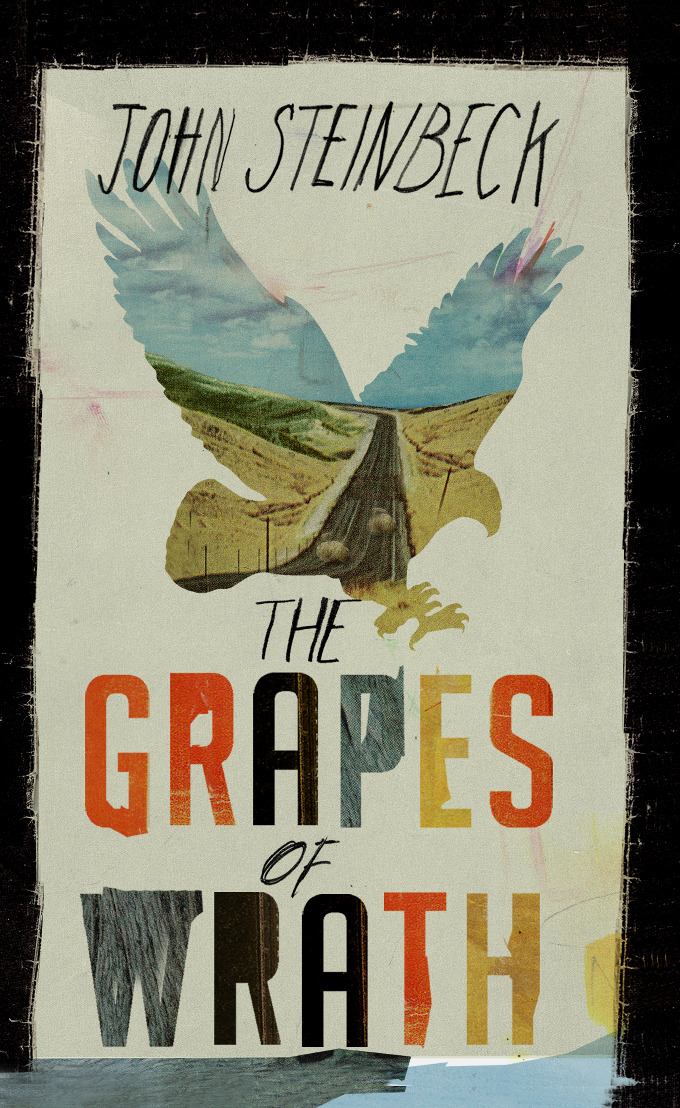
The Grapes of Wrath ― John Steinbeck

Image

First published in 1939, and set during the Great Depression in the United States, The Grapes of Wrath is John Steinbeck’s critical analysis of the capitalistic forces responsible for forcing thousands of families off of their land, and in search of better work, and a brighter future, both of which for the majority simply did not exist.

When preparing to write the novel, Steinbeck wrote: “I want to put a tag of shame on the greedy bastards who are responsible for this”.

This is definitely a book I would recommend for everyone to read, but I would recommend you do so before going any further with this review. As I feel the need to give a rather in depth synopsis in order to give more meat to some of my opinions.

While the novel was written almost 80 years ago the underlying themes of the story, ring true once again today [although for the majority of people without the severity of the 1930s]. Thanks to the outsourcing of labour by large corporations in a bid to drive down production costs, Steinbeck’s themes of corporate greed and joblessness are back with a vengeance.

Steinbeck’s novel focuses initially, and primarily on Tom Joad, who, when released from an Oklahoma prison, sets out to reunite himself with his family. Along the way Tom runs into an old preacher from his childhood Jim Casy, and takes him along to find the family, only to discover the old house uninhabited, an empty shell of the life it once contained. The pair discover that changing economic conditions have forced the Joad family out of their farm, leaving them unable to pick the cotton which had sustained them for so many years. New living conditions in an old lean to shack are proving too cramped, and so the family, relived at Tom’s reappearance, head west to California chasing the promises of orange “han’bills”, offering good money for pea pickers to work in the harvest.

Within the novel, aside from telling the story of the Joad family, Steinbeck also dedicates smaller chapters to looking at the issue on a somewhat larger, less personal scale. These chapters work brilliantly within the context of the story, giving the reader a wider scope with which to view the setting of the novel. The chapter which stands out as the most memorable for me focuses on ‘the monster’ which is the root cause of so much pain and destruction. Steinbeck’s monster can be a difficult creature to get your head around. The monster does not refer to the new machines that plough the land, or the land owners, or those responsible for loaning money and running the banks. It is the banks themselves:

“The bank is something more than men, I tell you. It’s the monster. Men made it, but they can’t control it.”

Something much more sinister than any man, a thought process which has been brought about by men, and now runs free, unburdened, and terrible:

“The monster has to have profits all the time. It can’t wait. It’ll die. No, taxes go on. When the monster stops growing, it dies. It can’t stay one size.”

Steinbeck follows the Joad family along Route 66 as they head west, towards the promise of a new life and a fresh start. The eldest daughter Rose of Sharon, and her new husband Connie, are expecting their first child, and have high hopes of Connie securing an education, a job and a house before the baby is born. Rose of Sharon busies herself dreaming of what life will be like, she is particularly taken with the idea of owning an ice box.

Shortly after the family begin their journey things take a turn for the worse, travelling proves extremely wearing on the family, especially on the elder relatives, and the journey progresses the family slowly begins to fall apart, beginning with the death of Grandpa just days after they leave Oklahoma. The eldest son, Noah, stays behind as they enter California, refusing to go back to exhausting life on the road, insisting that he will stay with the river, and soon after Noah leaves, Grandma joins her husband.

As time progresses the family desperately attempt to hold onto the hope that their new life in California will hold the treasures they so eagerly anticipated. They experience ‘Hooterville’ for the first time, a place where job seeking “Okies” huddle together in dirty tents, with starving families until driven on by the authorities, and Pa holds a conversation with a dirty, giggling man, who sparks the first of the family’s fears, there is no work in California. At the prospect of being unable to supply for Rose of Sharon and the baby Connie flees. Later, when the authorities appear in Hooterville to try and move the settlers on Casy intervenes and gets himself arrested.

Desperately seeking shelter for the night, they find temporary relief in the “Weedpatch” government camp. The camp offers the family the much needed rest they required, a sense of community operates within the fences, with families working together to keep the camp clean, running water, and weekly dances. All this takes place much to the dismay of the local authorities, who cannot bear the idea of the poor sticking together and getting comfortable. However the joy of having a community, washing facilities and a safe place to sleep is short lived, and the family eventually moves on, realising that despite the comfort of the government camp, there is still no work.

Having travelled west of the government camp the Joad family pass a picket line of protesting workers, and end up picking peaches in the “Hooper Ranch” receiving a higher wage than usual having just broken a strike. Living in a small wooden shack, and forced to buy overpriced food from the ranch store, the situation is far from ideal. One night Tom discovers that the man leading the strike is in fact Jim Casy. Shortly afterwards Tom, Casy and some of the other striking workers get into a fight with the ranch authorities, and one of the men kills Casy with a tool handle. Tom manages to wrestle the weapon away Casy’s Killer, he then, enraged by what he has seen, commits the second murder of his life.

Steinbeck’s description of the time spent at the Hooper Ranch brings to light in the readers mind more than ever the severity of the indignities that these people suffered at the hands of other human beings. It seems almost incomprehensible that anyone could have been treated with such little compassion. The idea of paying a man a pittance, because he does not have the strength, or the ability to refuse a job, regardless of the price, or work involved, is absolutely incredible.

My feelings are all but summed up by the words of Guardian writer Melvyn Bragg:

“I was all but drowned in the pity and anger John Steinbeck evoked for these people, fleeing Oklahoma to seek work but finding nothing save cruelty, violence, the enmity of immoral banks and businesses”

This incredibly moving novel, stirred so many emotions within me, even before what I’m sure many consider to be the bleakest period in the Joad family’s journey.

After Tom’s clash with the ranch authorities, the family are forced to go on the run. They travel north and find work picking cotton in a roadside field, residing in a boxcar while Tom takes refuge in the nearby woods. Other families are hungry for work, and the cotton does not last long. Then the rains set in, and with them, hunger, cold, and flooding. Rose of Sharon goes into labour after a bout of sickness and loses the baby. Meanwhile the floods threaten to completely engulf the car which the family reside in, leaving the Joad’s with no choice but to leave. At this point Tom is sent away to care for himself, and one of the elder children chooses to stay behind with the daughter of another family, leaving the Joad family less than half the size they were when they first began their journey.

Steinbeck ends the novel with a devastating scene. The family has taken refuge in a barn inhabited an old gentleman and his son. The man is gravely ill, having forfeited him own food to feed his son, and he can no longer hold down solid food. Ma realises that Rose of Sharon is now producing milk, at which time a silent nod of understanding passes between the two women, and the family leave the barn. The reader is left with the haunting image of Rose of Sharon, nursing the dying man. An incredibly powerful image, which stays with the reader long after the novel is finished.

Inhumanity is possibly the most important and prominent theme running through The Grapes of Wrath. The characters within the novel experienced horrendous suffering at the hands of landowners who saw migrants with rights as a threat to their livelihoods, and therefore set out to strip them of even the basic human rights we enjoy today, exploiting fellow Americans to the point of utter ruin. Human beings were the both the cause, and the recipients, of suffering in the land of the free. The land owners in California lived a life of luxury, while the migrants were treated like animals.

With the inhumanity lies a second, more positive theme. The characters within the novel maintain a certain hope and unity which holds the dwindling family and the migrants in general together as one. The importance of remaining together as a family is emphasised throughout the novel. It is being together that in part helps the Joad family to never lose sight of hope. When the groups of migrants get together they create a sense of hope of what will come next, such as can be seen within the government camp. This is a striking, and more than likely accurate, depiction of the great depression migrants, who, when all else failed, clung to hope.

Steinbeck’s writing is beautifully poetic, with the most intricate details going into every description, be it a blonde headed girl outside a tent in the government camp, or the feeling of sand between hot toes in the cool Californian Rivers. At the same time, The Grapes of Wrath would not be wasted on a less avid reader; Steinbeck’s style is wonderfully accessible without being easy to read. Rewarding, without being tedious.

Steinbeck will leave the reader thinking about the story long after the book is finished. A work of fiction about a real thing, a real time, with real people. While the Joad family may be fictional, their experiences reflect the life of many Americans at that time.

“Hope Smiles from the threshold of the year to come, Whispering ‘it will be happier’…” ― Alfred Tennyson

With Christmas out of the way for another 12 months I am very much looking forward to getting things back on track.

I was very optimistic before I broke up for work for the festive season that I would get a lot of work done during my time off. I had a pile of books waiting to be reviewed which desperately needs cutting down to size a little bit [I have a terrible habit of getting far too far ahead of myself with reading, and not quite keeping up to speed with reviewing]. Unfortunately my optimism was ill-founded, and alas my workload is as big as ever.

The post Christmas lull should be a nice time to get some work done, so here’s to the start of a happy, constructive and prosperous 2014!

I have a lot planned for the next few months, aside from a stack of books I hope to work my way through, I will be assisting with writing a book for the publishing house where I work, which I’m sure you’ll agree is incredibly exciting, if a little daunting. Before Christmas I also was asked to reviewed a book for the magazine Global – the International Briefing, the next issue of which should go to press within a couple of weeks, so be sure to watch this space.

“And when at last you find someone to whom you feel you can pour out your soul, you stop in shock at the words you utter— they are so rusty, so ugly, so meaningless and feeble from being kept in the small cramped dark inside you so long.” ― Sylvia Plath

There are two sides to every story

The Confidant – Hélène Grémillon

Confidant final cover.448x688

Another truly beautiful piece of literature to add to my read list. ‘The Confidant’ was given to me by my partners godparents as a Christmas present last year, and sadly ended up hidden in the bottom of a box until a few weeks ago, one of the downsides of having moved house and never fully unpacked. Having just read and thoroughly enjoyed ‘The Elegance of the Hedgehog’ I was excited at the prospect of getting started on another piece of French literature, and potentially giving myself a nice topic of conversation for our next family dinner.

‘The truth lies hidden in the past’ is such a fitting tagline for this novel. Grémillon draws the reader into the depths of a long hidden secret, of longing, forbidden love, betrayal, and revenge. The novel achieves an almost perfect blend of historical narration, thrilling suspense and harsh reality, the result of which is truly stunning.

It is 1975, and in her apartment in Paris, Camille receives an anonymous letter, a letter narrating the lives individuals seemingly unrelated to Camille, surely the letter has been sent to her by mistake? The anonymous letters continue to fill the post box of Camille’s Paris flat, and a long hidden secret begins to unravel before her very eyes. As the story unfolds Camille becomes desperate to discover the source of the letters, before finally succumbing to the realisation that it is her own story which is being told. The story of pre war France, a young boy in love, a young girl eager to please, and a rich and lonely madame is inextricably linked to Camille’s unlikely friendship with the concierge of her apartment building, the recent death of her mother, and the future of her unborn child.

What struck me about this book was the profound effect it has on my emotions. As the secret unraveled I found myself taken on an emotional journey of empathy and hatred of Annie, and simultaneous hatred, and empathy for Madame M. There are two sides to every story, and Grémillon highlights this so perfectly, by the end of the novel I felt as though neither character did anything wrong. Their actions were inevitable, driven by emotion and instinct.

The story presents a fierce, raw examination of women, coupling motherhood and feminism with love, passion, and desire. In this respect there was one theme in particular that struck a chord with me, and that is Grémillon’s unrestrained examination of infertility.

Madame M’s yearning to have a baby is spoken of at length throughout the novel, and I find the way in which her desires are portrayed incredibly moving. The world around M seems almost super fertile, numerous women in Paris are falling pregnant, and the newspapers are awash with stories crying for the need for more babies:

‘Have more Children! Have more children, France must make up for her losses in 1914’.

M is described as going to all lengths to sure her infertility, even physically injuring herself in a desperate hope that someday she will discover a solution. She describes her constant consumption of an aphrodisiac made from wine and spices,  resorting even to bathing in the concoction to the point where:

‘Over time my skin acquired a spicy scent that disgusted me’

Gremillon delves further into the realms of M’s depression, describing at length her dismay at her sudden transformation into ‘the infertile woman’. What I think is the most striking description of this comes during a dinner with her Husbands family, his grandmother makes an announcement that someone at the table is with child, and the guests begin to guess who it could be:

‘Every name except Granny’s and my own. Because it was no longer possible for her, and for me, it never had been.’

This seems to be time when M finally succumbs to the fact that she will forever be the elephant in the room, the person whom everyone must be careful around, who is looked upon with pity. I found reading the following passage quite emotional, my heart goes out to anyone, who is ever made to feel this way:

‘Suddenly her eyes met mine and she looked away at once, her broad radiant smile frozen on her face, and a moment of awkwardness spread round the table. Silence. The game had yielded to the weight of reality, my reality. At that moment I realised I had become ‘the infertile woman’ in the family, the one whose presence absolutely precluded any displays of joy , the one who was so unfortunate that the happiness of others could prove fatal. My shame was confirmed

M’s story touched on something I feel is shied away from far too often: the unspoken ‘shame’ that is placed upon infertile woman. I found myself asking why? Why is being infertile considered something to be embarrassed about? The following quote was taken from a comment on a feministphilosophers blog post ‘On Becoming Infertile – Part 1’:

‘I feel like I’ve often been treated like a faulty baby machine rather than a person. The guilt, the shame, the sense of failure, the indignation and the grief have all been a lot to deal with’ (Commenter: L Stokes).

The idea that anyone should be made to feel this way is incredibly sad. M’s story took place in the early 20th century, and this is an issue that is still felt today. I very much admire Grémillon for approaching the subject.

There is so much more I could say about this book, so many themes which could be explored, but I feel I have written enough for now. For anyone reading this who has not, I would urge you to read the book, it is a beautifully written, thought provoking read. You will not be disappointed as you read the final page, and see the secret of fully unraveled and laying before you in its entirety. The novel is captivating to read and satisfying to have read.

When I finished ‘The Confidant’ I felt the indescribable mix of sadness and fulfillment which accompanies the completion of a really fantastic novel.