“The future depends on what you do today.” ― Mahatma Gandhi

Actions speak louder than words

Deeds Not Words ― Katharine D’Souza

deedsnotwords

Katharine D’Souza has lived much of her life in and around Birmingham. She specialises in writing contemporary fiction, in the form of novels, and the occasional short story, with a realistic edge. Her characters, who, like herself, all herald from Birmingham, encounter real life situations and problems. ‘It’s perhaps unsurprising that my stories are set in Birmingham,’ she says, ‘but I hope the themes are universal’. To date D’souza has released two novels, the second of which, Deeds not Words, was published in December 2013.


Deeds not Words follows the story of museum curator Caroline, who has returned to her hometown following the breakdown of her marriage. Now, middle aged and alone, Caroline is stagnating, and feels herself become more and more unfased by her work and social life. As the fledgling member of a competitive office Caroline struggles to make her voice heard, and outside of work she bears the brunt of being the only one of her parents’ children living close to home. So when Caroline accidentally stumbles upon information alluding to a side of her family she never knew existed she cannot resist the urge to indulge her passion for the past and delve a little further into her family history. In doing this she is all at once given the once given the opportunity, and the motivation, she needs to create something from her life. But is she willing to take the risk?

I was pleasantly surprised by this novel. When I started reading it, despite the fact it is about a museum curator, I had no idea it would have the historical aspect that it did. Those of you who read my blog often will know of my soft spot for historical fiction – while I don’t think this book quite falls within these realms, there is a definite a historical aspect to it, which I love. The historian within Caroline is reawakened in researching her family history when she discovers her ‘great aunt Susannah’, an inspirational lady who was heavily involved in the women’s suffrage movement in Birmingham. Caroline’s research takes the reader on a historical journey back to a time when the women’s suffrage movement was in full swing – while D’Souza has been clear that the book is a work of fiction the message conveyed remains the same.

It is Caroline’s grandmother, Beth,  who first sets in motion Caroline’s desire to uncover her family history when she speaks to Caroline about wanting to do what is right, and put an end to a feud which has been hanging over the family for years. Her grandmother’s words are vague and confusing, however, and Caroline has to take matters into her own hands to realise the root of the feud, and ultimately her grandmother’s true wishes. Caroline makes up her mind to take action and bring the family back together, and in so doing finds herself up against some serious barriers in the form of her incredibly stubborn mother. Reading about the relationship Caroline has with her mother is actually quite painful, and I’m sure an empathetic reader would feel more than a little sympathy for Caroline. In deciding to strive to reform her family after so many years, Caroline effectively risks marring her relationship with her mother – a difficult decision, but ultimately a clear one.

While reading this book I felt I grew to know Caroline intimately, and was able to witness first hand as she in turn grew to know Susannah. It is easy to imagine Caroline sitting down to filter through her great aunt’s old possessions and to picture her captivation upon visiting her old art college and walking the same paths as she had so many years before. Caroline’s journey occurs as a result of Susannah’s actions so many years before, the knowledge of Susannah’s passion and commitment to her cause is what gives Caroline the motivation she needs to succeed:

‘In Susannah’s footsteps, the simple act of asking for something, stating a demand, had brought her a long way.’

I thoroughly enjoyed travelling with Caroline as her research uncovered the parts of Susannah and the suffragettes which were still hidden in Birmingham, such as the oil painting left hanging in her family’s old factory:

‘It was all there the suffragette’s colours of pure white, hopeful green and dignified purple all present in the scenery around the edge of the picture. The splashes of colour surrounded the factory building and that female figure opening the gate as though she owned the factory made a fine punchline.’

While D’souza has been clear that Deeds not Words is purely a work of fiction, the suffragettes were of course only too real, and it is interesting to consider that there could still be such messages hidden within direct sight so many years after the suffragettes demand of ‘votes for women’ has been realised.

I was pleasantly surprised that this novel didn’t turn out to be yet another love story. In fact, this was made all the more rewarding in D’Souza decision to peter dangerously close to becoming just this, before stealing the show back right at the very end. Caroline is only human, and while it is to be expected that she would be not entirely adverse to the advances of an attractive man, I feel this would have given the book entirely the wrong message. The choice D’Souza made with regards to Caroline’s love life was, I feel, entirely the right one.

Overall, I found Deeds Not Words to be a very satisfying read. D’Souza has a unique take on historical fiction which is juxtaposed with the contemporary banality of middle-aged city life. The story itself is enthralling because it is entirely believable, especially given the current obsession with the trend for people to tracing their family histories. The book also has something to say about life choices and the idea of making your mark upon the world, a message which may leave the reader contemplating their decisions long after the final chapter has concluded.

Many thanks to Katharine D’Souza for supplying me with a free review copy of her book.

“You can love someone so much…But you can never love people as much as you can miss them.” ― John Green

Love and tragedy

Spare change – Bette Lee Crosby

12845372

Heralding from the southern United States, Bette Lee Crosby fell in love with fiction at a very early age. For Crosby, the step towards becoming a writer was an obvious one. ‘Storytelling is my blood,’ she says, and describes her mother as a ‘captivating storyteller.’ She recounts using bits and pieces of her southern mother’s voice in almost all of her writing, a trait for which she is well known and much admired. Crosby first entered the international publishing scene in 2006 when she received the National League of American Pen Women Award for one of her unpublished manuscripts. Since her debut novel, Cracks in the Sidewalk, was released in 2009, she has gone on to publish six further novels, including USA Today bestseller Spare Change in 2011.


In Spare Change Crosby exceptionally executes the multi strand narrative, telling the tale of two very distinct characters, whose storylines unexpectedly become one. Olivia Ann Westerly has her life well and truly figured out, stubborn and superstitious to the very core, she hates opals, loathes the number 11 and sees children as a weight that crushes a woman’s soul. That’s why, despite being well into her thirties, she continues to dismiss any proposals of marriage. Her life is simple, until she meets Charlie Doyle, a man with blue eyes and a lopsided smile which finally captures her heart. When Olivia allows herself to become absorbed by her love, ignoring the bad omen brought by the unexpected gifting of an opal necklace, her honeymoon period ends abruptly and with devastating results. Leaving her once more alone, with none of the independence she once so coveted. Meanwhile Ethan Allan Doyle has been born into an underprivileged home, to an abusive father, and a mother with dreams of running away to New York City to pursue a music career. Having grown up in a less than conventional household with a mother and father with their fair share of secrets, Ethan Allen knows better than to go shooting his mouth off. As a result, when he bears witness to a gruesome incident, which leaves both his parents dead, he knows he needs to run before the man responsible catches up to him. Lost and without a hope in the world, Olivia and Ethan Allen’s lives may seem miles apart, but they are about to get to know each other a whole lot better.

This was my first experience of reading Crosby’s work, and I have to say that I was not disappointed. I really appreciated the southern flair in her style. The language is second to none and gives a real twist to the text. I found myself inadvertently reading pretty much the entire book with a southern accent. The use of the southern dialect sets the perfect scene for the book, and it’s not just the speech which has this amazing southern feel, the whole book reads like a passage of speech from the Grapes of Wrath:

‘The year Ethan Allen became eleven was when things between Benjamin and Susanna turned rancid as a week old pork chop.’

I challenge anyone to get through the whole novel without inadvertently donning an internal Scarlet O’Hara-esque persona on at least one occasion. Just try and say the words ‘leastwise’ or ‘elsewise’ with anything other than a southern drawl, I’m sure it can’t be done. This aspect of Crosby’s work is something for which she is well known and liked, and it’s evident from reading the book just why this is.

Crosby’s narrative is interlaced with passages of italicised text which serve as the internal monologues of some of the main characters. These short passages allow the reader an insight into the inner thoughts and workings of the characters. I found these openings to be the place where the most of the language came out, especially with Ethan Allen, whose character was less likely to have lengthy passages of speech within the storyline itself. From his expressions and thoughts I developed a very clear image of the boy in my mind – street wise, small, dirty, and foul mouthed. I can imagine him as being a bit of a Huckleberry Finn type character. Olivia’s monologue also lent me a clear view of her personality, her written word painted such a clear picture that I felt as though I could reach out and touch her. She seems to be quite the quintessential southern belle: much sought after, but never captured.

The individual stories of Ethan Allen and Olivia are sure to tug on the heart strings of all that read them. Both characters have such tragic stories; blessed by love, but plagued by loss. The relationship between Ethan Allen and his mother may be unconventional, but it uniquely charming and adorable in its own way. His evident despair and anger at having lost his mother is truly heart-breaking. Meanwhile, Olivia’s relationship with Charlie is nothing short of perfect from the very start, but is so much shorter than anyone could ever expect. The brutality the situation is overwhelming, and is epitomised in the words that Olivia uses to describe her grief:

‘The bits and pieces of Charlie are like a bouquet of roses. I look at them and see a world of sweetness and beauty, but when I try to hold onto them the thorns rip me to pieces.’

It is the tragedy of each character’s past which makes the unexpected relationship which blossoms between the two of them all the more rewarding.

Another aspect of the book, I would like to go into is the past that Ethan Allen is running from, but I’m wary of unleashing too many spoilers, so I’ll keep this short. Needless to say, Ethan Allen’s troubles are not over when he meets with Olivia; in fact they’re really just beginning. A shadow of the past is following Ethan, threatening to take the only thing he has left – his life. It is the prospect of his past catching up with him which ultimately brings Olivia and Ethan Allen closer together. As it becomes apparent that his troubles are not just going to disappear Ethan realises he has to trust Olivia, which means telling the truth about what he saw the day his parents died.

On the whole I found Spare Change to be a satisfying read, and I would definitely consider reading more of Crosby’s work. The only thing I felt I could have done without is the final chapter; I think that introducing a spiritual aspect to the novel at the last minute was unnecessary. That said, as it is the final chapter wasn’t too perturbed by it. The relationship between Olivia and Ethan Allen is enchanting and really heart-warming, but the storyline itself manages to stand out and is not too flowery. Crosby’s style is easy and fun to read, serving as an eclectic mix of southern flair, tragedy, crime and love which really expresses the best of human nature.

Many thanks to Bette Lee Crosby and Bent Pine Publishing for supplying me with a free review copy of the book.

“People who claim that they’re evil are usually no worse than the rest of us… It’s people who claim that they’re good, or any way better than the rest of us, that you have to be wary of.” ― Gregory Maguire

Don’t be afraid to be bad.

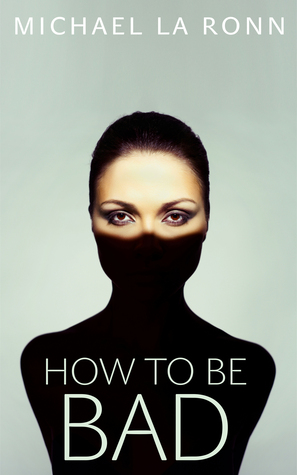
How to be Bad ― Michael La Ronn

20529997

Michael La Ronn made the decision to pursue a writing career in 2012, after recovering from a potentially life threatening illness. The realisation that he had come so close to death inspired him to turn his writing, which he refers to as his ‘true passion’, into a full-time job. La Ronn’s goal as a writer is to entertain; he says that reading should be a journey with the potential to take you to unexpected places. His signature works are Decision Select™ Novels, which are essentially choose your own adventure novels specially written for an adult audience. The first of these, How to Be Bad, was published in early 2014.


In How to be Bad the reader fills the shoes on Bebe McFerrin, a budding young attorney and professional pushover. Bebe has the confidence of a gnat, rendering her susceptible to the manipulation of her co-workers. The reader is introduced to Bebe, on the most important day of her life so far, having her promotion stolen by a co-worker, and what does she do? Nothing, she sit’s and takes it. That is until she meets Ladouche, a demon with a taste for revenge, who promises her total immunity from any evil deed, giving her the opportunity to wipe the smile from her colleague Anette’s face once and for all. As Bebe’s life enters the hands of the reader she finally gets her revenge, binding her to a contract with Ladouche she did not know existed and Bebe is forced to steal the souls of three innocent people.

When I was younger I loved the Goosebumps choose your own adventure books, so I was immediately interested when La Ronn asked me to read his new novel, and I was not disappointed. Overall, I had a great time; it was so much fun experimenting with a book of this type made specifically for adults. The choices were a more complicated than in those books designed for a younger audience, some of it is actually based on your ability as a reader, your general knowledge, and ability to navigate certain situations – I liked this a lot.

Each possible story only takes about an hour to read, and as I’m sure those of you who have read these books before can appreciate they are more of a holiday read than anything else. I think it would be make a good book to read on a long journey, or a lazy afternoon when you have a few hours to kill. I enjoyed reading it a few times to see how the endings changed.

I think the message I took from the story is that it might not be a very good idea to place much faith in the promises of a demon.  But of course the outcome will change depending on the choices a reader makes, so you might find you take something different away. I do think the text says something about people who let themselves get walked over, you shouldn’t be afraid ‘be bad’ every now and then to get what you want. If Bebe could learn to do things for herself every now and then, and be a bit less conscientious things might turn out better for her.

The one issue I have with the book is that there are a few formatting problems. I noticed that some of the outcomes did not quite fit with the choices I made.  I’ve no doubt these are supposed to be different and I have relayed the issues back to the author and he is in the process of working them out.

I like reading things which are a little different and this definitely ticked a few boxes for me. Like I said before it’s not the most thought-provoking piece I’ve ever read, but it’s what you expect a choose your own adventure to be. The book is well written, fast paced, and entertaining, and I think Ladouche is a really great character, even if he is a bit of a douche. I would recommend How to be Bad to those who were fans of choose your own adventure novels as children, or those who, like me, appreciate things which have a little individuality and flair.

Many thanks to Michael La Ronn for proving me with a free review copy of the book.

“And when at last you find someone to whom you feel you can pour out your soul, you stop in shock at the words you utter— they are so rusty, so ugly, so meaningless and feeble from being kept in the small cramped dark inside you so long.” ― Sylvia Plath

There are two sides to every story

The Confidant – Hélène Grémillon

Confidant final cover.448x688

Another truly beautiful piece of literature to add to my read list. ‘The Confidant’ was given to me by my partners godparents as a Christmas present last year, and sadly ended up hidden in the bottom of a box until a few weeks ago, one of the downsides of having moved house and never fully unpacked. Having just read and thoroughly enjoyed ‘The Elegance of the Hedgehog’ I was excited at the prospect of getting started on another piece of French literature, and potentially giving myself a nice topic of conversation for our next family dinner.

‘The truth lies hidden in the past’ is such a fitting tagline for this novel. Grémillon draws the reader into the depths of a long hidden secret, of longing, forbidden love, betrayal, and revenge. The novel achieves an almost perfect blend of historical narration, thrilling suspense and harsh reality, the result of which is truly stunning.

It is 1975, and in her apartment in Paris, Camille receives an anonymous letter, a letter narrating the lives individuals seemingly unrelated to Camille, surely the letter has been sent to her by mistake? The anonymous letters continue to fill the post box of Camille’s Paris flat, and a long hidden secret begins to unravel before her very eyes. As the story unfolds Camille becomes desperate to discover the source of the letters, before finally succumbing to the realisation that it is her own story which is being told. The story of pre war France, a young boy in love, a young girl eager to please, and a rich and lonely madame is inextricably linked to Camille’s unlikely friendship with the concierge of her apartment building, the recent death of her mother, and the future of her unborn child.

What struck me about this book was the profound effect it has on my emotions. As the secret unraveled I found myself taken on an emotional journey of empathy and hatred of Annie, and simultaneous hatred, and empathy for Madame M. There are two sides to every story, and Grémillon highlights this so perfectly, by the end of the novel I felt as though neither character did anything wrong. Their actions were inevitable, driven by emotion and instinct.

The story presents a fierce, raw examination of women, coupling motherhood and feminism with love, passion, and desire. In this respect there was one theme in particular that struck a chord with me, and that is Grémillon’s unrestrained examination of infertility.

Madame M’s yearning to have a baby is spoken of at length throughout the novel, and I find the way in which her desires are portrayed incredibly moving. The world around M seems almost super fertile, numerous women in Paris are falling pregnant, and the newspapers are awash with stories crying for the need for more babies:

‘Have more Children! Have more children, France must make up for her losses in 1914’.

M is described as going to all lengths to sure her infertility, even physically injuring herself in a desperate hope that someday she will discover a solution. She describes her constant consumption of an aphrodisiac made from wine and spices,  resorting even to bathing in the concoction to the point where:

‘Over time my skin acquired a spicy scent that disgusted me’

Gremillon delves further into the realms of M’s depression, describing at length her dismay at her sudden transformation into ‘the infertile woman’. What I think is the most striking description of this comes during a dinner with her Husbands family, his grandmother makes an announcement that someone at the table is with child, and the guests begin to guess who it could be:

‘Every name except Granny’s and my own. Because it was no longer possible for her, and for me, it never had been.’

This seems to be time when M finally succumbs to the fact that she will forever be the elephant in the room, the person whom everyone must be careful around, who is looked upon with pity. I found reading the following passage quite emotional, my heart goes out to anyone, who is ever made to feel this way:

‘Suddenly her eyes met mine and she looked away at once, her broad radiant smile frozen on her face, and a moment of awkwardness spread round the table. Silence. The game had yielded to the weight of reality, my reality. At that moment I realised I had become ‘the infertile woman’ in the family, the one whose presence absolutely precluded any displays of joy , the one who was so unfortunate that the happiness of others could prove fatal. My shame was confirmed

M’s story touched on something I feel is shied away from far too often: the unspoken ‘shame’ that is placed upon infertile woman. I found myself asking why? Why is being infertile considered something to be embarrassed about? The following quote was taken from a comment on a feministphilosophers blog post ‘On Becoming Infertile – Part 1’:

‘I feel like I’ve often been treated like a faulty baby machine rather than a person. The guilt, the shame, the sense of failure, the indignation and the grief have all been a lot to deal with’ (Commenter: L Stokes).

The idea that anyone should be made to feel this way is incredibly sad. M’s story took place in the early 20th century, and this is an issue that is still felt today. I very much admire Grémillon for approaching the subject.

There is so much more I could say about this book, so many themes which could be explored, but I feel I have written enough for now. For anyone reading this who has not, I would urge you to read the book, it is a beautifully written, thought provoking read. You will not be disappointed as you read the final page, and see the secret of fully unraveled and laying before you in its entirety. The novel is captivating to read and satisfying to have read.

When I finished ‘The Confidant’ I felt the indescribable mix of sadness and fulfillment which accompanies the completion of a really fantastic novel.

“God is a circle whose center is everywhere and circumference nowhere.” ― Voltaire

The power of words

The Chronicles of Narnia ― C. S. Lewis

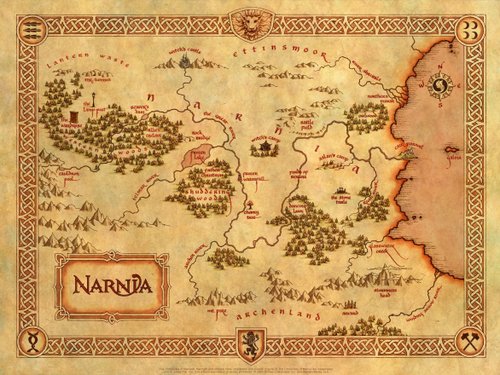
book-inmyownview-map-narnia-the-chronicles-of-narnia-Favim.com-204175

Firstly let me say how irritated I just was when I typed ‘The Chronicles of Narnia’ into Google image search, and was overcome with stills from the films. I had to add ‘book’ before I got anything of use.

I’m going to make this a short review, as this is a review of seven books in one I feel it necessary to keep it to the minimum or I could go on for an age.

I would recommend these books very highly to anyone who hasn’t read them, and would not want to spoil any part of them. Go out, buy the books, read them, read them to your children, buy them as gifts. I feel I would have loved these books even more had I read them as a child. I would recommend the Chronicles of Narnia for children far above the Harry Potter books, Philip Pullman’s dark materials or Lemony Snicket’s Series of Unfortunate Events. Not that the other series’ do not have their merits, but I would go so far as to say I would not let any of my children grow up without giving them the opportunity to experience these stories.

C S Lewis writes the stories in a way that everyone can understand, communicating at times with children on their level. I have read it written that C. S. Lewis had an incredibly strong respect for children, and felt the need to speak with them as if they were his equals and not beneath him. This is evident throughout the books, with C S Lewis coming up with little analogies to explain things which only a child will fully appreciate.

I know many people will know the basics of the Chronicles of Narnia, but I still don’t wish to ruin anything for those of you who are in the dark. Put very simply, the books follow the adventures of the Digory Kirke, Polly Plummer and the Pevensie family in the mysterious land of Narnia, and their encounters with the king of Narnia -Aslan.

I am sure there are people out there who will not enjoy the Chronicles of Narnia, partly due to their obvious theological content. It is well known that the books draw heavily in the bible, from the Creation Story through to the Book of Revelations. I have never been what I would call religious, I have yet to decide exactly what I believe in, no doubt one day I will decide but it will be my choice alone. However I believe that these books teach fantastic morals, and can be enjoyed on several levels.

The books are a great read as stories alone. The adventures are incredibly enticing, and kept me enthralled for hours at a time, to the point where I did not want to put the books down, reading one after another in quick succession. C S Lewis’ presents religion in such as way as to appeal to those who are not open to the ideas of Christianity, by giving them something which is meant first and foremost to be entertaining, presenting religious stories as works of fiction.

I feel as though the stories are meant to inspire children to love Aslan in the way that Christ should be loved. Not to force children into believing, but to help them understand how others feel. I felt myself falling completely in love with Aslan, for reasons I can not fully explain. Something in the way he is described -beautiful and yet terrible at the same time, the voice he is given and the words that he speaks very much appealed to me, as I’m sure they have to many people. There is one quote I will share with you from The Last Battle, when Aslan is explaining the difference between himself and the terrifying god Tash, which for me perfectly encapsulates the idea of religion, and when de-constructed is a fantastic moral to teach children:

“The Lion growled so that the earth shook (but his wrath was not against me) and said, It is false. Not because he and I are one, but because we are opposites, I take to me the services which thou hast done to him. For I and he are of such different kinds that no service which is vile can be done to me, and none which is not vile can be done to him. Therefore if any man swear by Tash and keep his oath for the oath’s sake, it is by me that he has truly sworn, though he know it not, and it is I who reward him. And if any man do a cruelty in my name, then, though he says the name Aslan, it is Tash whom he serves and by Tash his deed is accepted. Dost thou understand, Child?”

Ultimately Aslan is not speaking of serving one god or another, but of a way of living. It is a guideline, a moral, to be good and kind and feel the benefit of your actions, or to suffer as a result cruel choices.

Overall I thoroughly enjoyed these books for what they were – stories. It was interesting for me to look at the theological aspect as well, but ultimately it was the stories that I enjoyed, and it is the stories that I recommend. Having finished the books I plan to lend them on to my younger siblings, who are of the perfect age to fully appreciate the stories.

“I love walking into a bookstore. It’s like all my friends are sitting on shelves, waving their pages at me.” ― Tahereh Mafi

Having recently moved out of student housing, I’ve suddenly found myself with a whole house in which to store my things. I always thought I had an impressive book collection, but after having bought three bookcases (expertly assembled by myself and Katie), and somehow acquired a forth, our books were looking a little lost. To fix this problem Katie and I have taken up frequenting Cambridge’s second hand book shops.

Image

I’m quite impressed with the collection we have going. I’ve taken to picking up leather bound books by authors unfamiliar to me.

Image

It makes me really happy to see an inscription inside an old second hand book – like it has a story all of it’s own. I couldn’t resist buying the above book ‘an essay on comedy’ by George Meredith as well as four other books by the same author. The idea that George gave these lovely little books as a gift and they somehow ended up in Oxfam made me feel a bit sad, and while I know that the George in the inscription is not the same George that wrote the books (the latter being long dead by 1926), I still feel better knowing they have a nice bookshelf to sit on again.