“Knowing that you’re crazy doesn’t make the crazy things stop happening.” ― Mark Vonnegut

My illness and I

The Shock of the Fall – Nathan Filer

I picked up this book while stranded at Liverpool street train station after yet another one of my trains was cancelled, I’d been at a stag do for the weekend and I was hungover, grumpy, and needed something to take my mind off things. I haven’t had much time to read just because I wanted to recently. Reviewing books for people has taken over my life a little bit. I hadn’t heard of the book by name but when I turned it over and looked at the blurb I read this:

‘I’ll tell you what happened because it will be a good way to introduce my brother. His name’s Simon. I think you’re going to like him. I really do. But in a couple of pages he’ll be dead. And he was never the same after that.’

Now this I had read before. I’m not sure where, but I had definitely read this and had my interest piqued once before. So I took the plunge, shelled out the £7.99 WHSmiths were asking for and decided to read it. I’d pretty much finished by the time I finally got home to Cambridge. It really is as un-put-down-able as they come. And my afternoon spent reading it made me realise the importance of taking the time to read for pleasure, which I really have been neglecting a little too much recently.

Anyway I digress, on with the review.

AIPIA

Nathan Filer, grew up near Bristol in the UK, and initially trained as a mental health nurse at the University of West England. Following this he worked a researcher in department of psychiatry at the University of Bristol and as a psychiatric nurse in several inpatient mental health facilities. Filer is currently employed as a lecturer in creative writing at Bath Spa University, as well as performing and writing for TV and Radio. In 2013, Filer published his first novel, The Shock of the Fall, which went on to win the 2013 Costa Book Awards for Best First Novel and Book of the Year.


In his debut novel Filer introduces the reader to Matthew Holmes, a 19-year-old mental health patient. In a bid to understand his own problems, Matthew turns to writing, writing his own story – this story forms the pages of The Shock of the Fall. Matthew’s memoirs start with what he sees as the beginning of his mental health issues – the ‘shock of the fall’ which led to the untimely death of his older sibling, Simon. Wracked by guilt over his death, even much later on his life, Matthew writes, sometimes on a computer at the community centre, other times on an old typewriter donated to him by his beloved grandmother ‘Nanny Noo’. The book is a fantastic amalgamation of drawings, letters, diagrams and passages of thought written with varying typefaces, presenting a fascinating yet harrowing image of one man’s descent into madness.

When I was a teenager I read The Curious Incident of the Dog in the Night-time, which initiated my interest in novels written from unusual perspectives. Those of you who know me will no doubt be aware of this, I often recommend the book to people, and you will find the booked proudly positioned on my ‘Favourites’ page. Now, often when I am choosing a book to read I will be most drawn towards those which offer something a little different, be it a strange perspective, writing style or genre. So when flicked through the pages of The Shock of the Fall at Liverpool Street, I knew it was a book for me as soon as I saw the different typefaces, the scratchy drawings and randomly placed text. Needless to say it’s been a while since I have been touched by a novel in this way.

Firstly I would like to talk about Filer’s introduction; we meet Matthew [Matt], and are introduced to Simon through the first section of the book – The girl and her doll. This first chapter instantly captivated me. It is this point, the moment when Matthew first saw the young girl and her doll that all of Matt’s problems started, or at least, this is the beginning he has given us. There is something so mysterious and fascinating about this scene, a young boy, hiding around behind some bins, watching a mysterious girl hold a funeral for a small rag doll. I didn’t necessarily expect to find out the meaning behind this scene [even though I desperately wanted to] I was more expecting it to be a pitch to get the reader interested, and it worked. Eventually, I forget about the girl and her doll, or at least forget to remember to be interested in her, because as a reader you are given so much more to be interested in.

The main thing we are given to be interested in is of course Simon. I’ve already revealed that Simon died, and I don’t feel bad about unleashing that ‘spoiler’, because it’s not really a spoiler at all. The passage is written on the back of the book, and Matt lets us known about Simon’s death very early on. The reader is kept waiting to find out the circumstances of Simon’s death, however. Matt’s method of writing leaves a lot to the imagination, allowing the reader to form their own conclusions for an almost frustratingly long time. One thing that is made very clear is that Matt feels he is responsible for Simon’s death.  Even though he really only lives through Matt’s thoughts and memories, Simon is central to the book. At its core, everything is about Simon, and the effect of Simon’s death on those around him, predominantly, but not only, Matt.

For Matthew’s mother, grief was most easily dealt with by keeping Matt at home, close to her. She mothered him, or tried to.  In reality this made things even more difficult for Matt, a young boy struggling to cope after the death of his older brother. Matt resents his mother for keeping him home from school and for stopping him from socialising with his friends, effectively making him into the ‘weird’ kid.

For Matt, grief is far more complicated; it is on-going, all-encompassing and further intensified not only by his guilt but something much, much darker – an illness which ‘slithers through the branches’ of his family tree. In Matt’s story, his grief, and indeed his illness are epitomised in his ‘special project’ a combination ant-farm/science-project:

‘Nanny looked around my living room; her face was pale. I think she needed to sit down, but there wasn’t any space. The whole floor, the chairs, the table, every surface was taken over. I had filled hundreds of bottles and jars with earth, connecting groups of them together with plastic tubing. The Hydrogens were already up and running – they’re the easiest to build – a single proton and a single electron. I had made ten of these because we are made of ten per cent hydrogen. The Oxygens took more work, two electrons in the first shell, and six in the outer shell. Then I would pair them up, colliding a pair of electrons from each to make the covalent bonds. This often smashed the glass, so most of the ants had escaped. The carpet was crawling with them.’

This ‘special project’, is Matt’s way of attempting to recreate his brother. He has combined the memory of Simon wanting an ant farm, with some knowledge he picked up in a school science class – everyone is made of the same atoms. In Matt’s mind he must therefore contain a part of Simon, and so Simon must still exist.  It is this point in the book that the extent of Matthew’s illness, the terrifying realisation comes out in full. When his grandmother sees his ‘special project’, and realises that Matthew has been singled out by the same illness which claimed her brother: ‘Nanny pressed a tissue to her lips, “we need to get you some help.”’

By writing his story this is exactly what Matt is trying to do, to help himself.

Matt’s writing perfectly traces his journey through the mental health system. The changing typefaces and scratchy drawings seem to mirror the times he is writing about. When Matt writes about his time locked away inside a mental institution he does it while locked up inside his flat, ignoring the persistent knocks of his community support workers:

‘KNOCK KNOCK KNOCK

Knock knock KNOCK KNOCK. They are outside, standing at my door, they are peering through the letter box, they are listening to me type. They know I’m here.’

It is while locked within his apartment that Matt revisits the time when Simon completely monopolised his life. While inside the institution, thoughts of Simon regularly invaded his mind, and Simon himself often came to visit:

‘I didn’t even get out of bed. I just leant over the side and slowly lifted the overhanging sheets. The giggle turned into a squeal of delight. “I knew it was you.” His face was painted orange with black stripes, and the tip of his nose was a smudge of black with lines drawn for whiskers. “I’m a tiger,” he grinned. “Do I look like a tiger?”’

Even as Matt writes his story, Simon is still with him. Towards the end of the book, when Matt, meets once again with Annabelle, the girl he witnessed having a funeral for her doll all those years ago, Simon is there:

‘Simon was in the movement of her hair. He was in the little yellow coat as it billowed in the wind.’

Matt meeting with Annabelle once again was a perfect beginning for the end of his story. In talking to Annabelle, he begins to tie up his loose endings and realises what he needs to do in order to let go of Simon once and for all.

Throughout Matt’s story when he writes about his illness he repeats the same words and phrases. The illness is a part of him, and so he often refers to ‘My illness and I’, as though through everything he does, his illness is there with him, and there is no escaping it. With an illness such as Matt’s there really is no way of escaping it, but it seems as though, once you have reached the end of the book Matt is writing from a place where he has finally come to accept his illness.

Overall, I thoroughly enjoyed every aspect of The Shock of the Fall. I really don’t feel as though I can recommend this book highly enough. I have already suggested it to a number of my friends, and will continue to do so until I have several people with whom to discuss it. A huge would recommend. Whoever you are, you will not regret it.
“You can never be overdressed or overeducated.” ― Oscar Wilde

Hi guys and girls!

Just a little update to let you know I am currently not accepting any new reviews until further notice.

Please rest assured that this a TEMPORARY thing.

When I first started blogging I never imagined I would have so much interest in my reviews. I’ve been overwhelmed by your support, and all your lovely feedback. It’s great to know my work is appreciated.

Those of you with books listed on my future reviews page, don’t panic. I will honour all former requests. I’m in the process of writing a couple at the moment which will be up in the next week or so.

This is all for the greater good, as I have decided to embark on a little personal development in the form of an NCTJ Diploma in Journalism.

I’ll be sure to let you all know as soon as I am accepting review requests again 🙂

“Great empires are not maintained by timidity.” ― Tacitus

When in Rome

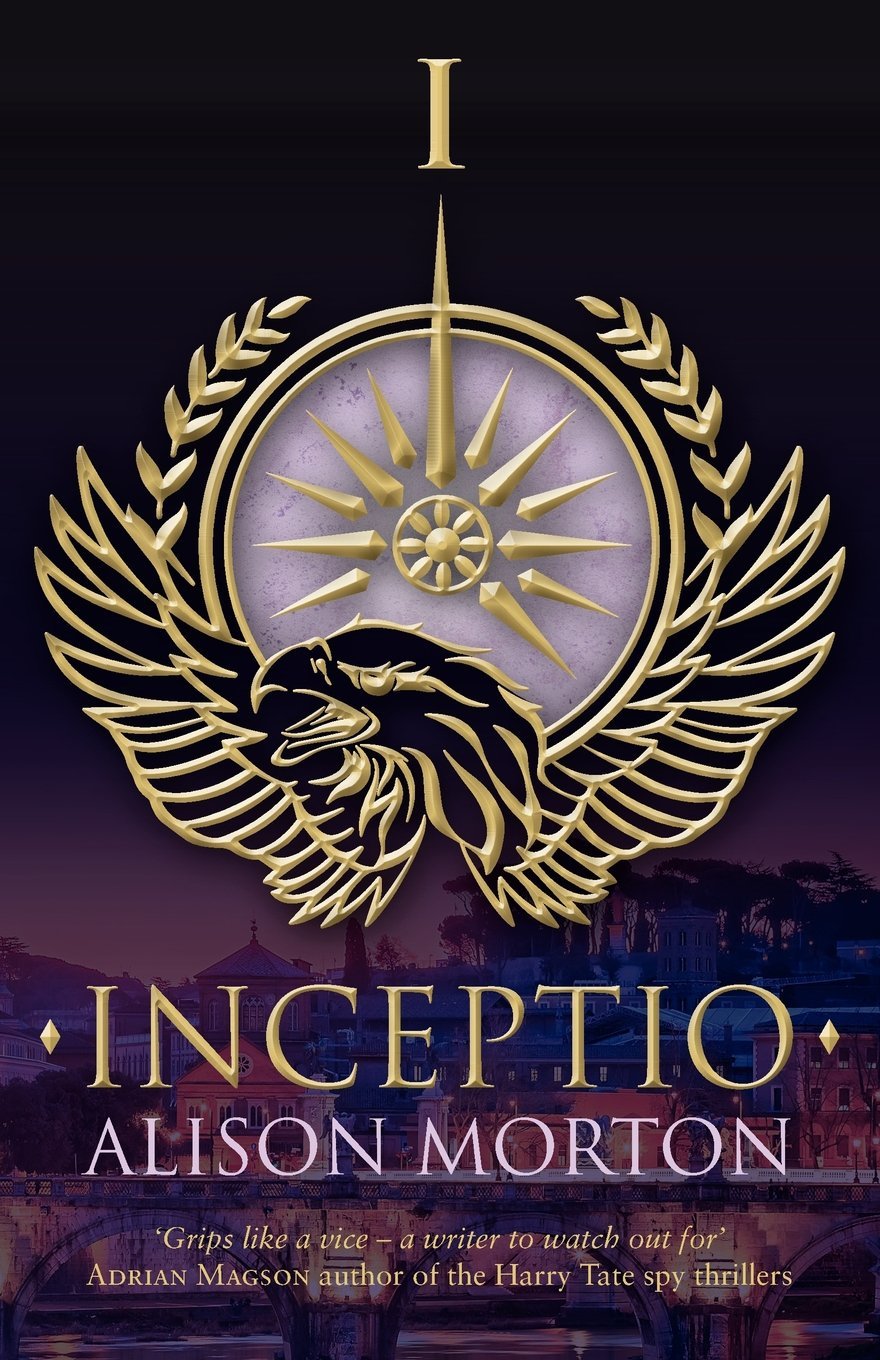
Inceptio and Perfiditas – Alison Morton

Having shown a keen interest in all things Roman since the age of 11, Alison Morton is a self-proclaimed ‘Roman nut’. She recounts how walking on the mosaic floors of the old Roman City in Ampurias started her wondering what a Matriarchal Roman society would have been like. This set the background for her alternative Roman history trilogy, the Roma Nova series. The first book in the trilogy, Inceptio, was published in 2013, with Perfeditas and Successio following soon after.


Inceptio

71f9nF10OJL._SL1360_

In the first book of the trilogy Morton introduces the reader to Karen Brown; a seemingly ordinary marketing assistant who lives for her weekends spent volunteering at a New York country park. Her life is turned upside down when, following an altercation with a disruptive park visitor, she finds herself dismissed from her position. This is just the beginning, as Karen’s position as sole heir to her father multi-million dollar company leaves her as the target of government enforcer Jeffery Renschman. Her choice: stay in New York and risk being eliminated by Eastern United States Government, or flee to the mysterious Roma Nova, the European homeland of her late mother. Karen makes the not-so-difficult decision to see what Roma Nova has in store for her, only to find that her troubles have crossed the Atlantic.

The opening few pages of a book are often the most important, from a reader’s perspective at least. As soon as I started reading Inceptio I knew I was going to like it. There was no slow introduction to the story, with Morton instead opting to get straight in with the action. We are introduced to Morton’s main character, initially known as Karen, right after she bloodied the nose of a delinquent adolescent in the county park where she voluntarily spends her weekends. Despite this somewhat lively introduction to Karen, we are made aware straight away that that this is out of character for her: ‘I hadn’t knocked anybody down since junior high, when Albie Jolak had tried to put his hand up my sobbing cousins skirt’.

I found I sympathised with Karen, but not with the Karen in the book as such, but with the Karen she had been, before the book began. In the first chapter and a half, you get a sense of the woman Karen had been before made the mistake of punching the son of the second most powerful man in the country. The old Karen, the Karen before her life was turned upside down, seemed placid, and a little unfazed by life, working for money, without really caring about the job itself, like a shadow in the back of the office. Of course, given the colourful opening of the book, it’s obvious that Karen’s life is about to take a turn, but hard to tell if it will be for better or worse.

I don’t want to go too much into the plot with this review, for fear of revealing any spoilers, of which there are many. Needless to say the storyline that follows is certainly a gripping one. Morton feeds the reader small titbits of information, allowing them to come to the same realisations as the characters, while leaving the final aspects of the plot hidden until the very end, making for a satisfying read. While I liked the story that Morton created for her readers, I do feel that Inceptio serves first a foremost as a settling in novel of sorts, where the reader is introduced to the main characters, and the Roma Novan way of life, paving the way for the other books in the series. I think this is often inevitable for the first book in a series, however, and do not begrudge this fact.

There are several aspects of Morton’s work within this book that I really enjoyed. The first and possibly most important of which is Karen’s character. I think Karen is fantastic, but I also find her horribly frustrating. As Karen makes the journey to Europe she sheds her old identity, and seems to slip effortlessly into her new role as Carina Mitela, granddaughter of one of the most important women in Roma Nova. She is undoubtedly pleased with this turn of events, but finds herself craving freedom. She has gone from having an admittedly fairly mediocre but laissez faire life to being watched over constantly – anyone is bound to be a little overwhelmed by this. Now, the thing I find frustrating about Carina is her choice to sneak around and attempt to escape the eyes of those watching out for her security; it’s just asking for trouble. Of course she is frustrated, but she is also needs security, there are, after all, people trying to kill her – it just seems a little selfish and immature to me.  I am torn though, as it is also Carina’s independence, which makes her such a fantastic character. If it wasn’t for her perseverance and drive she wouldn’t have left the EUS, or become the, let’s be honest, kick ass character she develops into. Morton transforms her character from the ordinary marketing assistant who was Karen Brown, to a sassy, character changing, ninja in the form of Carina Mitela, a woman able to rub shoulders with some of the most dangerous characters in Roma Nova, while continuing to serve her family and country. Exactly the kind of woman you would hope to find in a matriarchal society.

Another thing I enjoyed about the book, which I am a real sucker for at times, was the relationship between Carina and Conrad. A blossoming romance I found myself hanging onto throughout the book. My image of Conrad, developed through Karen’s descriptions of this mysterious man, portrayed a Scandinavian Alexander Skarsgård figure, wholly divine.

‘His colleague was more than striking blonde hair long enough to slick back behind his ears. And tall. Several inches taller than me, even. Above a smiling mouth and straight nose marred by a scar, his eyes were tilted slightly upwards, red brown near the iris, green at the edges’.

While I loved the romance between the couple, I also enjoyed the fact that they’re relationship did not follow a traditional path, and although there is a definite love story within Inceptio, it is by no means central to the plot.

On the whole I found Inceptio to be an entertaining read and a great introduction to the world of Roma Nova.  I can really appreciate the work that must have gone into creating a book such as this. Morton has left no stone unturned in her creation of the alternate historical timeline, which bore Roma Nova. The book starts with ‘The boring stuff’, for those not familiar with the history of Rome, a category of which I am a member and so found very useful. Morton has also laid out every aspect of the country for the reader to discover in plain sight, the government structure, military, family values, traditions and even holidays, Saturnalia instead of Christmas, the importance of family day, the presence of the family courts and importance of the female figure head of the family. Nothing is left out, which helps to give the reader a very clear picture of this new and exotic place.


Perfiditas

Perfiditas - Front Cover_med

In the second book of the trilogy Perfiditas, the reader once again meets with Karen Brown, in her new and transformed state as Captain Carina Mitela of the Praetorian Guard Special Forces. Carina finds herself once more at the receiving end of an attempt on her life, which throws her full force into the depths of an extensive underground conspiracy to topple the government of Roma Nova. Taking matters into her own hands, as usual, Carina calls on some old acquaintances known for operating outside of the law to aid her in her quest to uncover the perpetrators and save her beloved homeland, a move which threatens to ruin both her credibility, and her marriage. The plot thickens, as Carina finds herself at risk, not only from the conspirators who seem determined to ruin her, but also from the very government she strives to protect.

Perfiditas picks up several years after the end of Inceptio, allowing for a more intense storyline, and less settling in. Morton is able to build up more of a storyline, and focus less on background and character development. This gives way to a really gripping plotline. Several times throughout the book things are completely turned upside down, adding a whole new dimension to story and prying a surprised gasp from the mouth of the reader at the end of each chapter.

One of the things I think I liked most about Morton’s second book, though, was the group she created to overthrow the government of Roma Nova. The PFPP – Paterfamilias Patria Potestas are most simply described as ‘a fundamentalist group, believing literally in the original Roman tribal values’. The group want to overthrow the matriarchal system that Roma Nova is founded upon, and are dismissed as living in the past, with one character describing their values as ‘only two and a half thousand years out of date’. The realistic nature of this group really spoke to me; in any society there are those who are anti-establishment, so such groups are bound to arise in some form or another. In a society founded on gender, this seems even more inevitable, as modern times bring forward the desire for equality or, the call for an overhaul of traditional gender roles.

Love once again comes into play in Perfiditas, but in a very different way to Inceptio. When Carina is forced to go undercover after having been framed as a conspirator she is initially devastated at having to distance herself from her family:

‘Normally, I relished the buzz of going undercover on an operation. But no adrenaline raced through my body now. I had no doubt I’d been on the brink of being arrested as a conspirator; I’d been trapped into deserting my post so would be pursued; I was cut off from my family, my children and my love. A cold wave washed through me. Deep down, I had never felt so alone.’

This image of Carina mourning her lost family is not a regular occurrence, however, and she does slip into her undercover role, a little too comfortably, and quickly falls back into allegiance with a group of old, less than legal, acquaintances. As she spends more and more time undercover, Carina becomes increasingly aware that she is developing feelings towards one of her criminal friends, feelings which, when resigned to, threaten to completely overwhelm her.

This aspect of the novel came as quite a surprise. Given the intensity of the relationship between Carina and Conrad in Inceptio, I did not expect her to ever look at anyone else. However, the fact that she does makes her all the more real in my mind. Carina is a person like everyone else; despite the things she achieves, she is not infallible. When this aspect of Carina comes out in the book, it seems almost inevitable that something will slip out of place. In admitting to herself her feelings, Carina lets her guard down, allowing herself to become blind to that which is right in front of her. When the reality of the situation comes to light, Carina is left not only knowing that she missed something, but with a feeling of betrayal so deep it is hard to shake, even as a reader.

Overall, I found that Perfiditas followed nicely in the footsteps on Inceptio, while succeeding in standing on its own two feet. The book has a fast paced and exciting storyline, in which it is easy to become absorbed. Morton grants the reader access to Carina’s inner thoughts, allowing the reader and Carina to puzzle though the mysteries and come to the same conclusions at exactly the same time. I felt breath catch in my throat when I read the lines ‘”I’ll never forget those black eyes.” She caught her breath, “They bored into me. I don’t think I’ve ever been so frightened in the whole of my life”’. Morton ensures that the reader known exactly to whom the black eyes belong, and that you are just as surprised, and heartbroken, as Carina.

Looking at the Roma Nova series as whole so far, there were a few things I found slightly problematic. Firstly, I was slightly irritated by Morton’s reference to non-Roma Novan reality. I picked up on references to Gladiator, James Bond, and Madame Butterfly. While I can’t say these references are incorrect, or shouldn’t be there, as the books are first and foremost fiction, and so Morton has poetic license to do as she pleases, I personally I feel these references were slightly out of place. I don’t feel they added much to the story itself – they were fleeting remarks more than anything, or comparisons in passages, which were already well described – and so I feel would have been better left out.

My other slight gripe, is that I found the books to be slightly too fast paced given the complicated nature of some of the names. Even with the glossary I found it difficult at times to keep up with who was who, and what exactly was happening, I occasionally found myself needing to reread whole chapters.  It took me quite a while to read both Inceptio, and Perfiditas I am normally quite a fast reader.

Despite a couple of minor irritations I did find both books to be entertaining and most impeccably written, both from a grammatical and literal viewpoint. I continue to be astonished the level of detail in which each book is written, Roma Nova really is a very thoroughly laid out alternate history series, and for this I applaud Morton. I would recommend any mystery or thriller fans wanting to try something new to look up the Roma Nova series.

Many thanks to Alison Morton for providing me with free review copies of Inception and Perfiditas.

“You can’t patch a wounded soul with a Band-Aid.” ― Michael Connelly

Invisible illness

Thank You for Your Service ― David Finkel

ThankYouForYourService_300dpi

David Finkel, author of the New York Times bestselling book The Good Soldiers- a journalistic account of the lives of the men from the 2-16 infantry battalion on the front lines of Baghdad, emerges once again with a gripping addition to his work – Thank You for Your Service. This new book takes a look into the lives of soldiers who serve in Iraq, this time with a glimpse into what happens when they return home.

In Thank You for Your Service, Finkel meets with men from 2-16 to look at the way the war has affected their lives outside the battlefield. First person accounts of adjusting to life outside Iraq throw light on a new war fought by many soldiers, this time with themselves.

The wars of the 21st century have been well covered by journalists, reporters and authors from across the world, but none like Finkel. He presents a harrowing account of the psychological state of many of our modern war veterans.

The book begins with an introduction to Adam Schumann – “the great soldier who one day walked in the aid station and went through the door marked COMBAT STRESS and asked for help”. After making the difficult decision to return home, Schumann is plagued by nightmares, flashbacks, memory loss and crippling depression. Other veterans featured include Tausolo Aieti, who forever sees the image of his fallen comrade in his dreams asking the question “why didn’t you save me?”; and widow Amanda Dorster as she struggles to comprehend life without her husband.

The book presents an in-depth analysis of the psychological condition of war veterans from first person accounts and psychological analysis from professionals. The most common conditions suffered by those returning from the battlefield are post-traumatic stress disorder (PTSD) and traumatic brain injury (TBI). While many people have heard of these conditions, not much is actually known about them. Finkel uses soldiers’ own accounts to put them into perspective.

PTSD is the psychological damage caused by experiencing traumatic events, such as those experienced by Schumann, who carried a wounded comrade down a flight of stairs, with blood from the man’s head wound pouring into his mouth – a taste and smell he cannot shake. Symptoms of PTSD can include depression, flashbacks, nightmares and anxiety. While TBI stems from physical brain trauma, such as that experienced by Aieti, who was in a Humvee travelling down a route lined with palm trees, when the vehicle rolled over three buried 130 mm artillery shells “everything was right and boom it happened so fast”.

TBI can cause memory loss, confusion and impulsivity, and issues with balance, with sufferers struggling to carry out the simplest of tasks.

Many people are unaware of these issues and the extent to which they affect those returning from war. Finkel’s research shows it is a much graver issue than many expect, with PTSD affecting 20-30 per cent of US soldiers deployed to Iraq and Afghanistan.

The intimate encounters relayed in the book give a clear and frightening portrayal of the long-term effect of being in a warzone, the terrifying psychological state of veterans and the stigma surrounding psychological illness. The book relays diary entries, conversations, court cases, and tales of abuse and suicide, exploring in detail the far-reaching effects of war as it leaks into the homes of the veterans.

For the soldiers and their families, the journey to recovery is tough. Many soldiers are faced with the realisation that society is far less understanding of psychological illness than they are of physical conditions. Widow Amanda Dorster was given US$100,000 dollars in death gratuity, which she refers to “oops money” or “blood money”, while in the Schumann household money has never been tighter since Adam returned from the Iraq.

Finkel follows Schumann’s return home from Iraq, to the time when, years later, he graduates from the Pathway Institute for war veterans, and continues his healing at home with his family.

The book serves as an almost novelistic account; such is the intimacy of the stories and conversations between families, and the emotions expresses by soldiers and their spouses.

Thank You for Your Service is an incredibly thought-provoking and gripping book – the writing methods and use of first person accounts render the text incredibly accessible. I would echo the thoughts expressed in many other reviews of this volume and in urging anyone interested in PTSD and the events of the Iraq war to read Finkel’s work.

This review was first published in Global: the international briefing. Many thanks to Scribe for providing a free review copy of the book.

Orange is the new black

It’s been very busy in the office over the last few months, culminating in the much anticipated annual summer party and simultaneous release of our best known yearly publication. We’re in the process of working on a few other books and things are a little hectic at present, so please forgive me for keeping this post short and sweet!

Without further ado it gives me great pleasure to present to you our latest publication:

CYB14

Introducing The Commonwealth Yearbook 2014

The Commonwealth Yearbook 2014 is the flagship annual publication of the Commonwealth Secretariat. It is the essential reference guide to the countries, organisations, activities and values of the modern Commonwealth.

For more information or to purchase a copy of the publication please visit our website.

“Scratch any cynic and you will find a disappointed idealist.” ― George Carlin

The road is rough

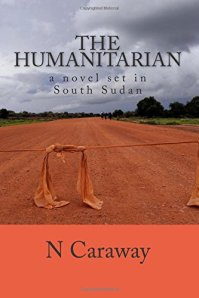
The Humanitarian – N Caraway

This month I have the pleasure to present to you a book I’ve been involved in re-releasing as well as reviewing –The Humanitarian. If you like the review then please head on over Amazon where the new edition is available to purchase on kindle and as a paperback.

51W+tDMNtgL

N Caraway was born in 1957 and grew up in a picturesque village in rural Cambridgeshire. In 2002 Caraway and moved to Nairobi, Kenya, and began working for the United Nations in South Sudan, experiencing the country during the final years of the Sudanese civil war. This experience sets the background for his first novel, The Humanitarian, which was published in 2012. There is little further information available about Caraway’s working life up to this point, but the flavour of the text gives a clear impression that this has been written by someone who has dedicated his life to working in places like those he describes and has, like so many others (Paul Theroux springs to mind), come to question the validity of what he and others like him are doing.


Through an ageing diary found abandoned in a B&B bedroom Caraway introduces the reader to Richards, an ageing United Nations official, beginning his final mission to a remote region in South Sudan. Richards is a troubled man who, as he draws closer to a life outside the bureaucracy of development, finds himself beginning to doubt his significance in the world of which he is a part. Feelings of detachment give way to memories of times long past, and almost forgotten. As his isolation deepens, so too does his despair in humanity, and his past threatens to crumple the carefully constructed cocoon of security within which he has encased himself. As the mission draws on, and Richards slips further and further into an abyss of isolation and self loathing, the chance of redemption arises in the form of an unlikely friendship with a young priest. Will this meeting be the aid Richards needs to rediscover his faith in humanity, or is it already too late?

I found this piece to be a very insightful read. Caraway was able to sketch a remarkably vivid representation of the camp, the area, and the struggles through the eyes of the disillusioned Richards. Perhaps it sounds clichéd, but at times I felt as though I was there, in the rank, stifling heat of Richards’ tent, as he lay awake with only his thoughts for company.  The story sheds real, first person insight on the harsh and unforgiving environment of a war-torn landscape. Through Richards’ short diary, Caraway provides an insight into the inner workings of the UN, and the disillusionment felt by some of the aid workers at the core of the institution. As well as this, the book serves as an interesting analysis of the ideological implications involved in carrying out aid in remote areas which are not fully understood by the organisations involved.

Caraway’s medium serves as a live stream into Richards’ consciousness, as though Richards’ is projecting his mind onto the pages of his ‘yellow exercise book’.  Caraway’s style is very distinct and unique, using evocative language and long, somewhat rambling yet eloquent sentences which provide an insight into the inner workings of Richards’ despair riddled mind:

‘The date is a hard, concrete element in the swaying flux that has swallowed me up and made me disappear. I can hold onto it, like a shipwrecked sailor holding onto a lifeline, or like Theseus in the labyrinth holding onto the thread that will guide him out, a thread that started in Nairobi and led through Loki and then out here into the darkness beyond.’

Years spent working for institutions providing aid for struggling communities has left Richard disillusioned, he has become apathetic, someone who no longer believes in the work of development agencies. Caraway has told a story I’m sure many people involved in development research and humanitarian aid can relate to. He describes the moral doubt in the work of which he is part, the self-questioning and more than anything else the overwhelming feeling of impotence in the face of suffering – the relentless provision of spontaneous food drops, and crude privies in the hope that the effects of these short term solutions will carry through to the long term.

‘I let my eyes travel round the circle of blank faces. Who were these people, how far had they come, how long had they waited for us to show up, and what did they really think this strange meeting was all about? These people were the real mystery, doubly isolated by language, strangers even to the Sudanese. I doubted they would benefit from any relief supplies, in any case. The distributions took place down below at the airstrip and they never went down there.’

Linked to Richards’ disillusionment are the haunting thoughts of his past, which invade his sleeping, and waking hours. Through Richards’ eyes Caraway using incredibly evocative language, allowing the reader a very personal insight into Richards’ despair over past events. You get the impression that perhaps, as The Humanitarian is based, somewhat on real experiences, that these may be thoughts which the author actually experienced himself. As a reader you become absorbed by Richards’ self-pity and self-loathing:

‘How did you approach him, this person, strong or naïve, whatever he was, who, unlike you, did not wake up every morning with a curse in the very taste of the saliva in his mouth, who did not wish God, if he existed at all, might rip the entrails out of your belly, rip your flesh apart in any way he chose, do whatever he wanted so long as it would stop the dreams from coming, stop the memories, just switch off the images that tormented you, with no promise of eternity, just the peace of an endless dark sleep, just the switch going off and a deep slow sigh escaping from your breast into the air.’

Richards’ saving grace – if I can even call it that, as the book is left very much open ended – comes in the form of a kind stranger. In Father Severino, Richards’ finds a kindred spirit of sorts, a person to whom, for some reason, he feels as though he can pour his heart out. In turn Father Severino seems to understand where the roots of Richards’ feelings of despair lie. For Richards, father Severino represents someone outside of everything. Not a part of his team, or the villagers requiring aid. He is a mutual third party, a kind stranger, who is able to listen, and to understand, when Richards’ most needs it:

‘There was an excitement inside me that kept out the dark and anticipated the arrival of Father Severino in his landcruiser. It was not just the trip, but something more, something about the man himself and the thought that we would meet and talk and the sure knowledge that our talk would take us far beyond the desultory exchanges that were all I ever managed with my colleagues or with Simon.’

Overall I found The Humanitarian to be a very thoughtful provoking piece, which offers the reader an insight into the Sudanese conflict, and the repercussions surrounding this, as well as the inner working of the organisations responsible for providing aid to these places. The Humanitarian is an incredibly powerful read, which will leave the reader asking questions, and with a desire to uncover more.

‘The provisional government is an egg’ – Ross Sutherland

I know I’ve been a little quiet of late but I’m trying to get back on track. Had a very busy July, with work, and a social life which seemed to spring from nowhere, and now I’m planning for an exciting couple of weeks InterRailling in Europe. But I will get a few posts done before hand. This one included.

So here it is, my next stop on the obscure poetry train, translation poetry!

I got the idea from a poetry evening I went to attended by Ross Sutherland. If you’re not familiar with Sutherland, you must check out some of his work, he’s brilliant, and absolutely hilarious.

The idea is to take a poem, and feed it through a piece of translation software until the original meaning is lost in translation errors. His manuscript National Language can be found here.

252294_458007547543644_1272932445_nI had a play around with Bing translator and one of my favourite poems – Rudyard Kipling’s The Way through the Woods . I didn’t run it through hundreds of times like Sutherland did, nor did I take words out in between translations and manipulate it in that way. I ran it through about 10 times, and then tidied the text up. If I have more time I might try following Sutherland’s process a little more carefully, but I’m still quite happy with the result I got from this one.
This is the original:

They shut the road through the woods
Seventy years ago.
Weather and rain have undone it again,
And now you would never know
There was once a road through the woods
Before they planted the trees.
It is underneath the coppice and heath,
And the thin anemones.
Only the keeper sees
That, where the ring-dove broods,
And the badgers roll at ease,
There was once a road through the woods.
Yet, if you enter the woods
Of a summer evening late,
When the night-air cools on the trout-ringed pools
Where the otter whistles his mate,
(They fear not men in the woods,
Because they see so few.)
You will hear the beat of a horse’s feet,
And the swish of a skirt in the dew,
Steadily cantering through
The misty solitudes,
As though they perfectly knew
The old lost road through the woods.
But there is no road through the woods.

And here is my mistranslated version:

They are out of the way, Les.
More than 70 years ago.
Gone back to the weather and the rain.
You would never know now
That once a forest was in the way.
Trees were planted
Based on the Bush administration;
And the heath’s pale sea anemones.
Only a custodian can see the Paluomakefu school.
The badgers do not.
At the end of the summer night,
A trout pond loops in the air conditioning.
And the Colleague Otter?
Well, he does not like the woods.
Therefore, some are searching.
Listen to your horse,
Dress pink,
Ride.
Solitodis Dim.
They know.
Take the old forest road.
There is no forest.

As always I had great fun playing around with this, although it did take me a little while to find some software which was unsophisticated enough to sufficiently obscure the meaning (sorry Bing). I would suggest trying this method out yourself if you’ve enjoyed any of the other methods I’ve tried out.

Once again, any suggestions for future blog posts are much appreciated 🙂

“People who claim that they’re evil are usually no worse than the rest of us… It’s people who claim that they’re good, or any way better than the rest of us, that you have to be wary of.” ― Gregory Maguire

Don’t be afraid to be bad.

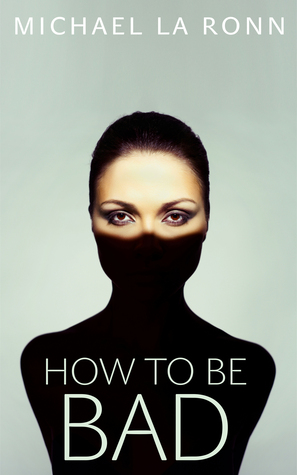
How to be Bad ― Michael La Ronn

20529997

Michael La Ronn made the decision to pursue a writing career in 2012, after recovering from a potentially life threatening illness. The realisation that he had come so close to death inspired him to turn his writing, which he refers to as his ‘true passion’, into a full-time job. La Ronn’s goal as a writer is to entertain; he says that reading should be a journey with the potential to take you to unexpected places. His signature works are Decision Select™ Novels, which are essentially choose your own adventure novels specially written for an adult audience. The first of these, How to Be Bad, was published in early 2014.


In How to be Bad the reader fills the shoes on Bebe McFerrin, a budding young attorney and professional pushover. Bebe has the confidence of a gnat, rendering her susceptible to the manipulation of her co-workers. The reader is introduced to Bebe, on the most important day of her life so far, having her promotion stolen by a co-worker, and what does she do? Nothing, she sit’s and takes it. That is until she meets Ladouche, a demon with a taste for revenge, who promises her total immunity from any evil deed, giving her the opportunity to wipe the smile from her colleague Anette’s face once and for all. As Bebe’s life enters the hands of the reader she finally gets her revenge, binding her to a contract with Ladouche she did not know existed and Bebe is forced to steal the souls of three innocent people.

When I was younger I loved the Goosebumps choose your own adventure books, so I was immediately interested when La Ronn asked me to read his new novel, and I was not disappointed. Overall, I had a great time; it was so much fun experimenting with a book of this type made specifically for adults. The choices were a more complicated than in those books designed for a younger audience, some of it is actually based on your ability as a reader, your general knowledge, and ability to navigate certain situations – I liked this a lot.

Each possible story only takes about an hour to read, and as I’m sure those of you who have read these books before can appreciate they are more of a holiday read than anything else. I think it would be make a good book to read on a long journey, or a lazy afternoon when you have a few hours to kill. I enjoyed reading it a few times to see how the endings changed.

I think the message I took from the story is that it might not be a very good idea to place much faith in the promises of a demon.  But of course the outcome will change depending on the choices a reader makes, so you might find you take something different away. I do think the text says something about people who let themselves get walked over, you shouldn’t be afraid ‘be bad’ every now and then to get what you want. If Bebe could learn to do things for herself every now and then, and be a bit less conscientious things might turn out better for her.

The one issue I have with the book is that there are a few formatting problems. I noticed that some of the outcomes did not quite fit with the choices I made.  I’ve no doubt these are supposed to be different and I have relayed the issues back to the author and he is in the process of working them out.

I like reading things which are a little different and this definitely ticked a few boxes for me. Like I said before it’s not the most thought-provoking piece I’ve ever read, but it’s what you expect a choose your own adventure to be. The book is well written, fast paced, and entertaining, and I think Ladouche is a really great character, even if he is a bit of a douche. I would recommend How to be Bad to those who were fans of choose your own adventure novels as children, or those who, like me, appreciate things which have a little individuality and flair.

Many thanks to Michael La Ronn for proving me with a free review copy of the book.

‘Poetry is when an emotion has found its thought and the thought has found words.’ — Robert Frost

Found prose poetry.

I actually stumbled across this idea on a teaching forum as a suggested homework for English literature students, still I liked the idea and gave it a go. As with all my obscure poetry so far, it’s fairly simple, but I think gives you a little more opportunity for being yourself than some of my past ideas.

The model is as follows: choose a piece of prose fiction; select a passage from the text; identify important words, phrases and sentences; arrange these excerpts into a poem. I think you can be fairly unrestrained with this sort of method, you could try choosing a specific structure and molding the text, or using free verse.  It’s also fine to rearrange order, wording and phrases, do whatever sounds most appealing to you.

I opted to use free verse and selected the final paragraphs from both books.

Here are the results:

shepard_fairey_george_orwell_1984

1984 — George Orwell

He gazed up. Forty years it had taken him to learn what kind of smile was hidden beneath the dark moustache. O cruel, needless misunderstanding! O stubborn, self-willed exile from the loving breast! Two gin-scented tears trickled down the sides of his nose. But it was all right, everything was all right, the struggle was finished. He had won the victory over himself. He loved Big Brother.


He gazed up.
What kind of
Cruel, stubborn smile
as hidden beneath the dark moustache?
He had learned.
Tears trickled down his nose.
Everything was all right,
He had won the struggle,
He loved Big Brother.

halloweenbooks_maryshelley

Frankenstein — Mary Shelley

“But soon,” he cried, with sad and solemn enthusiasm, “I shall die, and what I now feel be no longer felt. Soon these burning miseries will be extinct. I shall ascend my funeral pile triumphantly, and exult in the agony of the torturing flames. The light of that conflagration will fade away; my ashes will be swept into the sea by the winds. My spirit will sleep in peace; or if it thinks, it will not surely think thus. Farewell.”

He sprung from the cabin-window, as he said this, upon the ice-raft which lay close to the vessel. He was soon borne away by the waves and lost in darkness and distance.


Soon I shall die.
I will no longer feel
these burning miseries,
the torturing flames.
My light will fade,
My ashes swept into the wind.
I will sleep.
Borne away by the waves,
Lost in the darkness.
Farewell.

My latest find is possibly my favourite so far, I really liked the freedom of constructing a poem in this way permitted me. If you find yourself at a loose end one afternoon give it a go, I’d love to see other people’s results.

As always, any suggestions for future methods would be greatly appreciated 🙂

“People in a small town tend to do a lot of talking, even when they don’t know what they’re talking about. ” — Don Roff

A hilarious take on village politics at their very worst.

A Tunnel is Only a Hole on its Side – James Minter

Image

James Minter was born in Oxfordshire, from whence he is said to draw much inspiration for his writing. Prior to writing fiction, Minter spent 35 years in the IT industry working on specialist literature, including training manuals. In 2009 Minter turned his mind to writing fiction, the experience of which he soon fell in love with. Five years on and he has become an award-winning author. His first book, The Hole Opportunity,was published in 2011 and formed the beginning of The Hole Trilogy. The book went on to be the Bronze Winner for Adult Fiction at the Wishing Shelf Book Awards in 2013. Minter’s second book, The Unexpected Consequences of Iron Overload, was published the following year, taking a humorous look at the medical condition Haemochromatosis and written to help raise awareness of the condition, from which Minter himself suffers. The second book in The Hole Trilogy, A Tunnel is Only a Hole on its Side, was published in 2013.


The Hole Trilogy follows the lives of the citizens of the small town of Harpsden. In A Tunnel is Only a Hole on its Side, Minter takes a look at the reaction of the town’s citizens when faced with the idea of change. Harpsden is in dire need of a bypass – the roads are so clogged that the traffic backs up right to the high street, making accessing Waitrose an absolute nightmare. When a letter arrives from the council to announce a proposed new bypass, which threatens to cut through the local golf course, the citizens of Harpsden are driven to distraction. The club’s members, including the captain Major Woods, are horrified by the proposal and take it upon themselves to redesign the route. Major Woods takes the opportunity to reignite a feud he has with ‘hole farmer’ Colin Griggs and proposes a route that will effectively wipe the Griggs’ farm off the map. Meanwhile, kindly Colin opts for an alternate route that will suit everyone – tunnelling under the golf course and constructing the tunnel himself, potentially winning the favour of Major Woods in the process. As with all small town politics, however, nothing is ever that simple.

When I started reading this book, Minter’s writing style immediately appealed to me. The text is very well written, accessible, and humorous. I had to do a little of my own research to begin with as I hadn’t had the opportunity to read the first book in the trilogy. I was a little confused by the concept of ‘hole farming’ and wasn’t familiar with the feud between Colin Griggs and Major Woods, but after a bit of surfing the web I soon set this straight and was able to enjoy the book for what it is, a really funny, light-hearted read.

My initial reaction to Minter’s work was that it reads like an English sitcom, an opinion which I maintained throughout. It really does feel as though you are watching an episode of Keeping up Appearances or One Foot in the Grave. I really liked Minter’s introduction of Colin Griggs (whose character I absolutely love, by the way – but more on that later). Colin is introduced as an aging farmer, whose thoughts are so plagued by the rumour of a new bypass that he is unable to sleep and decides to put pen to paper to help clear his head. The description of Colin, sneaking downstairs in the early hours of the morning, trying so hard to be quiet and ultimately stumbling aimlessly in the dark, is priceless:

‘Making his way downstairs, he remembered the third from the top produced a loud squeak. Stepping over it, he stumbled past the next two treads. In the dark, he’d misjudged the distance. He struggled to maintain his balance ricocheting off the walls like a pinball in an arcade machine.’

Another aspect of Minter’s writing I enjoyed was being able to see the characters thoughts through the use of the third person omniscient. This too, for me, added to the feel of the book being like a sitcom. An example which immediately comes to mind is Colin’s wife’s description of Colin coming in from the cold in the first chapter:

‘Dropping his smile he flopped back into his chair. The fly on his pyjama bottoms gaped. There was nothing to see. It must be cold out there, she thought.’

Minter is said to draw on his own knowledge of rural Oxfordshire as the inspiration for his characters. Hailing from a small town myself, I can definitely relate to Minter’s choice of characters and his description of village politics. Those involved in community interest groups can very often get far too carried away, especially if it is a heavily contested subject. This is evident with the characters in Minter’s book and none more so than Major Woods, who sees himself as being at ‘war’ with several other citizens of Harpsden and takes his role as head of the Golfer’s Against the New Bypass very, very seriously:

‘The Major felt his hackles rise. “Mr Flanagan, you’ve been invited here today as a guest, to report on proceedings only. This is not a public debate. Please keep your thoughts to yourself. If you’d listen and not interrupt, then as Mary said, you will learn. Now please be quiet. Questions will be allowed later.” The colour in his cheeks was reminiscent of a Macaques’ red bum.’

The Major in general is only too reminiscent of someone taking a role far too seriously. No doubt the bypass is an important subject, but the Major appears more than a little unhinged. I hope I don’t make any enemies by saying that from why I understand of small groups like this there is always a character such as the Major, who feels they can take the law into their own hands, Minter just does a rather fantastic and hilarious job of describing such an individual.

One final passage of praise for this book: I thought the characters were fantastic. Minter presents a really good mix of characters, including a fantastically posh and aging Lady of the Manor, a sultry seductress, as well as characters who appeal to a reader’s better nature, and others that are just downright infuriating. Major Woods is firmly rooted in that last category for me; I find the idea of such a man absolutely repugnant, which I think is what makes him such a great character. A friend of mine once told me of an aging army Major who would always sign his name ‘Major’ so and so, if there was a chance the person reading it might think they were better than him. I don’t know if such a man actually exists, but it is of him that I thought when reading about the self important, furious and somewhat ridiculous man that is Major Woods.

‘The persistent drone of the Mercedes horn alerted him to the Major’s arrival. Looking up he was taken aback to see him, eyes staring, mouth trembling, moustache twitching, face reddening, nostril flaring, only a few feet away from him.’

Needless to say, anybody who insists on being called Major outside of a barracks by close friends is not ok by me, but he does make for a rather amusing read.

On the other hand, I struggle to see how anyone could fail to warm to Colin Griggs. The man is so well meaning, while perhaps a little short sighted at times. I really took to Colin, finding his inability to use a computer an endearing and largely accurate description of many older people I know.

I was very pleasantly surprised by the book as a whole. Minter has created something very unique to him – it is different to anything I have read before. The only aspect of the book I struggled with slightly, and which I feel could perhaps use a bit more work, is the transition between settings and chapters. At times the text can read a bit like a script and it can get a little bit much, making it difficult to read too much in one sitting.

Overall, I found A Tunnel is Only a Hole on its Side to be a really light-hearted and entertaining look at village politics and rural living. I think Minter is undoubtedly unique in his writing style and has created something, which, while it may not be for everyone, will have a lot of people singing its praises. I would strongly recommend anyone give it a go, if only to experience something a little different.

Many thanks to James Minter for providing me with a free review copy of the book.