Children’s book review tour! The Griffin and Sabine Trilogy – Nick Bantock

‘All of us need to be in touch with a mysterious, tantalizing source of inspiration that teases our sense of wonder and goads us on to life’s next adventure.’  ― Rob Brezsny

Ok so these books aren’t technically children’s books; they’re very much written for adults. Instead, it’s the style of the books which is taken from traditional children’s literature – they are interactive, made up entirely of heavily illustrated postcards and private letters that you can remove from their envelopes.

I heard about this trilogy on an episode of the Books on the Nightstand podcast and knew straight away I needed to check them out. I’m always on the lookout for new things to read which are a little different; this one certainly piqued my interest.

Griffin and Sabine

610l1JvKFAL.Image._

Griffin Moss:
It’s good to get in touch with you at last.
Could I have one of your fish postcards?
I think you were right – the wine glass had more impact than the cup.
Sabine Strohem

So begins this extraordinary correspondence between Griffin Moss, a postcard illustrator living in London, and Sabine Strohem, a postage stamp illustrator from the fictional Sicmon Islands.

The book is without introduction, background to the conversation, or hint as to how these two people know one another. As a reader, you begin the book in exactly the same situation as Griffin, for he also knows nothing about Sabine.

The mysterious Sabine has been linked to Griffin for many years, with the power to see his artwork through his very eyes. He struggles to believe this fact, but what choice does he have? How else would she know that he darkened the sky in his most recent painting? This begs the questions is she real? Or merely a figment of Griffins grief addled mind?

Through their correspondence Griffin gets to know Sabine, and lays bare his soul for the entire world to see. The journey through their correspondence brings them closer together, though they are separated by thousands of miles of land and ocean.

The experience of reading this book was truly amazing. I was sceptical, mainly because I knew these books had been published in the 90s but that I had somehow never heard of them until now. But I was so far from being disappointed.

As the relationship between Griffin and Sabine unfurls you are able to delve into it on such a personal level. There is something so deeply intriguing and alluring about reading the story through private correspondence, as though you can enter the minds of both Griffin and Sabine. At no point are the characters actively described in terms of appearance and yet by the end of the book I had developed a clear image of both in my mind.

The illustrations are stunning. And so they should be, drawn supposedly by professional postcard and stamp illustrators. I felt as though I could spend hours studying the images, while the text itself could probably be read in just half an hour. At times the images of the postcards seem to illustrate the passion written in the short blurbs of text.

So – you’ve been making love to me ten thousand miles away – how tantalizing.

It’s all rather steamy, I can feel myself blushing – if I feel like this what kind of affect is it going to have on Griffin?!

Oh…IMG_20150315_130111281

Their relationship intensifies to the point that Griffin thinks himself insane, convinced that he has imagined himself a companion to sooth his troubled soul. He panics, terrified of what might happen, and attempts to break all ties with Sabine.

But she is not to be played with.

There are so many questions left unanswered. So much I want, no, need to know. Thank goodness I already have the rest of the trilogy.

Sabine’s Notebook

griffin-sabine-2_m

Faced with the terrifying prospect of coming face to face with his own imaginary creation Griffin has fled London. Meanwhile his muse sits quietly, patiently, awaiting his return, having taken up refuge in his empty flat.

The second book is told with the same beautiful postcard and intricately decorated envelopes that make up the correspondence between the two star crossed, and, possibly imaginary lovers – but with the added bonus of doubling up as Sabine’s notebook. The pages which surround Griffin’s letters and cards serve as extra space for Sabine to doodle, sketch, wonder and muse.IMG_20150315_130227339

Griffin travels all over, Dublin, Italy, Egypt, picking his way through crumbling ruins and ancient civilisations, drawing further into the abyss of the past, running further and further away but from what? All the while Sabine sits patiently in his flat in London, or else taking the occasional excursion to more rural England, waiting for his return.

Sabine serves as Griffin’s voice of reason – guiding him on his journey, puzzling through his problems in her intricate sketches, and ultimately, leading him home to her.

The second book flings up even more questions which will leave you itching to get your hands on this third.

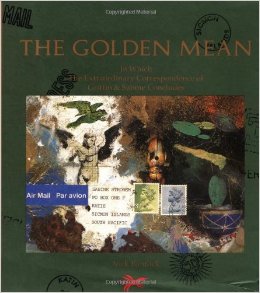
The Golden Mean
51Fdmd8yGdL._SX258_BO1,204,203,200_

Griffin is in back in London, and Sabine is back in the Sicmon Island – somehow they missed each other. But how? The final book in the trilogy sees Griffin and Sabine suffering silently against the unseen forces which keep them from one another.

‘It seems that each cannot exist in the presence of the other. Yet neither can continue without the presence of the other.’  

Sabine has returned to the Sicmon islands, she has washed her face in the sea and felt the sand between her toes, and yet she is unhappy. Her visions of Griffin’s artwork are fading, and a mysterious stranger is haunting her everywhere she goes.

The final part of the trilogy is told once again through postcards and letters, but this time the illustrations begin to take a darker form. Shadows emerge in the corners of the page, threatening to engulf that which lurks within the images. The fog leaks across the page, like that which creeps before the eyes of Griffin and Sabine, a physical representation of the dark forces at play.IMG_20150315_130321081

Desperate to be with one another Griffin and Sabine try one last time to make a connection.

Far from being a conclusion to the trilogy, The Golden Mean throws up just as many new questions as it answers old ones, and may leave the reader feeling many combinations of feelings – but I can guarantee this will not include disappointment.

From what I had heard about these books before I bought them, I expected them to be good, but not mind-blowing. I thought they would be novel – having books made out of postcards is such a quirky idea, but really, how far can a story be told in this way?

So, how do I feel now I’ve finished the books? Suitably humbled.

These books aren’t just good, they are really something special. Bantock’s artwork, imagination, and the intimacy and passion with which each letter is written combine to create a trilogy of books which really shine. The books are niche, clever and, above all, a truly epic read. I have been completely drawn in to Griffin and Sabine’s world.

I would recommend these books to crafty types, arty types, fans of children’s fiction, fans of fiction, fans of pictures books – in short, pretty much everyone, other than those who only read non-fiction.

Children’s book review tour! The Dark – Lemony Snicket

‘When it is dark enough, you can see the stars.’  ― Ralph Waldo Emerson

The Dark – Lemony Snicket
Illustrated by Jon Klassen

15790852

‘You might be afraid of the dark, but the dark is not afraid of you. That’s why the dark is always close by.’

The next stop on my children’s book tour is this children’s picture book by well-known author Lemony Snicket. First, a little something about Lemony Snicket, probably best known for his YA books, A Series of Unfortunate Events. I loved this series when I was a teenager although I will confess to being more than a little disappointed by the final book. Anyway, since my teenage years I have not read anymore of his work and it just so happened that he popped up while I was looking for books to include on my children’s book for adults feature.

I stumbled upon The Dark browsing picture books on Amazon, and when I saw the cover, with the tiny, fragile image of a child staring hesitantly into the mouth of darkness at the top of an endless flight of stairs  I knew I needed it. It looked exactly like the kind of children’s book I was searching for, heavily illustrated with a dark touch. The cover alludes to a story just dark enough to give a child a bit of a thrill while cuddled up in bed, but not so much that a caring parent can’t then turn out the lights without an internal dread of being awoken by a nightmare induced screaming sprint to the master bedroom and the sleepless night that is sure to follow. Intrigued, I decided to give my old friend Lemony another chance.

The Dark is about a little, pyjama-clad boy named Laszlo, who ‘was’ afraid of the dark.

Note – was.

‘The dark lived in the same house as Laszlo, a big place with a creaky roof, smooth cold windows and several flights of stairs.’

Lazslo seems like a sensible boy. In The Dark, Snickets tells of how he tried to be practical about his fear. Thinking that perhaps if he spoke to the dark, if he visited it in the basement of his house from time to time, perhaps then it wouldn’t bother him. But every night the dark would come out of its room and creep through the rest of the house, and Lazslo was always afraid that it would come and visit him …

‘One night – it did’

The pages of the book take you on a journey with Laszlo through the darkness of his house path is lit only by a triangle of light shining from his flashlight. He follows the voice of the dark, a deep, creaking, rumbling voice, which calls out to him.

Dark3The design of the book is absolutely stunning. Klassen’s illustrations, transposed onto dark blocky pages emphasises the light and dark in Laszlo’s house and make for an amazing visual journey. The illustrations are simple and mysterious, alluding to more while showing the bare minimum. Klassen’s work is beyond stunning and in some ways speaks more volume than the words themselves, take away the text and you still have an epic visionary tale.


‘Never, ever put anything in the text that the child could already tell from the pictures.’ – Judith Kerr


At its heart The Dark is a simple, yet inspired book. The story of a little boy and his somewhat unusual experience which helps him to get over his fear of the dark.

The moral of the story is that there is nothing to be scared of – the dark can’t hurt you.

I absolutely love this book. The story, the language and the illustrations combine to make a really beautiful and impressively unusual children’s book. While it may seem that the book is a little too dark for some children, I think a parent can judge for themselves whether their child will revel in the thrill of a child tiptoeing through a house on a terrifying midnight adventure.  I loved this kind of stuff when I was little, and I know my nephews would lap something like this right up. It also has a great moral to it, which will can easily be used discuss being afraid of the dark with your own little Lazslo, you never know maybe he’ll finally let mummy and daddy have their bed to themselves again.  That said, if your children are particularly sensitive, and likely to be upset by a slightly dark book, you might want to think twice before buying them this one.

I have a friend who is rather into children’s books, so when I had read The Dark I took it round for her to marvel at.

‘I love this book’ she beamed as soon as I pulled it from my bag.

I wasn’t the first one to show it to her. I was gutted. But my disappointment was short lived.

‘You need to read this one’ she said, thrusting another books into my hands.

The book in question was written and illustrated by Jon Klassen. I gave it a read and enjoyed it so much that I have to give it a little mention here.

I Want My Hat Back – Jon Klassen

size500_book_johnklassen_HAT_cover1_500

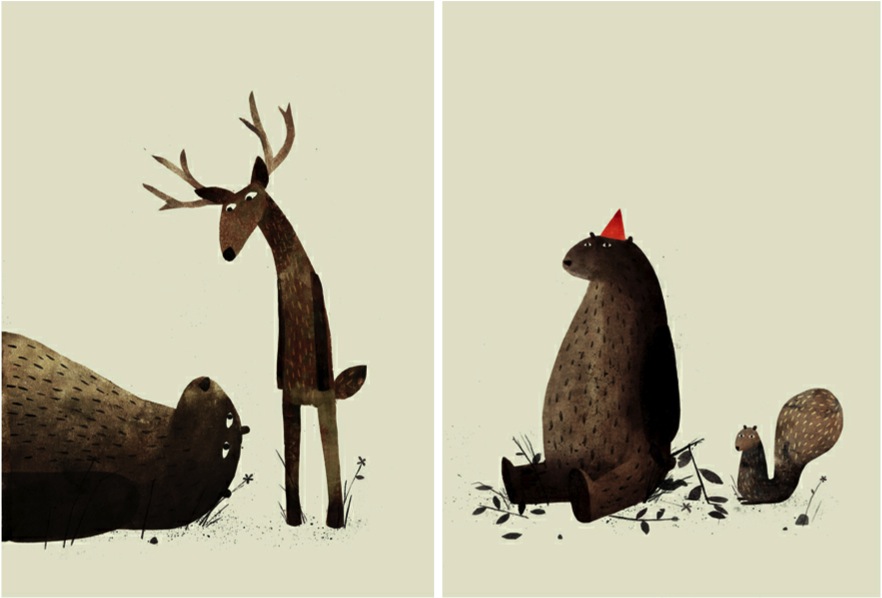
A bear has lost his hat and he wants it back. He travels around asking all of the animals he passes if they have seen his hat, most of them say no, some are outraged to have been asked, one doesn’t know what a hat is, and others have been far too busy to look out for missing hats. The bear feels dejected, he lost his hat and he will never get it back.

Until he realises, that he has seen his hat after all.

I Want My Hat Back is easily one of the most hilarious children’s books I have ever read. I was literally, and I mean literally in its literal sense, doubled over laughing when I read this book. The kind of laughter that brings tears to your eyes and makes you struggle to draw breath. My boyfriend, unamused by the scene I was making in our otherwise empty living room, tutted and I told me to get over myself. I stuffed the book into his arms; he needed to read it for himself. A few moments passed before a loud ‘HA!’ from the other side of the sofa let me know that he approved.

i_want_my_hat_back1

Some people have said they don’t think the book is suitable for children, I think these people need to lighten up a little. The book is great, it’s the perfect example of a children’s book that can actually be appreciated by an adult, without having to be overly long, or complicated. The story is short, simple, brilliantly illustrated, and absolutely hilarious. I challenge any adult to not appreciate the tragic-comic masterpiece that is I Want My Hat Back.

Bravo!

Many thanks to Hachette Children’s Books for sending me a free copy of The Dark for review purposes.

Children’s book review tour! Amber: A Fairy Tale – David Gibson

‘Some day you will be old enough to start reading fairy tales again.’  ― C.S. Lewis

Welcome to the first installment of my children’s books for adults tour. I’m sure you’ll agree there’s no better book to feature first than a good old fashioned fairy tale.

Amber: A Fairy Tale – David Gibson

51mv3R4uHML

‘The Wandering Woods were vast and unimaginable in size. A canopy of ever changing shades of green stretched from the mountains of the cold north to the great river that wound its way far to the south. Trees, strong and proud, stood branch to bark with those that were old and gnarled, covering the land from the ocean in the distant west to disappear into the hazy depths of the fairy mists to the east.’

Amber: A Fairy Tale is the first part of The Wandering Woods series by David Gibson, and was published in November 2014 by Rowanvale Books. Gibson began writing The Wandering Woods series while studying for a degree in English and Creative Writing at Glyndwr University, Wrexham. He originally began The Wandering Woods as bedtime stories for his two young children, drawing inspiration from his daughter’s personality to develop the character of Amber; a character based on his son is due to feature heavily in one of the upcoming instalments in the series.

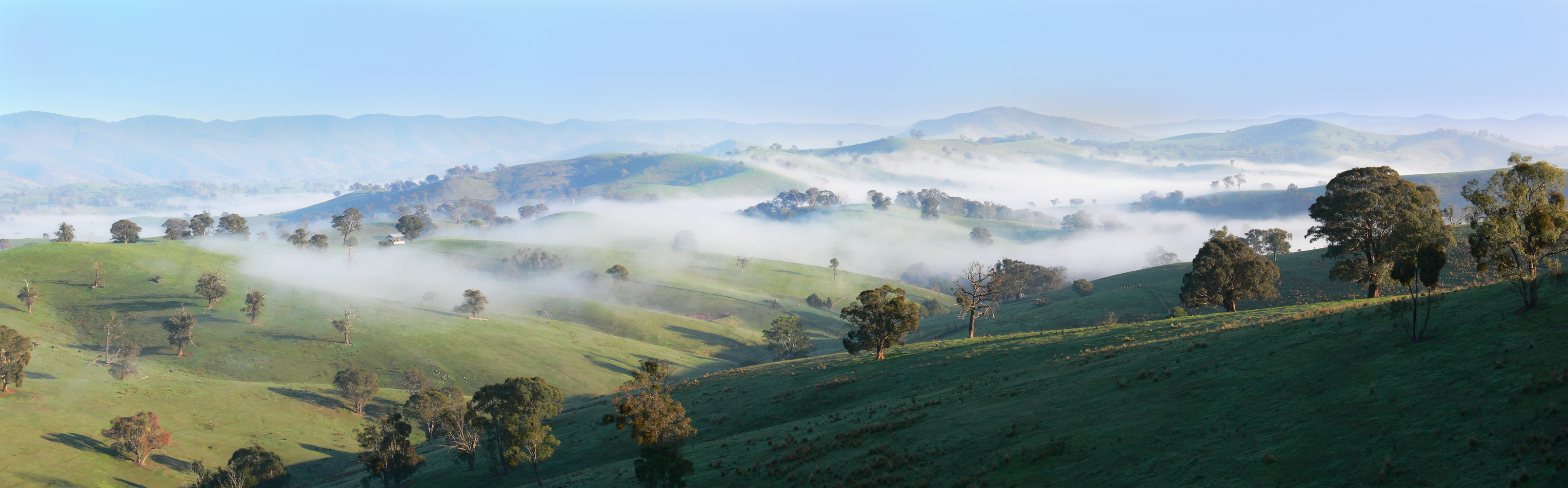
Mist_-_Ensay_region3

Amber is the enchanting tale of a young girl who lives with her mother, the good witch Blossom, in a small house within the sprawling realms of the wandering woods. Amber is a carefree child, first introduced doing battle with an old scarecrow in the quaint garden of her home, carelessly humming along to the tune of a passing finch. All this changes when her mother is suddenly taken ill and Amber quickly discovers the reason behind a ‘special potion’ her mother has to take each day. With her mother’s potion supplies depleted Amber must travel deep into the wandering woods, to seek out the domain of her evil aunt Belladonna in the hope of finding supplies to replenish her mother’s potion stock. The question hangs throughout the tale; will Amber ever return from her quest? And if she does, can she save her mother?


‘If I’m honest I have to tell you I still read fairy-tales and I like them best of all’ – Audrey Hepburn


I would love to say that it is the youngster in me that enjoys fairy tales, but I think the tales appeal just as much to me now as they ever did, and I don’t attribute this to any feeling of childishness. Fairy tales are for everyone, they are in their very nature timeless, and can appeal to the most innocent and wise of minds alike. I so enjoyed reading Amber, and felt compelled afterwards to revisit some of my childhood favourites. I dusted off my old copy of Hans Christian Andersen’s Fairy Tales and spent a few happy hours immersed in its pages once more.

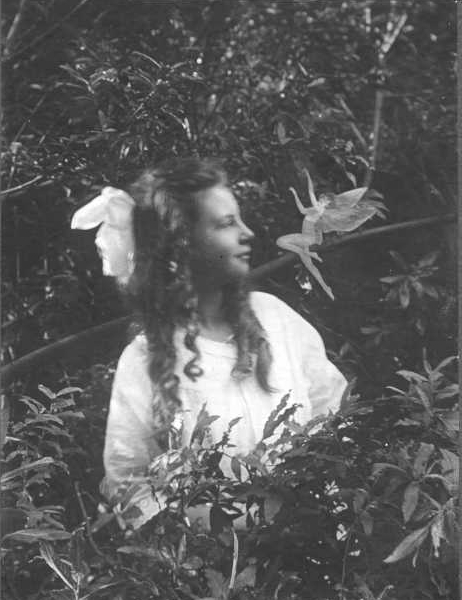
The Wandering Woods are the perfect setting for a fairy tale, a tangled expanse of plant and animal life, buzzing with magic which seems to bring the setting to life. Woods have long been considered to be the dwelling place of fairies, sprites and other mythical creatures. Even the famous Cottingley fairy pictures were taken inside the woods.

CottingleyFairies3

The story which develops out of this setting is intricate and enchanting, reflecting all the characteristics of a traditional, well loved fairy story, although it is rather more child friendly than many of the darker, more sinister traditional tales (I’m looking at you brothers Grimm). Amber embarks on a quest, the innocence of her mind unable to grasp the horror which may await her outside of her mother’s domain. With a determined heart and her trusty wooden sword she sets out on a journey which could well be her last. Along the way, she meets many a friend and foe, and encounters magical settings and creatures which delight and amaze her, as well as darkness so black as to make an ogre quake.

Amber serves as a tale of the battle between good and evil, with the message that there is good to be found in the most unlikely places. Amber’s evil, wicked Aunt Belladonna serves as the image of a character absorbed by darkness, but with a small slither of light still within her. If you look closely, Belladonna is not so unlike a good creature; within her Amber sees ‘a face not unlike [her] mother’s’ but with eyes reflecting ‘only malice’.

Gibson writes with the most beautiful, flowing language, which may at first seem a little too deep for a young child. However, given that it is predominately written as story for parents to read for their children (and Gibson originally wrote the story as a bedtime story for his own children), this does not seem to be a problem at all. In fact, intricate language is a great way to introduce a bigger vocabulary to a young child. As Einstein said ‘If you want your children to be intelligent, read them fairy tales. If you want them to be more intelligent, read them more fairy tales.’ Older fairytales are full of long, flowing passages describing the leaves of a forest or the song of a nightingale and Gibson’s is no different.

Amy Sayer’s artwork adds another wonderful dimension to Gibson’s work, and an important one at that; whoever heard of a children’s book without illustrations? The artwork is truly stunning, and presented in such a way as to still allow for the imagination of a child to run wild. The characteristics of Amber, Blossom and Belladonna are given, and yet only their silhouettes are shown. Children can create their own image of Amber for themselves, while still enjoying the artwork.Amber illustration preview

With Amber, Gibson has created a beautiful tale for parents and children alike, which has in turn been stunningly illustrated by Sayers. The style of illustration is perfect for a fairytale – and the cover has just the right amount of allure. The language is beautiful and poetic, slowing freely from chapter to chapter and drawing the reader deep into the Wandering Woods. I would highly recommend fans of fairy tales give Gibson a chance; you’ll be eagerly anticipating the next instalment.

I was sent a free copy of Amber by the author in exchange for an honest review.


Ruthless Rhymes for Heartless Homes – Harry Graham

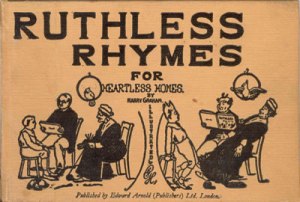
I was rummaging through some old books this weekend and I came across my Grandparents’ old copy of Ruthless Rhymes for Heartless Homes by Col. D. Streamer (Harry Graham).

Have you heard of it? If not, you’re about to. As part of my Obscure Poetry journey I thought I’d share some of my favourite rhymes with you.

Ruthless Rhymes1 (1)

But first, a little background. Ruthless Rhymes for Heartless Homes was published in 1898 and is full of delightfully cruel little rhymes, which are to the point and completely without moral.

The book was described in an editorial by the Times as embodying a world where ‘there are no values nor standards of conduct or feeling, and where the plainest sense is the plainest nonsense.’

Now, on with the rhymes. Enjoy!

Impetuous Samuel
Sam had spirits naught could check,
And to-day, at breakfast, he
Broke his baby sister’s neck,
So he shan’t have jam for tea!

The Stern Parent
Father heard his Children scream,
So he threw them in the stream,
Saying, as he drowned the third,
“Children should be seen, not heard!”

Nb I once read this poem (The Stern Parent) as part of my primary school’s Christmas production. My choice. I don’t think the teachers approved.

Nurse’s Mistake
Nurse, who peppered baby’s face
(She mistook it for a muffin),
Held her tongue and kept her place,
“Laying low and sayin’ nuffin’”;
Mother, seeing baby blinded,
Said, “Oh, nurse, how absent-minded!”

The Fond Father
Of Baby I was very fond,
She’d won her father’s heart;
So, when she fell into the pond,
It gave me quite a start.

Misfortunes Never Come Singly
Making toast at the fireside,
Nurse fell in the grate and died;
And, what makes it ten times worse,
All the toast was burned with nurse.

I remember often reading these as a child, and pretending to find them funny to impress the adults, while all the while puzzling over why having jam taken away was a punishment.

As an adult I’m able to appreciate how bluntly hilarious and ahead of their time they are.

Oh, one more thing, the illustrations are great!

graham-quiet-fun