“People who claim that they’re evil are usually no worse than the rest of us… It’s people who claim that they’re good, or any way better than the rest of us, that you have to be wary of.” ― Gregory Maguire

Don’t be afraid to be bad.

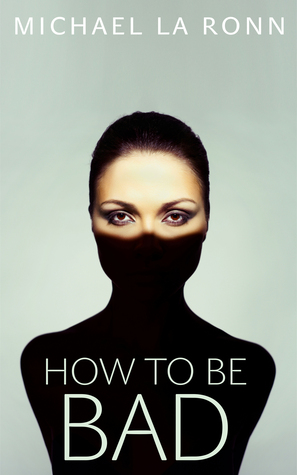
How to be Bad ― Michael La Ronn

20529997

Michael La Ronn made the decision to pursue a writing career in 2012, after recovering from a potentially life threatening illness. The realisation that he had come so close to death inspired him to turn his writing, which he refers to as his ‘true passion’, into a full-time job. La Ronn’s goal as a writer is to entertain; he says that reading should be a journey with the potential to take you to unexpected places. His signature works are Decision Select™ Novels, which are essentially choose your own adventure novels specially written for an adult audience. The first of these, How to Be Bad, was published in early 2014.


In How to be Bad the reader fills the shoes on Bebe McFerrin, a budding young attorney and professional pushover. Bebe has the confidence of a gnat, rendering her susceptible to the manipulation of her co-workers. The reader is introduced to Bebe, on the most important day of her life so far, having her promotion stolen by a co-worker, and what does she do? Nothing, she sit’s and takes it. That is until she meets Ladouche, a demon with a taste for revenge, who promises her total immunity from any evil deed, giving her the opportunity to wipe the smile from her colleague Anette’s face once and for all. As Bebe’s life enters the hands of the reader she finally gets her revenge, binding her to a contract with Ladouche she did not know existed and Bebe is forced to steal the souls of three innocent people.

When I was younger I loved the Goosebumps choose your own adventure books, so I was immediately interested when La Ronn asked me to read his new novel, and I was not disappointed. Overall, I had a great time; it was so much fun experimenting with a book of this type made specifically for adults. The choices were a more complicated than in those books designed for a younger audience, some of it is actually based on your ability as a reader, your general knowledge, and ability to navigate certain situations – I liked this a lot.

Each possible story only takes about an hour to read, and as I’m sure those of you who have read these books before can appreciate they are more of a holiday read than anything else. I think it would be make a good book to read on a long journey, or a lazy afternoon when you have a few hours to kill. I enjoyed reading it a few times to see how the endings changed.

I think the message I took from the story is that it might not be a very good idea to place much faith in the promises of a demon.  But of course the outcome will change depending on the choices a reader makes, so you might find you take something different away. I do think the text says something about people who let themselves get walked over, you shouldn’t be afraid ‘be bad’ every now and then to get what you want. If Bebe could learn to do things for herself every now and then, and be a bit less conscientious things might turn out better for her.

The one issue I have with the book is that there are a few formatting problems. I noticed that some of the outcomes did not quite fit with the choices I made.  I’ve no doubt these are supposed to be different and I have relayed the issues back to the author and he is in the process of working them out.

I like reading things which are a little different and this definitely ticked a few boxes for me. Like I said before it’s not the most thought-provoking piece I’ve ever read, but it’s what you expect a choose your own adventure to be. The book is well written, fast paced, and entertaining, and I think Ladouche is a really great character, even if he is a bit of a douche. I would recommend How to be Bad to those who were fans of choose your own adventure novels as children, or those who, like me, appreciate things which have a little individuality and flair.

Many thanks to Michael La Ronn for proving me with a free review copy of the book.

“People in a small town tend to do a lot of talking, even when they don’t know what they’re talking about. ” — Don Roff

A hilarious take on village politics at their very worst.

A Tunnel is Only a Hole on its Side – James Minter

Image

James Minter was born in Oxfordshire, from whence he is said to draw much inspiration for his writing. Prior to writing fiction, Minter spent 35 years in the IT industry working on specialist literature, including training manuals. In 2009 Minter turned his mind to writing fiction, the experience of which he soon fell in love with. Five years on and he has become an award-winning author. His first book, The Hole Opportunity,was published in 2011 and formed the beginning of The Hole Trilogy. The book went on to be the Bronze Winner for Adult Fiction at the Wishing Shelf Book Awards in 2013. Minter’s second book, The Unexpected Consequences of Iron Overload, was published the following year, taking a humorous look at the medical condition Haemochromatosis and written to help raise awareness of the condition, from which Minter himself suffers. The second book in The Hole Trilogy, A Tunnel is Only a Hole on its Side, was published in 2013.


The Hole Trilogy follows the lives of the citizens of the small town of Harpsden. In A Tunnel is Only a Hole on its Side, Minter takes a look at the reaction of the town’s citizens when faced with the idea of change. Harpsden is in dire need of a bypass – the roads are so clogged that the traffic backs up right to the high street, making accessing Waitrose an absolute nightmare. When a letter arrives from the council to announce a proposed new bypass, which threatens to cut through the local golf course, the citizens of Harpsden are driven to distraction. The club’s members, including the captain Major Woods, are horrified by the proposal and take it upon themselves to redesign the route. Major Woods takes the opportunity to reignite a feud he has with ‘hole farmer’ Colin Griggs and proposes a route that will effectively wipe the Griggs’ farm off the map. Meanwhile, kindly Colin opts for an alternate route that will suit everyone – tunnelling under the golf course and constructing the tunnel himself, potentially winning the favour of Major Woods in the process. As with all small town politics, however, nothing is ever that simple.

When I started reading this book, Minter’s writing style immediately appealed to me. The text is very well written, accessible, and humorous. I had to do a little of my own research to begin with as I hadn’t had the opportunity to read the first book in the trilogy. I was a little confused by the concept of ‘hole farming’ and wasn’t familiar with the feud between Colin Griggs and Major Woods, but after a bit of surfing the web I soon set this straight and was able to enjoy the book for what it is, a really funny, light-hearted read.

My initial reaction to Minter’s work was that it reads like an English sitcom, an opinion which I maintained throughout. It really does feel as though you are watching an episode of Keeping up Appearances or One Foot in the Grave. I really liked Minter’s introduction of Colin Griggs (whose character I absolutely love, by the way – but more on that later). Colin is introduced as an aging farmer, whose thoughts are so plagued by the rumour of a new bypass that he is unable to sleep and decides to put pen to paper to help clear his head. The description of Colin, sneaking downstairs in the early hours of the morning, trying so hard to be quiet and ultimately stumbling aimlessly in the dark, is priceless:

‘Making his way downstairs, he remembered the third from the top produced a loud squeak. Stepping over it, he stumbled past the next two treads. In the dark, he’d misjudged the distance. He struggled to maintain his balance ricocheting off the walls like a pinball in an arcade machine.’

Another aspect of Minter’s writing I enjoyed was being able to see the characters thoughts through the use of the third person omniscient. This too, for me, added to the feel of the book being like a sitcom. An example which immediately comes to mind is Colin’s wife’s description of Colin coming in from the cold in the first chapter:

‘Dropping his smile he flopped back into his chair. The fly on his pyjama bottoms gaped. There was nothing to see. It must be cold out there, she thought.’

Minter is said to draw on his own knowledge of rural Oxfordshire as the inspiration for his characters. Hailing from a small town myself, I can definitely relate to Minter’s choice of characters and his description of village politics. Those involved in community interest groups can very often get far too carried away, especially if it is a heavily contested subject. This is evident with the characters in Minter’s book and none more so than Major Woods, who sees himself as being at ‘war’ with several other citizens of Harpsden and takes his role as head of the Golfer’s Against the New Bypass very, very seriously:

‘The Major felt his hackles rise. “Mr Flanagan, you’ve been invited here today as a guest, to report on proceedings only. This is not a public debate. Please keep your thoughts to yourself. If you’d listen and not interrupt, then as Mary said, you will learn. Now please be quiet. Questions will be allowed later.” The colour in his cheeks was reminiscent of a Macaques’ red bum.’

The Major in general is only too reminiscent of someone taking a role far too seriously. No doubt the bypass is an important subject, but the Major appears more than a little unhinged. I hope I don’t make any enemies by saying that from why I understand of small groups like this there is always a character such as the Major, who feels they can take the law into their own hands, Minter just does a rather fantastic and hilarious job of describing such an individual.

One final passage of praise for this book: I thought the characters were fantastic. Minter presents a really good mix of characters, including a fantastically posh and aging Lady of the Manor, a sultry seductress, as well as characters who appeal to a reader’s better nature, and others that are just downright infuriating. Major Woods is firmly rooted in that last category for me; I find the idea of such a man absolutely repugnant, which I think is what makes him such a great character. A friend of mine once told me of an aging army Major who would always sign his name ‘Major’ so and so, if there was a chance the person reading it might think they were better than him. I don’t know if such a man actually exists, but it is of him that I thought when reading about the self important, furious and somewhat ridiculous man that is Major Woods.

‘The persistent drone of the Mercedes horn alerted him to the Major’s arrival. Looking up he was taken aback to see him, eyes staring, mouth trembling, moustache twitching, face reddening, nostril flaring, only a few feet away from him.’

Needless to say, anybody who insists on being called Major outside of a barracks by close friends is not ok by me, but he does make for a rather amusing read.

On the other hand, I struggle to see how anyone could fail to warm to Colin Griggs. The man is so well meaning, while perhaps a little short sighted at times. I really took to Colin, finding his inability to use a computer an endearing and largely accurate description of many older people I know.

I was very pleasantly surprised by the book as a whole. Minter has created something very unique to him – it is different to anything I have read before. The only aspect of the book I struggled with slightly, and which I feel could perhaps use a bit more work, is the transition between settings and chapters. At times the text can read a bit like a script and it can get a little bit much, making it difficult to read too much in one sitting.

Overall, I found A Tunnel is Only a Hole on its Side to be a really light-hearted and entertaining look at village politics and rural living. I think Minter is undoubtedly unique in his writing style and has created something, which, while it may not be for everyone, will have a lot of people singing its praises. I would strongly recommend anyone give it a go, if only to experience something a little different.

Many thanks to James Minter for providing me with a free review copy of the book.

“Never be so busy as not to think of others.” ― Mother Teresa

I know I haven’t been posting quite as much recently. My ‘one review a week’ rule went out the window when my body decided to gift me a two-month spell of headaches and nausea. Now, don’t get me wrong, getting ill is never convenient, but this came at a really, really terrible time. We’ve been working on three books on top of one another at work, and there really hasn’t been much time for feeling sorry myself [although I will confess I’ve managed to fit a little of that in here and there].

Thankfully, last week was a bit of a turning point. Not only did one of the books go to press [Whoop whoop!] but I finally woke up without a nagging pain in the side of my face and a desire to crawl back under the covers. It really is amazing how good a couple of months of feeling awful can make you feel.

So to all of you reading this, I know some of you are waiting for reviews from me, don’t worry I haven’t forgotten you. I’ve got a mound of books to get through, but I am getting through them. The next one is coming, very soon!

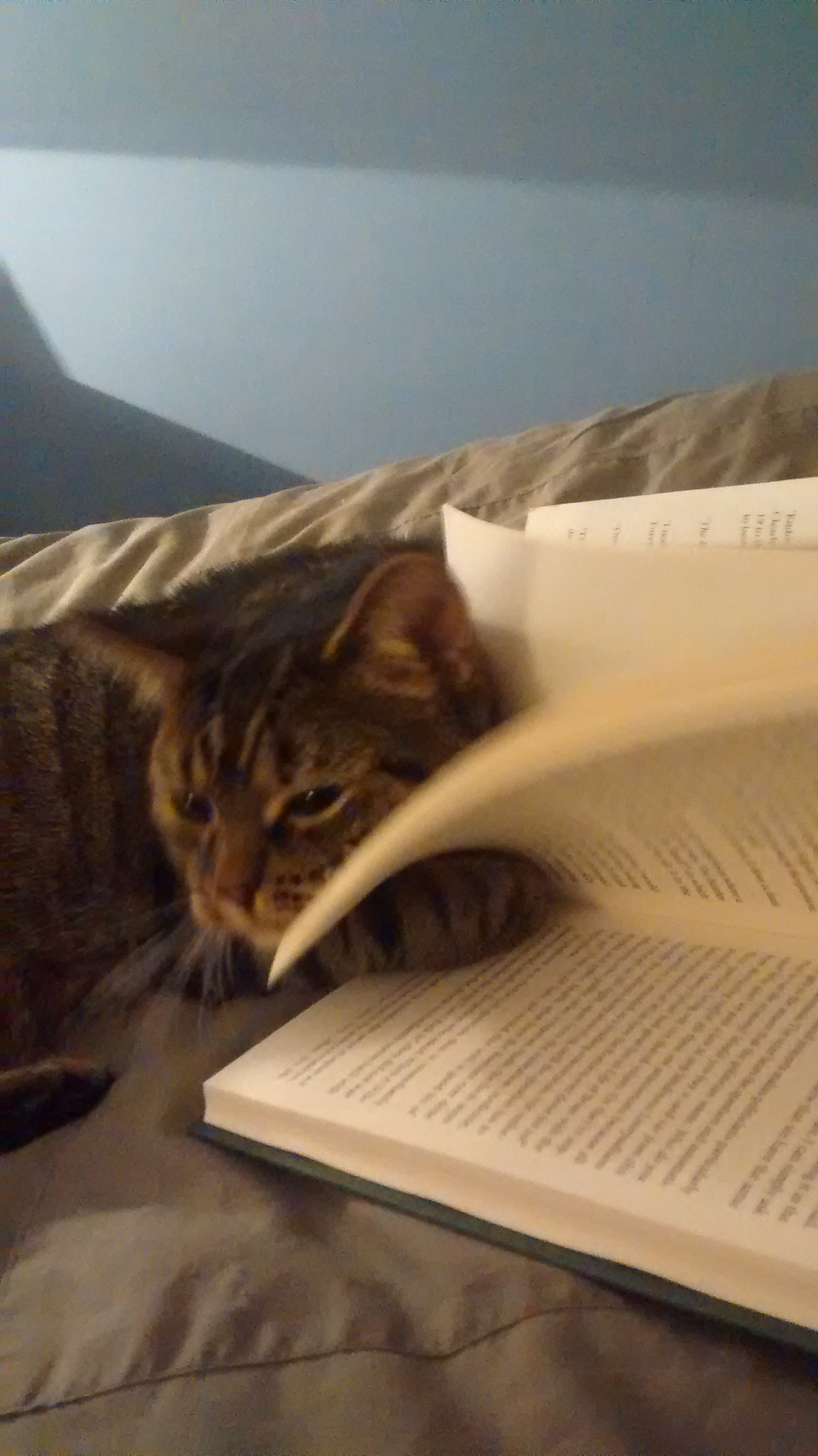
In the mean time, feel free to enjoy these pictures of Umlaut reading a book, and just be thankful you don’t need to use your own face every time you turn a page.

Image


Image


Image


“Your worst enemy, he reflected, was your nervous system. At any moment the tension inside you was liable to translate itself into some visible symptom.” ― George Orwell

Don’t get caught.

Dead and Buryd – Chele Cooke

dfw-cc-dab-cover-mid (2)

Chele Cooke recalls always having books around her while growing up, but she truly realised her love of reading as a teenager, when she discovered the Harry Potter books. Her taste in books is varied, having grown from her initial interest in fantasy – ‘I’ll give anything a try at least once,’ she tells me. Cooke began writing through play-by-post role plays, which she says was akin to ‘learning to walk before I ran’, and being able to submerge herself in another world helped with her own writing. This, coupled with a degree in creative writing, was the catalyst that launched her career as an author. Dead and Buryd, was released in 2013.


Dead and Buryd takes place on an alien planet plagued by harsh seasons; searing hot summers that give way to inhospitable, freezing winters. The planet’s natives, the Veniche have found themselves the effective slaves of their technologically advanced invaders, the Adveni. Any Veniche who steps out of line is liable for incarceration within the walls of the Adveni’s impenetrable prison, Lyndbury.

Cooke introduces the reader to Georgianna Lennox, a local medic, who works alongside the Adveni forces, treating those injured within the walls of the prison as a way of serving her lost people. When Georgianna’s friendship with a group of rebels – the Belsa – risks putting her own freedom at stake, she is faced with a difficult decision – what will she choose to put first, her family or the freedom of her people?

The first two chapters of the book form a sort of prologue to the story, setting the scene and introducing us to characters that come into play later on in the novel. This introduction to the novel works really well, serving to spark questions in the reader’s mind and piquing their curiosity. The history of the planet and the natives is quickly skimmed over in these opening chapters, and is elaborated upon at points throughout the novel. Through this gradual method of unravelling, Cooke lets the history of her world develop in the reader’s imagination, revealing little snippets of the story piece by piece.

The novel’s setting, an unfamiliar planet occupied by inhuman, almost robotic invaders, really appealed to me. Not only was the way in which Cooke portrays the setting particularly masterful – her descriptions allow your mind’s eye to create an almost perfect picture – but the harsh summers and harsher winters made me think of an exaggerated version of our own world. It almost seemed plausible to me that Cooke’s dystopia could be a future version of Earth, a world where the natural environment has been irreversibly damaged to such an extent that people are forced to live in tunnels to escape the searing heat, unable to spend even a short amount of time in the sun, in the heat of the day without fear of burning. Needless to say I was intrigued enough by the book from the onset that I didn’t want to put it down.

There are several central themes running through the novel, the most important of which is love. Love emerges in Cooke’s work in many different ways, but ultimately, there is a love which is central to the Veniche’s existence that the Adveni seem incapable of feeling. The Veniche are described as a very sentimental people – they have a strong allegiance to their kind, their tribes and ultimately their family. Georgianna herself works alongside the Adveni so that she can treat those of her people who are trapped away from the ones they love. Above and beyond this allegiance, is the love the Veniche develop for the one person they choose to ‘join’ themselves with. Being joined is described as something very final, which you can never distance yourself from. The topic is first approached in reference to a relationship between Georgianna’s brother and the man to whom he was joined. Georgianna first learns what it means to love by witnessing the love the two men share:

‘Watching her brother with Nequiel, However, she quickly learned that it wasn’t about finding someone suitable to join with, someone you could live with. It was about joining with the person you couldn’t live without.’

It is as though each Veniche is only one half of a person, and there is another half without which they cannot become whole. This is evident in the way loss is described:

‘Her brother was no longer the same person she had grown up with. He was quieter, more reserved, and less willing to talk about anything important.’

The Adveni, on the other hand, are clinical in the very sense of the word. Cooke creates an army of invaders akin to the Nazi’s Master Race. The allegiance that the Adveni have to their group goes beyond the heartfelt commitment of the Veniche; they have an ingrained herd mentality, going about their lives in favour of the greater good.

‘Unlike the Veniche, who paired most commonly for love, the Adveni were put to numerous tests. If their tletonise – the Adveni way of referring to what the Veniche people knew to be the aspects of a person passed on to their children – did not pass these tests, they were forbidden from creating offspring.’

The Adveni mating ritual is an example of survival of the fittest at its most horrifying – a greater force deliberately manipulating breeding patterns to create an indestructible army. Tactics frighteningly similar to those used by the Nazi’s during World War II. The Adveni do not have that one person who they feel they cannot live without; rather, they are matched up with the person best suited to their genetic makeup. For the Adveni, love exists only for the greater collective good.

A lack of love for one another is just a slight crack in the hard exterior that is the Adveni forces. They are feared and hated by the Veniche. The title of the novel alludes to this; the Veniche used the phrase ‘buryd alive’ to describe those taken captive by the Adveni, alive in almost every sense of the word, but unable to escape: ‘Though your life was over and there was no escape, your body remained alive.’

I love the way Cooke expresses Georgianna’s fear of the prison and the Adveni guards. While she tries to keep on the good side of the guards, she is always terrified of what may happen when the doors of the compound close behind her. Her fear is, understandably, multiplied when she has reason to be afraid:

‘If she showed up acting suspiciously, they’d know for certain that something was going on. The problem was, the harder she tried to think about other things, the more the plan filtered into her mind. As she walked, her only salvation became that the Adveni had no mind-reading technology, at least not that she knew of.’

This passage really stood out to me as a perfect portrayal of the reasoning everyone goes through when trying to behave casually in a risky situation. It’s a feeling so many people will be familiar with, as though your mind is playing tricks on you, feeding you morsels of hope before making you doubt yourself.

I found Georgianna to be, on the whole, an incredibly genuine and relatable character. In Georgianna, Cooke has created a fantastically well-rounded vessel to convey her story. The reader learns about the planet, the people, and the struggle almost exclusively through Georgianna, but they also get to know the heroine on a very personal level. In time it becomes apparent just how normal Georgianna is. Despite her situation, her allegiance with the rebels, the things that she does, and even the fact that she is from another world, there is an aspect of her personality that a lot of people can relate to.

The most obvious demonstration of Georgianna’s real character comes out in her feelings about Keiran. Georgianna has fallen foul to one of those complicated casual relationships, which I’m sure many people are familiar with. The way that she justifies the relationship to herself is so transparent. She begins by suggesting that she is fine with the way things are, but she always comes back to mentioning that she knows Keiran is with other women, and that she’s fine with it [I’m fine! Who else is fine?]. As time goes on, and Keiran’s comings and goings continue to plague Georgianna’s thoughts, it becomes apparent that she is not so cool with it after all:

‘Weird was hardly the word she’d give to it. She’d maybe been a little more emotional, but seeing as Keiran has his wonderful reputation with women, surely this wasn’t the first time a girl had realised she wasn’t happy keeping their relationship at just sex.’

When Georgianna realises she might want more from the relationship, she cannot keep the sarcasm out of her thoughts – Keiran has a wonderful reputation with women. However, she still attempts to appear reserved, as though she does not want to show her true self for fear of being hurt:

‘Finally looking up at him, she shrugged a little. Clasping her hands tightly in her lap, trying to stop herself from fidgeting, she found herself drumming her fingers nervously against the backs of her hands.’

Georgianna really is just so likeable and funny, despite her hard exterior. Forming a relationship with the heroine of the story like this really added to my enjoyment of the novel.

Overall, I thoroughly enjoyed reading Cooke’s work. The story has some fantastic plot twists and enough unanswered questions to have me eagerly anticipating the next in the series. Cooke’s writing style is smooth and fluid, maintaining a unity throughout the flow of the story. I am not an enormous Sci-Fi reader, and I can be easily put off by the random and incessant introduction of unnecessarily complicated devices, but I found Cooke to be very accessible. While new terminology is introduced to the reader, it is done so easily, and with explanation, so as to avoid over complication. Dead and Buryd gets a resounding ‘would recommend’ from me.

I am thankful to Chele Cooke for providing me with a free review copy of her work, and introducing me to the Out of Orbit series.
“You’re never too old, too wacky, too wild, to pick up a book and read to a child.” ― Dr. Seuss

Bing was bored.

Bing and Nero ― Story by I.L. Williams; illustrated by Inci Alper

Image

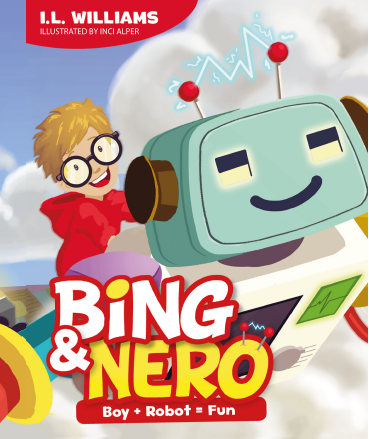
There is nothing worse than feeling like you have nothing to do. It’s Saturday and Bing is stuck inside with no friends to play with, even the cat is asleep. How boring. On days like this Bing really wishes his mother would let him get a dog.

Not content with the prospect of spending a quiet afternoon staring out of the window Bing decides to make his own fun. A quick glance around the room gives Bing an amazing idea for what he can do to make his weekend more exciting.

‘Bing and Nero’ is the delightful little story of a boy who, when confronted with boredom, uses his imagination and creativity make the best friend a boy could ever have. The book follows Bing and his new companion Nero the robot as they have endless amounts of fun doing things that only a boy and a robot could do.

Williams’ fun story, coupled with colourful and vibrant pictures make a book which all young children can enjoy, whether alone or with an adult. On each new page Alper’s eye-catching illustrations help to keep a child engaged while the story progresses.

I thought the presence of Minxie the cat throughout the book was a nice little addition to the story. I know from experience how much children like to look out for things in illustrations, and Minxie’s antics allow a child to do just that.

Children’s books are often rife with morals and hidden meanings, and Bing and Nero is no exception. The story encourages children to be creative when confronted with boredom by suggesting that imagination can be used to create your own fun.

Overall, I think that Bing and Nero would make a fantastic addition to any young child’s library. The book offers lots to think about and engage young minds, including full illustrations with plenty of little details just waiting to be spotted.

Many thanks to I.L Williams for providing me with a free review copy of the book.


“So many people are shut up tight inside themselves like boxes, yet they would open up, unfolding quite wonderfully, if only you were interested in them.” ― Sylvia Plath

Beautifully captivating.

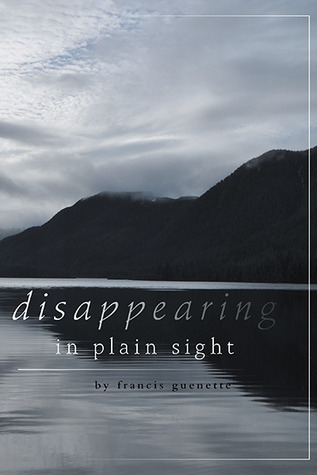
Disappearing in Plain Sight ― Francis Guenette

Image

Francis Guenette lives with her husband on the West coast of British Columbia. She has an MA in counselling psychology and is on the way to completing a PhD in education psychology. Throughout the course of her life she has worked as an educator, trauma counsellor and researcher. Guenette now spends most of her time writing novels that draw on her own life experiences. The first book in her debut venture, The Crater Lake Series, is entitled Disappearing in Plain Sight and was released in 2013.


The book introduces the reader to sixteen-year-old Lisa-Marie, sent to spend the summer with her aunt Bethany in a remote town on the edge of the fictional Crater Lake. Her aunt resides in a simple A-frame within the confines of Camp Micah, a counsellor’s camp for young ways and strays. Like any sixteen-year-old, Lisa-Marie is instantly taken by the camp’s resident hunk, nineteen-year-old Justin, and as time progresses she develops confusing feelings towards Izzy Montgomery, the camp’s exceptionally beautiful and gifted trauma counsellor, and begins an unlikely friendship with Liam Collins, a thoughtful and secretive camp worker. While on the outset the close-knit community which keeps Camp Micah operating day by day may seem watertight the reader learns of hidden tensions and unspoken words just waiting to destroy the carefully constructed routines. The presence of Lisa-Marie and a new guest unleash tensions which have been simmering under the surface of the camp for some time. The reader is set to discover that all those at Camp Micah have their own secrets and guilt locked away inside them.

Over the last few days I have been looking over Guenette’s blog and something she said in a recent post really caught my eye: “Have you ever read a novel where the setting was so breathtakingly described that you almost felt as though you had seen the movie version?”. This is the effect which Disappearing in Plain Sight had on me. I not only felt as though I was watching the movie, but increasingly, as the novel progressed, as though I was at the camp ― I could smell the pencil-y scent of the cedar wood cabins, and almost feel the breeze from the lake on my face. I couldn’t have gotten a better image of the setting if the book had been illustrated. It is obvious that real-world experience has gone into Guenette’s writing ― which is exactly what Guenette was writing about in her aforementioned blog post, the inspiration behind writing. Guenette herself lives in a small, secluded cabin right by a lake [and you should see the lake! Check it out here]. Every day when she writes, she does so with a view of the lake ― it sounds absolutely perfect. Of course, Guenette draws on her own life experiences as inspiration for her work; living in a place like that, how could she not?

Guenette has a penchant for similes within her descriptions, which I find really charming. The book opens with a very memorable quote: “Lisa-Marie woke to the sound of voices and the reflection of the lake rippling and running like melted butter along the sloped, cedar-planked ceiling above her bed.” Comparing flowing water to ripples of butter conjures up the most wonderful images; nothing could make the lake seem more appealing.

All the characters in the book are incredibly well rounded, with each chapter divided into several mini chapters each following a different character. In this way the reader is able to submerge themselves within the community and grow to know the characters on an almost personal level. The first few chapters of the book are centred almost entirely on introducing each character, some of which appear very appealing and likable, and some not so much. I’m sure I am not alone when I say that I found it difficult to warm to Beulah at first. Lisa-Marie is perhaps the most central character, and the one the reader gets to know on the most personal level through her writings in her journal, Emma, named for the Jane Austen character. The central theme which links all the characters together is past trauma, as though they have been brought together at the camp for this very reason.

Disappearing in Plain Sight is undoubtedly a very well-written and enjoyable novel, but the aspect of the novel which particularly appealed to me was Guenette’s focus on the inner mind of the characters. Guenette confronts issues which are still somewhat taboo in many circles of modern society, and she does so in such a way as to make it relatable. Depression, anxiety and stress are all problems that a large percentage of the population will come into contact with in one way or another at some point in their lives. Guenette brings this to the forefront of her work, expressing character’s actions in an incredibly understanding way take, for example, Liam: looking up at the sky when he cannot sleep because he is so plagued by his thoughts. I’m sure there are many people who can relate to the feeling of comfort and security which comes from taking a duvet and lying under a skylight or in front of a large window and just being alone with the stars.

I was also very pleased by Guenette’s decision to look at bullying in her novel, and particularly her choice to highlight the issue of online bullying and the stresses of social media, issues I feel very strongly about. The online world is full of resources, but it can also be a very dark and sinister place. The way Guenette expresses Lisa-Marie’s feelings is so perfect that I am sure a lot of people who have experienced bullying to some extent can relate to her words. Lisa-Marie describes just wanting the voices to stop, to just get away from what is happening to her, without necessarily thinking about the result. Her only desire is for peace and quiet, to be left alone. Guenette conveys an incredibly complex feeling with remarkable simplicity.

This brings me to perhaps the strongest theme which runs throughout the novel: growth and progression. Throughout the course of the text, we learn the sad past of each character and over time witness them learning to deal with their problems. This in itself reflects a quotation from the beginning of the book:

“Izzy believed that people had their own answers to what they needed in order to heal and that these answers were embedded in the stories they told.”

The answers, for many of the characters, come out in the pages of Guenette’s novel. The ever-present lone wolf howling in the distance echoes the loneliness and worry felt throughout the camp. I don’t want to ruin the ending of the book for anyone, so I will just say that the final paragraph serves to emphasise the natural progression of the characters.

I really enjoyed my first experience with Guenette’s work. At first, I found it was the setting of the novel which most appealed to me. I developed a strong desire to visit camp Micah and dangle my feet into the cool water of the lake. Guenette’s writing style is natural and fluid, allowing you to escape into the incredible scene she has created. As the book progressed each character began to speak to me, telling me their stories in turn. The intricate and multifaceted storyline is rewarding and well executed, with a carefully planned ending, which is satisfying without being fairy-tale-like. Overall, I would rate Disappearing in Plain Sight very highly and would strongly recommend anyone thinking of reading the book to give it a go.

Disappearing in Plain Sight and the newly released sequel The Light Never Lies are available for kindle and in paperback from Amazon.

Many thanks to Francis Guenette for sending me a free review copy of the book.

‘There are two kinds of idiots – those who don’t take action because they have received a threat, and those who think they are taking action because they have issued a threat.’ – Paulo Coelho

Hello there new visitors and followers. I can’t help but notice that my blog hits have gone up somewhat today, over 900% actually, but who’s counting?

I’m sure most of you can already guess what this post is going to be about.

I started reviewing books because I love to read, and I am always keen to practice my writing. To begin with it was just a hobby, something to fill up an empty evening. I only reviewed books I specifically wanted to read, which was great, but I started to want more.

Recently reviews have become a much bigger part of my life. I have started reviewing books for the publishing house where I work (check out issue 17 of Global magazine). I have also been offering my services to authors, when requested. My experience on the whole has been very positive. Reviewing for people gives me a chance to widen my connections, and most authors are happy to receive some honest feedback.

Note – most authors.

Today I had a very unpleasant experience with one author who had gifted me a book to review. After reading what was, on the whole not a very successful novel, I attempted to relate my honest opinion to the author in question. I was met with verbal abuse, and threats that if I published my review I would be ‘destroyed’.

Any author should be prepared to encounter tough criticism to begin with. First, second, and even third novels are often not met with the reaction that an author desires. George Orwell’s first few novels were very badly received, and it was the process of rejection which eventually led to the successful publishing of Down and Out in Paris and London.

I am an open, honest and fair critic and thus some reviews, particularly of first time authors, can seem a little discouraging. However, all of my reviews are conducted with respect for the time and effort put into any novel and with particular sympathy to first time authors. While I may at times be tough, I am never nasty.

The purpose of this post is to emphasise that no amount of abuse will stop a reviewer from saying what they feel. I will continue to give an honest review of any book I read. Any author who asks for a review should be open to the prospect that not all comments will be positive.

Threatening behaviour helps no-one and achieves nothing.