Author spotlight and Goodreads giveaway ― N Caraway

“Let us learn to show our friendship for a man when he is alive and not after he is dead.”  ― F. Scott Fitzgerald

I am currently helping to host a goodreads giveaway on behalf of my good friend and author N Caraway.
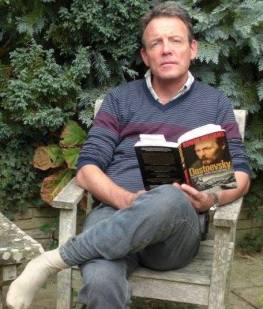
10409674_1437375683175728_2270036257601865586_nN Caraway was born in Cambridge in 1957 and studied at Cambridge University, where he read mediaeval and modern languages, specialising in Dostoevsky and Latin American literature. Before going to university he worked as a volunteer teacher in a rural school in Kenya, an experience which eventually set the course of his life. He has worked for a variety of development agencies mostly in Africa and Asia.

In 2002 he moved to Nairobi to work for the United Nations in South Sudan. This was during the last years of the conflict between government and rebel forces of the Sudan People’s Liberation Army. The UN operated a relief operation by air, using a network of small landing strips spread across a vast landscape without roads or electricity. This landscape provides the background for his first novel, The Humanitarian.


maneThe Manneken Pis

A lonely old man is living out the last days of his life in Brussels, a city that alternates between small-town non-entity and extreme surrealist quirkiness, symbolised by the famous statue of a small boy urinating. Increasingly confused by the effects of a heart attack, he tries to find meaning in one last rational act of kindness before he dies.

Set in the capital of a rapidly ageing Europe, the second novel by N Caraway is a tragicomic study of solitude and growing old that also provides a surprising new take on the theme of the classic Frank Capra movie, It’s a Wonderful Life.

N Caraway’s second novel, The Manneken Pis is set in Brussels, and inspired by the grotesque pageantry of the Balloon Day parade. Caraway’s protagonist, Harold Cumberlidge, suffers a heart attack after having the ‘monstrous calamity’ of a balloon fashioned to resemble the urinating Manneken Pis collapse on top of him. The event causes Harold to take a closer look at life; he begins to question his significance and that of the Europe which surrounds him. Then, befriended by an unlikely pair of characters, one of whom introduces himself as Harold’s ‘Guardian Angel’ in a scene that inevitably harks back to James Stewart contemplating suicide in Capra’s film, Harold becomes increasingly unhinged, as he obsesses over his own mortality. By the end of the novel it is up to the reader to decide for themselves exactly who, or what, is real.

The Manneken Pis serves as an analysis of the lonely life of an ageing EU bureaucrat. Harold Cumberlidge is an interesting character; a strange mix of old-world charm and grumpy bastard, who the empathetic reader will find themselves warming to very quickly. The extent to which Caraway delves into the inner workings of Harold’s increasingly frazzled mind makes one feel that the thoughts and musings of the character may be at least partly based on the authors own life experiences.

Caraway’s descriptions of Brussels, of Harold’s mindset, and the characters which surround the story are intricate, developed and well rounded. He really has a talent for descriptive writing, which shines through to the very smallest detail. Every part of the book is told as if you are the eyes within Harold’s head, down to the horrifying image of the Manneken Pis looming down on Harold, causing the heart attack which sets the rest of the book in motion:

‘There was a blinding flash as the sun caught his unguarded eyes full on and then the monstrous calamity of a giant figure tumbling down towards him, grotesque in its nakedness, leering and obscene, a gigantic naked child, milk-chocolate brown as though fashioned from an enormous turd, a canine crotte from the sullied urban pavements galvinised into monstrous life, plunging headlong down to smother him…’

The effect of description in Caraway’s prose, down to the very smallest thought which flits through Harold’s mind, is such that by the end of the book you really feel as though you know Harold on a personal level.

The story is intricate, touching and incredibly thought provoking, and touches on several exceptionally deep subjects, the most notable of which is the recognition of one’s own mortality. Caraway’s second novel is equal parts sadness and humour, which will leave the reader with several questions hanging in their minds and a deep feeling of empathy towards their fellow man.

There are four copies of The Manneken Pis up for grabs, Goodreads users can enter the giveaway by clicking here. The giveaway will run until the 2nd March.


The Humanitarian

Caraway is also offering review copies of his first novel The Humanitarian, which was featured on Jade the Obscure last summer.

51W+tDMNtgLAfter decades of civil war a peace deal is in the offing for the ravaged land of South Sudan, where the United Nations and a plethora of non-government organisations have come together to deliver emergency aid to the thousands of displaced and homeless people scattered in camps and villages across the vast wilderness of swamps and scrubland, where rogue militias, cattle raiders and bandits roam. Richards is a UN official on his final mission, leading a small team to a remote region. For him it is not just the war which is ending, but the world he has come to inhabit. Detachment and isolation from all that is around him begin to take hold and memories of another life threaten to break through the thin walls he has built around himself. As he sinks deeper into inner darkness a chance meeting with a young priest seems to offer the hope of a way back to belief in humanity and meaning, but the road is rough.

To read the review click here.

There are another four copies of The Humanitarian available to lucky winners, Goodreads users can enter the giveaway by clicking here. This giveaway will also run until the 2nd March.

While you’re at it why not visit him on Facebook and Twitter.

“We write to taste life twice, in the moment and in retrospect.” ― Anaïs Nin

Zenith Hotel ― Oscar Coop-Phane

81OoFqSoNNL._SL1500_

‘When I wake up my teeth feel furry. There’s a foul taste in my mouth – a nasty sort of animal taste.’ – For Nanou, this is how each day begins. Nanou is a Parisian streetwalker ‘Not a call girl or anything. No, a real street whore, with stiletto heels and menthol cigarettes.’

In Zenith Hotel Oscar Coop-Phane details the not so glamorous life lived by Nanou. The book takes the form of a one day diary, interwoven with short portraits of the men who seek solace in the withered arms of Nanou. The book is original and incredibly moving, creating a world of solitude and sadness encompassed in the actions of just one day.

Nanou’s story is different to how you might expect. It is not a sob story dreamt up by Coop-Phane to make a reader feel better about their own sad existence – no, it is just a day. ‘I don’t intend to go into detail and tell you about my childhood, my love life and all my woes. I’m not going to tell you how I ended up like this’ say Nanou, she is clear that in knowing her past ‘you’d get too much of a kick out of it’, and she would not give you the satisfaction. Instead, all Nanou tells us is her day, so, – ‘If you were expecting me to talk about rape, being abandoned, HIV and heroin, you can fuck off, pervert’ – if you are looking for a misery maker this probably isn’t the book for you.

So why does Nanou write, if not to tell of her woes and mistakes in life? She doesn’t complain, and doesn’t even seem to see the worth or the point in her own writing. ‘I don’t know why I write. It churns me up, it soils me from the inside. To pass the time perhaps. That’s it. I write like some people do crosswords, it keeps me busy. I think about words, style and shape of the letters. I feel as if I am doing something without getting up off my arse.’

The book is structured into short chapters each detailing background of each Nanou’s clients – this is the only background information we are given, as though the messed up lives of her clients say more about her life than her own past – each chapter ends with a short interaction between Nanou and her client. Through each entry Coop-Phane digs into the very heart and soul of Nanou’s clients, voicing their innermost thoughts, desires and anxieties, while detailing Nanou’s complete lack of interest. These chapters come between passages written by Nanou herself, short ramblings scratched from the street corner, recording her day’s activities and musings.

Nanou’s life is routine, living hand to mouth with only but the smallest of pleasures to call her very own. ‘I drink my coffee all alone in my room. Smoking my fags. To cheer myself up, I tell myself I’m saving money.’ The reality is more depressing, it is not that Nanou cannot afford to drink her coffee out, but that she gave up socialising when the smoking ban was implemented, the pleasure of a combined nicotine and caffeine hit too great to spare for a chat with friends.

1024px-Rotlichviertel_Frankfurt_MainHer living quarters are dismal, the shared bathroom having fallen into the bleakest state of disrepair, Nanou resorts to borrowing the bathroom of another friend, where her morning wash routine is clinical, a mere formality rather than something to be enjoyed: ‘I wash with a mini soap. I like feeling the roughness of my skin, the way it goes taut and chapped after washing. Shower gel is too gentle. It leaves your skin slightly greasy, like when you oil it. I prefer it when my skin’s dry. I feel cleansed – disinfected.’
After leaving the discomfort of her living quarters for a day on the street Nanou meets an extraordinary circus of men. Among them Dominic, a young man who, having been convinced of his family’s desire to murder him, beat them to it and earned himself life in an institution, and Emmanuel a dreary school worker, who has no friends and spends each Saturday when his wife is away sneakily masturbating into their sofa.

Of course Nanou does not really notice these men. She is not really there when she sees them, making small talk, being kind and giving them what they want is all part of the service after all. It is just as much a part of prostitution as the selling of her body itself. These men use her as escape, as a method of running away from the harsh realities of life, which she herself has come to accept. The reality is that these men do not even come close to being with Nanou when they pay for her services: ‘I can tell you that when they screw me, when they get all horny jiggling about on top of my poor inert body, those sad suckers are well and truly alone.

640px-Prostitute_tj

Her work day is rhythmic, relentless and monotonous ‘like a factory worker in a production line. The same action relentlessly for years. No hope. A little factory worker of the flesh’. She gets no pleasure from the lifestyle, other than the cigarettes and coffee bought with her wages. As the day progresses Nanou’s thoughts become bleaker and bleaker, as though she has an intrinsic hatred of everything she stands for. She is not self-pitying, but self-loathing, considering herself to be of no worth other than a temporary recipient of other men’s primal desires: ‘I feel hollow – as commonplace as a chamberpot that you plonk down beside the bed.’

The day drags on, and the money comes easily, ‘but at what cost?’ she asks herself. She works the street all day, until finally, after her sixth client and a day spent absorbing the filth of the city, it is time to go home. ‘At last’ she thinks, ‘I can go to bed, turn on the television and light up another fag.’

Nanou is a streetwalker in Paris. Her heart has taken on the colour of the pavement. And when she falls asleep she knows ‘Tomorrow is another day.’

Taken at face value Zenith Hotel is a striking representation of the depressing life lead by a Parisian prostitute, but it is also deeply poetic, insightful, and beautiful in a way which speaks mountains about the work of Coop-Phane. Nanou is the picture of a life lost to the grime of the Paris streets, her ‘soul sweats the filth of the city’, and her words speak volumes.

I was given a free copy of Zenith Hotel by Arcadia Books, the publishers, in return for an honest review.

“Confession is not betrayal. What you say or do doesn’t matter; only feelings matter. If they could make me stop loving you-that would be the real betrayal.” ― George Orwell

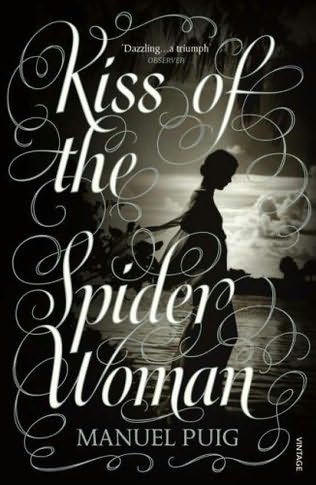
The Kiss of the Spider Woman – Manuel Puig
(El Beso de la Mujer Araña) 

n273641‘– Something a little strange, that’s what you notice, that she’s not a woman like all the others.’ This is how Argentine author Manuel Puig introduces his most highly acclaimed novel The Kiss of the Spider Woman.

What does this opening sentence tell the reader? Is it speech? Narration? The introduction of a protagonist?

In beginning the book in this way Puig throws the reader in at the deep end – there is no introduction, explanation or clue as to how the novel will progress.

This novel is unusual, formed as it is without any form of narrative voice – a primary feature of the traditional novel. Puig composes the novel almost entirely of dialogue, interlaced with periods, often extended, of stream of consciousness, providing the reader with nothing side from a dash (–) to show that the speaker (or thinker) has changed.

As such, the characters are never actively introduced, and their names only emerge through their conversation with one another. It is up to the reader to remain attentive in order to work out who is speaking, and keep up with the flow of speech. It takes some time, but as the story unravels it becomes apparent that the two main ‘speakers’ are cell mates in an Argentine prison.

The two protagonists are Molina, a homosexual window-dresser who is serving a sentence for ‘corrupting a minor’, and Valentín, a political prisoner, serving a sentence for his membership of a leftist organisation attempting to overthrow the government. In the seclusion of their cell these two men talk, or rather, Molina talks, while Valentín listens. Molina reanimates the films he so loves in order to light up the darkness of the prison cell, while the cynical minded Valentín allows himself to become absorbed by the scenes which emerge before him. Sometimes they talk all night long – given over to their desire to escape from their surroundings.

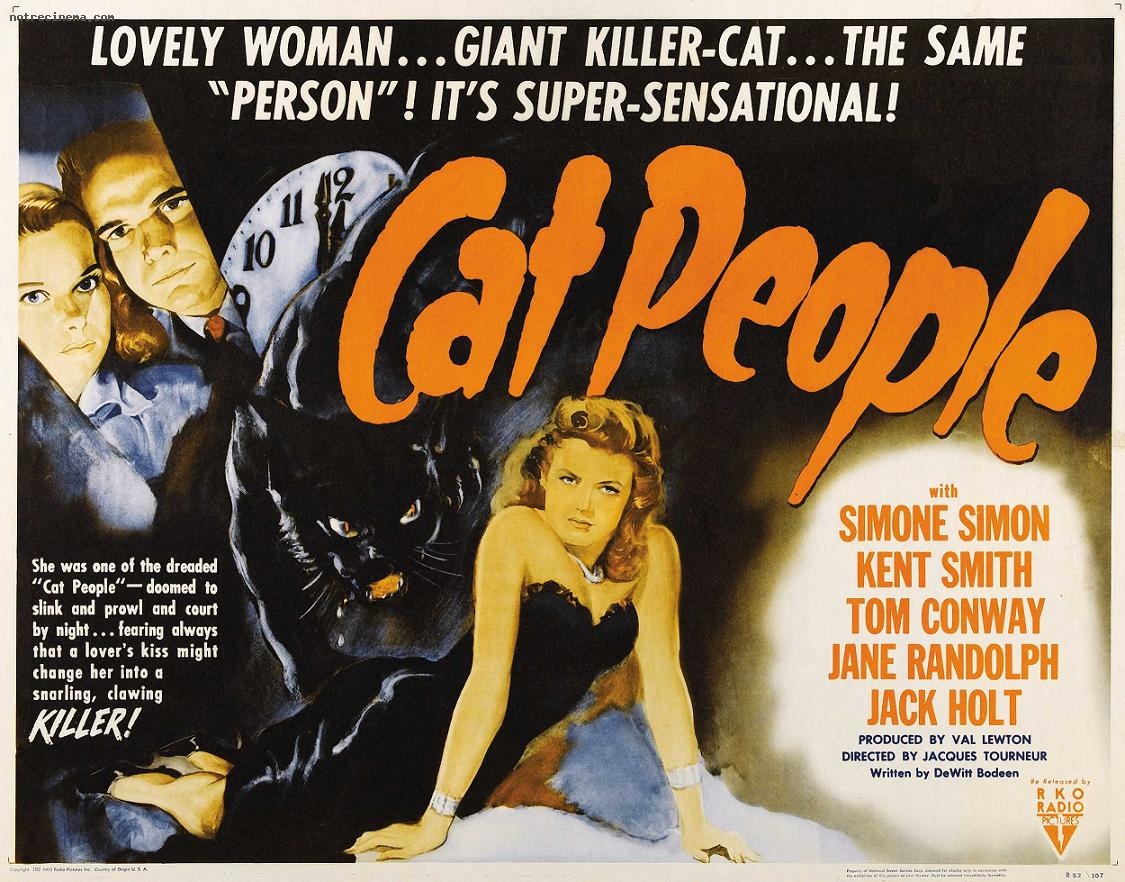
This is how the novel begins, with a film, or rather with Molina’s description of a film – Cat People if you are interested – and this introduces one of the most important aspects of the novel. Molina’s retelling of the films make up the majority of the novel, the effect of which is strange, I found myself absorbed by these subplots and a desire, just like Valentín, to know how the films end, while simultaneously desperate to know how the novel itself will begin to pan out.

cat-people-poster

The storytelling is captivating, I felt at times as though I could see the film panning out before me, Molina’s descriptions, particularly those of the women, bring the scenes to life before your eyes.

‘She has her legs crossed, her shoes are black, thick high heels, open toed, with dark-polished toenails sticking out. Her stockings glitter, that kind they turned inside out when the sheen went out of style, her legs look flushed and silky’

While the eloquent, effeminate Molina and the gruff, radical Valentín present themselves as almost polar opposites the character that emerge through their conversation share a key similarity. Valentín believes in suffering for the greater good; while Molina believes in enduring all else for the magic of love, but each man feels destined to be alone, Valentín for want of the cause, and Molina due to his passion for heterosexual men.

Slowly, as the novel progresses and the men spend night after night wrapped in each other words, they begin to surrender themselves to one another, with each committing himself to the cause of the other.

In The Kiss of the Spider Woman Puig rewards his readers with a truly unique reading experience. Puig’s unusual style and abstract form choice combine to create a novel which is both deeply moving and incredibly thought provoking. The unique position if the reader within the novel allows for the development of an almost intimate character-reader relationship. As such Molina’s films serve as an escape, not just for the prisoners, but also for the reader.

Who is the spider woman?

The main question I found myself asking while reading this book was – what is the relevance of the spider woman? She is referred to just once, briefly in the novel, when Valentín tells Molina ‘– You, you’re the spider woman, that traps men in her web.’ Still this doesn’t give much away as to who, or what the spider woman is. It requires a little research.

Pur_12_aracneIn Latin American history, the Teotihuacán Spider Woman, or Great Goddess, is thought to have been the goddess of the underworld, and, somewhat strangely, of earth, water and possibly creation itself. While in Greek mythology the other spider woman, Arachne, was a mortal woman who was incredibly skilled in the art of weaving and challenged the goddess of wisdom and crafts, Athena, to a – for want of a better phrase – spin off and was transformed into a spider as punishment for her arrogance.

So which of these spider women lend themselves to Molina? Having read the book I feel I could attribute either of these personas to his character, although I’m not sure myself which Puig was referring to, if indeed he was referring to either. Puig presents Molina as a glittering weaver of great things, as a true an artist adept at creating beautiful scenes to distract and allure Valentín, but it also emerges that he is a great manipulator capable of influencing those around him for his own cause.

“The moment you doubt whether you can fly, you cease for ever to be able to do it.” ― J.M. Barrie

Flowers, shadows and the age of magic

Nigerian author Ben Okri reflects on how moving from the UK to Africa as a child introduced him to new experiences that were to be a big influence on his future writing

Ben Okri

Writing should be a lifelong experience, says Ben Okri, the Nigerian poet and author. Since publishing his first novel, Flowers and Shadows, at the tender age of 21, Okri has risen to international acclaim. His best known work, The Famished Road, was awarded the 1991 Booker Prize.

As a newcomer to Okri’s work, you would be forgiven for seeing it as somewhat obscure. His ideas, he says, are born “out of the strangeness of reality”. To put this into context, he refers to a time when he first noticed the peculiarity of everything around him, when travelling back to Nigeria from the UK as a young boy. “Everything was strange,” he says, “the trees, and the streets, everything was unusual, and therefore brimming over with ideas.”

In order to reflect this perceived strangeness of reality, Okri expresses himself in a very different way to what he calls the “old Western novel”, referring to books written by the likes of Jane Austen. This older style of writing, he says, follows a sequential pattern, born from a sequential way of thinking taught within Western institutions. Okri’s writing attempts to convey a new way of thinking, to show that writing does not need to follow a strict criteria and can instead be perceived in any number of unique ways  – it can be sequential, he says, or “circular and dancing”.

Okri was participating in the Cambridge Festival of Ideas – a week-long University of Cambridge public event celebrating the arts, humanities and social sciences. He reflected on his colourful writing career, sharing a stage with Tim Cribb, an English fellow at the university. Crowds of people turned up to listen to Okri speak. He was invited to begin reading from one of his poems, with the audience duly advised that there was a problem with the sound system, and so we would have to listen carefully. As Okri rose to begin his recital, the audio equipment suddenly crackled into life and the auditorium exploded into applause.

Okri, however, seemed reluctant to speak into the microphone. “I think I will abandon this,” he said, gesturing towards the device. “I do not like to raise my voice. The gentler I speak the clearer I think.

“It is wonderful to be here,” he added, lamenting on what a lovely day it was for such a splendid turnout. “You must love ideas more than sunlight,” he commented, smiling. “That’s unwise.”

Although he was born in west-central Nigeria to an Urhobo family, Okri spent the majority of his early life in London, only returning to Nigeria in 1968 when the country was in the midst of civil war. These experiences dramatically shaped his writing. While Okri has won several esteemed prizes for his work, including the 1987 Commonwealth Writer’s Prize, his ability to write emerged only after completing a long and arduous journey.

“As a child,” Okri reflects, “I would read Plato and the classics, and once, my father told me ‘we have our own Platos’. This confused me, and so I asked ‘Where?’.”

His father’s response to this, Okri shows the audience, was to simply gesture all around him. After many years of not fully understanding what his father meant, Okri says that the realisation suddenly dawned on him. His father’s gesture, he now understood, meant: “It is here, you’re just not seeing it.” This realisation, he says, led to more than seven years of self-discovery through writing, a period Okri refers to as his “critical crisis”. Throughout this time he attempted to break down the barriers of language to establish a way of conveying his new look at reality. “Try and get a dimensional reality into sequential prose,” he challenges, “it cannot deal with it – it does not work!”

“The difficulty in writing,” Okri says, “is finding the language to express these ideas without the need for explanation.” Writing, Okri believes, should serve as the special explanation of ideas, where a literal explanation is not needed. The solution to the problem lies within the discovery of language.

Ideas can only exist outside of the mind with the right language; “Otherwise they exist only in their own reality,” he adds.

And more than anything, you must write something which hasn’t been written before. “What are you going to write if it has already been done so beautifully before? How can you do what Dostoyevsky has already done? The whole point in writing is to not repeat – you invest your life in a journey, and if you repeat each day you are effectively writing yourself out of existence.”

In this way, Okri focuses his own writing on the micro moments that have gone unnoticed in more traditional methods of writing. “Everyone focuses on the big moments,” he says, “but reality is in the micro moment, grind it down and you see the seedbeds of the greater moments.”

While uncovering such a method of writing for oneself may seem slightly terrifying to the fledgling writer, reaching a point where you have something unique is the ultimate challenge. “Writing when you do not know where you are going is frustrating and painful,” he says, “but the process, and the finished work, is more fruitful, more rewarding and more beautiful.”


‘Some things only become clear much later’

The Age of Magic ― Ben Okri

The Age of Magic

Ben Okri’s first novel in seven years, The Age of Magic, follows the journey of a film production team travelling from Paris to Basel while filming a documentary. As the voyage unfolds, the team find themselves followed by shadows, plagued by ghosts, troubled by their pasts and enlightened by the world around them.

“What does Arcadia mean to you?” is the subject of the documentary and, increasingly, the question on each of the crew’s minds. The characters are troubled – burdened with their own physical and emotional baggage, in the form of invisible ghommids, trolls, niebelungens, gnomes, harpies, sprites and an elusive quylph. When they are together, the crew speaks increasingly of a disconcerting presence among them – the ever-present, domineering figure of Malasso, the name given by the crew to a haunting, shadowy spectre which stalks the group.

When they arrive at a hotel in a small Swiss town, in the eye of the domineering Rigi Mountain, they are at once gripped by the serene beauty around them. Over the course of the stay, they each find themselves drawn towards the mystery of the crystal clear lake on the edge of the hotel grounds and the secrets of the mountain town.

The novel takes the reader on a journey unlike any other, presenting characters with a different way of seeing the world and offering the reader a very different way of reading. As the crew are transformed by their journey, so too is the reader.

The Age of Magic unfolds to form a truly dreamlike story, with characters wandering like ghosts in a world that seems to form and fall away before their very eyes.

Both the article and review published here were first published in Global: the international briefing. Many thanks to Head of Zeus for supplying a free review copy of The Age of Magic.

“Travel makes one modest. You see what a tiny place you occupy in the world.” ― Gustave Flaubert

A man of the world

Glimpses of a Global Life ― Shridath Ramphal

Glimpses of a Global Life

Shridath ‘Sonny’ Ramphal was born in 1928 in New Amsterdam, British Guiana, to an Indo-Guyanese family. Having been educated at King’s College London, and later at Harvard Law School, Ramphal went on to live a decidedly ‘global’ life.

In his memoirs, Glimpses of a Global Life, Ramphal tells of his experiences working within international institutions, framing his place within the bigger picture of global politics. The book was released in November following a launch party at Marlborough House, the headquarters of the Commonwealth Secretariat and one of London’s best-known stately homes.

Among his acknowledgements, Ramphal speaks of his reluctance to write a set of memoirs, having been asked, somewhat insistently, by multiple friends and relatives, when his memoirs would emerge. He defines multiple reasons for not having written until now, one of these being that his story had not yet ended. His mind was changed over Christmas in 2011, the time of ‘resolutions’, he says, when he felt that it was not just the time, but his duty to begin writing.

Ramphal begins, somewhat unusually for a memoir, 100 years before his birth, with the abolition of slavery. But it was a key time because it formed the roots of Ramphal’s beginnings within British Guiana, a country built on the trade. The first section, ‘Beginnings’, in fact serves as less of a memoir and more of a depiction of the foundations that supported Ramphal’s life. Ramphal traces the history of the abolition of slavery, painting an extraordinary picture of his family’s life in Guiana.

He speaks of his interest in the voyage of women across the Kala Pani under the Indian indenture system and, in particular, the book Maharani’s Misery: Narratives of a Passage from India to the Caribbean, by Professor Verene Shepherd. It was a journey that his own great grandmother took, and a story which could easily have been her own. He begins the book in this way because the events helped to shape his life: “I am a child of all I have narrated,” he says.

There are eight parts to Ramphal’s memoirs, each of which could serve as a volume in its own right, every one covering an important era of Ramphal’s life. From his humble beginnings in British Guiana, Ramphal rose to become Foreign Minister of an independent Guyana, from 1972 to 1975, and later was the second Commonwealth Secretary-General, from 1975 to 1990.

One of the most moving sections of the book is that dedicated to the period of Apartheid in South Africa, described by Ramphal as “the most cruel legacy of slavery”. Ramphal recounts the importance of the Commonwealth community, and himself, in ending this legacy and helping to ensure that “the light of Apartheid’s end was faintly glowing” by the finish of his final tenure as Commonwealth Secretary-General. He speaks at length of the events leading up to the release of Nelson Mandela, whose freedom embodied that of black South Africa. In a chapter dedicated to Mandela’s freedom, Ramphal recounts his own words, emphasising the significance of Mandela’s release to the future of South Africa: “The human spirit survives in South Africa in many ways… But most of all, its survival is symbolised in the person of Nelson Mandela.”

The end of Ramphal’s time as Commonwealth Secretary-General was by no means the end of his story. He went on to become Chancellor of the Universities of Guyana, Warwick and West Indies, and served as the chair of the West Indian Commission. He was also recommended several times for the position of Secretary-General of the United Nations. In the final sections of his memoirs, Ramphal writes further of the ‘honours and intrigue’ inferred upon him, and how he was awarded honorary degrees from 28 universities and made an honorary fellow of another four.

Ramphal ends his memoirs, somewhat fittingly, with a story summing up his relationship with Nelson Mandela. In 1996 Ramphal had the pleasure of conferring upon Mandela an honorary degree from the University of Warwick. The graduation ceremony was a tremendous event held at Buckingham Palace and attended by eight top universities, but it is Warwick, and indeed Ramphal, that are said to have ‘stolen the show’ when Ramphal’s offer of a handshake was dismissed in favour of a familial embrace.

Glimpses of a Global Life is a truly fascinating look into the life of a key figure within the Commonwealth of Nations, serving not only as a memoir, but as a recollection of serious global issues spanning several decades. All this is presented in the form of a worldwide show, in which Ramphal stands centre stage, alongside a whole host of the world’s most prominent figures in international politics.

This review was first published in Global: the international briefing. Many thanks to Hansib for supplying a free review copy of the book.

“Reflect upon your present blessings ― of which every man has many ― not on your past misfortunes, of which all men have some.” ― Charles Dickens

Christmas is a time for reflection

As we come to the close of 2014 I am faced with the realisation that I have let a few things slip over the last 12 months. I started the year with so many good intentions as to books I would read and things I would get done, and although I have accomplished a lot this year, there are certain books I have really wanted to read which I have let pile up and gather dust. And so, as part of my end of year reflections I am going to give you a short review of three books I read this month, after realising I had put off the task, if indeed you can call it a task, for far too long.

The Thurber Carnival – James Thurber 

the-thurber-carnival

The first book is one my beloved bought me for Valentine’s Day this year; I know a lot of thought went into choosing a book he knew I would enjoy. So this month I spent a few days curled up in bed with Mr Thurber and indulged myself in his musings, and what an experience it was.

As Thurber writes in the preface:

‘This book contains a selection of the stories and drawings the old boy did in his prime, a period which extended roughly from the year Lindbergh flew the Atlantic to the day coffee was rationed.  He presents this to his readers with his sincere best wishes for a happy new world.’

If you have yet to read any James Thurber I cannot recommend him highly enough. The Thurber Carnival is an eclectic mix of short stories, essays, biographical snapshots, poems and anecdotes which give you a little bit of everything. As a first time reader you may find yourself laughing out loud at his work, while at the same time suffering slight confusion as to what exactly is happening – in this way Thurber’s work is full of unexpected and not entirely understandable surprises.

The book was put together by the author himself, adapted from some of his most colourful work, almost all of which was originally published in the New Yorker. Some of the better known parts of the book include ‘The Secret Life of Walter Mitty’ which was recently adapted on the big screen, but even the lesser known anecdotal sentences speak volumes about Thurber’s work. Each piece within the volume, down to the smallest of cartoons is worthy of publication.catslikemice

Here is one of my favourite snippets from ‘The Owl in the Attic’, in which the author offers advice in the form of questions and answers from pet owners:

Q. We have cats the way most people have mice. – Mrs C.L Footloose.

A. I see you have. I can’t tell from your communication, however, whether you wish advice or are just boasting.

I also really enjoyed Thurber’s selection of fables which carry somewhat unusual morals. I think my favourite, and it was a difficult choice as they are all hilarious, was ‘The Very Proper Gander’, in which a goose who is very fond of singing to his family was accused of being a dangerous bird capable of spreading propaganda by a nosey hen and subsequently forced to flee his home. This tale carried with it the insightful moral ‘Anybody who you or your wife thinks is going to overthrow the government by violence must be driven out of the country’.

I spent many an afternoon doubled up laughing at Thurber’s anecdotes from ‘My Life and hard times’ including such gems as ‘The Night the Bed Fell’ and ‘The Night the Ghost got in’, in fact I spent many an afternoon laughing at just about everything.

The Thurber Carnival serves as a fantastic amalgamation of the very best of Thurber’s insights and observations, effortlessly presented and bound with a mix of effortless humour and the correct balance of subtle and obvious eccentricities. While highlighting Thurber’s much deserved reputation as a truly great humourist and storyteller, the book simultaneously unleashes upon the reader his second role as a truly profound thinker, philosopher and anthropologist. It has been a while since a book has made me laugh, and think, in quite this way. This collection has something for everyone, if the writing is a little out of your reach; you’re bound to appreciate the illustrations at the very least.

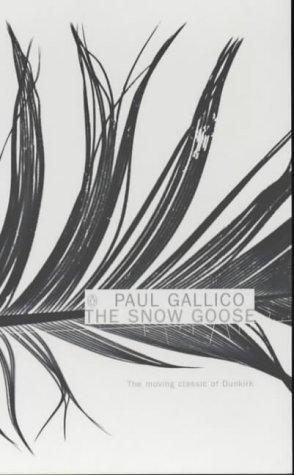
The Snow Goose – Paul Gallico

529241

The second book was recommended by a man whose presence in my life was all too short, and this month sadly marks one year since he passed. Michael was a truly inspirational man, and I have many fond memories of the time I got to know him. He recommended that I read The Snow Goose on one of the last occasions I ever saw him and I am somewhat ashamed to say the book has been sitting by my bed ever since.

Set against the backdrop of World War II, The Snow Goose documents the touching, if somewhat unusual, friendship between Philip Rhayader, a disfigured artist living a solitary life a lighthouse in the Essex marshlands and a young local girl named Fritha. The unlikely friendship is born out of Fritha’s discovery of a snow goose, miles from its Canadian homeland and wounded by a gunshot.

The tale of the friendship between this unlikely pair is truly moving, and reminded me, in some respects, of the story of the Hunchback of Notre Dame. Rhayader is a beautiful soul who is so misunderstood given his outward appearance, but whose kindness emerges in his care those close to him. The story is so captivating that you will be forgiven for shedding a tear, as I did, with the outcome of the story.

Rhayader assists in the British retreat from Dunkirk, and succeeds in rescuing hundreds of men. The snow goose accompanies him constantly, flying circles around the fishing boat, a shining beacon of hope in the grey skies above the stormy channel, becoming somewhat of an omen to the men in Dunkirk.

When the snow goose returns briefly to the lighthouse, alone, Fritha sees it as vision of Rhayder’s soul coming to bid her farewell. It is at this point that the girl comes to realise that she loved her friend, and he her. When, shortly after, the lighthouse is lost to a German bomber plane, the only thing which remains of Rhayader’s artwork is a painting of Fritha as a young child, with the injured snow goose in her arms. This ending of this short piece is remarkably powerful, and the image of the painting, the one remaining piece of a life now lost, is something which will remain with me for a long time.

The Snow Goose is a simple, eloquently written, yet powerful tale of the power of friendship and love, which is in equal parts beautiful and devastating.

The Young Visters – Daisy Ashford.

h3817

The final book I have chosen is very dear to me. I was first given this book to read by my grandmother as a child, under the knowledge that it was written by a little girl. Unfortunately the knowledge of the book fell somewhere into the back of my mind, and when my grandparent passed away I realised I had forgotten the title. With no one to ask the book was lost to me somewhere within the household clutter that results from many lives well lived. I recently decided to try and find the name of the book and was surprised to find how simple the task was, such are the wonders of the internet. I treated myself to a lovely little second had edition and it seemed natural that this would make it into my Christmas list.

The Young Visiters was written by Daisy Ashford at the remarkable age of nine, and was discovered many years later in a notebook hidden amongst her mother’s possessions. The book was published in a completely unedited state, save for having the single block of text which makes up each chapter divided into paragraphs for readability. Needless to say, the book is truly extraordinary, as J M Barrie writes in his preface to the work: ‘It seems to me to be a remarkable work for a child, remarkable even in its length and completeness, for when children turn author they usually stop in the middle, like the kitten when it jumps.’

There is so much I could say about The Young Visiters; such is my love for this charmingly childish tale. Since rediscovering the work I have recommended it to so many, and have bought it as a Christmas gift for others. It makes a beautiful addition to any collection, and reading it is an experience I can guarantee you will enjoy.

I remember enjoying the book when I first read it, but reading it as an adult has afforded me a whole new appreciation of Ashford’s writing. When I was first given the book by my grandmother she interrogated me almost immediately, asking me if I had noticed anything funny about the book. I remember referring to the sentence ‘Then he sat down and eat the egg which Ethel had so kindly laid for him.’ I will confess does still afford a little chuckle from me, but I noticed so much more about the little girl’s writing this time round, the main thing being her fantastic perception of people and society. J M Barrie writes in his preface that had the author paid a visit to your house ‘I am sure that when you left your bedroom this child stole in, examined everything and summed you up.’ She has a certain way with words, expressing a character with all of the subtlety of a child: ‘My own room is next the bath room said Bernard it is decerated dark red as I have somber tastes.’ Can you think of any better way to sum up ones personality?

There is something so refreshing in reading something written by one so young, who has such a great understanding of life. The heroine in the story Ethel is forever powdering her face with ‘ruge’ for fear that she appears too pale and sickly, an ongoing theme in novels of the time, as stated most eloquently by Ethel : ‘I am very pale owing to the drains in this house’. It is an ongoing these in early 20th century literature that women are almost like china dolls, and liable to break at any moment, which one can pick up quite easily from reading a Jane Austen novel. God forbid a girl gets caught in the rain she is likely to have to stay in bed for the whole summer. Perhaps my favourite snippet from the book in this respect is when Ethel is so overcome with happiness that she faints. The gentleman she is with, Bernard, is very concerned that she is gravely ill, but the matter is soon resolved: ‘Oh no I am very strong said Ethel I fainted from joy she added to explain matters.’

I could delve further into the story, but really, I don’t feel there is any need. I don’t feel anyone is better equipped to tell the tale than the ‘smug’ – as J M Barrie refers to her – little nine-year-old who wrote it.  I would highly recommend this book to just about anyone who enjoys reading. Buy it, read it, and pass it on, you won’t regret it.

“The future depends on what you do today.” ― Mahatma Gandhi

Actions speak louder than words

Deeds Not Words ― Katharine D’Souza

deedsnotwords

Katharine D’Souza has lived much of her life in and around Birmingham. She specialises in writing contemporary fiction, in the form of novels, and the occasional short story, with a realistic edge. Her characters, who, like herself, all herald from Birmingham, encounter real life situations and problems. ‘It’s perhaps unsurprising that my stories are set in Birmingham,’ she says, ‘but I hope the themes are universal’. To date D’souza has released two novels, the second of which, Deeds not Words, was published in December 2013.


Deeds not Words follows the story of museum curator Caroline, who has returned to her hometown following the breakdown of her marriage. Now, middle aged and alone, Caroline is stagnating, and feels herself become more and more unfased by her work and social life. As the fledgling member of a competitive office Caroline struggles to make her voice heard, and outside of work she bears the brunt of being the only one of her parents’ children living close to home. So when Caroline accidentally stumbles upon information alluding to a side of her family she never knew existed she cannot resist the urge to indulge her passion for the past and delve a little further into her family history. In doing this she is all at once given the once given the opportunity, and the motivation, she needs to create something from her life. But is she willing to take the risk?

I was pleasantly surprised by this novel. When I started reading it, despite the fact it is about a museum curator, I had no idea it would have the historical aspect that it did. Those of you who read my blog often will know of my soft spot for historical fiction – while I don’t think this book quite falls within these realms, there is a definite a historical aspect to it, which I love. The historian within Caroline is reawakened in researching her family history when she discovers her ‘great aunt Susannah’, an inspirational lady who was heavily involved in the women’s suffrage movement in Birmingham. Caroline’s research takes the reader on a historical journey back to a time when the women’s suffrage movement was in full swing – while D’Souza has been clear that the book is a work of fiction the message conveyed remains the same.

It is Caroline’s grandmother, Beth,  who first sets in motion Caroline’s desire to uncover her family history when she speaks to Caroline about wanting to do what is right, and put an end to a feud which has been hanging over the family for years. Her grandmother’s words are vague and confusing, however, and Caroline has to take matters into her own hands to realise the root of the feud, and ultimately her grandmother’s true wishes. Caroline makes up her mind to take action and bring the family back together, and in so doing finds herself up against some serious barriers in the form of her incredibly stubborn mother. Reading about the relationship Caroline has with her mother is actually quite painful, and I’m sure an empathetic reader would feel more than a little sympathy for Caroline. In deciding to strive to reform her family after so many years, Caroline effectively risks marring her relationship with her mother – a difficult decision, but ultimately a clear one.

While reading this book I felt I grew to know Caroline intimately, and was able to witness first hand as she in turn grew to know Susannah. It is easy to imagine Caroline sitting down to filter through her great aunt’s old possessions and to picture her captivation upon visiting her old art college and walking the same paths as she had so many years before. Caroline’s journey occurs as a result of Susannah’s actions so many years before, the knowledge of Susannah’s passion and commitment to her cause is what gives Caroline the motivation she needs to succeed:

‘In Susannah’s footsteps, the simple act of asking for something, stating a demand, had brought her a long way.’

I thoroughly enjoyed travelling with Caroline as her research uncovered the parts of Susannah and the suffragettes which were still hidden in Birmingham, such as the oil painting left hanging in her family’s old factory:

‘It was all there the suffragette’s colours of pure white, hopeful green and dignified purple all present in the scenery around the edge of the picture. The splashes of colour surrounded the factory building and that female figure opening the gate as though she owned the factory made a fine punchline.’

While D’souza has been clear that Deeds not Words is purely a work of fiction, the suffragettes were of course only too real, and it is interesting to consider that there could still be such messages hidden within direct sight so many years after the suffragettes demand of ‘votes for women’ has been realised.

I was pleasantly surprised that this novel didn’t turn out to be yet another love story. In fact, this was made all the more rewarding in D’Souza decision to peter dangerously close to becoming just this, before stealing the show back right at the very end. Caroline is only human, and while it is to be expected that she would be not entirely adverse to the advances of an attractive man, I feel this would have given the book entirely the wrong message. The choice D’Souza made with regards to Caroline’s love life was, I feel, entirely the right one.

Overall, I found Deeds Not Words to be a very satisfying read. D’Souza has a unique take on historical fiction which is juxtaposed with the contemporary banality of middle-aged city life. The story itself is enthralling because it is entirely believable, especially given the current obsession with the trend for people to tracing their family histories. The book also has something to say about life choices and the idea of making your mark upon the world, a message which may leave the reader contemplating their decisions long after the final chapter has concluded.

Many thanks to Katharine D’Souza for supplying me with a free review copy of her book.

“You can love someone so much…But you can never love people as much as you can miss them.” ― John Green

Love and tragedy

Spare change – Bette Lee Crosby

12845372

Heralding from the southern United States, Bette Lee Crosby fell in love with fiction at a very early age. For Crosby, the step towards becoming a writer was an obvious one. ‘Storytelling is my blood,’ she says, and describes her mother as a ‘captivating storyteller.’ She recounts using bits and pieces of her southern mother’s voice in almost all of her writing, a trait for which she is well known and much admired. Crosby first entered the international publishing scene in 2006 when she received the National League of American Pen Women Award for one of her unpublished manuscripts. Since her debut novel, Cracks in the Sidewalk, was released in 2009, she has gone on to publish six further novels, including USA Today bestseller Spare Change in 2011.


In Spare Change Crosby exceptionally executes the multi strand narrative, telling the tale of two very distinct characters, whose storylines unexpectedly become one. Olivia Ann Westerly has her life well and truly figured out, stubborn and superstitious to the very core, she hates opals, loathes the number 11 and sees children as a weight that crushes a woman’s soul. That’s why, despite being well into her thirties, she continues to dismiss any proposals of marriage. Her life is simple, until she meets Charlie Doyle, a man with blue eyes and a lopsided smile which finally captures her heart. When Olivia allows herself to become absorbed by her love, ignoring the bad omen brought by the unexpected gifting of an opal necklace, her honeymoon period ends abruptly and with devastating results. Leaving her once more alone, with none of the independence she once so coveted. Meanwhile Ethan Allan Doyle has been born into an underprivileged home, to an abusive father, and a mother with dreams of running away to New York City to pursue a music career. Having grown up in a less than conventional household with a mother and father with their fair share of secrets, Ethan Allen knows better than to go shooting his mouth off. As a result, when he bears witness to a gruesome incident, which leaves both his parents dead, he knows he needs to run before the man responsible catches up to him. Lost and without a hope in the world, Olivia and Ethan Allen’s lives may seem miles apart, but they are about to get to know each other a whole lot better.

This was my first experience of reading Crosby’s work, and I have to say that I was not disappointed. I really appreciated the southern flair in her style. The language is second to none and gives a real twist to the text. I found myself inadvertently reading pretty much the entire book with a southern accent. The use of the southern dialect sets the perfect scene for the book, and it’s not just the speech which has this amazing southern feel, the whole book reads like a passage of speech from the Grapes of Wrath:

‘The year Ethan Allen became eleven was when things between Benjamin and Susanna turned rancid as a week old pork chop.’

I challenge anyone to get through the whole novel without inadvertently donning an internal Scarlet O’Hara-esque persona on at least one occasion. Just try and say the words ‘leastwise’ or ‘elsewise’ with anything other than a southern drawl, I’m sure it can’t be done. This aspect of Crosby’s work is something for which she is well known and liked, and it’s evident from reading the book just why this is.

Crosby’s narrative is interlaced with passages of italicised text which serve as the internal monologues of some of the main characters. These short passages allow the reader an insight into the inner thoughts and workings of the characters. I found these openings to be the place where the most of the language came out, especially with Ethan Allen, whose character was less likely to have lengthy passages of speech within the storyline itself. From his expressions and thoughts I developed a very clear image of the boy in my mind – street wise, small, dirty, and foul mouthed. I can imagine him as being a bit of a Huckleberry Finn type character. Olivia’s monologue also lent me a clear view of her personality, her written word painted such a clear picture that I felt as though I could reach out and touch her. She seems to be quite the quintessential southern belle: much sought after, but never captured.

The individual stories of Ethan Allen and Olivia are sure to tug on the heart strings of all that read them. Both characters have such tragic stories; blessed by love, but plagued by loss. The relationship between Ethan Allen and his mother may be unconventional, but it uniquely charming and adorable in its own way. His evident despair and anger at having lost his mother is truly heart-breaking. Meanwhile, Olivia’s relationship with Charlie is nothing short of perfect from the very start, but is so much shorter than anyone could ever expect. The brutality the situation is overwhelming, and is epitomised in the words that Olivia uses to describe her grief:

‘The bits and pieces of Charlie are like a bouquet of roses. I look at them and see a world of sweetness and beauty, but when I try to hold onto them the thorns rip me to pieces.’

It is the tragedy of each character’s past which makes the unexpected relationship which blossoms between the two of them all the more rewarding.

Another aspect of the book, I would like to go into is the past that Ethan Allen is running from, but I’m wary of unleashing too many spoilers, so I’ll keep this short. Needless to say, Ethan Allen’s troubles are not over when he meets with Olivia; in fact they’re really just beginning. A shadow of the past is following Ethan, threatening to take the only thing he has left – his life. It is the prospect of his past catching up with him which ultimately brings Olivia and Ethan Allen closer together. As it becomes apparent that his troubles are not just going to disappear Ethan realises he has to trust Olivia, which means telling the truth about what he saw the day his parents died.

On the whole I found Spare Change to be a satisfying read, and I would definitely consider reading more of Crosby’s work. The only thing I felt I could have done without is the final chapter; I think that introducing a spiritual aspect to the novel at the last minute was unnecessary. That said, as it is the final chapter wasn’t too perturbed by it. The relationship between Olivia and Ethan Allen is enchanting and really heart-warming, but the storyline itself manages to stand out and is not too flowery. Crosby’s style is easy and fun to read, serving as an eclectic mix of southern flair, tragedy, crime and love which really expresses the best of human nature.

Many thanks to Bette Lee Crosby and Bent Pine Publishing for supplying me with a free review copy of the book.

“Nothing saddens me more than seeing how quickly the dog grows used to its leash.” ― Marty Rubin

Human qualities

Lifeform Three – Roz Morris

Lifeform Three

Roz Morris lives in London with her husband in a house straight out of a booklover’s dream. Each wall is decorated with bookshelves, with each room serving as a different section of her personal library. Morris is a self-proclaimed ‘sucker’ for beautiful language and stories, so it seems fitting that her study serves as the fiction room of the house, with walls showcasing the most important novels in her life. Morris has worked as a journalist, ghost-writer, editor and writing coach. In the past she has published books on novel writing, including ‘Nail Your Novel’, which has been defined as a writing mentor and buddy in book form. After emerging from the shadows of ghost-writing, Morris published her first novel My Memories of a Future Life in 2011. Her second ‘nailed’ novel, Lifeform Three, was released in December 2013.


How would one define Lifeform Three? Scifi? Dystopia? Fantasy? Or perhaps, all of the above? In her second novel Morris introduces the reader to a future world, very different from the normalities and comforts of today. Paftoo is a ‘bod’, a creature made to serve the ‘intrepid guests’ of the last remaining countryside estate of which he is groundsman, the once grand Harkaway Hall. At first glance Paftoo seems much like the other bods around him, the renew bods, the dispose bods, and many other bods besides, all built with one purpose, to serve. Look closer, however, and there is something about Paftoo which makes him different, something which sets him out from the rest of the group. He seems unable to contend himself with the life of servitude offered to bods. When Paftoo begins dreaming, of times past, nightly rides through the woods and mysterious messages, he begins an incredible journey. Paftoo nightly antics aid him on the path of rediscovery of his memories, his passions, and most of all, his beloved lifeform three.

The world Morris has created within the pages of Lifeform Three is an interesting one. The book is set, almost exclusively within the grounds of a crumbling manor house, the little that remains of a once grand estate, which now serves as a tiny spec of greenery in a vast concrete jungle. The estate now serve as little more than a theme park for the inhabitants of the desolate plains which exist outside. These ‘guests’ are so much more unresponsive than those we live amongst today. They speed around in cars which drive themselves, forever glued to the screens of their ‘pebbles’. This world, which favours efficiency over tradition and production over nature, and in which animals are categorised according to the order in which they were domesticated, is the result of intensive industrialisation and capitalism:

‘The sea levels rose. Once people had liked to live on the coast or by a river, but now the waves came and licked their homes away. The government built flood walls and the population retreated inland. They needed new cities, factories, farms and power stations. Places to live. Bypasses to drive there more directly. Between the roofs and roads there was no room for countryside.’

I love a dystopia – and I would call this a dystopia – which plays on very real current fears. Like the New York City presented in Harry Harrison’s Make Room, Make Room, these kinds of worlds are all the more real, and terrifying, because there is a very real possibility such a world becoming a reality.

Now I would like to introduce you to our main character, Paftoo. Paftoo as you will already know is a bod, but he is different to the other bods though, and I think the first clue in this is in his name. The other bods are numbered, Pafonenine Pafseven, and so on, but he is Paftoo, not Paftwo. Does this suggest that he is different to the others? I like to think he is named this way because he is extra, not the second bod, but an additional bod.  His differences extend beyond the variation in his name, while during the day he picks up the rubbish left behind by intrepid guests, cleans up after the animals which roam the Lost Lands, he also thinks, and feels unsatisfied with his life:

‘To Pafnine and the rest, there is no future beyond the tally of scores at the end of each day. And then another day, numbingly the same.’

The bods are made to serve, and at the end of the day, when the sun sets and the intrepid guests go to wherever the intrepid guests go, the bods shut down. I found the idea of this quite disturbing, the thought of the robots just stopping, not sleeping or recharging, just staying where they are, open to the elements, is really quite sad. It seems much more pleasant to think of the grandmother in Ray Bradbury’s film Electric Grandma, who, at the end of the day plugs herself in to charge, sits down in her rocking chair and closes her eyes. This seems so much more compassionate to me. The bods are made to seem human, they are all different, with different haircuts and facial features, and yet they are not even given a place to be put away. And of course this is even worse when seen through the eyes of Paftoo, who himself does not shut down, but continues to roam the lost lands by night. The bods, standing around him in the darkness, or lying crumpled on the floor, wet and covered in leaves, is a horrible and depressing sight to imagine.

Paftoo does, he eventually discovers, have another reason for living other than serving the intrepid guests.  A desire he must keep hidden for fear of being forced into a ‘sharing’ with the other bods – a  ritual which promises to ‘make things better’ by deleting memories and rendering the bod a blank canvas, ready to question the meaning of life once again. When Paftoo beings to dream at first he is confused, but slowly, as he begins to uncover his lost memories, he realises what is missing from his ‘life’ – his lifeform three, Storm. The bond between Paftoo and Storm is unbreakable, so much so that the idea of being without him, even when he has only just discovered his existence, is enough to send him to the sharing suite:

‘Soon it will all be gone. He won’t have to worry about anything but the team and the chores.’

This brings me nicely onto my next point. What is it that makes us human? It is said that a robot is born to serve, and this is very much the case with Paftoo and the rest of the bods. But Paftoo has a decidedly human quality to him, his existence does not seem limited to a life of servitude, and he himself understands this:

‘If Paftoo’s cloud showed his true interests there would be only one; to look after Storm.’

The other bods do not have this self-awareness; they are not ‘interested’ in anything other than cleaning and achieving quotas. I’m reminded slightly of the house in Ray Bradbury’s There Will Come Soft Rains. There is something deeply saddening about a robot made to serve, which knows nothing other than what it is programmed to do. The bods care nothing for the decaying mansions left behind, just as the house in There Will Come Soft Rains remains oblivious to the fact that the people he was made to care for have been turned into piles of ash. While Paftoo can see the world changing around him, he understands that might lose his memories and it terrifies him:

‘The sharing has ripped something out of him. It robbed him of the individuality that mattered. It took away his memories of storm. Instead it gave him the empty routine the others call a life.’

I could go on, I would love to go on, but I feel as though I have already said too much. If I have piqued your interest enough to read this far, you should really read the book. Needless to say I really enjoyed it, and would highly recommend it. I am a little obsessed with dystopian fiction, and for me Lifeform Three ticked all the boxes. I found Morris’ style incredibly captivating, and the story itself had me reading on at the end of every chapter.

I am incredibly grateful to Roz Morris for supplying me with a free review copy of her book, and thus introducing me to the captivating world of Lifeform Three.

“Knowing that you’re crazy doesn’t make the crazy things stop happening.” ― Mark Vonnegut

My illness and I

The Shock of the Fall – Nathan Filer

I picked up this book while stranded at Liverpool street train station after yet another one of my trains was cancelled, I’d been at a stag do for the weekend and I was hungover, grumpy, and needed something to take my mind off things. I haven’t had much time to read just because I wanted to recently. Reviewing books for people has taken over my life a little bit. I hadn’t heard of the book by name but when I turned it over and looked at the blurb I read this:

‘I’ll tell you what happened because it will be a good way to introduce my brother. His name’s Simon. I think you’re going to like him. I really do. But in a couple of pages he’ll be dead. And he was never the same after that.’

Now this I had read before. I’m not sure where, but I had definitely read this and had my interest piqued once before. So I took the plunge, shelled out the £7.99 WHSmiths were asking for and decided to read it. I’d pretty much finished by the time I finally got home to Cambridge. It really is as un-put-down-able as they come. And my afternoon spent reading it made me realise the importance of taking the time to read for pleasure, which I really have been neglecting a little too much recently.

Anyway I digress, on with the review.

AIPIA

Nathan Filer, grew up near Bristol in the UK, and initially trained as a mental health nurse at the University of West England. Following this he worked a researcher in department of psychiatry at the University of Bristol and as a psychiatric nurse in several inpatient mental health facilities. Filer is currently employed as a lecturer in creative writing at Bath Spa University, as well as performing and writing for TV and Radio. In 2013, Filer published his first novel, The Shock of the Fall, which went on to win the 2013 Costa Book Awards for Best First Novel and Book of the Year.


In his debut novel Filer introduces the reader to Matthew Holmes, a 19-year-old mental health patient. In a bid to understand his own problems, Matthew turns to writing, writing his own story – this story forms the pages of The Shock of the Fall. Matthew’s memoirs start with what he sees as the beginning of his mental health issues – the ‘shock of the fall’ which led to the untimely death of his older sibling, Simon. Wracked by guilt over his death, even much later on his life, Matthew writes, sometimes on a computer at the community centre, other times on an old typewriter donated to him by his beloved grandmother ‘Nanny Noo’. The book is a fantastic amalgamation of drawings, letters, diagrams and passages of thought written with varying typefaces, presenting a fascinating yet harrowing image of one man’s descent into madness.

When I was a teenager I read The Curious Incident of the Dog in the Night-time, which initiated my interest in novels written from unusual perspectives. Those of you who know me will no doubt be aware of this, I often recommend the book to people, and you will find the booked proudly positioned on my ‘Favourites’ page. Now, often when I am choosing a book to read I will be most drawn towards those which offer something a little different, be it a strange perspective, writing style or genre. So when flicked through the pages of The Shock of the Fall at Liverpool Street, I knew it was a book for me as soon as I saw the different typefaces, the scratchy drawings and randomly placed text. Needless to say it’s been a while since I have been touched by a novel in this way.

Firstly I would like to talk about Filer’s introduction; we meet Matthew [Matt], and are introduced to Simon through the first section of the book – The girl and her doll. This first chapter instantly captivated me. It is this point, the moment when Matthew first saw the young girl and her doll that all of Matt’s problems started, or at least, this is the beginning he has given us. There is something so mysterious and fascinating about this scene, a young boy, hiding around behind some bins, watching a mysterious girl hold a funeral for a small rag doll. I didn’t necessarily expect to find out the meaning behind this scene [even though I desperately wanted to] I was more expecting it to be a pitch to get the reader interested, and it worked. Eventually, I forget about the girl and her doll, or at least forget to remember to be interested in her, because as a reader you are given so much more to be interested in.

The main thing we are given to be interested in is of course Simon. I’ve already revealed that Simon died, and I don’t feel bad about unleashing that ‘spoiler’, because it’s not really a spoiler at all. The passage is written on the back of the book, and Matt lets us known about Simon’s death very early on. The reader is kept waiting to find out the circumstances of Simon’s death, however. Matt’s method of writing leaves a lot to the imagination, allowing the reader to form their own conclusions for an almost frustratingly long time. One thing that is made very clear is that Matt feels he is responsible for Simon’s death.  Even though he really only lives through Matt’s thoughts and memories, Simon is central to the book. At its core, everything is about Simon, and the effect of Simon’s death on those around him, predominantly, but not only, Matt.

For Matthew’s mother, grief was most easily dealt with by keeping Matt at home, close to her. She mothered him, or tried to.  In reality this made things even more difficult for Matt, a young boy struggling to cope after the death of his older brother. Matt resents his mother for keeping him home from school and for stopping him from socialising with his friends, effectively making him into the ‘weird’ kid.

For Matt, grief is far more complicated; it is on-going, all-encompassing and further intensified not only by his guilt but something much, much darker – an illness which ‘slithers through the branches’ of his family tree. In Matt’s story, his grief, and indeed his illness are epitomised in his ‘special project’ a combination ant-farm/science-project:

‘Nanny looked around my living room; her face was pale. I think she needed to sit down, but there wasn’t any space. The whole floor, the chairs, the table, every surface was taken over. I had filled hundreds of bottles and jars with earth, connecting groups of them together with plastic tubing. The Hydrogens were already up and running – they’re the easiest to build – a single proton and a single electron. I had made ten of these because we are made of ten per cent hydrogen. The Oxygens took more work, two electrons in the first shell, and six in the outer shell. Then I would pair them up, colliding a pair of electrons from each to make the covalent bonds. This often smashed the glass, so most of the ants had escaped. The carpet was crawling with them.’

This ‘special project’, is Matt’s way of attempting to recreate his brother. He has combined the memory of Simon wanting an ant farm, with some knowledge he picked up in a school science class – everyone is made of the same atoms. In Matt’s mind he must therefore contain a part of Simon, and so Simon must still exist.  It is this point in the book that the extent of Matthew’s illness, the terrifying realisation comes out in full. When his grandmother sees his ‘special project’, and realises that Matthew has been singled out by the same illness which claimed her brother: ‘Nanny pressed a tissue to her lips, “we need to get you some help.”’

By writing his story this is exactly what Matt is trying to do, to help himself.

Matt’s writing perfectly traces his journey through the mental health system. The changing typefaces and scratchy drawings seem to mirror the times he is writing about. When Matt writes about his time locked away inside a mental institution he does it while locked up inside his flat, ignoring the persistent knocks of his community support workers:

‘KNOCK KNOCK KNOCK

Knock knock KNOCK KNOCK. They are outside, standing at my door, they are peering through the letter box, they are listening to me type. They know I’m here.’

It is while locked within his apartment that Matt revisits the time when Simon completely monopolised his life. While inside the institution, thoughts of Simon regularly invaded his mind, and Simon himself often came to visit:

‘I didn’t even get out of bed. I just leant over the side and slowly lifted the overhanging sheets. The giggle turned into a squeal of delight. “I knew it was you.” His face was painted orange with black stripes, and the tip of his nose was a smudge of black with lines drawn for whiskers. “I’m a tiger,” he grinned. “Do I look like a tiger?”’

Even as Matt writes his story, Simon is still with him. Towards the end of the book, when Matt, meets once again with Annabelle, the girl he witnessed having a funeral for her doll all those years ago, Simon is there:

‘Simon was in the movement of her hair. He was in the little yellow coat as it billowed in the wind.’

Matt meeting with Annabelle once again was a perfect beginning for the end of his story. In talking to Annabelle, he begins to tie up his loose endings and realises what he needs to do in order to let go of Simon once and for all.

Throughout Matt’s story when he writes about his illness he repeats the same words and phrases. The illness is a part of him, and so he often refers to ‘My illness and I’, as though through everything he does, his illness is there with him, and there is no escaping it. With an illness such as Matt’s there really is no way of escaping it, but it seems as though, once you have reached the end of the book Matt is writing from a place where he has finally come to accept his illness.

Overall, I thoroughly enjoyed every aspect of The Shock of the Fall. I really don’t feel as though I can recommend this book highly enough. I have already suggested it to a number of my friends, and will continue to do so until I have several people with whom to discuss it. A huge would recommend. Whoever you are, you will not regret it.