Children’s book review tour! The Dark – Lemony Snicket

‘When it is dark enough, you can see the stars.’  ― Ralph Waldo Emerson

The Dark – Lemony Snicket
Illustrated by Jon Klassen

15790852

‘You might be afraid of the dark, but the dark is not afraid of you. That’s why the dark is always close by.’

The next stop on my children’s book tour is this children’s picture book by well-known author Lemony Snicket. First, a little something about Lemony Snicket, probably best known for his YA books, A Series of Unfortunate Events. I loved this series when I was a teenager although I will confess to being more than a little disappointed by the final book. Anyway, since my teenage years I have not read anymore of his work and it just so happened that he popped up while I was looking for books to include on my children’s book for adults feature.

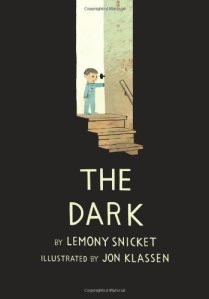
I stumbled upon The Dark browsing picture books on Amazon, and when I saw the cover, with the tiny, fragile image of a child staring hesitantly into the mouth of darkness at the top of an endless flight of stairs  I knew I needed it. It looked exactly like the kind of children’s book I was searching for, heavily illustrated with a dark touch. The cover alludes to a story just dark enough to give a child a bit of a thrill while cuddled up in bed, but not so much that a caring parent can’t then turn out the lights without an internal dread of being awoken by a nightmare induced screaming sprint to the master bedroom and the sleepless night that is sure to follow. Intrigued, I decided to give my old friend Lemony another chance.

The Dark is about a little, pyjama-clad boy named Laszlo, who ‘was’ afraid of the dark.

Note – was.

‘The dark lived in the same house as Laszlo, a big place with a creaky roof, smooth cold windows and several flights of stairs.’

Lazslo seems like a sensible boy. In The Dark, Snickets tells of how he tried to be practical about his fear. Thinking that perhaps if he spoke to the dark, if he visited it in the basement of his house from time to time, perhaps then it wouldn’t bother him. But every night the dark would come out of its room and creep through the rest of the house, and Lazslo was always afraid that it would come and visit him …

‘One night – it did’

The pages of the book take you on a journey with Laszlo through the darkness of his house path is lit only by a triangle of light shining from his flashlight. He follows the voice of the dark, a deep, creaking, rumbling voice, which calls out to him.

Dark3The design of the book is absolutely stunning. Klassen’s illustrations, transposed onto dark blocky pages emphasises the light and dark in Laszlo’s house and make for an amazing visual journey. The illustrations are simple and mysterious, alluding to more while showing the bare minimum. Klassen’s work is beyond stunning and in some ways speaks more volume than the words themselves, take away the text and you still have an epic visionary tale.


‘Never, ever put anything in the text that the child could already tell from the pictures.’ – Judith Kerr


At its heart The Dark is a simple, yet inspired book. The story of a little boy and his somewhat unusual experience which helps him to get over his fear of the dark.

The moral of the story is that there is nothing to be scared of – the dark can’t hurt you.

I absolutely love this book. The story, the language and the illustrations combine to make a really beautiful and impressively unusual children’s book. While it may seem that the book is a little too dark for some children, I think a parent can judge for themselves whether their child will revel in the thrill of a child tiptoeing through a house on a terrifying midnight adventure.  I loved this kind of stuff when I was little, and I know my nephews would lap something like this right up. It also has a great moral to it, which will can easily be used discuss being afraid of the dark with your own little Lazslo, you never know maybe he’ll finally let mummy and daddy have their bed to themselves again.  That said, if your children are particularly sensitive, and likely to be upset by a slightly dark book, you might want to think twice before buying them this one.

I have a friend who is rather into children’s books, so when I had read The Dark I took it round for her to marvel at.

‘I love this book’ she beamed as soon as I pulled it from my bag.

I wasn’t the first one to show it to her. I was gutted. But my disappointment was short lived.

‘You need to read this one’ she said, thrusting another books into my hands.

The book in question was written and illustrated by Jon Klassen. I gave it a read and enjoyed it so much that I have to give it a little mention here.

I Want My Hat Back – Jon Klassen

size500_book_johnklassen_HAT_cover1_500

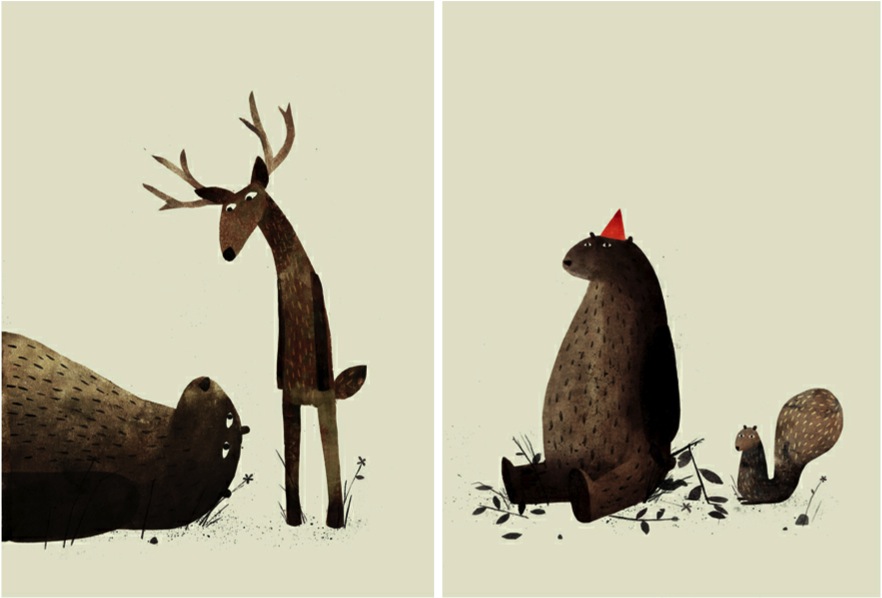
A bear has lost his hat and he wants it back. He travels around asking all of the animals he passes if they have seen his hat, most of them say no, some are outraged to have been asked, one doesn’t know what a hat is, and others have been far too busy to look out for missing hats. The bear feels dejected, he lost his hat and he will never get it back.

Until he realises, that he has seen his hat after all.

I Want My Hat Back is easily one of the most hilarious children’s books I have ever read. I was literally, and I mean literally in its literal sense, doubled over laughing when I read this book. The kind of laughter that brings tears to your eyes and makes you struggle to draw breath. My boyfriend, unamused by the scene I was making in our otherwise empty living room, tutted and I told me to get over myself. I stuffed the book into his arms; he needed to read it for himself. A few moments passed before a loud ‘HA!’ from the other side of the sofa let me know that he approved.
i_want_my_hat_back1

Some people have said they don’t think the book is suitable for children, I think these people need to lighten up a little. The book is great, it’s the perfect example of a children’s book that can actually be appreciated by an adult, without having to be overly long, or complicated. The story is short, simple, brilliantly illustrated, and absolutely hilarious. I challenge any adult to not appreciate the tragic-comic masterpiece that is I Want My Hat Back.

Bravo!

Many thanks to Hachette Children’s Books for sending me a free copy of The Dark for review purposes.

Children’s book review tour! Amber: A Fairy Tale – David Gibson

‘Some day you will be old enough to start reading fairy tales again.’  ― C.S. Lewis

Welcome to the first installment of my children’s books for adults tour. I’m sure you’ll agree there’s no better book to feature first than a good old fashioned fairy tale.

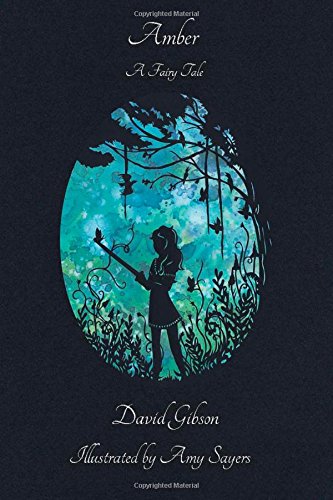
Amber: A Fairy Tale – David Gibson

51mv3R4uHML

‘The Wandering Woods were vast and unimaginable in size. A canopy of ever changing shades of green stretched from the mountains of the cold north to the great river that wound its way far to the south. Trees, strong and proud, stood branch to bark with those that were old and gnarled, covering the land from the ocean in the distant west to disappear into the hazy depths of the fairy mists to the east.’

Amber: A Fairy Tale is the first part of The Wandering Woods series by David Gibson, and was published in November 2014 by Rowanvale Books. Gibson began writing The Wandering Woods series while studying for a degree in English and Creative Writing at Glyndwr University, Wrexham. He originally began The Wandering Woods as bedtime stories for his two young children, drawing inspiration from his daughter’s personality to develop the character of Amber; a character based on his son is due to feature heavily in one of the upcoming instalments in the series.

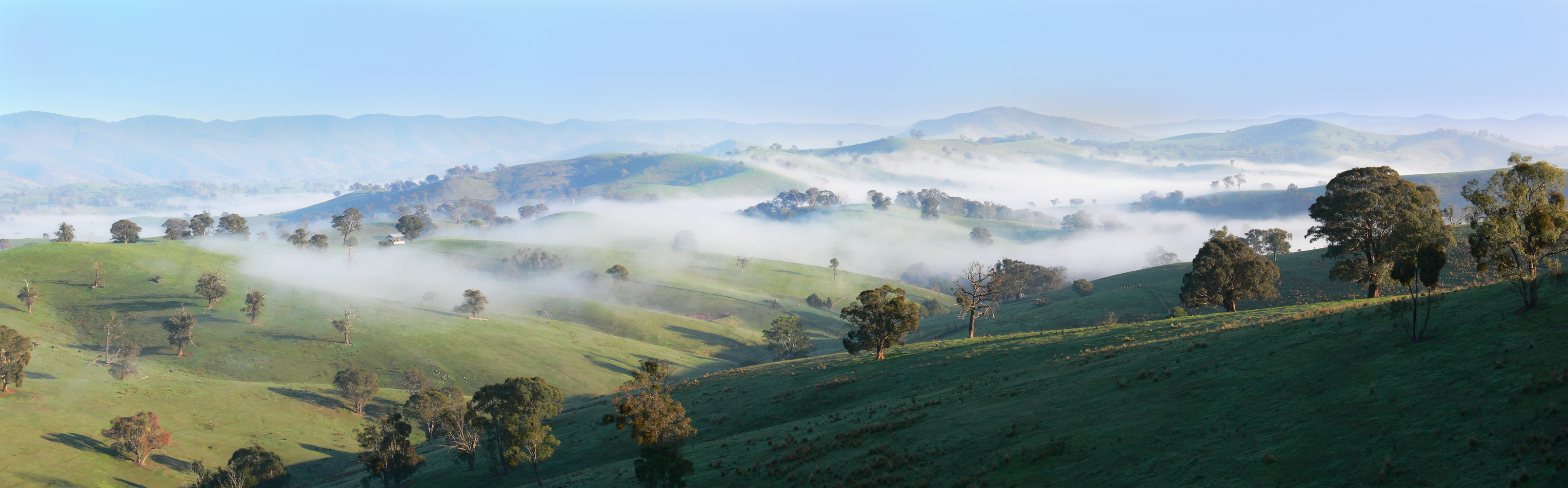
Mist_-_Ensay_region3

Amber is the enchanting tale of a young girl who lives with her mother, the good witch Blossom, in a small house within the sprawling realms of the wandering woods. Amber is a carefree child, first introduced doing battle with an old scarecrow in the quaint garden of her home, carelessly humming along to the tune of a passing finch. All this changes when her mother is suddenly taken ill and Amber quickly discovers the reason behind a ‘special potion’ her mother has to take each day. With her mother’s potion supplies depleted Amber must travel deep into the wandering woods, to seek out the domain of her evil aunt Belladonna in the hope of finding supplies to replenish her mother’s potion stock. The question hangs throughout the tale; will Amber ever return from her quest? And if she does, can she save her mother?


‘If I’m honest I have to tell you I still read fairy-tales and I like them best of all’ – Audrey Hepburn


I would love to say that it is the youngster in me that enjoys fairy tales, but I think the tales appeal just as much to me now as they ever did, and I don’t attribute this to any feeling of childishness. Fairy tales are for everyone, they are in their very nature timeless, and can appeal to the most innocent and wise of minds alike. I so enjoyed reading Amber, and felt compelled afterwards to revisit some of my childhood favourites. I dusted off my old copy of Hans Christian Andersen’s Fairy Tales and spent a few happy hours immersed in its pages once more.

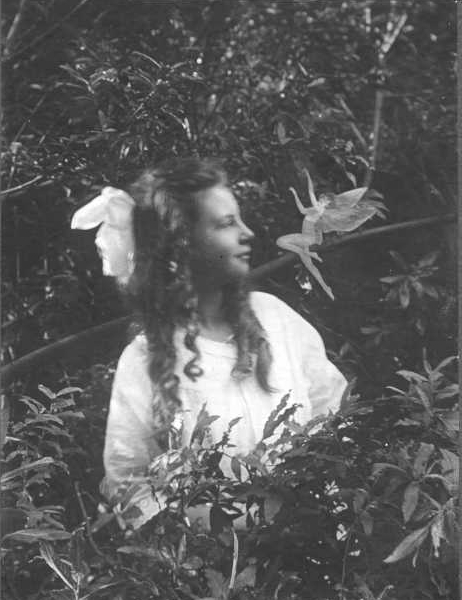
The Wandering Woods are the perfect setting for a fairy tale, a tangled expanse of plant and animal life, buzzing with magic which seems to bring the setting to life. Woods have long been considered to be the dwelling place of fairies, sprites and other mythical creatures. Even the famous Cottingley fairy pictures were taken inside the woods.

CottingleyFairies3

The story which develops out of this setting is intricate and enchanting, reflecting all the characteristics of a traditional, well loved fairy story, although it is rather more child friendly than many of the darker, more sinister traditional tales (I’m looking at you brothers Grimm). Amber embarks on a quest, the innocence of her mind unable to grasp the horror which may await her outside of her mother’s domain. With a determined heart and her trusty wooden sword she sets out on a journey which could well be her last. Along the way, she meets many a friend and foe, and encounters magical settings and creatures which delight and amaze her, as well as darkness so black as to make an ogre quake.

Amber serves as a tale of the battle between good and evil, with the message that there is good to be found in the most unlikely places. Amber’s evil, wicked Aunt Belladonna serves as the image of a character absorbed by darkness, but with a small slither of light still within her. If you look closely, Belladonna is not so unlike a good creature; within her Amber sees ‘a face not unlike [her] mother’s’ but with eyes reflecting ‘only malice’.

Gibson writes with the most beautiful, flowing language, which may at first seem a little too deep for a young child. However, given that it is predominately written as story for parents to read for their children (and Gibson originally wrote the story as a bedtime story for his own children), this does not seem to be a problem at all. In fact, intricate language is a great way to introduce a bigger vocabulary to a young child. As Einstein said ‘If you want your children to be intelligent, read them fairy tales. If you want them to be more intelligent, read them more fairy tales.’ Older fairytales are full of long, flowing passages describing the leaves of a forest or the song of a nightingale and Gibson’s is no different.

Amy Sayer’s artwork adds another wonderful dimension to Gibson’s work, and an important one at that; whoever heard of a children’s book without illustrations? The artwork is truly stunning, and presented in such a way as to still allow for the imagination of a child to run wild. The characteristics of Amber, Blossom and Belladonna are given, and yet only their silhouettes are shown. Children can create their own image of Amber for themselves, while still enjoying the artwork.Amber illustration preview

With Amber, Gibson has created a beautiful tale for parents and children alike, which has in turn been stunningly illustrated by Sayers. The style of illustration is perfect for a fairytale – and the cover has just the right amount of allure. The language is beautiful and poetic, slowing freely from chapter to chapter and drawing the reader deep into the Wandering Woods. I would highly recommend fans of fairy tales give Gibson a chance; you’ll be eagerly anticipating the next instalment.

I was sent a free copy of Amber by the author in exchange for an honest review.


Author Interview – Marion Husband

I am delighted to be able to share with you my exclusive interview with Marion Husband, author of Now the Day is Over.

Having read the book and gushed about it to all my friends (click here to see my review), I was over the moon to get the opportunity to learn a little more about the woman behind the words.


About the author

unnamedMarion Husband is a prize-winning author of poetry, short stories and novels, including the best-selling trilogy The Boy I Love, All the Beauty of the Sun and Paper Moon. She has an MA in Creative Writing and has taught creative writing for many years for the Open University and has lectured on Creative Writing MA courses in Newcastle and Teesside Universities. Marion is married with two grown up children and lives in Norton in the Tees Valley. Her sixth novel, Now the Day is Over, was published in October 2014.


To start with can you tell us a little bit about your most recent book, Now the Day is Over?

Now the Day is Over is a ghost story set between the present day and 1920. Unusually for me, this novel is told by one person – Edwina, a ghost. She is omnipresent – knows everything about everybody: an eye-of-god narrator, just the type of narrator I would discourage my creative writing students from using – too experimental, too liable to go wrong for all the questions the style begs: how does she know? Is she making up stories or telling the truth? But I did want to experiment with this novel, to toss it all up in the air. Now the Day is Over is also a love story, but is also about guilt, grief and suspicion. Edwina – the ghost – was a nurse during the First World War. She haunts the present-day house of Gaye and David (the house was once hers) and tells the story of their unhappy marriage, gradually telling her own story, too.

Where did your inspiration come from to write a book like this?

My inspiration for Now the Day is Over was the First World War and how men and woman survived the war’s aftermath. But I’m also inspired by places: the Victorian houses I grew up in; my home town of Stockton with all its cemeteries and parks and churches, its High Street and backstreets. Inspiration is a nebulous thing, I think; for me it comes mainly from what I’ve just written, whether the character is becoming interesting or not. I have given up on other novels because I’ve failed to convince myself that the characters are entertaining enough to keep me writing.

And what about Edwina? Can you give us an insider insight into your main character?

Edwina, the ghost, is mad: she was maddened by her childhood, by the war and by her marriage, but mainly by her brother who was also maddened by his childhood and his experiences in the trenches. Edwina never truly grew up – her mother’s death when Edwina was five petrified her – she remained that frightened child even as she nursed seriously wounded and dying men during the war. The reader has to decide if Edwina is mad or bad, a liar – a story-teller – or someone with special powers of mindreading…But then, she is a ghost and I have invented my own version of what ghosts can and cannot do.

How much research went into Now the Day is over? Does research play a large part in your writing process?

I researched Now the Day is Over by reading diaries and autobiographies of 1st World War nurses. I read many, many books about the war itself, including novels and poetry – research is about knowing your subject, looking things up when you have to. There are facts you must get right, the rest is interpretation.

Who is your intended audience for this book?

My audience? – everyone (although I know my own audience is largely women and gay men) – those men and women who read a lot, so much in fact to have come across someone as obscure as me. My honest answer re who my audience is? Me. I write to entertain myself.

The cover of the book is an interesting one. Who designed your cover? Why did you choose this particular image?

9781908381811-frontcover (2)The cover was designed by me – I wanted a picture of an angel standing over a grave in an over-grown cemetery – the kind of cemetery I played in as a child where there was an angel just like the one depicted – it would scare my brothers and me to death. The image came out as rather more glossy than I would have liked…Covers are problematic in my experience.
Do you have any interesting or fun facts about your most recent book you would be willing to share with us?

An interesting fact about the book – Edwina was originally Edward – my agent told me to change the sex as he thought I shouldn’t write another novel about gay men…


Edwina started out as Edward! I let that fact bounce around in my head for a little bit before moving on to some more general questions about Marion as a writer.


Which writers inspire you?

Writers who inspire me: Julian Barnes; Pat Barker; George Orwell (very much so); Sarah Waters; Hilary Mantel (the best living writer); Margaret Atwood; Philip K Dick. Too many to mention, really.

How long on average does it take you to write a book?

It takes me less than a year to write a novel – sometimes only three months. But afterwards there are the months and months of rewriting and despair.

How do you deal with the dreaded writer’s block?

I have writers’ block now – no ideas, no inspiration, nowt. I am not dealing with it now, but I used to deal with it simply by writing. I used to think there was no such thing as a block, but I was young then and on a roll…

What would you say is your interesting writing quirk?

If I have a writing quirk it’s trying too hard to be playful (a contradiction in terms?) I like flourishes and embellishments, allowing one thought to lead to another – a stream of consciousness, which is what Edwina’s narrative is, I think. I hope I won’t put off anyone reading Now the Day by saying this – I’m very definitely not James Joyce; I just like messing around with ways of describing a thing or conveying an emotion.

As a reviewer, I’ve noticed reviews tend to be a bit of a mixed bag, and often authors are less than happy to hear about potential problems in their work. What are your feelings towards good and bad reviews?

Good reviews buck me up for a few hours; bad reviews confirm all my own thoughts about my writing. On balance, though, it’s a bit like Kipling said – good or bad – Triumph or Disaster – both are imposters and for me they tend to cancel each other out.

What advice would you give to aspiring writers?

To aspiring writers I would say write a lot – a very great deal – write and write and write. But also read – read more than you write and soak it all up. I would say that you can only get good at something if you practice for many, many hours, but you also need feedback from a trusted source…In essence, write grammatically correct sentences and make sure your syntax is elegant, interesting and strong. Go easy on adjectives and adverbs; make sure the verb fits the action.

And finally, how can readers discover more about you and you work?

Discover more about my work on amazon, where all my books are for sale and where there are reviews and synopsis. Also I have a website – http://www.marionhusband.com, but it doesn’t always work properly, like me, and so I have a Goodreads Author page where all my blogs are. I also twitter links to blogs and reviews: @marionhusband.


Marion’s Latest book Now the Day is Over is available to buy direct from the publisher, Sacristy Press, or from Amazon for those outside of the UK. If this interview has piqued your interest be sure to check her out, you won’t be disappointed. I have another of her books sitting waiting on my bedside table, so there will be more to come from me too. Watch this space!

Many thanks to Marion for taking the time to talk with me.

Comic Relief 2015: The Queen’s Orang-Utan by David Walliams

Any of you literary types looking to make a donation to Comic Relief?

Hilarious new children’s book The Queen’s Orang-utan was written exclusively for Comic Relief 2015 by David Walliams.

David will be giving all of his proceeds from the book to the charity. The illustrator, Tony Ross, will waive his royalties and HarperCollins UK will also donate all profits from the publishing of the book – at least £3 from each copy sold will go to Comic Relief.

The Queen’s Orang-Utan – David Walliams

The-Queens-OrangutanFrom Number One bestselling picture book duo, David Walliams and Tony Ross, comes this spectacularly funny story for children of 3 and up.

A bored queen.

A birthday wish.

An outrageous orang-utan.

Everything’s about to go bananas!

Available to buy from Amazon and direct from HarperCollins.

Praise for David Walliams

“TV star David Walliams is as adept at writing for the under-fives as for older children.” – Daily Express

“No one has any business being as talented as David Walliams. He is one of the few comic actors who is actually funny, and is now the genius writer of ridiculously over-the-top and utterly delightful children’s books…” – Spectator

“I absolutely love David Walliams’s books. In a few more years they will become classics.” – Sue Townsend, author of Adrian Mole

“A new Roald Dahl” – The Times

Tales of terror – Ghosts of Cambridge

Cambridge is renowned for its rich history, and as a historic seat of learning; it seems only natural then that the city would also be teeming with myths, legends and tales of ghostly sightings of long dead professors who still stalk the college halls.

Christ’s College

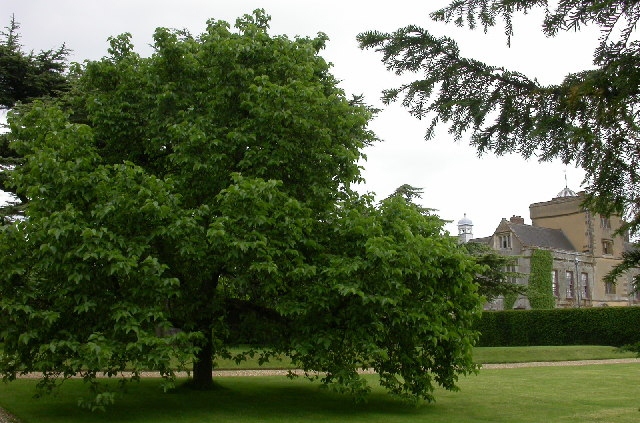
Christ’s college was founded by Lady Margaret Beaufort in 1505, and is renowned for educating some of Cambridge’s most famous figures, including Charles Darwin and John Milton. With such a rich history it is hardly surprising that the college has its fair share of ghosts. One such spectre haunts a mulberry tree which stands in the college gardens. Mr Round, as he is affectionately known, is said to visit the college on nights of the full moon. He appears as a tall, elderly gentleman wearing a beaver hat. It is rumoured that in life Mr Round murdered the only doctor with the skills to save his dying girlfriend. Now his ghost stalks the area around the mulberry tree in deep regret.

mulberry tree (3)

Corpus Christi College

Historically Corpus Christi College is notable as the only college in Cambridge founded by Cambridge townspeople; nowadays it is, unfortunately, perhaps best known for the Corpus Clock. The clock is an odd device, which could be considered both hypnotic, and deeply disturbing – I am more inclined to lean towards the latter.

The college is also said to be the lurking place of the ghost of Dr Butts, who was found hanging by his garters in his room on Easter Sunday 1632. The image of Dr Butts is described as being dressed in white, and having a distinctive dark mark on his throat – evidence of his suicide.

Corpus_Christi_College,_Cambridge_-_New_Court,_looking_North-East (2)

Peterhouse

Peterhouse is the oldest of the Cambridge Colleges, founded in 1284 by Hugo de Balsham, Bishop of Ely. The college is said to be the stalking place of the ghost of Francis Dawes, a former bursar of the college who hanged himself in the 18th century after an election scandal. Dawes took his life near the Combination Room, and is now said to prowl the area. It is said that a series of knocks can be heard before his spirit appears.

IMG_0059 (2)

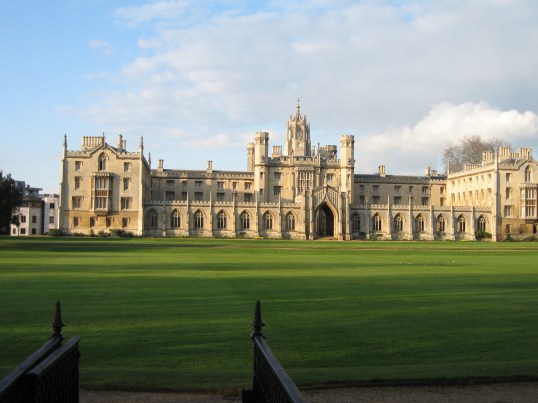
St John’s College

St John’s College was founded in 1511 by Lady Margaret Beaufort, the mother of King Henry VII. The college is said to be the home of one of the more unusual of the college ghosts. On several occasions in the 1990s the spectre of a large, black cat was spotted, lurking the in the college grounds. Sightings of the creature were reported by both a college caretaker and the groundsman.

St_John's_College,_Cambridge,_2008-03-31_(1)

Gog Magog Downs

The Gog Magog Downs are a series of low chalky hills running along the south-eastern side of Cambridgeshire. The downs are now considered to be a place of great natural beauty, with many people coming from the surrounding areas to walk through the woods and meadows. It was rumoured in the distant past that these hills were home to a phantom monkey, which could be seen darting through the undergrowth. I myself am a great fan of the Gog Magog Downs; I love to go on afternoon walks there. But I find the idea of a ghost monkey to be somewhat terrifying, inadvertently shuddering with horror each time I read over the legend.Gog magog (2)

The Fitzwilliam Museum

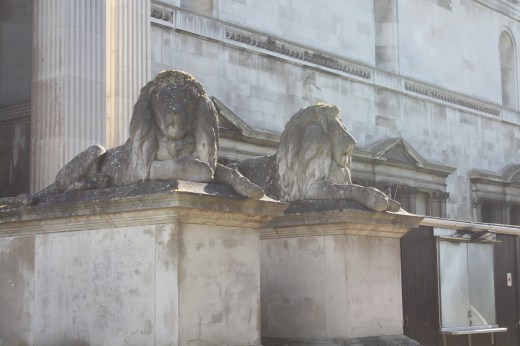
The Fitzwilliam Museum is the art and antiquities museum of the University of Cambridge, located on Trumpington Street in the heart of the city centre. It is an outstanding building to look at, made up of spectacular columns, mosaic floors and intricate decorated ceilings, and guarded by four majestic stone lions. It is said that should you be on Trumpington Street at the stroke of midnight you could bear witness to the great stone lions rising up from their guard posts at either side of the museums grand entrance, and making their way into the street, where they can be seen to briefly stop to drink from the guttering at the side of the road, before turning and proceeding back to their posts.

IMG_0052 (3)

Newmarket Road

Newmarket Road is an unremarkable part of Cambridge, which is none the less said to be haunted by one of the city’s most remarkable ghosts. The image of a furry, waddling penguin has often been spotted in this area. In recent years, a local paranormal group have suggested that the ghost may be that of a doctor in a cloak, wearing a beak-like plague mask – but that’s hardly very exciting is it?book_about_plague_doctor_by_mizusasori-d3exvda

Arbury road

Arbury road is located on the northern side of Cambridge city centre. Legend has it that this residential street is home to an unlucky shuck – a giant, spectral dog. It is said that any person unfortunate enough to gaze upon its prowling form will be cursed with a spell of bad luck.

nz51dad623

Special thanks for this post go to our resident office ghost Johannes.

Wordless Wednesday

Red Squirrel reading a Jeremy Clarkson book © Susan Squirrel, 2011, Flikr

Why should kids have all the fun? Seven children’s books for adults

Sometimes I feel a little jealous of children.

I won’t lie, when I look at my nephews playing with toy cars and Lego I am overcome with the desire sit down and play with them. Not just to entertain them, but to really play with them, to refuse to share and snatch toys just like they do.

Oh, that I were so carefree!

Children’s books are another thing which fill me with envy. Not the books themselves mind, but the way they are created. I love the bright colours, blocky pictures, pup up pages and liftable flaps – why can’t I have them?

So to quench my increasing desire I’ve been on a little expedition to find children’s book which can be appreciated by adults, and some which are especially made for adults but adopt traditional children’s themes.

From Monday 16th March I will share with you my thoughts on seven amazing books which I’ve found, or been sent, as part of my research.

And to whet your appetite a little, here’s what you can expect:

Amber: A Fairy Tale – David Gibson

51mv3R4uHML

The Dark – Lemony Snicket

41raAIbxWJL

Griffin and Sabine: An Extraordinary Correspondance – Nick Bantock

381102

Monstrous Affections: An Anthology of Beastly Tales – Kelly Link and Gavin J. Grant

20697444

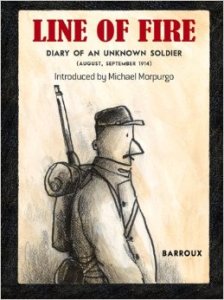
Line of Fire: Diary of an Unknown Soldier – Barroux and Sarah Ardizzone

51QTsd1WFBL._SY344_BO1,204,203,200_

Unspoken: A Story from the Underground Railroad – Henry Cole

unspoken_111-495x436

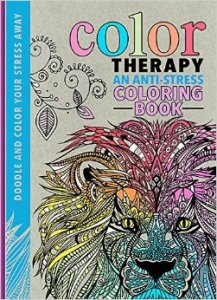
Color Therapy: An Anti-Stress Coloring Book – Cindy Wilde, Laura-Kate Chapman and Richard Merritt

61GoYvLOMHL._SY344_BO1,204,203,200_

Excited? I know I am!

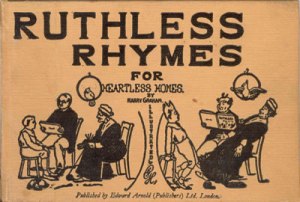
Ruthless Rhymes for Heartless Homes – Harry Graham

I was rummaging through some old books this weekend and I came across my Grandparents’ old copy of Ruthless Rhymes for Heartless Homes by Col. D. Streamer (Harry Graham).

Have you heard of it? If not, you’re about to. As part of my Obscure Poetry journey I thought I’d share some of my favourite rhymes with you.

Ruthless Rhymes1 (1)

But first, a little background. Ruthless Rhymes for Heartless Homes was published in 1898 and is full of delightfully cruel little rhymes, which are to the point and completely without moral.

The book was described in an editorial by the Times as embodying a world where ‘there are no values nor standards of conduct or feeling, and where the plainest sense is the plainest nonsense.’

Now, on with the rhymes. Enjoy!

Impetuous Samuel
Sam had spirits naught could check,
And to-day, at breakfast, he
Broke his baby sister’s neck,
So he shan’t have jam for tea!

The Stern Parent
Father heard his Children scream,
So he threw them in the stream,
Saying, as he drowned the third,
“Children should be seen, not heard!”

Nb I once read this poem (The Stern Parent) as part of my primary school’s Christmas production. My choice. I don’t think the teachers approved.

Nurse’s Mistake
Nurse, who peppered baby’s face
(She mistook it for a muffin),
Held her tongue and kept her place,
“Laying low and sayin’ nuffin’”;
Mother, seeing baby blinded,
Said, “Oh, nurse, how absent-minded!”

The Fond Father
Of Baby I was very fond,
She’d won her father’s heart;
So, when she fell into the pond,
It gave me quite a start.

Misfortunes Never Come Singly
Making toast at the fireside,
Nurse fell in the grate and died;
And, what makes it ten times worse,
All the toast was burned with nurse.

I remember often reading these as a child, and pretending to find them funny to impress the adults, while all the while puzzling over why having jam taken away was a punishment.

As an adult I’m able to appreciate how bluntly hilarious and ahead of their time they are.

Oh, one more thing, the illustrations are great!

graham-quiet-fun

International Women’s Day – I am Malala

Happy International Women’s Day! Have you read I am Malala? If not, I strongly suggest that you do so.

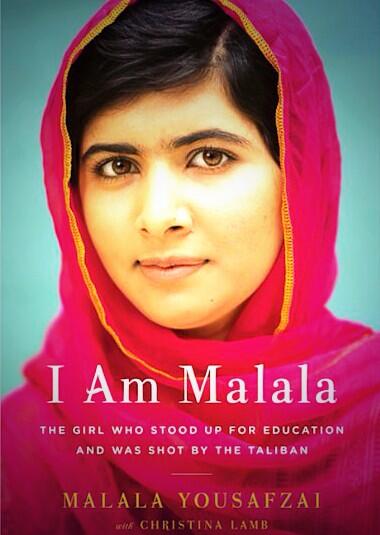
I am Malala – Malala Yousafzai and Christina Lamb

malala

‘Who is Malala?’

These were the words spoken by young bearded man, in light coloured clothing, to a bus full of school girls on 9 October 2012.

‘No one said anything but several of the girls looked at me. I was the only girl with my face not covered.’

‘Don’t worry,’ she had said to her friends. ‘The Taliban have never come for a small girl.’

‘Who is Malala?’

These were the words spoken by the young bearded man, in light coloured clothing, before he lifted up a black pistol and fired three shots, one after the other, into the crowded school bus.

‘Who is Malala?’ Malala Yousafzai writes in the prologue to her inspiring life story. ‘I am Malala, and this is my story. 

When the Taliban took control of her home in the Swat Valley in Pakistan, Malala Yousafzai spoke out. I am Malala is the moving tale of how she fought for her right, and the right for every girl, to go to school, and came close to paying the ultimate price.

‘One year ago I left my home for school and never returned’ she begins.

In I am Malala, Malala takes the reader on an inspiring journey beginning with her happy childhood among the sweet fig trees and twittering birds in her village, in the time before the Taliban took control, when she was just a little girl, growing under the protective gaze of her adoring father.

The events which took place of 9 October 2012 changed Malala’s life forever, and has taken her on a journey half way across the world, to speak in the presence of the world’s most influential people, as she continues her fight for universal education and the empowerment of ‘the girl child’.

Malala’s story is inspiring, as well as moving and terribly tragic, as she writes of her despair at being away from the country that she loves, she is no longer at home in her beloved Pakistan, and she doesn’t know if she will ever return. Each morning when she awakes it is to the tall buildings of the Birmingham skyline.

Written in plain, moving English, I Am Malala, will take you on an extraordinary journey, move you to tears, and make you believe in the power of a single voice to inspire change in the world.

“Never in the field of human conflict was so much owed by so many to so few.” ― Winston S. Churchill

I’m feeling thoughtful today, so it seems like a good time to share my latest piece of Obscure Poetry.

This piece was published in a young writers’ poetry book by a friend of mine back in primary school. She spoke to me after reading my own poem, refreshingly over-the-moon by the fact that we were both young poets, and told me all about hers. ‘It’s a rhyming piece told from the perspective of a dead WWII soldier’ she said – ok, if I wasn’t already interested I most certainly was after hearing this. I needed to see the poem.

It didn’t take long I got my grubby mits on it, and she was even kind enough to let me share it here:

Watching

I watch the millions of crosses in a row
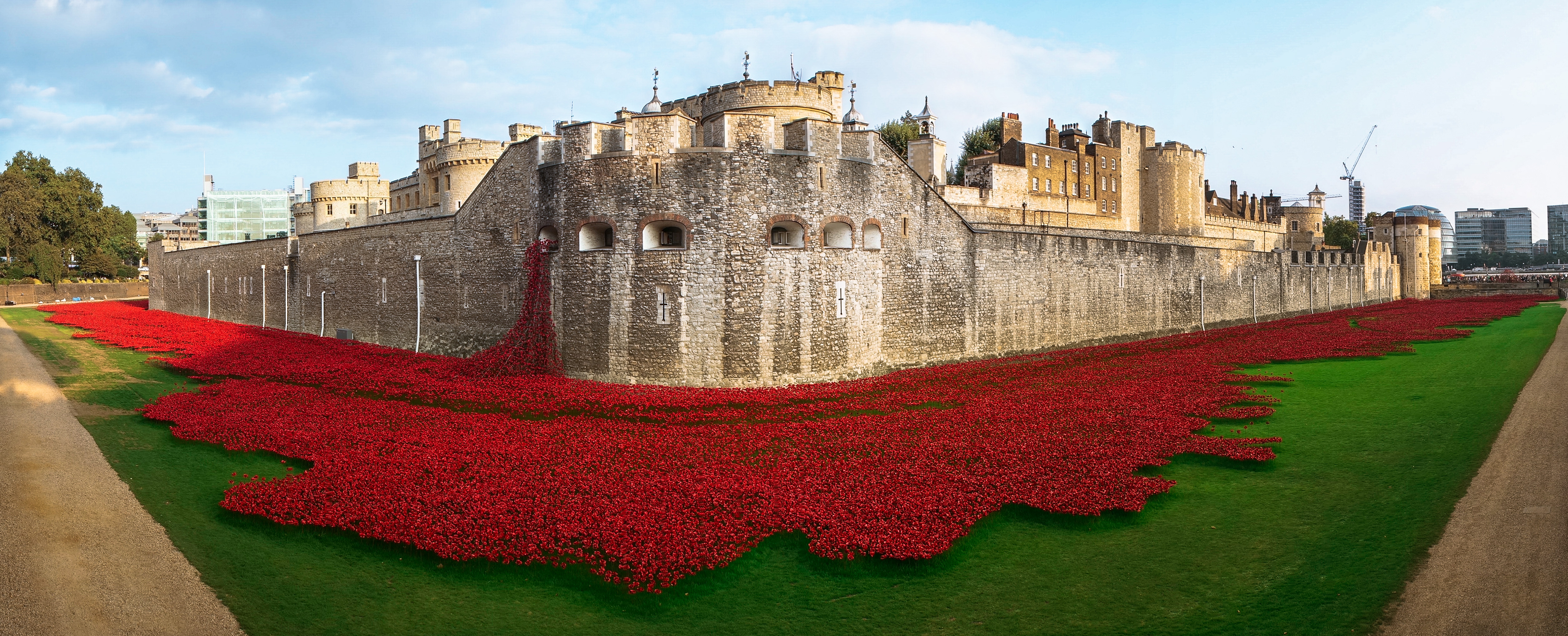
I watch the bright red poppies, in Flanders’ Fields’ grow
I watch the people lay their wreaths with a sigh
I watch, and as they salute I start to cry

I see the crumbling stonework carved with names
I know that terrible war is the one to blame
I hear the gunshots ringing through my ears
Their bitter sound has brought so many to tears

I watch the un-marked grave, it pains my heart
As I think of those men it tears my soul apart
Those soldiers were my friends brave, happy, kind
And as I watch that grave from heaven, I know it’s mine.

She doesn’t seem to think much of her poetic younger self. I, however, am quite fond of this little poem. It’s poignant, sombre, and really quite moving, and, indeed, made all the more so more so by how young she was when she wrote it.

May I remind you that my poem was about a cat. I am suitably humbled.

Tower_of_London_Poppy