“Every man at the bottom of his heart believes that he is a born detective.” – John Buchan

I’m fairly sure I said I will ‘try’ and upload one review a day. This one’s only 11 days late!

The Thirty-Nine Steps ― John Buchan

buchan-thirty-nine-steps-bookcover

John Buchan published this little novel in 1915. The newest edition has been published as part of Penguin’s Great Books for Boys collection, and it really is a great book for boys. On a side note, I actually came across this hidden on my partner’s book shelf, a lovingly inscribed present from his grandfather.

I have heard elsewhere that everyone has an inner adventurer that will love books such as this. While this may be true for some, I think it is misleading to say everyone loves an adventure. If you do however, this is the book for you.

The Thirty-Nine Steps is set four weeks before the commencement of World War I. The story is that of Richard Hannay and his unlikely entanglement in a German plot to steal secrets from the British military. The story begins with Hannay lamenting on how boring life has become, and wondering if leaving the country would award him a more exciting life. This all changes when Hannay meets for the first time his upstairs neighbour.

The neighbour, Scudder, confesses to Hannay that he is in grave danger and in desperate need of a place to hide. Scudder is a US spy with knowledge of an assassination attempt, due to take place on June 15th, which if successful will ravage Europe. Hannay believes Scudder and decided to help him out. However, when the very next day Hannay arrives home to find scudder himself has been murdered, he realises just how much trouble he is landed himself in. With both the police and the killers after him, Hannay decides to go on the run until the assassination is due to take place, with the hope of stopping murder before it’s too late.

Hannay is chased through England to the harsh Scottish wilderness, pursued by a mysterious aeroplane, as well as the London police. The novel follows Hannay through exciting chase scenes and incredibly narrow escapes, all while Hannay tries crack the code in Scudder’s diary – the key discovering where and when the assassination will occur. Hannay discovers the kindness of strangers who prove invaluable to his journey. An adventure loving reader will be kept engrossed by the mystery of “the thirty-nine steps”, Hannay must discover the meaning of this riddle in a race against time.

While this book isn’t necessarily the sort of thing I would normally choose to read, I did actually quite enjoy it. Although I do feel it’s more of a boy’s book – I think it would make a fantastic gift for a young boy who loves to read.  I won’t spoil the ending; nothing ruins an adventure like a spoiler.

One of the things I particularly enjoyed about this book was the attention to detail Buchan used when describing scenes and people. I love the way Hannay can go from looking like a fine upstanding gentleman, to a dishevelled traveller, to a weathered road worker, and back again while all the time his image is kept meticulously clear in your mind.

I cannot stress enough that this is definitely a book for adventure lovers, and I feel it may also be appropriate for those with an interest in World War I.  Having been set around the time of the war itself it may be interesting to examine the novel in relation to history. Buchan is said to perfectly capture the feel of the time period.
“Even bad books are books and therefore sacred” – Günter Grass

My journey into the really obscure

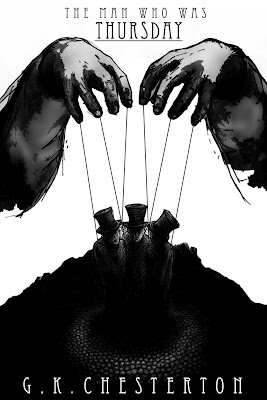
The Man Who Was Thursday ― G K Chesterton

Image

One of the best reviews I have read of this book was very short:

‘Boy, this was really good until it wasn’t at all anymore’

That almost sums it up for me I’m afraid. Needless to say I was horribly disappointed by this book. I did not begin reading with any sort of expectations, I had never heard of G K Chesterton before, and was just taken in by the unusual title more than anything. I found this little book on the shelf of a charity shop and decided to give it a go.

I really enjoyed the book at first. I like the style in which it is written, it remind me almost a bit of P.G Wodehouse. It’s a pleasure to read, and full of wonderful, intricate little descriptions. One is simultaneously drawn into the depth of the story, and laughing out loud at the ridiculousness of it.

I feel it necessary to give you a brief overview.

It begins with two poets arguing in a park in London as to whether poetry is more akin to law or anarchy. One Poet, Gregory, claim to be an anarchist, the other, Syme, does not believe Gregory can possibly be so. Later that night Gregory takes Syme to his secret anarchist meeting place, after swearing him to secrecy.

The anarchist lair exists underground, below a public house, and has wall lines with firearms. Gregory confides in Syme that the anarchist council is run by seven men, each taking their name from a day of the week. Gregory feels he is about to take the place of the recently deceased Thursday. At this point, right before the Gregory’s fellow anarchists enter the room, Syme drops a bombshell and tell Gregory that he is in fact an undercover policeman. That was it, Chesterton had my complete attention.

When the other anarchists enter the room, they hold a vote, and as predicted Gregory is selected as the candidate to replace Thursday, and asked to say a few words. Gregory, worried by Syme’s presence, changes his tune and tries to trick Syme into believing that anarchists are not dangerous at all. Upon which time Syme adopts the disguise of a true anarchist, and finds himself -quite hilariously- elected the new Thursday.

What follows is a terrifying journey for Syme, who soon finds himself surrounded by the other six leaders of the anarchist council. Including the terrifying Sunday:

‘They might have called Sunday the super-man. If any such creature be conceivable, he looked, indeed, somewhat like it, with his earth-shaking abstraction, as of a stone statue walking’

Without going into too great detail, in the proceeding chapters Syme discovers little by little that the other leaders -all except Sunday- are all in fact members of the same secret police service as himself. Having all been recruited by the same mysterious man in a dark room. Despite all being terrified of Sunday, the group decide to confront him, and find out exactly who he is, and what his plans are.

The meeting takes place on a balcony, and when confronted Sunday merely says: ‘There’s one thing I’ll tell you though about who I am. I am the man in the dark room, who made you all policemen’ before leaping from the balcony and escaping into London. The ensuing chase is absolutely fantastic, with Sunday absconding first via handsome cab, then on a stolen elephant and finally in a hot air balloon.

The six friends continue their pursuit in vain, exhausted, bedraggled and covered in their own blood, and begin discussing their views on Sunday. It now comes to light that each man’s thoughts, though almost completely different to the next, have one thing in common, they all view Sunday as the universe.

At this point in the story I realised it wasn’t going to be the ridiculous ending I had hoped for – although I’m not entirely sure what exactly I was hoping for.

The group are eventually picked up by an employee of Sunday’s, who packs them each into their own private carriages and takes them off to Sunday’s house (it gets stranger). Once at the house they are each given a bed chamber, and a change of clothes for the fancy dress party (but of course!). Each man has a costume that corresponds to their day of the week  in the creation story, with Thursday suitably decorated in the sun, the moon and the stars. There were seven thrones present at the fancy dress party -which was further attended by an assortment of forest type creatures, all dancing round a giant bonfire- each would-be anarchist has his own throne, with Sunday sitting in the middle throne, dressed as if made out of light itself.

I’m everyone can work out where this is going. Sunday, is God. Of course! Of course Sunday is God! Why on earth wouldn’t Sunday be God? It completely ruins what was otherwise quite an interesting, quirky little book, that’s why. It also turns out that Gregory (remember him?), represents evil. To top everything off, the book ends with the fancy dress party fading out of sight, and Syme finding himself walking along a country lane with Gregory at his side.

I find it quite difficult to describe to you my disappointment, in everything, and especially in the ‘he woke up and it was all a dream’ esque final paragraph.

Upon doing a bit of research of Chesteron after finishing this it turns out he liked to write about Christian theology, in ALL his novels. So needless to say I won’t be picking up one of his books if I pass it in a charity shop again. I don’t think I can claim to have fully understood exactly what Chesterton was getting at when he wrote this, that God is a terrifying joker perhaps?

As I said at the beginning, I think this book is best summed up by ‘Boy, this was really good until it wasn’t at all anymore’. I won’t say I didn’t enjoy it at all, but any enjoyment I felt was completely ruined by the ending.

Overall I think the book would have been a hell of a lot better is Chesterton wasn’t obviously so terribly keen on being Christian.

Apologies and promises.

It’s been a crazy few weeks, or months. I’m not sure which. There has been so little time for blogging, but I have still been writing reviews… I just struggle to remember to type them up and upload them. 

I’ll try and upload one a day for the next few days and get myself back on track.

Expect reasonably mediocre things!

“I love walking into a bookstore. It’s like all my friends are sitting on shelves, waving their pages at me.” ― Tahereh Mafi

Having recently moved out of student housing, I’ve suddenly found myself with a whole house in which to store my things. I always thought I had an impressive book collection, but after having bought three bookcases (expertly assembled by myself and Katie), and somehow acquired a forth, our books were looking a little lost. To fix this problem Katie and I have taken up frequenting Cambridge’s second hand book shops.

Image

I’m quite impressed with the collection we have going. I’ve taken to picking up leather bound books by authors unfamiliar to me.

Image

It makes me really happy to see an inscription inside an old second hand book – like it has a story all of it’s own. I couldn’t resist buying the above book ‘an essay on comedy’ by George Meredith as well as four other books by the same author. The idea that George gave these lovely little books as a gift and they somehow ended up in Oxfam made me feel a bit sad, and while I know that the George in the inscription is not the same George that wrote the books (the latter being long dead by 1926), I still feel better knowing they have a nice bookshelf to sit on again.

Is this a hearty welcome, or a Hardy welcome?

Blogging seems to be all the rage these days, so I’ve decided to jump on board the band wagon. After all, who doesn’t enjoy talking about themselves? I’m not so vain as to think many people will be particularly interested in my chattering away about nothing though – I do think blogs are more interesting when they are about something, rather than everything. My ‘something’ will be the books I read. I like to read, but I am by no means a connoisseur of fine literature. I will blog about the books I feel like reading, rather than reading books purely for the sake of blogging about them, so I’m terribly sorry if my reviews are grossly behind the time and irrelevant. Furthermore I refuse to rate anything out of ten, the idea that all my thoughts and emotions relating to a book can be summed up in such a small scale is, frankly, ridiculous.

So on to the first book of many.

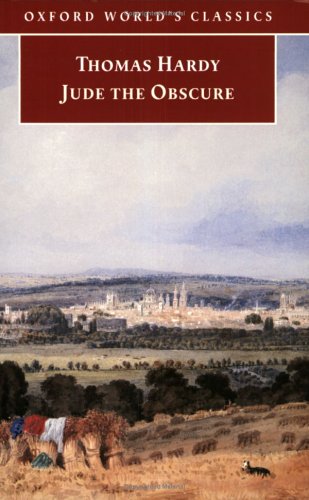
Jude the Obscure – Thomas Hardy

Jude The ObscureI will admit that I have never really given Hardy the time of day before now ― due to a very bad experience of far too many hours spent listening to the audio book of ‘Return of the Native’ read by Alan Rickman, thanks to the incompetence of my sixth form English literature teacher. A friend of mine recently read Jude and told me it was “the most depressing book ever” naturally I was intrigued so thought I would give Hardy a second chance – I’m glad I did, although I can’t really say I enjoyed reading it.

I have never come across a character in my reading quite as unlucky as Jude Fawley, and that is to put it lightly. Poor Jude has from a young age, dreamt of travelling to the nearby town of Christminster and pursuing the life on an academic, but Hardy places so many road blocks along the way that Jude’s journey seems doomed to fail. Hardy goes far beyond making Jude’s character merely unfortunate, gifting to him a life filled with little other than misery and pain.  The chronicle of Jude’s life seems to me so depressing that it becomes almost completely farcical. While I am fully aware that Jude’s life is one to be pitied, I find myself more inclined to have a laugh at his expense, as his life gets ever more ridiculous.

For those of you who haven’t had the pleasure of reading this book I will elaborate.  Jude has a very humble background, and was raised for the most part by his elderly Aunt, a bitter, cynical old lady, who tried in vain to convince Jude that the Fawley family are not meant for marriage.  Despite this Jude is quickly trapped by local girl Arabella, who tricks him into marriage, which seemingly makes Jude’s dreams of becoming a scholar a distant memory. However, when the marriage inevitably falls apart and Arabella leaves the country it seems almost possible that Jude may have a second chance at happiness. I was too easily fooled by this first part of the book, Hardy continually lays these traps, luring the reader into thinking that things could be ok for Jude after all.

Eventually Jude does find himself in Christminster and once again has high hopes of somehow securing a place in the colleges; however he is inevitably rejected by all the institutions, and somehow find the time to fall hopelessly in love with his cousin Susan Brideshead in the process, whom of course he cannot marry being already wed to another. In true Jude style, Arabella asks for a divorce, just in time for Sue to get married. When Sue finally decides she wants to be with Jude and asks to be released from her marriage it seems just a bit too good to be true.

Of course it really would be asking too much for Jude to have any sort of luck, and so he soon finds out he has a son from his first marriage. Refusing to let this dampen their spirits the couple decide to raise the child – known as ‘Little Father Time’- as their own. This inevitably leads to their being shunned by society for living together out of wedlock. Jude and Sue decide to leave the area completely, in order to avoid the gossip.

When Jude and Sue return to Christminster a few years later, after pretending to tie the knot, and having a further two children of their own they find things little improved and are continually turned away from lodgings. Noticing the tension in the air Little Father Time speaks with Sue and quickly gathers that his parents are suffering because they have children, he then throws a tantrum and promises to never forgive Sue upon finding out that there is another child on the way. The next morning Jude and Sue find all three children hanging dead in their bedroom, Little Father Time having killed both his younger siblings and then himself – leaving behind the note ‘because we were too menny’. The devastation of losing her children leads Sue to lose the baby she is carrying. Sue then leaves Jude, returning to her first husband, as she feels that the death of her children was a punishment for her having done wrong in her first marriage.

Alone and miserable Jude is somehow once again tricked into marrying Arabella. By this stages Jude’s health is declining rapidly, he soon becomes bed ridden and is of little interest to Arabella. When Jude inevitably dies, he is on his own, pleading for a glass of water. Once discovered by Arabella the death is temporarily covered up, so as to not inconvenience Arabella’s social plans. Jude’s funeral is a dismal event, of which Sue does not attend.

My thoughts upon finishing this book are mixed. I am satisfied that what started out as an incredibly depressing story did not somehow end up having a fantastical and unbelievable happy ending. However as I have said before the extent to which Hardy attempts to make the story one of woe does seem to go a bit too far. The idea that any one person could be quite as unlucky as Jude Fawley does make me laugh (Hardy ha ha), it seems so detached from reality.  I also found myself really disliking most of the characters, which I feel in some ways made the book more enjoyable. Sue is the most annoying creature I have ever experienced. Sue’s character has moments of such fantastic clarity and insight, expressing her thoughts so brilliantly, but for every one of these there are at least a dozen irritating sessions in which she is seen to cry, continually change her point of view and attitude, and ultimately behave like a complete swine to her husband Mr Phillotson –who is in turn annoyingly accepting and far too nice for his own good. Jude’s character is not only unlucky, but also so intolerably needy, and so incredibly weak willed (what sort of a man gets tricked into a marriage, twice?!). Despite being quite an unpleasant character, it seems to me that the only one of group with an ounce of strength in her is Arabella, she is manipulative and cruel, but ultimately she gets what she wants, and is the only person who ends up being anything close to happy.