“Travel makes one modest. You see what a tiny place you occupy in the world.” ― Gustave Flaubert

A man of the world

Glimpses of a Global Life ― Shridath Ramphal

Glimpses of a Global Life

Shridath ‘Sonny’ Ramphal was born in 1928 in New Amsterdam, British Guiana, to an Indo-Guyanese family. Having been educated at King’s College London, and later at Harvard Law School, Ramphal went on to live a decidedly ‘global’ life.

In his memoirs, Glimpses of a Global Life, Ramphal tells of his experiences working within international institutions, framing his place within the bigger picture of global politics. The book was released in November following a launch party at Marlborough House, the headquarters of the Commonwealth Secretariat and one of London’s best-known stately homes.

Among his acknowledgements, Ramphal speaks of his reluctance to write a set of memoirs, having been asked, somewhat insistently, by multiple friends and relatives, when his memoirs would emerge. He defines multiple reasons for not having written until now, one of these being that his story had not yet ended. His mind was changed over Christmas in 2011, the time of ‘resolutions’, he says, when he felt that it was not just the time, but his duty to begin writing.

Ramphal begins, somewhat unusually for a memoir, 100 years before his birth, with the abolition of slavery. But it was a key time because it formed the roots of Ramphal’s beginnings within British Guiana, a country built on the trade. The first section, ‘Beginnings’, in fact serves as less of a memoir and more of a depiction of the foundations that supported Ramphal’s life. Ramphal traces the history of the abolition of slavery, painting an extraordinary picture of his family’s life in Guiana.

He speaks of his interest in the voyage of women across the Kala Pani under the Indian indenture system and, in particular, the book Maharani’s Misery: Narratives of a Passage from India to the Caribbean, by Professor Verene Shepherd. It was a journey that his own great grandmother took, and a story which could easily have been her own. He begins the book in this way because the events helped to shape his life: “I am a child of all I have narrated,” he says.

There are eight parts to Ramphal’s memoirs, each of which could serve as a volume in its own right, every one covering an important era of Ramphal’s life. From his humble beginnings in British Guiana, Ramphal rose to become Foreign Minister of an independent Guyana, from 1972 to 1975, and later was the second Commonwealth Secretary-General, from 1975 to 1990.

One of the most moving sections of the book is that dedicated to the period of Apartheid in South Africa, described by Ramphal as “the most cruel legacy of slavery”. Ramphal recounts the importance of the Commonwealth community, and himself, in ending this legacy and helping to ensure that “the light of Apartheid’s end was faintly glowing” by the finish of his final tenure as Commonwealth Secretary-General. He speaks at length of the events leading up to the release of Nelson Mandela, whose freedom embodied that of black South Africa. In a chapter dedicated to Mandela’s freedom, Ramphal recounts his own words, emphasising the significance of Mandela’s release to the future of South Africa: “The human spirit survives in South Africa in many ways… But most of all, its survival is symbolised in the person of Nelson Mandela.”

The end of Ramphal’s time as Commonwealth Secretary-General was by no means the end of his story. He went on to become Chancellor of the Universities of Guyana, Warwick and West Indies, and served as the chair of the West Indian Commission. He was also recommended several times for the position of Secretary-General of the United Nations. In the final sections of his memoirs, Ramphal writes further of the ‘honours and intrigue’ inferred upon him, and how he was awarded honorary degrees from 28 universities and made an honorary fellow of another four.

Ramphal ends his memoirs, somewhat fittingly, with a story summing up his relationship with Nelson Mandela. In 1996 Ramphal had the pleasure of conferring upon Mandela an honorary degree from the University of Warwick. The graduation ceremony was a tremendous event held at Buckingham Palace and attended by eight top universities, but it is Warwick, and indeed Ramphal, that are said to have ‘stolen the show’ when Ramphal’s offer of a handshake was dismissed in favour of a familial embrace.

Glimpses of a Global Life is a truly fascinating look into the life of a key figure within the Commonwealth of Nations, serving not only as a memoir, but as a recollection of serious global issues spanning several decades. All this is presented in the form of a worldwide show, in which Ramphal stands centre stage, alongside a whole host of the world’s most prominent figures in international politics.

This review was first published in Global: the international briefing. Many thanks to Hansib for supplying a free review copy of the book.

“All glory comes from daring to begin.” ― Ruskin Bond

Throwback Thursday.

I don’t normally opt into the whole #TBT thing, but this just seemed to perfect to pass up!

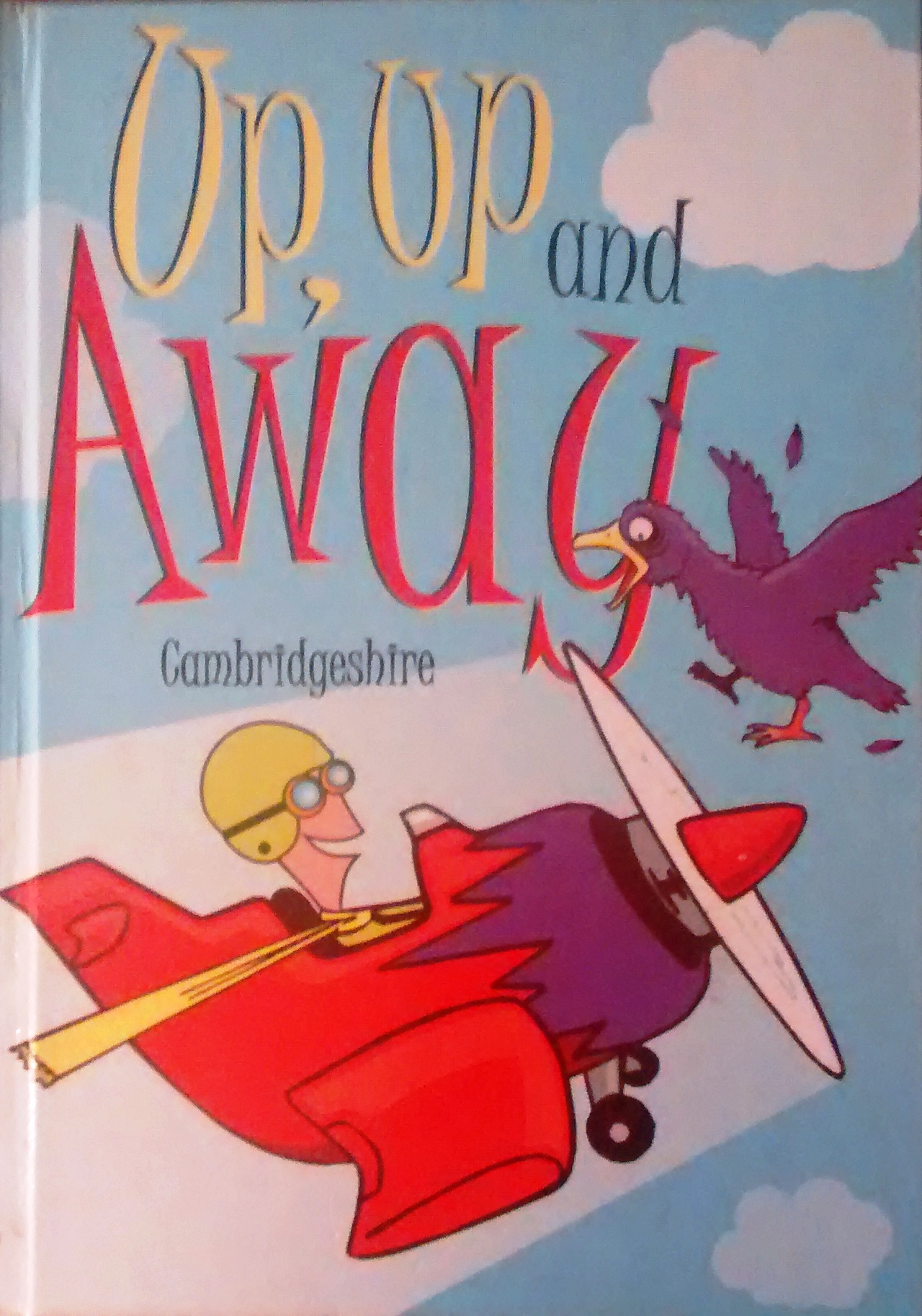
I recently came across an old book while unpacking one of the many forgotten boxes of my belongings which occupy our storage room.

IMG_20150114_201257497

Those of you who live in East Anglia might be familiar with this little gem. This book was published by the group Young Writers, an organisation which runs competitions at primary schools for children to submit poetry and the like. The lucky winners have their work published in a book which is available to buy direct from the organisation.

This edition, from 2000, which no doubt once had pride of place on my parents’ book shelf, includes a poem written by me at the tender age of ten.

Warning: Contains scenes which some may find distressing.

The Prince of Darkness
Black cat snoozing in the sunlight,
You are the prince of darkness,
Coat like charcoal as black as night.
Your eyes are like two red hot embers,
Shining in the darkness.
Your call is like a lion’s roar echoing in
My mind.
You flick your tail to and fro to warn
Off unwanted predators.
Your teeth are like sharpened rows of
Sharpened daggers, sinking into the
Innocent flesh of poor helpless mice.
You prowl the forest all night long
Searching for your midnight snack.

Ominous isn’t it? I especially like the repetition of the word ‘sharpened’, it really emphasises the sharpness of that cat’s teeth.

“Reflect upon your present blessings ― of which every man has many ― not on your past misfortunes, of which all men have some.” ― Charles Dickens

Christmas is a time for reflection

As we come to the close of 2014 I am faced with the realisation that I have let a few things slip over the last 12 months. I started the year with so many good intentions as to books I would read and things I would get done, and although I have accomplished a lot this year, there are certain books I have really wanted to read which I have let pile up and gather dust. And so, as part of my end of year reflections I am going to give you a short review of three books I read this month, after realising I had put off the task, if indeed you can call it a task, for far too long.

The Thurber Carnival – James Thurber 

the-thurber-carnival

The first book is one my beloved bought me for Valentine’s Day this year; I know a lot of thought went into choosing a book he knew I would enjoy. So this month I spent a few days curled up in bed with Mr Thurber and indulged myself in his musings, and what an experience it was.

As Thurber writes in the preface:

‘This book contains a selection of the stories and drawings the old boy did in his prime, a period which extended roughly from the year Lindbergh flew the Atlantic to the day coffee was rationed.  He presents this to his readers with his sincere best wishes for a happy new world.’

If you have yet to read any James Thurber I cannot recommend him highly enough. The Thurber Carnival is an eclectic mix of short stories, essays, biographical snapshots, poems and anecdotes which give you a little bit of everything. As a first time reader you may find yourself laughing out loud at his work, while at the same time suffering slight confusion as to what exactly is happening – in this way Thurber’s work is full of unexpected and not entirely understandable surprises.

The book was put together by the author himself, adapted from some of his most colourful work, almost all of which was originally published in the New Yorker. Some of the better known parts of the book include ‘The Secret Life of Walter Mitty’ which was recently adapted on the big screen, but even the lesser known anecdotal sentences speak volumes about Thurber’s work. Each piece within the volume, down to the smallest of cartoons is worthy of publication.catslikemice

Here is one of my favourite snippets from ‘The Owl in the Attic’, in which the author offers advice in the form of questions and answers from pet owners:

Q. We have cats the way most people have mice. – Mrs C.L Footloose.

A. I see you have. I can’t tell from your communication, however, whether you wish advice or are just boasting.

I also really enjoyed Thurber’s selection of fables which carry somewhat unusual morals. I think my favourite, and it was a difficult choice as they are all hilarious, was ‘The Very Proper Gander’, in which a goose who is very fond of singing to his family was accused of being a dangerous bird capable of spreading propaganda by a nosey hen and subsequently forced to flee his home. This tale carried with it the insightful moral ‘Anybody who you or your wife thinks is going to overthrow the government by violence must be driven out of the country’.

I spent many an afternoon doubled up laughing at Thurber’s anecdotes from ‘My Life and hard times’ including such gems as ‘The Night the Bed Fell’ and ‘The Night the Ghost got in’, in fact I spent many an afternoon laughing at just about everything.

The Thurber Carnival serves as a fantastic amalgamation of the very best of Thurber’s insights and observations, effortlessly presented and bound with a mix of effortless humour and the correct balance of subtle and obvious eccentricities. While highlighting Thurber’s much deserved reputation as a truly great humourist and storyteller, the book simultaneously unleashes upon the reader his second role as a truly profound thinker, philosopher and anthropologist. It has been a while since a book has made me laugh, and think, in quite this way. This collection has something for everyone, if the writing is a little out of your reach; you’re bound to appreciate the illustrations at the very least.

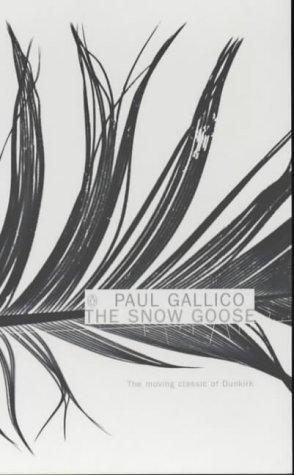
The Snow Goose – Paul Gallico
529241

The second book was recommended by a man whose presence in my life was all too short, and this month sadly marks one year since he passed. Michael was a truly inspirational man, and I have many fond memories of the time I got to know him. He recommended that I read The Snow Goose on one of the last occasions I ever saw him and I am somewhat ashamed to say the book has been sitting by my bed ever since.

Set against the backdrop of World War II, The Snow Goose documents the touching, if somewhat unusual, friendship between Philip Rhayader, a disfigured artist living a solitary life a lighthouse in the Essex marshlands and a young local girl named Fritha. The unlikely friendship is born out of Fritha’s discovery of a snow goose, miles from its Canadian homeland and wounded by a gunshot.

The tale of the friendship between this unlikely pair is truly moving, and reminded me, in some respects, of the story of the Hunchback of Notre Dame. Rhayader is a beautiful soul who is so misunderstood given his outward appearance, but whose kindness emerges in his care those close to him. The story is so captivating that you will be forgiven for shedding a tear, as I did, with the outcome of the story.

Rhayader assists in the British retreat from Dunkirk, and succeeds in rescuing hundreds of men. The snow goose accompanies him constantly, flying circles around the fishing boat, a shining beacon of hope in the grey skies above the stormy channel, becoming somewhat of an omen to the men in Dunkirk.

When the snow goose returns briefly to the lighthouse, alone, Fritha sees it as vision of Rhayder’s soul coming to bid her farewell. It is at this point that the girl comes to realise that she loved her friend, and he her. When, shortly after, the lighthouse is lost to a German bomber plane, the only thing which remains of Rhayader’s artwork is a painting of Fritha as a young child, with the injured snow goose in her arms. This ending of this short piece is remarkably powerful, and the image of the painting, the one remaining piece of a life now lost, is something which will remain with me for a long time.

The Snow Goose is a simple, eloquently written, yet powerful tale of the power of friendship and love, which is in equal parts beautiful and devastating.

The Young Visters – Daisy Ashford.

h3817

The final book I have chosen is very dear to me. I was first given this book to read by my grandmother as a child, under the knowledge that it was written by a little girl. Unfortunately the knowledge of the book fell somewhere into the back of my mind, and when my grandparent passed away I realised I had forgotten the title. With no one to ask the book was lost to me somewhere within the household clutter that results from many lives well lived. I recently decided to try and find the name of the book and was surprised to find how simple the task was, such are the wonders of the internet. I treated myself to a lovely little second had edition and it seemed natural that this would make it into my Christmas list.

The Young Visiters was written by Daisy Ashford at the remarkable age of nine, and was discovered many years later in a notebook hidden amongst her mother’s possessions. The book was published in a completely unedited state, save for having the single block of text which makes up each chapter divided into paragraphs for readability. Needless to say, the book is truly extraordinary, as J M Barrie writes in his preface to the work: ‘It seems to me to be a remarkable work for a child, remarkable even in its length and completeness, for when children turn author they usually stop in the middle, like the kitten when it jumps.’

There is so much I could say about The Young Visiters; such is my love for this charmingly childish tale. Since rediscovering the work I have recommended it to so many, and have bought it as a Christmas gift for others. It makes a beautiful addition to any collection, and reading it is an experience I can guarantee you will enjoy.

I remember enjoying the book when I first read it, but reading it as an adult has afforded me a whole new appreciation of Ashford’s writing. When I was first given the book by my grandmother she interrogated me almost immediately, asking me if I had noticed anything funny about the book. I remember referring to the sentence ‘Then he sat down and eat the egg which Ethel had so kindly laid for him.’ I will confess does still afford a little chuckle from me, but I noticed so much more about the little girl’s writing this time round, the main thing being her fantastic perception of people and society. J M Barrie writes in his preface that had the author paid a visit to your house ‘I am sure that when you left your bedroom this child stole in, examined everything and summed you up.’ She has a certain way with words, expressing a character with all of the subtlety of a child: ‘My own room is next the bath room said Bernard it is decerated dark red as I have somber tastes.’ Can you think of any better way to sum up ones personality?

There is something so refreshing in reading something written by one so young, who has such a great understanding of life. The heroine in the story Ethel is forever powdering her face with ‘ruge’ for fear that she appears too pale and sickly, an ongoing theme in novels of the time, as stated most eloquently by Ethel : ‘I am very pale owing to the drains in this house’. It is an ongoing these in early 20th century literature that women are almost like china dolls, and liable to break at any moment, which one can pick up quite easily from reading a Jane Austen novel. God forbid a girl gets caught in the rain she is likely to have to stay in bed for the whole summer. Perhaps my favourite snippet from the book in this respect is when Ethel is so overcome with happiness that she faints. The gentleman she is with, Bernard, is very concerned that she is gravely ill, but the matter is soon resolved: ‘Oh no I am very strong said Ethel I fainted from joy she added to explain matters.’

I could delve further into the story, but really, I don’t feel there is any need. I don’t feel anyone is better equipped to tell the tale than the ‘smug’ – as J M Barrie refers to her – little nine-year-old who wrote it.  I would highly recommend this book to just about anyone who enjoys reading. Buy it, read it, and pass it on, you won’t regret it.

“The future depends on what you do today.” ― Mahatma Gandhi

Actions speak louder than words

Deeds Not Words ― Katharine D’Souza

deedsnotwords

Katharine D’Souza has lived much of her life in and around Birmingham. She specialises in writing contemporary fiction, in the form of novels, and the occasional short story, with a realistic edge. Her characters, who, like herself, all herald from Birmingham, encounter real life situations and problems. ‘It’s perhaps unsurprising that my stories are set in Birmingham,’ she says, ‘but I hope the themes are universal’. To date D’souza has released two novels, the second of which, Deeds not Words, was published in December 2013.


Deeds not Words follows the story of museum curator Caroline, who has returned to her hometown following the breakdown of her marriage. Now, middle aged and alone, Caroline is stagnating, and feels herself become more and more unfased by her work and social life. As the fledgling member of a competitive office Caroline struggles to make her voice heard, and outside of work she bears the brunt of being the only one of her parents’ children living close to home. So when Caroline accidentally stumbles upon information alluding to a side of her family she never knew existed she cannot resist the urge to indulge her passion for the past and delve a little further into her family history. In doing this she is all at once given the once given the opportunity, and the motivation, she needs to create something from her life. But is she willing to take the risk?

I was pleasantly surprised by this novel. When I started reading it, despite the fact it is about a museum curator, I had no idea it would have the historical aspect that it did. Those of you who read my blog often will know of my soft spot for historical fiction – while I don’t think this book quite falls within these realms, there is a definite a historical aspect to it, which I love. The historian within Caroline is reawakened in researching her family history when she discovers her ‘great aunt Susannah’, an inspirational lady who was heavily involved in the women’s suffrage movement in Birmingham. Caroline’s research takes the reader on a historical journey back to a time when the women’s suffrage movement was in full swing – while D’Souza has been clear that the book is a work of fiction the message conveyed remains the same.

It is Caroline’s grandmother, Beth,  who first sets in motion Caroline’s desire to uncover her family history when she speaks to Caroline about wanting to do what is right, and put an end to a feud which has been hanging over the family for years. Her grandmother’s words are vague and confusing, however, and Caroline has to take matters into her own hands to realise the root of the feud, and ultimately her grandmother’s true wishes. Caroline makes up her mind to take action and bring the family back together, and in so doing finds herself up against some serious barriers in the form of her incredibly stubborn mother. Reading about the relationship Caroline has with her mother is actually quite painful, and I’m sure an empathetic reader would feel more than a little sympathy for Caroline. In deciding to strive to reform her family after so many years, Caroline effectively risks marring her relationship with her mother – a difficult decision, but ultimately a clear one.

While reading this book I felt I grew to know Caroline intimately, and was able to witness first hand as she in turn grew to know Susannah. It is easy to imagine Caroline sitting down to filter through her great aunt’s old possessions and to picture her captivation upon visiting her old art college and walking the same paths as she had so many years before. Caroline’s journey occurs as a result of Susannah’s actions so many years before, the knowledge of Susannah’s passion and commitment to her cause is what gives Caroline the motivation she needs to succeed:

‘In Susannah’s footsteps, the simple act of asking for something, stating a demand, had brought her a long way.’

I thoroughly enjoyed travelling with Caroline as her research uncovered the parts of Susannah and the suffragettes which were still hidden in Birmingham, such as the oil painting left hanging in her family’s old factory:

‘It was all there the suffragette’s colours of pure white, hopeful green and dignified purple all present in the scenery around the edge of the picture. The splashes of colour surrounded the factory building and that female figure opening the gate as though she owned the factory made a fine punchline.’

While D’souza has been clear that Deeds not Words is purely a work of fiction, the suffragettes were of course only too real, and it is interesting to consider that there could still be such messages hidden within direct sight so many years after the suffragettes demand of ‘votes for women’ has been realised.

I was pleasantly surprised that this novel didn’t turn out to be yet another love story. In fact, this was made all the more rewarding in D’Souza decision to peter dangerously close to becoming just this, before stealing the show back right at the very end. Caroline is only human, and while it is to be expected that she would be not entirely adverse to the advances of an attractive man, I feel this would have given the book entirely the wrong message. The choice D’Souza made with regards to Caroline’s love life was, I feel, entirely the right one.

Overall, I found Deeds Not Words to be a very satisfying read. D’Souza has a unique take on historical fiction which is juxtaposed with the contemporary banality of middle-aged city life. The story itself is enthralling because it is entirely believable, especially given the current obsession with the trend for people to tracing their family histories. The book also has something to say about life choices and the idea of making your mark upon the world, a message which may leave the reader contemplating their decisions long after the final chapter has concluded.

Many thanks to Katharine D’Souza for supplying me with a free review copy of her book.

“I am solitary as grass. What is it I miss? Shall I ever find it, whatever it is?” ― Sylvia Plath

The plight of a female office worker.

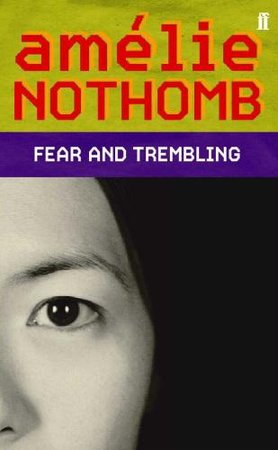
Fear and Trembling – Amélie Nothomb

FearAndTrembling

The business environment in Japan is decidedly male dominated. Unlike many western countries gender stereotypes in the country still tend to dictate that a woman’s place is within the home. Given this, many women who work in office will do so temporarily, as more of a stop gap before marriage rather than a proper career. A quick internet search will bring up multiple accounts of Japanese women having graduated from top universities merely to end up serving refreshments in a male dominated office. Such is the challenge faced Amélie Nothomb’s main character, also named Amélie, in her hard hitting novel Fear and Trembling. 

Amelie is an interesting character, having been born in Japan she moved to Europe with her family at a young age and was raised and educated in Belgium. Fear and Trembling introduces the reader to Amélie at the beginning of her working life, having just finished university she returns to her place of birth to pursue a career which she hopes will begin the offices of the Yumimoto Corporation.

A quick look into the past of Amélie Nothomb enlightens the reader to the fact she is the same Amélie whose story Fear and Trembling tells. Nothomb is Belgian by nationality, was born in Japan, speaks fluent Japanese and returned to Japan following her degree to work as an interpreter in a large Japanese company. In an interview with Paris-Match in 1999, Nothomb was recorded to have said ‘I invented nothing! …I just changed the names. It all happened to me as described.’ Nothomb presents the reader with a no nonsense semi-autobiographical satire on the plights of both the female employee and the westerner working in a Japanese office. Nothomb is critical of the Japanese corporate lifestyle, describing with great detail the soul destroying nature of life as a white collar worker in Japan.

Amélie struggles significantly, being very much stamped down by her superiors. To begin with Amélie is very naive and believes she has a good relationship with her superior Fubuki Mori. She becomes slightly infatuated with Fubuki, whose name translates as snowstorm, leading Amélie to romantically fantasise about Fubuki being born in a snowstorm. Amélie’s difficulties arise when she attempts to climb the ladder too soon, much to Fubuki’s disgust. Amélie makes the mistake of writing an article for Mr Tenshi, head of the dairy products division of Yumimoto. Fubuki responds by reporting the act to Mr Omochi, presenting both Amélie and Mr Tenshi as traitors, and ultimately ruining any chance Amélie has at being promoted. Mr Tenshi explains Fubuki’s reasoning to Amélie:

‘Miss Mori struggled for years to get the job she has now. She probably found it unbearable for you to get that sort of promotion after being with the company only ten weeks… All I can say is that she suffered greatly during the first few years she was here.’

This is then further drummed in by Fubuki herself:

‘I’m twenty-nine years old. You’re twenty-two. I’ve been in this position since last year. I fought for it for years. Did you think that you were going to get a comparable job within a matter of weeks?’

This whole exchange highlights the struggles that women face when coming into a male dominated workplace. Fubuki struggled for years to become recognised in the workplace, and because of this she makes sure that Amélie suffers the same fate.

Trust is of key importance in the Japanese corporate culture, and, in fitting with the vile time had by Amélie at the hands of her superiors, there is little to no trust given to her; due to her constant blunders Amélie well and truly loses all trust within the workplace. Following on from failing her tasks of filing and accounting the policy held by her superiors is ‘something along the lines of: “don’t let her do anything anymore.”‘ In the case of Amélie, her superiors do not trust her, and this is largely due to the fact that Fubuki continually gives her tasks that she knows she cannot complete. Amélie more than proved herself as capable when she wrote a report on fat reduced butter; however, Fubuki gives her tasks in accounting that she knows are beyond Amélie’s capabilities. This seems to be largely due to Fubuki’s resentment once again at having struggled for her position for so long. As another female in the office Fubuki is threatened by Amélie, and as such wants to make her life difficult. She does this at least partly by ensuring that Amélie loses all trust.

Amélie resists the urge to leave the Yumimoto Corporation although aware it would be the most logical thing for her to do, while this may seems puzzling to a reader, it is summed up rather eloquently by Amelie when she describes the Japanese trait of maintaining ‘face’ despite everything:

‘To western eyes, there would have been nothing ignominious to this; to Japanese eyes, it meant losing face… leaving after so short a time would have brought disgrace on me – in their eyes as well as in my own.’

When it comes to other members of the Yumimoto Corporation, the only person the reader is aware of ‘losing face’ is Fubuki – a situation Amélie herself compares to witnessing a rape . Comparing the loss of face with rape in this way highlights the plight of the career woman in a male dominated office; Nothomb further accentuates this point, comparing Fubuki’s pleas of ‘Don’t be angry’ to that of a slaughtered gazelle beneath a lion.

Staying late in the office to complete a deadline is very common amongst white collar workers in Japan. However it is presented in a very different light within Fear and Trembling; Amélie stays for days in the office in an attempt to finish the work Fubuki has set her:

‘Three days before the end of the month, I announced my decision not to go home in the evenings. “With your permission, I will spend the night here, at my desk.”…I got her permission without difficulty. It was not unusual for employees to stay at the office all night when deadlines were looming.’

This brings me nicely onto my next point, throughout the novel Nothomb highlights the susceptibility of Japanese white collar workers to nervous breakdowns. This is never more evident than at the time Amélie stays late. Alone in the office and having not slept properly for days Amélie ends up throwing caution to the wind, and strips naked before jumping from desk to desk and finally holding Fubuki’s computer to her naked body. Although not every office worker who suffers from workplace stress in Japan would necessarily behave in the way Amélie did, Nothombs tale nonetheless highlights the extreme pressure under which many Japanese office workers are put. In her own thoughts main character Amélie describes accountants as ‘victims sacrificed on the altar of a divinity wholly bereft of either greatness or mystery.’

Nearing the end of the novel Amélie has clearly become totally disillusioned by the corporate lifestyle; having been driven mad by the accounting tasks assigned to her by Fubuki, and ridiculed to the greatest extent possible, in her demotion to rest room attendant the reader is made more and more aware of Amélie’s thoughts while she stares out of the bay window in the woman’s restroom on the forty-forth floor. In the text Amélie makes it clear she will not divulge information about her private life, however, she speaks constantly of the time she spent gazing out of the ladies restroom window:

‘I spent hours standing before it, pressing my forehead against the glass, imagining again and again throwing myself into the view, letting the feeling permeate my body until I was giddy’

It is almost as if Amélie uses this as a method of escaping the office, imagining herself falling, plummeting through the Tokyo skyline. As if while staring out of the window she could completely forget all that was going on around her, and become absorbed by the view until she was giddy and work did not matter anymore.

Fear and Trembling ends with Amélie resignation from the Yumimoto Corporation to pursue life as a novelist. When tendering her resignation to Fubuki, Amélie declares that ‘Ancient Japanese protocol stipulated that the emperor be addressed with “fear and trembling”… so I put on the mask of terror and started to tremble. I looked into Fubuki’s eyes.’ The only person who shows any sort of humanity towards Amélie when she is resigning is the man Amélie refers to as ‘God’ – Mr Haneda, the president of the Yumimoto Corporation. Presumably because he has worked his way up the corporate ladder to the highest position in the company he understands the plights of those starting out at the bottom. Mr. Haneda is honest with Amélie, not allowing her to take the blame for her resignation:

‘You have been unlucky. You came at the wrong moment. You’re right to leave, but please remember that if someday you change your mind, you would be most welcome to return.’

Amélie leaves the corporation knowing that the business woman lifestyle is not for her, that she does not want to deal with the routine stresses of day in day out office life and working through promotions no one will congratulate her on. Upon leaving Yumimoto Amélie tells the reader that she started to write a novel, which was subsequently published a year later. The novel ends with Amélie informing the reader of a letter she received from Fubuki prior to the publishing of her first novel, saying simply ‘congratulations’. Nothomb describes the letter as bringing Amélie ‘Great happiness’. The reader is aware throughout the novel of Amélie’s respect for Fubuki, and her sadness that they could not be friends. Nothomb describes in great detail throughout the novel the struggles of the female office worker, in both Fubuki and Amélie, and the fact that their lives crossed in such a way that they could not be friends. The corporate lifestyle of a female office worker is too competitive, there is too much to fight for, too much at stake. The fact that Amélie received a letter congratulating her on her success as a novelist brought her great happiness because she respected Fubuki, seeing and understanding from a westerner’s perspective the reasons that Fubuki and she had the relationship that they did. A sign that Fubuki was happy that she had achieved something would naturally be something that Amélie held close to her heart. It is as though Fubuki was able to congratulate Amélie, because they were no longer on the same path.

Overall I really enjoyed reading Fear and Trembling. Amélie’s somewhat tragic story highlights the challenges faced by women, as well as westerners, coming into the Japanese world of work as a minority. I have no doubt that the empathetic reader will feel sympathy towards Amélie’s situation. Despite her best efforts, Amélie was completely unable to fit in with her colleagues. However, this in itself may be seen as a blessing in disguise as Amelie was able to find her place in life elsewhere.

“You can love someone so much…But you can never love people as much as you can miss them.” ― John Green

Love and tragedy

Spare change – Bette Lee Crosby

12845372

Heralding from the southern United States, Bette Lee Crosby fell in love with fiction at a very early age. For Crosby, the step towards becoming a writer was an obvious one. ‘Storytelling is my blood,’ she says, and describes her mother as a ‘captivating storyteller.’ She recounts using bits and pieces of her southern mother’s voice in almost all of her writing, a trait for which she is well known and much admired. Crosby first entered the international publishing scene in 2006 when she received the National League of American Pen Women Award for one of her unpublished manuscripts. Since her debut novel, Cracks in the Sidewalk, was released in 2009, she has gone on to publish six further novels, including USA Today bestseller Spare Change in 2011.


In Spare Change Crosby exceptionally executes the multi strand narrative, telling the tale of two very distinct characters, whose storylines unexpectedly become one. Olivia Ann Westerly has her life well and truly figured out, stubborn and superstitious to the very core, she hates opals, loathes the number 11 and sees children as a weight that crushes a woman’s soul. That’s why, despite being well into her thirties, she continues to dismiss any proposals of marriage. Her life is simple, until she meets Charlie Doyle, a man with blue eyes and a lopsided smile which finally captures her heart. When Olivia allows herself to become absorbed by her love, ignoring the bad omen brought by the unexpected gifting of an opal necklace, her honeymoon period ends abruptly and with devastating results. Leaving her once more alone, with none of the independence she once so coveted. Meanwhile Ethan Allan Doyle has been born into an underprivileged home, to an abusive father, and a mother with dreams of running away to New York City to pursue a music career. Having grown up in a less than conventional household with a mother and father with their fair share of secrets, Ethan Allen knows better than to go shooting his mouth off. As a result, when he bears witness to a gruesome incident, which leaves both his parents dead, he knows he needs to run before the man responsible catches up to him. Lost and without a hope in the world, Olivia and Ethan Allen’s lives may seem miles apart, but they are about to get to know each other a whole lot better.

This was my first experience of reading Crosby’s work, and I have to say that I was not disappointed. I really appreciated the southern flair in her style. The language is second to none and gives a real twist to the text. I found myself inadvertently reading pretty much the entire book with a southern accent. The use of the southern dialect sets the perfect scene for the book, and it’s not just the speech which has this amazing southern feel, the whole book reads like a passage of speech from the Grapes of Wrath:

‘The year Ethan Allen became eleven was when things between Benjamin and Susanna turned rancid as a week old pork chop.’

I challenge anyone to get through the whole novel without inadvertently donning an internal Scarlet O’Hara-esque persona on at least one occasion. Just try and say the words ‘leastwise’ or ‘elsewise’ with anything other than a southern drawl, I’m sure it can’t be done. This aspect of Crosby’s work is something for which she is well known and liked, and it’s evident from reading the book just why this is.

Crosby’s narrative is interlaced with passages of italicised text which serve as the internal monologues of some of the main characters. These short passages allow the reader an insight into the inner thoughts and workings of the characters. I found these openings to be the place where the most of the language came out, especially with Ethan Allen, whose character was less likely to have lengthy passages of speech within the storyline itself. From his expressions and thoughts I developed a very clear image of the boy in my mind – street wise, small, dirty, and foul mouthed. I can imagine him as being a bit of a Huckleberry Finn type character. Olivia’s monologue also lent me a clear view of her personality, her written word painted such a clear picture that I felt as though I could reach out and touch her. She seems to be quite the quintessential southern belle: much sought after, but never captured.

The individual stories of Ethan Allen and Olivia are sure to tug on the heart strings of all that read them. Both characters have such tragic stories; blessed by love, but plagued by loss. The relationship between Ethan Allen and his mother may be unconventional, but it uniquely charming and adorable in its own way. His evident despair and anger at having lost his mother is truly heart-breaking. Meanwhile, Olivia’s relationship with Charlie is nothing short of perfect from the very start, but is so much shorter than anyone could ever expect. The brutality the situation is overwhelming, and is epitomised in the words that Olivia uses to describe her grief:

‘The bits and pieces of Charlie are like a bouquet of roses. I look at them and see a world of sweetness and beauty, but when I try to hold onto them the thorns rip me to pieces.’

It is the tragedy of each character’s past which makes the unexpected relationship which blossoms between the two of them all the more rewarding.

Another aspect of the book, I would like to go into is the past that Ethan Allen is running from, but I’m wary of unleashing too many spoilers, so I’ll keep this short. Needless to say, Ethan Allen’s troubles are not over when he meets with Olivia; in fact they’re really just beginning. A shadow of the past is following Ethan, threatening to take the only thing he has left – his life. It is the prospect of his past catching up with him which ultimately brings Olivia and Ethan Allen closer together. As it becomes apparent that his troubles are not just going to disappear Ethan realises he has to trust Olivia, which means telling the truth about what he saw the day his parents died.

On the whole I found Spare Change to be a satisfying read, and I would definitely consider reading more of Crosby’s work. The only thing I felt I could have done without is the final chapter; I think that introducing a spiritual aspect to the novel at the last minute was unnecessary. That said, as it is the final chapter wasn’t too perturbed by it. The relationship between Olivia and Ethan Allen is enchanting and really heart-warming, but the storyline itself manages to stand out and is not too flowery. Crosby’s style is easy and fun to read, serving as an eclectic mix of southern flair, tragedy, crime and love which really expresses the best of human nature.

Many thanks to Bette Lee Crosby and Bent Pine Publishing for supplying me with a free review copy of the book.

“I want my kids to have the things in life that I never had when I was growing up. Things like beards and chest hair.” ― Jarod Kintz

I was terribly secretive and mysterious in my last post and said I had something in the pipeline for my next round of obscure poetry, which I’m sure you’re all eagerly anticipating. So I’m very sorry to have to tell you that it failed.

The one that got away was the N+7 method (if you don’t know what that is, look it up, I’m sick of the thought of it) and try as I might I could not I love it as much as I wanted to, in fact, I couldn’t love it at all.

So now I’m back to the drawing board 😦

It’s not all gloom and doom though. Today, despite starting off feeling less than literary, I was inspired, with the help of one or two others, by a truly exceptional sentence: ‘Governance enables the government to govern’ ― It just rolls off the tongue doesn’t it? 

It seems almost inevitable that such masterful words would feed ones creativity, here’s what we came up with:

Governance enables the governed to govern;
Spying enables the spider to spy.
There’s hardly room to groom succession;
Incumbents have virtually no room to try.

And that’s it, I’ve no method to share this time, just the words themselves.

“The generation of random numbers is too important to be left to chance.”—Robert R. Coveyou

It’s been a while since I last shared a little bit of obscure poetry with you. I must sound like a broken record by now but I really have been very busy. I am in the process trying out a new method but I’m finding it difficult to fall in love with the results I’ve been getting so you might have to wait a little while for that one (cryptic, aren’t I?).

Anyway, I recently received an email from a family friend introducing me to a new method of constructing poetry from existing poems. Some of the results are really great, and it will give you an excuse to get some of the poetry books that might be craving some attention down from your shelves.

The method is as follows:

Take poetry books (individual poets and anthologies) to use as your base. You can select as few or as many as your collection allows (the method will also work with a single book, just remove step one).

Step one. Go to www.random.org and get a random number for your range of books.

Step two. Pick out the random book and find the pages for the actual poetry, for example 13–232, enter this range in the random number generator. Take the resulting number and go to that page in the book.

Step three. Get the range of lines on the page (eg 1–24) and enter this range in the random number generator. Go to the random line, et voilà, you have a line for your random poem.

Step four. Repeat until you have the number of lines you want for your poem (however many you like!).

Step five. Use the random number generator to rearrange the lines randomly.

Step six. (optional) Choose an extra line to use as the title for your poem.

Here are some of the examples Ross sent to me:

Slipped in the wet grass
(Merioneth’s bright as billow)
See glorious ages opening to our view
So sang the grains of sand, and while they whirled
to a pattern
So snugly in the depths
Occult. By son of Man, ambiguous name,
By Ignorance and parching Poverty,
To plume a lady’s gear; the motet waits
The lady Geraldine espies
Like the leaves scattered! Pale generating
creatures of clay
And Judas was a terrible chap!
Verde que te quiero verde
And make those flights on the bankes of Thames

This poem has a few German lines and one in French, the translations of which are displayed in parentheses. This example also, as per step six, uses a 14th line as a title:

Those cruel wings
And many a skeleton shook his head
Have passed by cedar, pine and yew
Sanfter träumet und schläft in Armen der Erde der Titan (In the arms of the earth the titan lies dreaming)
Das Leben und lassen wollten sie nicht (The life and they didn’t wish to part from it)
Reif sind, in Feuer getaucht, gekochet (Ripe they are, dipped in fire, cooked)
In a cave’s heart, until a thunderstorm
Without even the encumbrance of a brother
With free long looking ere I die
Ja, schon sagt mir gerüht dein Blick, mir sagt es die Träne, (Yes, I can tell by your emotion, your eyes, your tears)
Trouve, ô Chasseur, nous le voulons (Find, O Hunter, we desire it)
Here on this very campus years ago
There’s no more to tell
I don’t know when it’s likely to get better

The results, I think, speak for themselves. Credit for the previous two poems and the method itself is to poet and author Ross Tomkins, whose book entitled Short Works is now available on Amazon.

Now for my attempt:

For the Garden
To rise from Generation free:
He who was living is now dead
with a bare bodkin?
His present blessings, and to hushed up
Thoughts of a dry brain in a dry season.
Cascading through the dusty road
a cage for small bikes; rows of potted plants
The river’s tent is broken: the last fingers of leaf
I did not fall when I fell down the stairs
To leeward, swing on the heavy spar.
His energies roll back upon his heart,
And by came an angel who had a bright key,
And underneath the spreading tree

I think this method has been my favourite so far. While it might seem a bit complicated at first it really isn’t and you soon get the hang of it. I really enjoyed trying it out and the results so far have been great (I am particularly pleased that I ended up with a couple of rhyming lines in mine). The great thing about found poetry is you can attribute any meaning to the finished product, I get a very different feel from each of the poems listed here, at the very least some sense seems to emerge from the randomness.

“Nothing saddens me more than seeing how quickly the dog grows used to its leash.” ― Marty Rubin

Human qualities

Lifeform Three – Roz Morris

Lifeform Three

Roz Morris lives in London with her husband in a house straight out of a booklover’s dream. Each wall is decorated with bookshelves, with each room serving as a different section of her personal library. Morris is a self-proclaimed ‘sucker’ for beautiful language and stories, so it seems fitting that her study serves as the fiction room of the house, with walls showcasing the most important novels in her life. Morris has worked as a journalist, ghost-writer, editor and writing coach. In the past she has published books on novel writing, including ‘Nail Your Novel’, which has been defined as a writing mentor and buddy in book form. After emerging from the shadows of ghost-writing, Morris published her first novel My Memories of a Future Life in 2011. Her second ‘nailed’ novel, Lifeform Three, was released in December 2013.


How would one define Lifeform Three? Scifi? Dystopia? Fantasy? Or perhaps, all of the above? In her second novel Morris introduces the reader to a future world, very different from the normalities and comforts of today. Paftoo is a ‘bod’, a creature made to serve the ‘intrepid guests’ of the last remaining countryside estate of which he is groundsman, the once grand Harkaway Hall. At first glance Paftoo seems much like the other bods around him, the renew bods, the dispose bods, and many other bods besides, all built with one purpose, to serve. Look closer, however, and there is something about Paftoo which makes him different, something which sets him out from the rest of the group. He seems unable to contend himself with the life of servitude offered to bods. When Paftoo begins dreaming, of times past, nightly rides through the woods and mysterious messages, he begins an incredible journey. Paftoo nightly antics aid him on the path of rediscovery of his memories, his passions, and most of all, his beloved lifeform three.

The world Morris has created within the pages of Lifeform Three is an interesting one. The book is set, almost exclusively within the grounds of a crumbling manor house, the little that remains of a once grand estate, which now serves as a tiny spec of greenery in a vast concrete jungle. The estate now serve as little more than a theme park for the inhabitants of the desolate plains which exist outside. These ‘guests’ are so much more unresponsive than those we live amongst today. They speed around in cars which drive themselves, forever glued to the screens of their ‘pebbles’. This world, which favours efficiency over tradition and production over nature, and in which animals are categorised according to the order in which they were domesticated, is the result of intensive industrialisation and capitalism:

‘The sea levels rose. Once people had liked to live on the coast or by a river, but now the waves came and licked their homes away. The government built flood walls and the population retreated inland. They needed new cities, factories, farms and power stations. Places to live. Bypasses to drive there more directly. Between the roofs and roads there was no room for countryside.’

I love a dystopia – and I would call this a dystopia – which plays on very real current fears. Like the New York City presented in Harry Harrison’s Make Room, Make Room, these kinds of worlds are all the more real, and terrifying, because there is a very real possibility such a world becoming a reality.

Now I would like to introduce you to our main character, Paftoo. Paftoo as you will already know is a bod, but he is different to the other bods though, and I think the first clue in this is in his name. The other bods are numbered, Pafonenine Pafseven, and so on, but he is Paftoo, not Paftwo. Does this suggest that he is different to the others? I like to think he is named this way because he is extra, not the second bod, but an additional bod.  His differences extend beyond the variation in his name, while during the day he picks up the rubbish left behind by intrepid guests, cleans up after the animals which roam the Lost Lands, he also thinks, and feels unsatisfied with his life:

‘To Pafnine and the rest, there is no future beyond the tally of scores at the end of each day. And then another day, numbingly the same.’

The bods are made to serve, and at the end of the day, when the sun sets and the intrepid guests go to wherever the intrepid guests go, the bods shut down. I found the idea of this quite disturbing, the thought of the robots just stopping, not sleeping or recharging, just staying where they are, open to the elements, is really quite sad. It seems much more pleasant to think of the grandmother in Ray Bradbury’s film Electric Grandma, who, at the end of the day plugs herself in to charge, sits down in her rocking chair and closes her eyes. This seems so much more compassionate to me. The bods are made to seem human, they are all different, with different haircuts and facial features, and yet they are not even given a place to be put away. And of course this is even worse when seen through the eyes of Paftoo, who himself does not shut down, but continues to roam the lost lands by night. The bods, standing around him in the darkness, or lying crumpled on the floor, wet and covered in leaves, is a horrible and depressing sight to imagine.

Paftoo does, he eventually discovers, have another reason for living other than serving the intrepid guests.  A desire he must keep hidden for fear of being forced into a ‘sharing’ with the other bods – a  ritual which promises to ‘make things better’ by deleting memories and rendering the bod a blank canvas, ready to question the meaning of life once again. When Paftoo beings to dream at first he is confused, but slowly, as he begins to uncover his lost memories, he realises what is missing from his ‘life’ – his lifeform three, Storm. The bond between Paftoo and Storm is unbreakable, so much so that the idea of being without him, even when he has only just discovered his existence, is enough to send him to the sharing suite:

‘Soon it will all be gone. He won’t have to worry about anything but the team and the chores.’

This brings me nicely onto my next point. What is it that makes us human? It is said that a robot is born to serve, and this is very much the case with Paftoo and the rest of the bods. But Paftoo has a decidedly human quality to him, his existence does not seem limited to a life of servitude, and he himself understands this:

‘If Paftoo’s cloud showed his true interests there would be only one; to look after Storm.’

The other bods do not have this self-awareness; they are not ‘interested’ in anything other than cleaning and achieving quotas. I’m reminded slightly of the house in Ray Bradbury’s There Will Come Soft Rains. There is something deeply saddening about a robot made to serve, which knows nothing other than what it is programmed to do. The bods care nothing for the decaying mansions left behind, just as the house in There Will Come Soft Rains remains oblivious to the fact that the people he was made to care for have been turned into piles of ash. While Paftoo can see the world changing around him, he understands that might lose his memories and it terrifies him:

‘The sharing has ripped something out of him. It robbed him of the individuality that mattered. It took away his memories of storm. Instead it gave him the empty routine the others call a life.’

I could go on, I would love to go on, but I feel as though I have already said too much. If I have piqued your interest enough to read this far, you should really read the book. Needless to say I really enjoyed it, and would highly recommend it. I am a little obsessed with dystopian fiction, and for me Lifeform Three ticked all the boxes. I found Morris’ style incredibly captivating, and the story itself had me reading on at the end of every chapter.

I am incredibly grateful to Roz Morris for supplying me with a free review copy of her book, and thus introducing me to the captivating world of Lifeform Three.

An Excerpt: Willows of Fate — Suzanna J Linton

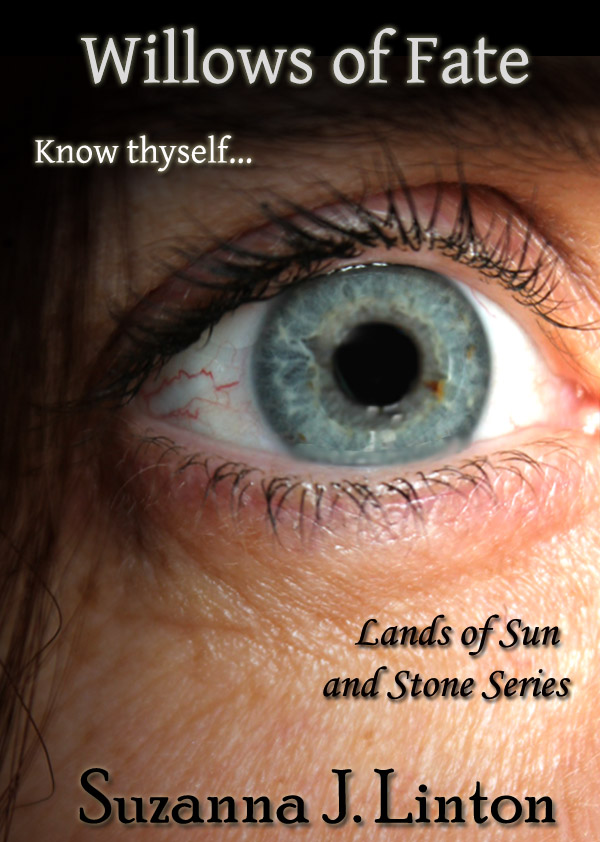
willows of fate banner This is my stop during the blog tour for Willows of Fate (Lands of the Sun and Stone series #1) by Suzanna J Linton. This blog tour is organized by Lola’s Blog Tours. The blog tour runs from 3 till 16 October, you can view the complete tour schedule on the website of Lola’s Blog Tours. WillowsofFateFinalWillows of Fate (Lands of the Sun and Stone series #1) by Suzanna J Linton Genre: Urban Fantasy Age category: Adult Release Date: October 3, 2014

Blurb: Know thyself… All her life, Desdemona has seen things others haven’t. Dragons, knights, dwarves, kids with three eyes. Heeding her mother’s advice, she keeps silent about this and struggles through life, pretending everything is normal. At her mother’s death, Desdemona returns to a home haunted with memories but she is determined to not be shaken from what little normalcy she has. However, when her brother is murdered and she uncovers a family secret, Desdemona realizes that there is more to what she sees. Perhaps a whole other world, one that’s willing to kill to have her as its own.

Excerpt: I pick up the first journal, the one I’d fallen asleep while reading, and flip until I come to place where I’d left off. An image of the teenager in the photograph fills my mind, writing the words in these pages as I read them. Time ticks by as the sun eases through the afternoon, drawing light slowly from the room until Eric is forced to flick on the overhead.
I wince and rub my eyes. Tense shoulder muscles tangle in a snarl and I roll them.
“Maybe we should take a break,” Eric suggests.
“Maybe. Have you come across anything useful?”
He shakes his head. “Just paranoid rantings, as far as I can tell. Sometimes it’s lucid. She talks about childhood memories or things that have gone on at the nursing home.”
“What kind of paranoia?”
“People stealing her things. People watching her. She complains that someone comes into her room every now and again and reorders it or knocks things over.”
My face feels cold as the blood drains away.
Eric frowns. “What is it?”
I shake my head, looking back down at the journal in my hands. “Nothing.”
“It doesn’t look like nothing.”
I close the book and stand. “I’m going for a walk.” Turning, I stride toward the hallway.
His chair scrapes back as he springs to his feet. “Desdemona, wait.”
I stop in the doorway and face him, crossing my arms. “What?”
“This isn’t going to work if you hide things from me.”
“I’m not hiding anything.”
“Bullshit.”
Scowling, I glare at him.
He moves to stand in front of me. “Des.” His voice is soft. Soothing. Like I’m a frightened filly and he seeks to calm me. “You can trust me. To get through this, you’re going to need to trust someone.”
His summer-blue eyes plead with me. Maybe there are those who can stand alone in the worst of situations, relying on inner strength and commitment to see them through. I am not one of those. My resolve crumbles beneath those eyes. I step back, his hands slipping away.
“I see things, too,” I tell him.
He frowns. “Things? Like Samantha sees?”
“Not like what she sees. I see and experience the exact same things.”

You can find Willows of Fate on Goodreads SuzannaAbout the Author: Suzanna Linton became a writer the first day she picked up a pencil, scribbling happily in magazines and books. Growing up in (very) rural South Carolina, she was steeped in legends and ghost stories and was surrounded by her mother’s ever-growing book collection. She graduated from Francis Marion University with a degree in Professional Writing and bounced from job to job until she landed in a library, where she met her now-husband. She lives with him in South Carolina with their two dogs and cat. You can find and contact Suzanna here: – WebsiteFacebookTwitterGoodreads There is a tour wide giveaway for the blog tour of Willows of Fate. These are the prizes you can win: – e-copy of Willows of Fate through smashwords – 20$ amazon gift card Enter the rafflecopter below for a chance to win: a Rafflecopter giveaway
Lola's Blog Tours