“It is easier to forgive an enemy than to forgive a friend.” ― William Blake

Keep your friends close, but your enemies closer.

The Dain Princess – Raitt Black
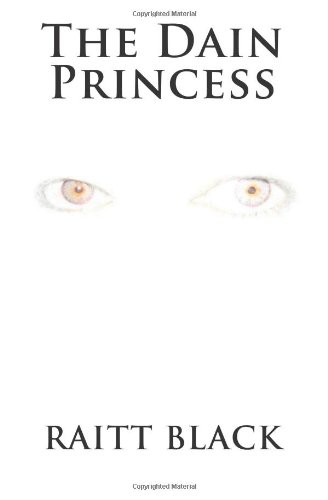
Image

Raitt Black was raised in New England, where he developed a love of literature. He tells me “I grew up reading books of all kinds”, before revealing that his favourites are “fantasy, science fiction, and horror”. Black first discovered a love of writing while in elementary school and it became a passion that he continued to feed as he progressed through high school. After studying for a BA in communications and relocating to the warm beaches of California, where he was to meet his future wife, Black began work on his first novel. He describes his writing as primarily fantasy with elements of mystery, love and horror. His debut novel, The Dain Princess, was released in 2013.


The Dain Princess introduces the reader to Lyhnzi Kole Dain, the only living heir to the fictional Innbern Kingdom. A colourful and feisty young girl, Lyhnzi spends her days training for battle with the castle guards and creating mischief with the hired help. Despite her comfortable existence, Lyhnzi yearns for adventure. When the opportunity arises to leave her home of Matraigh and stay with family on the coast she jumps at the opportunity, completely unsuspecting of the terrifying fate that awaits her. In the story that follows, Lyhnzi finds her understanding of good and evil challenged as she realises that those that she thinks of as friends or foes may not be all they seem.

This novel would suit a young adult audience – while I enjoyed the story, I’m sure I would have appreciated it even more if I were a few years younger.

Certain aspects of The Dain Princess reminded me of Philip Pullman’s Dark Materials, a comparison I’m sure I’m not alone in making. Lyhnzi is rather like Pullman’s Lyra – the girls share similar backgrounds and the same strong, stubborn character, but the similarities do not end here. Lyhnzi is an only child who rarely sees her father, and spends her days rattling around in an enormous castle, sneaking through hidden passageways and causing havoc with the children employed in the kitchens. A section quite early on in the book in particular reminded me of a scene in The Northern Lights, in which Lyra is made to have her knees washed before dinner, and then sneaks out onto the roofs of the college:

“Tris, this afternoon’s tutor, insisted she be clean for her lessons, and that she wear a dress. The pants and shirt she wore to train with the guards were not ladylike, according to Tris. Lyhnzi quickly washed and dressed. She went to the door and pressed her ear against it. Not a sound came from the other side. The guards were still there, she was sure of it, and they would only wait a few more moments. It was time to make her escape.”

The universe of The Dain Princess appears very similar to and yet considerably behind that of our own world, with armoured guards, gilded tapestries, cities enclosed within castle walls and travel by horse and cart, as if stuck within the realm of medieval Britain. It takes some time before elements of fantasy work their way into the text and I think this works really well. In Black’s world, the fantastic walk among everyday people rather than exist in an entirely alternate enchanted world.

Elements of horror within the story further add to the fantasy realm of the novel. Black creates new and obscure creatures, and ominous presences which lurk in the forest where the children are camping. The dangers of the forests are first revealed to the children, much like in a horror film, by an uneducated local man, who, without going into detail, suggests they sleep with one eye open:

“‘Some men hunt over there, come back in day. In light, it’s normal. Animals run, birds chirp, but in dark,’ he shook his head and shivered. ‘Most nights is quiet, silent. What should be, don’t. No crickets or nothing. Every sometime it’s like screams, only west of river. I’d sleep awake if I was.’”

As the story progresses the children learn of some of the horrors lurking in the trees. One creature in particular stays hidden just out of sight throughout the majority of their journey, quietly stalking the children by day, and emerging at night with a signature blood curdling scream. With the creatures kept at bay only by the light of the fire, the children find themselves coming closer and closer to the burning red eyes of the creatures of their nightmares.

The Dain Princess has many elements of a classic coming of age novel. As with much young adult fiction, the reader grows with the characters. Encompassed within this is the theme of trust, which runs throughout the novel. The characters are forever asking one another “why should I trust you?”, and having their whole understanding of trust completely redefined. Those who seem the most trustworthy in the traditional sense, those Lyhnzi has grown up with and those who swear to protect her, may have ulterior motives in mind, whereas the most unlikely characters become the most genuine. The reader finds themselves following Lyhnzi on her journey of self discovery and she grows from a teenager into a woman, learning to ignore traditional stereotypes and have confidence in her own instincts.

The story does have a few editing issues. However, I think that with self-published novels this is somewhat inevitable, and while a professional editor’s eye would undoubtedly improve the novel I don’t feel that the issues dramatically detract from its merits. There are also a few characters whose stories I don’t feel are properly concluded at the end of the book. The reader may find themselves with a few questions left hanging in the air.

On the whole I found The Dain Princess to be an engaging and fun read. Black’s work contains elements of horror, mystery and fantasy, which when combined make for a well structured and entertaining novel. I would recommend this book to young adult readers, and those who have read and enjoyed the work of Philip Pullman and other fantasy novelists.

Many thanks to Raitt Black for providing me with a free review copy of The Dain Princess. 


“Individuals pass like shadows, but the Commonwealth is fixed and stable.” — Edmund Burke

The digital age.

Old Links and New Ties: Power and Persuasion in an Age of Networks — David Howell

9781780768151

The suggestion that the world is entering a new phase of globalisation, a so-called digital age, is not a new viewpoint. Digital technologies are increasingly intermingled in almost all aspects of life. Perhaps the most notable transformation is the emergence of social media – itself often in the news for both the positive and negative consequences of its reach – but the effect of modern technologies extends far beyond this realm.

Computers and networks have enabled almost instant global communication, changing the machinery of society, politics and the economy. This has resulted in a widespread shift in the way that people think, exchange knowledge and access information.

In the digital age, new forces are making a practical impact on events.

Old Links and New Ties focuses on the effect that the digital age has had both on the international landscape and Britain’s shifting position in the world. It serves up a renewal of arguments that were laid out in a pamphlet entitled ‘New Networks’, published by the Globalisation Institute in 2007, and advances David Howell’s appeal for “fresh realism as the starting point for Britain’s repositioning in the global network”.

According to Howell, the USA, once a global giant dominating international relations, no longer holds the position of the most powerful nation on earth. Howell argues that, instead, the digital web, which serves to link billions of people every minute of every day, should be seen as the most powerful ‘nation’.

Howell explores Britain’s place in this new international landscape focusing, in particular, on how the country’s presence at the head of the Commonwealth has given it new international significance – a subject in which the author is very well informed, having stood as Minister of State at the Foreign Office with responsibility for the Commonwealth until 2012.

Howell suggests that the Commonwealth holds new opportunities for Britain to assume an important global role and that the geographical blocs of the last century serve only to hold the country back.

The emergence of new economies, which increasingly rely on fluid connections, gives a whole new role to the Commonwealth, he says.

Howell’s argument draws on the words of Queen Elizabeth’s Christmas Day speech of 2009, when she declared that the Commonwealth is the “face of the future” standing as a “necessary network of the 21st century”. As an organisation, the Commonwealth encompasses diverse people from small and large states serving to create a sphere in which such diversity can communication freely and equally.

Howell’s proposal, therefore, is that Britain should “re-join” this organisation that has served to unite many of the newcomers to the global market, including Nigeria, South Africa and Kenya. Britain’s global links with the Commonwealth put it far ahead of its neighbours, leaving it promisingly placed for the future and far away from the label of the ‘sick man of Europe’.

Britain is surrounded by potential allies and prosperous consumer markets, which are “ready and receptive for a rendezvous with the British”. Indeed, recent history is rife with examples of countries bidding for Commonwealth membership – there have been attempts from South Sudan, Suriname, Angola and even Ireland.

Howell’s message to policy-makers is that they must begin thinking in terms of the real and the virtual all at once. The networked age has brought with it new threats and opportunities and the guiding ‘geist’, as Howell puts it, is the importance of interdependence, not independence.

To this effect, he speaks of the importance of ‘soft power’ – that is, power through attraction and co-operation rather than coercion, force or bribery – in place of traditional perceptions of power dynamics.

Old Links and New Ties is an innovative book, drawing on important topical debates without bogging the reader down with excessive jargon and complicated wording. Howell is able to make the book readable and entertaining by drawing on interesting anecdotes from his somewhat colourful career. He adds further to the book by including several thought-provoking annexes, including his departure letter to Prime Minister David Cameron, after being asked to step down as Minister of State at the Foreign Office. In this very personal letter, Howell suggests that Cameron take heed of this.

This review was first published in Global: the international briefing. Thanks go to IB Tauris for providing a free copy of the book for review purposes.

“Treasure the love you receive above all. It will survive long after your good health has vanished.” ― Og Mandino

A second chance

Treasure Me — Christine Nolfi

Treasure-Me-FINAL

Christine Nolfi has had a life which has taken her all over the US, having lived in Ohio, Virginia, California and Utah, and currently residing in South Carolina. Christine was the owner of a small Cleveland-based public relations firm, and had many articles and press releases published in magazines and journals throughout Ohio. In 2004 Christine made the decision to close her PR firm to pursue her love of writing and began writing fiction full time. Her debut novel Treasure Me, the first book of the Liberty, Ohio series, was released in 2011.


Treasure Me is the romantically framed story of a petty thief’s journey towards self-discovery. Birdie Kaminsky has travelled to Liberty, Ohio with nothing more than a slip of paper, which she hopes will be her ticket to a new life. The paper, a note passed down through generations in her family, alludes to the whereabouts of a secret treasure, hidden since the Civil War. Unbeknownst to Birdie, Liberty holds a treasure far greater than mere riches. Nolfi introduces the reader to a complicated world of desire, love, realisation and second chances.

The first thing that struck me about Nolfi’s writing is the vibrancy of her characters. Each character is presented with their own individual traits and a well-rounded personality: Birdie Kaminsky, a sassy, petty thief with violet eyes; Finney, the hot-headed cook, always ready to swing her skillet if someone annoys her; and feisty Theodore, forever reaching into her handbag to retrieve her gun. Too many overly prominent characters can sometimes make for a rather confusing storyline. However, Nolfi’s masterful grasp of the third person omniscient narrative style provides a comprehensive view of each character, to the effect that the reader can identify each character purely from their individual mannerisms.

I feel the book has a lot more to offer than an average romance novel, while still encapsulating all that which makes a good romance satisfying. At the very core of the novel is the relationship between Birdie and newspaper reporter Hugh, a chemical attraction which has been simmering since they first laid eyes on each other. Interestingly, I only began to realise how attractive both Birdie and Hugh were once they met. It is through Hugh that Nolfi first takes the time to fully describe Birdie, and vice versa.

While there is obvious sexual tension between Birdie and Hugh from the onset, the relationship itself is built up slowly throughout the book, allowing the ending to be all the more rewarding. While Birdie and Hugh are clearly attracted to one another, and flirt like wildfire, they do try and resist one another, both realising their relationship would not work. I feel that romance within a novel works best when there is more actual romance and less sex. So many contemporary authors dive into sexual encounters almost instantly, which makes for quite an unsatisfying read. Birdie and Hugh dodge each other for so long that the reader is practically praying for them to get together.

There are several overarching themes within Nolfi’s book, the first and possibly the most evident being progression. Birdie is first portrayed as living a sad, bleak existence as a small-time crook, slipping from place to place, never getting to know anyone and always finding herself on a bus to somewhere new:

“She pressed her face to the window and blew out a breath. A moist haze settled over the countryside reflected through the glass. Sunlight pooled in orange puddles beneath the hills as the blue of night bled into the horizon. It would be dark soon, and her muscles were leaden with exhaustion.”

As the book draws on, more details about Birdie begin to emerge as Hugh takes the time to try and discover more about the mysterious girl who has appeared, seemingly without reason, in Liberty. Once Birdie’s tragic past is revealed, so too is Hugh’s desire to protect the girl and attempt to make Birdie trust him:

“Birdie managed to lift her head to regard him. The truth knocked around in her throat, trying to get out. But it was professional suicide for a petty thief to trust a newspaper reporter.”

Drawing on the theme of progression is that of hope, encapsulated in the character of freed slave Justice Postell, or rather her memory. Justice serves as the beacon of hope guiding Birdie towards a better life. Birdie craves what justice had, not in the form of riches but, without realising it, in the chance to start afresh.

“Justice overcame impossible odds to reach the north and build a new life. Did Birdie dream of escaping the shackles of a world with nothing but the criminal arts to guide her?”

Justice is the woman that Birdie looks up to, the only thing close to a role model that she has ever had. On her journey, Birdie begins to realise that she is more like Justice than she originally thought and her initial fears that she was cut from the same stone as her mother begin to fade away.

Perhaps the most important vein running through Nolfi’s work is concealed within the novel’s central setting, the Second Chance Grill. Nolfi’s overarching theme is that of second chances, being able to escape from the life that seems written for you. Justice Postell was able to break away from the shackles of slavery, and this very fact echoes in the lives of so many characters in the book. Liberty offers Birdie the second chance at life she so desperately craves, but also gives new meaning to the lives of Hugh and the many other characters whose lives are affected by Birdie’s arrival in the small town.

Finally, Nolfi presents the reader with the true meaning of treasure. Birdie travels to Liberty in search of riches but what she finds is so much more precious. For what seems like the first time in her life Birdie is loved. Not only does Liberty offer her the second chance she needed, but family and friends, who treasure her in return:

“You are a treasure, child. Bad-mouthed and sassy and more fun than a woman my age ought to have. But there it is”

The town and the people, new and old, are the real treasures, just as the clue suggested: “Liberty safeguards the cherished heart.”

On the whole, I very much enjoyed my first encounter with Nolfi’s work. I expected Treasure Me to be a very soft, romantic love story, but found it to be so much more. Nolfi gives the reader a well-paced and exciting storyline, which is far from being a traditional romance novel. Nolfi’s writing style is free flowing and easy to read, making this a perfect novel to relax with.

Many thanks go to Christine Nolfi for sending me a free review copy of her book.

A [tiny] bit about the day job — Commonwealth Governance and Growth 2014

As much as I love reading and writing reviews, it doesn’t pay the bills. On the plus side, I have an amazing job which does. Yes, when I’m not fighting crime, or reading all the lovely books you guys send me, I work in publishing. It’s hard work, but for me nothing tops the feeling I get when we receive the finished copy of one of our books.

So without further ado allow me to present to you our latest publication:

ImageIntroducing Commonwealth Governance and Growth 2014

Commonwealth Governance and Growth 2014 brings together various perspectives and experiences of public-private partnering for national development from experts at the Commonwealth Secretariat and also from senior officials and executives within government, industry, academia and the development community.

For information on our other publications, or to purchase a copy check out our website.

“You’re never too old, too wacky, too wild, to pick up a book and read to a child.” ― Dr. Seuss

Bing was bored.

Bing and Nero ― Story by I.L. Williams; illustrated by Inci Alper

Image

There is nothing worse than feeling like you have nothing to do. It’s Saturday and Bing is stuck inside with no friends to play with, even the cat is asleep. How boring. On days like this Bing really wishes his mother would let him get a dog.

Not content with the prospect of spending a quiet afternoon staring out of the window Bing decides to make his own fun. A quick glance around the room gives Bing an amazing idea for what he can do to make his weekend more exciting.

‘Bing and Nero’ is the delightful little story of a boy who, when confronted with boredom, uses his imagination and creativity make the best friend a boy could ever have. The book follows Bing and his new companion Nero the robot as they have endless amounts of fun doing things that only a boy and a robot could do.

Williams’ fun story, coupled with colourful and vibrant pictures make a book which all young children can enjoy, whether alone or with an adult. On each new page Alper’s eye-catching illustrations help to keep a child engaged while the story progresses.

I thought the presence of Minxie the cat throughout the book was a nice little addition to the story. I know from experience how much children like to look out for things in illustrations, and Minxie’s antics allow a child to do just that.

Children’s books are often rife with morals and hidden meanings, and Bing and Nero is no exception. The story encourages children to be creative when confronted with boredom by suggesting that imagination can be used to create your own fun.

Overall, I think that Bing and Nero would make a fantastic addition to any young child’s library. The book offers lots to think about and engage young minds, including full illustrations with plenty of little details just waiting to be spotted.

Many thanks to I.L Williams for providing me with a free review copy of the book.


“Dolls with no little girls around to mind them were sort of creepy under any conditions.” ― Stephen King,

Try as he might, Kenny can’t seem to hold it all together.

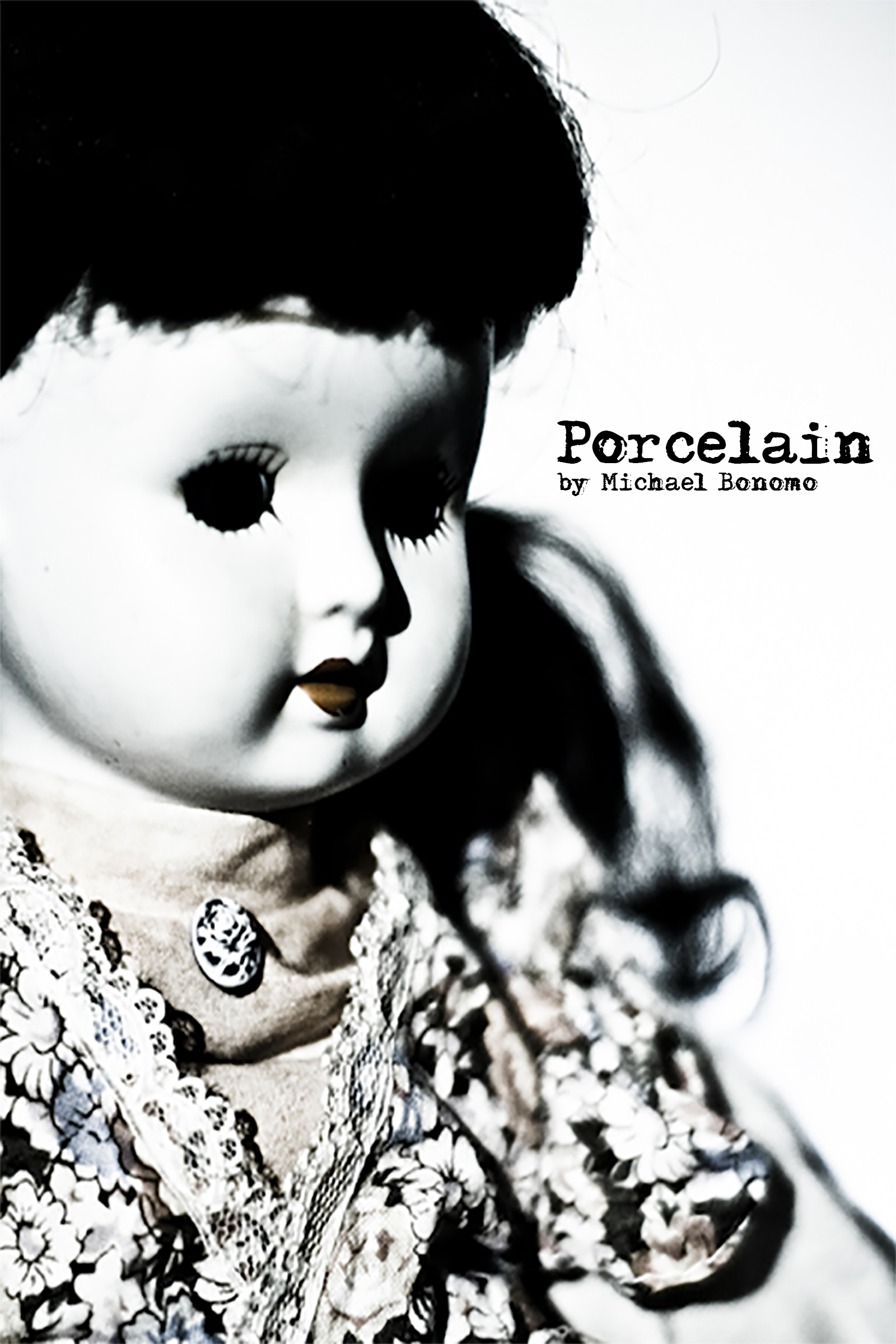
Porcelain – Michael Bonomo

PorcelainCover

Despite having been out of work and down on his luck for several months, Kenny tries his best to stay positive. Easier said than done when his father in law is constantly breathing down his neck, ready and waiting to remind him of his failures. If only he could learn to ignore the old man’s taunts. One night a particularly heated confrontation leaves Kenny desperate for a temporary escape from clutches of everyday life.

Little does he know that life will never be the same again.

Kenny finds himself no longer running from his home life, but ultimately trying to escape from himself. His frantic attempt to run away leads him on a journey he could never imagine, into a world he never wanted to experience. Any previous problems he had will seem very minor in comparison to what comes next.

Michael Bonomo, the author of this chilling short, places the reader directly inside the rapidly deteriorating mind of Kenny, where they witness first-hand the character’s downward spiral into a world filled with self loathing and terror.

Bonomo paints a vivid picture of Kenny’s journey by combining literary images with some of the creepiest elements of classic horror stories [I don’t know about you, but personally, I find nothing more unsettling than a child’s laughter]. This level of imagery, matched with a unique and fulfilling storyline creates a satisfying ghost story which is sure to thrill the reader.

Many thanks to Michael Bonomo for sending me a free review copy of the story.

“So many people are shut up tight inside themselves like boxes, yet they would open up, unfolding quite wonderfully, if only you were interested in them.” ― Sylvia Plath

Beautifully captivating.

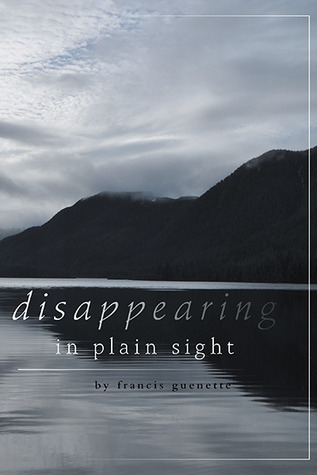
Disappearing in Plain Sight ― Francis Guenette

Image

Francis Guenette lives with her husband on the West coast of British Columbia. She has an MA in counselling psychology and is on the way to completing a PhD in education psychology. Throughout the course of her life she has worked as an educator, trauma counsellor and researcher. Guenette now spends most of her time writing novels that draw on her own life experiences. The first book in her debut venture, The Crater Lake Series, is entitled Disappearing in Plain Sight and was released in 2013.


The book introduces the reader to sixteen-year-old Lisa-Marie, sent to spend the summer with her aunt Bethany in a remote town on the edge of the fictional Crater Lake. Her aunt resides in a simple A-frame within the confines of Camp Micah, a counsellor’s camp for young ways and strays. Like any sixteen-year-old, Lisa-Marie is instantly taken by the camp’s resident hunk, nineteen-year-old Justin, and as time progresses she develops confusing feelings towards Izzy Montgomery, the camp’s exceptionally beautiful and gifted trauma counsellor, and begins an unlikely friendship with Liam Collins, a thoughtful and secretive camp worker. While on the outset the close-knit community which keeps Camp Micah operating day by day may seem watertight the reader learns of hidden tensions and unspoken words just waiting to destroy the carefully constructed routines. The presence of Lisa-Marie and a new guest unleash tensions which have been simmering under the surface of the camp for some time. The reader is set to discover that all those at Camp Micah have their own secrets and guilt locked away inside them.

Over the last few days I have been looking over Guenette’s blog and something she said in a recent post really caught my eye: “Have you ever read a novel where the setting was so breathtakingly described that you almost felt as though you had seen the movie version?”. This is the effect which Disappearing in Plain Sight had on me. I not only felt as though I was watching the movie, but increasingly, as the novel progressed, as though I was at the camp ― I could smell the pencil-y scent of the cedar wood cabins, and almost feel the breeze from the lake on my face. I couldn’t have gotten a better image of the setting if the book had been illustrated. It is obvious that real-world experience has gone into Guenette’s writing ― which is exactly what Guenette was writing about in her aforementioned blog post, the inspiration behind writing. Guenette herself lives in a small, secluded cabin right by a lake [and you should see the lake! Check it out here]. Every day when she writes, she does so with a view of the lake ― it sounds absolutely perfect. Of course, Guenette draws on her own life experiences as inspiration for her work; living in a place like that, how could she not?

Guenette has a penchant for similes within her descriptions, which I find really charming. The book opens with a very memorable quote: “Lisa-Marie woke to the sound of voices and the reflection of the lake rippling and running like melted butter along the sloped, cedar-planked ceiling above her bed.” Comparing flowing water to ripples of butter conjures up the most wonderful images; nothing could make the lake seem more appealing.

All the characters in the book are incredibly well rounded, with each chapter divided into several mini chapters each following a different character. In this way the reader is able to submerge themselves within the community and grow to know the characters on an almost personal level. The first few chapters of the book are centred almost entirely on introducing each character, some of which appear very appealing and likable, and some not so much. I’m sure I am not alone when I say that I found it difficult to warm to Beulah at first. Lisa-Marie is perhaps the most central character, and the one the reader gets to know on the most personal level through her writings in her journal, Emma, named for the Jane Austen character. The central theme which links all the characters together is past trauma, as though they have been brought together at the camp for this very reason.

Disappearing in Plain Sight is undoubtedly a very well-written and enjoyable novel, but the aspect of the novel which particularly appealed to me was Guenette’s focus on the inner mind of the characters. Guenette confronts issues which are still somewhat taboo in many circles of modern society, and she does so in such a way as to make it relatable. Depression, anxiety and stress are all problems that a large percentage of the population will come into contact with in one way or another at some point in their lives. Guenette brings this to the forefront of her work, expressing character’s actions in an incredibly understanding way take, for example, Liam: looking up at the sky when he cannot sleep because he is so plagued by his thoughts. I’m sure there are many people who can relate to the feeling of comfort and security which comes from taking a duvet and lying under a skylight or in front of a large window and just being alone with the stars.

I was also very pleased by Guenette’s decision to look at bullying in her novel, and particularly her choice to highlight the issue of online bullying and the stresses of social media, issues I feel very strongly about. The online world is full of resources, but it can also be a very dark and sinister place. The way Guenette expresses Lisa-Marie’s feelings is so perfect that I am sure a lot of people who have experienced bullying to some extent can relate to her words. Lisa-Marie describes just wanting the voices to stop, to just get away from what is happening to her, without necessarily thinking about the result. Her only desire is for peace and quiet, to be left alone. Guenette conveys an incredibly complex feeling with remarkable simplicity.

This brings me to perhaps the strongest theme which runs throughout the novel: growth and progression. Throughout the course of the text, we learn the sad past of each character and over time witness them learning to deal with their problems. This in itself reflects a quotation from the beginning of the book:

“Izzy believed that people had their own answers to what they needed in order to heal and that these answers were embedded in the stories they told.”

The answers, for many of the characters, come out in the pages of Guenette’s novel. The ever-present lone wolf howling in the distance echoes the loneliness and worry felt throughout the camp. I don’t want to ruin the ending of the book for anyone, so I will just say that the final paragraph serves to emphasise the natural progression of the characters.

I really enjoyed my first experience with Guenette’s work. At first, I found it was the setting of the novel which most appealed to me. I developed a strong desire to visit camp Micah and dangle my feet into the cool water of the lake. Guenette’s writing style is natural and fluid, allowing you to escape into the incredible scene she has created. As the book progressed each character began to speak to me, telling me their stories in turn. The intricate and multifaceted storyline is rewarding and well executed, with a carefully planned ending, which is satisfying without being fairy-tale-like. Overall, I would rate Disappearing in Plain Sight very highly and would strongly recommend anyone thinking of reading the book to give it a go.

Disappearing in Plain Sight and the newly released sequel The Light Never Lies are available for kindle and in paperback from Amazon.

Many thanks to Francis Guenette for sending me a free review copy of the book.

“Only people who are capable of loving strongly can also suffer great sorrow, but this same necessity of loving serves to counteract their grief and heals them.” ― Leo Tolstoy

Love heals all wounds.

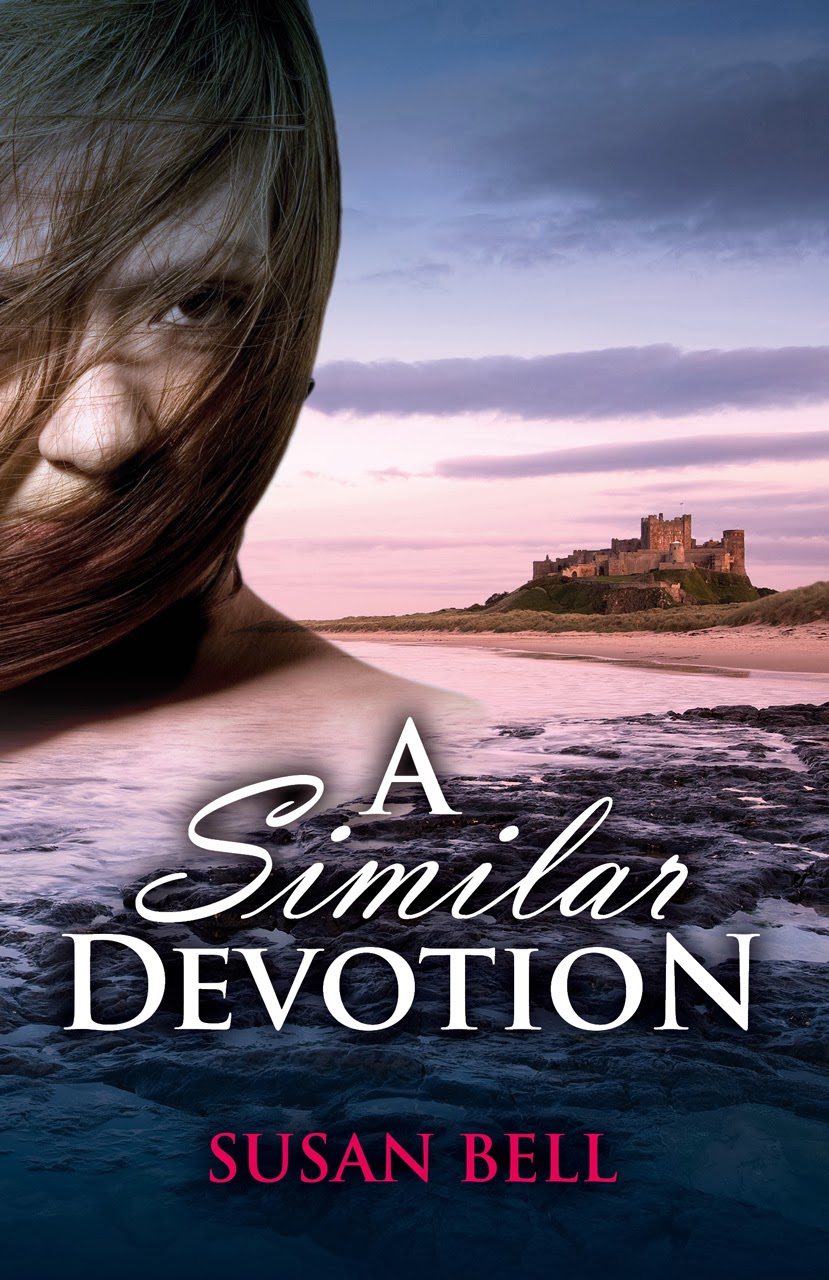
A Similar Devotion ― Susan Bell

Image

Susan Bell originally trained as a teacher at St Hild’s College, Durham, before completing a Master’s degree in education at the University of Cardiff. After taking some time out of teaching to raise a family, she invested in a diploma in teaching English as a foreign language and worked in Botswana, Zimbabwe and China. Later, Bell returned home to Durham to concentrate of her writing. Her first novel, A Similar Devotion, was published in 2013.


Set in Northern England at the turn of the eighteenth and twenty-first centuries, A Similar Devotion traces the compelling stories of two women separated by time, but brought together through commitment and devotion. The reader is introduced firstly to Dorothy Forster, a high-born lady living in constant fear for the safety of her brother during the Jacobite revolution of 1715. Fast forward three hundred years and we meet Cathy, a travel agent struggling to recover mentally from a tragedy. Bell’s romantic tale takes the reader on a dual journey through the frustrations and complications of the two time periods, introducing two strong heroines, helped through their journeys by unlikely friendships and, ultimately, love.

The first thing that struck me about Bell’s writing style was her ability to convey surroundings so simply. Effective description is crucial: nothing is more powerful than being able to transport the reader to a different place, where they can feel, smell and see the surrounding as the author envisaged them

Upon opening A Similar Devotion, I immediately knew I was going to get along with the writing style. The prologue sets the scene perfectly for the rest of the book:

“I am young again, remembering the pleasures of bare feet on dewy grass, the salty scent of the sea, thundering waves dissolving into lacy foam that fans across the wide sands, the plaintive cries of gulls and the moan of the wind in my ears.”

This demonstrates completely that descriptions needn’t be overly detailed. Bell appeals to the senses: initially, the feel of dewy grass and the smell of the sea, before unleashing taste, sight, and sounds to completely encapsulate the view. The transformative aspect of Bell’s writing transcends far beyond this opening paragraph and into the entire North of England; Bell’s familiarity with the region is evident and flows freely through the text.

The book itself is split into two separate sections, interlaced with one another so that the reader is simultaneously following both the story of Cathy and Dorothy Forster. I liked the effect that this had, offering the reader a break from each story for just long enough to make them wonder what is happening back in the present day, or vice versa. Bell succeeds in keeping the setting of each story separate without making the text awkward. The present day is expressed through a contemporary style, while the Jacobite revolution necessitates the use of more archaic language. The effect of this is not as jarring as one might imagine and allows the reader to move seamlessly between the two worlds rather than being dragged from one century to the other.

The two stories initially link to one another when Cathy, befriended by a kindly doctor, Jack, begins researching Dorothy Forster and the Jacobite revolution as a therapeutic means of dealing with her feelings. Research becomes a method of escapism, giving her something new to focus on, and her sensitive mind clings to Dorothy’s story, beginning to imagine a happy ending for the eighteenth-century heroine.

After doing a little bit of research into the Jacobite revolution myself, I was delighted to find that Dorothy Forster was a real person. I find something very rewarding in historical fiction. My research didn’t go as deep as Cathy’s, of course, but I can relate somewhat to her frustrations as much of what is immediately available on the Forsters is shrouded in suppositions. I found that Dorothy was described as the ‘darling’ of the Jacobite uprising of 1715, and is today rumoured to haunt the hotel in which Jack and Cathy stayed, the Lord Crewe Arms, apparently waiting for the return of her brother.

The lovely thing about really successful historical fiction such as this is being able to take away a newfound knowledge of a snippet of history. Before reading A Similar Devotion I was completely unfamiliar with the Jacobite revolution; reading about it in this way was enjoyable and interesting. Bell also slips the odd interesting fact into the story – I was particularly pleased to take away the knowledge that people from Newcastle are often referred to as Geordies due to their allegiance with King George during the Jacobite revolution.

As the book progresses the reader learns that it is in fact Cathy who is writing Dorothy’s story. Which, looking back on the text, seems almost obvious. The beginning of Dorothy’s tale is morose and filled with anxiety. As the story progresses you begin to learn more of Dorothy’s feelings, particularly with regards to her friend, John Armstrong. These feelings are themselves an indication of the feelings Cathy is having, reflecting her confused emotional attachment towards Jack:

“I climbed into bed and thought about John in the room below me, a great relief slowing over me that he had seen fit to join me in my quest. Despite feeling a mixture of excitement and apprehension, I slept better than I had done for some time.”

Towards the end of the novel, Cathy discovers the extent of the relationship between Dorothy and John and realises within herself that love is the most important thing, and that if two people love each other they will make it work. The parallels drawn between the two couples in the final sections of the novel are incredibly striking, with the words spoken by Cathy and Jack, about compromise and going against the wishes of their families, more or less repeated in the exchange between Dorothy and John:

“John Armstrong, if you think I’m going to wait that long, you are sadly mistaken. Whether my family disowns me or not, I mean to spend my life with you and I’m not one to be dissuaded from something once my mind is made up.”

Cathy wishes for a happy ending for Dorothy, because she wants it for herself, and, in the same way, she finds her own happy ending by discovering Dorothy’s.

Overall, I found A Similar Devotion to be a very satisfying read. Its slightly niche style and blend of modern romance and historical fiction is really fantastic. The story itself, while idealistic in some respects, feels believable. In both stories, loyalty to one man leads to the love of another, and both love stories require compromise on the part of both partners. Despite all that separates Dorothy and Cathy from one another, they share a similar devotion to a loved one and learn a similar lesson: that love has a power to heal wounds and draw happiness from the most devastating situations.

Many thanks to Sacristy Press for sending me out a free review copy of the book.


“Freedom of the Press, if it means anything at all, means the freedom to criticize and oppose” ― George Orwell

Roger Martin is an ‘expendable’ young journalist.

The Blue Pencil – David Lowther

16256888

David Lowther’s debut novel ‘The Blue Pencil’ was published in 2012 and encompasses the author’s love for historical fiction. It is 1936, Britain is in recovery, emerging from the depths of the greatest depression of all time and still reeling from the effects of the Great War. As expansionist forces in Germany threaten to turn Europe into a fascist dictatorship, the British government cling desperately to any hope of peace. The Blue Pencil focuses on the coverage of foreign events in London’s Fleet Street from 1936-1939, shedding a new light on the lengths the British Government went to, to hide the truth from the Great British public.

The book takes its name from the infamous ‘blue pencil’ traditionally used by editors and sub editors to show corrections. The dreaded receiving back of a piece of work covered in blue pencil akin to the corrections shown by teachers in secondary school is something most of us can relate to. These days the blue pencil has been largely replaced by a red pen. I’ve had many conversations with fellow writers over the despair of receiving a piece of work back covered in red ink.

The Blue Pencil is written in the style of a diary, and follows the life of recent university graduate Roger Martin.  Coming from a comfortable middle class background, and having just graduated from Cambridge, with a “good degree”, Roger feels he owes it to his parents to decide what he wants from life. Roger’s news savvy girlfriend awakens within him a renewed interest in international affairs, which sets him on the path towards his future career:

“The Spanish Civil War, and the interest in it from newsreels and newspapers changed my life. For the first time I became aware that there was life away from Cambridge and that greedy men wanted to seize power for themselves without caring two hoots about the quality of life for the majority of citizens.”

With support from his university tutor Roger writes to several newspapers, and soon lands his first real job as junior reporter at ‘The Globe’, a fictional left wing newspaper. Roger describes at length his first impression of the newspaper’s press office during his interview, and the effect that the atmosphere had on him:

“Everybody in the room seemed either to be talking into the phone or typing, and those phones not in use seemed to be ringing. The air was thick with smoke and most desks seemed littered with ashtrays, piled high to overflowing, and cups and saucers.”

Lowther’s description of the Globe’s offices particularly appealed to me, conjuring up vivid images of Lois Lane tapping away at her desk in the Daily Planet press office.

Roger quickly settles in to his new role and before long finds himself more or less leaving behind film and sport reviews for more important coverage of international affairs. He covers Hitler’s movements throughout Europe, attempting to make his stories as hot and hard hitting as possible.

As it becomes evident that the government is determined to strangle the press, Roger has a different aim in mind, to let his readers know the secrets the government is working so hard to cover up. Despite several warnings from those close to the Prime Minister, which put much more than just his job in danger, Roger insists on publishing nothing but the truth. When faced with confrontations with ‘the blue pencil’, the owners of the newspaper, and even the police Roger does not back down.

The Blue Pencil is an incredible story of the attempts by authoritative figures to suppress the press in what turned into the most devastating war in British history. The novel introduced me to a piece of history I knew nothing about. While Roger may be a fictional character I know that his unpleasant experiences at the hands of Chamberlain’s government, whether direct or indirect are Lowther’s description of a very real, and shocking truth.

I was particularly impressed by the detailed picture of the 1930s which Lowther presented; the level of research which must have gone into writing this book is truly incredible. The story is historically accurate but this goes far beyond the realms of European politics at the time. Lowther clearly put an awful lot of time and energy into discovering the entire time period. The journalists and reporters who Roger comes into contact with are all real people; the hard hitting news stories were actually published, including ‘The Tragedy of Guernica’ by George Steer. Lowther even keeps up to speed with the results of the Ashes, and the films of the time, often sporadically name dropping films and actors. This is all done so naturally that it feels as though one were actually living at the time of all these events.

Lowther’s unique writing style, which combines the commonplace with historical events, has the effect of drawing the reader into deep into the pages of the book. Through this method the main character grows, becoming a person that the reader relates to, and knows on an almost personal level. Roger travels to Berlin and relates first-hand one of the most horrific nights in Jewish history “Women were screaming, children were crying and the Nazis were celebrating”. He tells the reader of the anti-sematic rag, Der Stürmer with it vulgar caricatures of Jewish men. At the same time we are made aware of the way Roger feels, his terror and disgust, and the emotional exhaustion he felt upon returning to England. Roger is more than just a hard boiled reporter, he has a real life and is a person like any other, with a mother who worries if he is not home for dinner, and a girlfriend, with whom he goes on country outings, and trips to the cinema: “things quietened down for a while. I spent a lot more time with Jane. We saw Paul Muni in The Life of Emile Zola (Not bad) and Will Hay in Oh Mr Porter (very funny)”. Historical fiction is at its best when it is relatable to those who have not lived through the events in question, and Lowther’s original method of interlacing the poignant with the mediocre achieves just this.

Overall I would rate The Blue Pencil very highly, it was comprehensible and interesting and I thoroughly enjoyed reading it. I was captivated by Roger’s story, and drawn in by the realness of the characters and the situations; it really did feel as though I was stepping back into the 1930s. My one slight gripe is that there are multiple grammatical errors and spelling mistakes throughout the text, which is a shame. That said the mistakes were not so frequent as to ruin the book for me, and I would definitely still recommend it to others.

Many thanks go to Sacristy Press for providing a free copy of the book for review.

“Outside of a dog, a book is man’s best friend. Inside of a dog it’s too dark to read.” ― Groucho Marx

A child’s innocent review

My Family and Other Animals ― Gerald Durrel

ADYTA

My Family and Other Animals is the childhood autobiography of the renowned naturalist Gerald Durrell, and takes place over a few short years that the Durrell family spent together on the Greek Island of Corfu. It is perhaps the best known of Durrell’s Corfu trilogy, the others of which are ‘Birds, Beasts and Relatives’, and ‘The Garden of the Gods’. I have yet to read the other two, but they are currently working their way to the top of my ever increasing ‘to read’ pile.

The Durrell family made the choice to migrate to Corfu in an attempt to escape the dreary English weather. Early on in the book you are made aware that the family is somewhat unconventional as moving abroad seems to be a very snap decision. While of course this could just be the situation viewed through the eyes of a child, I have heard it said that the book paints a fairly accurate picture of the family. In fact it was described by Gerald Durrell’s elder brother Lawrence as “a very wicked, very funny, and I’m afraid rather truthful book”.

Through My Family and Other Animals Durrell traces the amusing happenings of the family in their new lives, and goes to great length to describe and account for all the creatures that he comes into contact with throughout his adventures. In fact, Durrell originally planned for the book to be purely a journal of all the animals he discovered, but in the process of constructing the journal he managed to wonderfully meld his own adventures with that of his family. The result is a really charming child’s snapshot of a period of Gerald Durrell’s life which to all extents sounds absolutely blissful and idyllic.

When writing about her married life to Durrell in her autobiography ‘Beasts in My Bed’, Jacquie Durrell remarked that she had never known Durrell to work with the vivacity he had while writing My Family and Other Animals, commenting that “it seemed to pour out of him”. I find this interesting, as many writers consider writing to be a laborious task. I remember with such clarity a lecture on essay writing during my first week at university. One of our new lecturers told us quite matter-of-factly ‘Writing hurts, and it will always hurt, when you sit down it will be painful’; words that have forever stuck with me. As much as I love writing, I do often find it painful in a way, albeit a positive way. There is no doubt that Durrell was immensely passionate about the animals he wrote about and this seems almost to have flowed directly out of him, through the pages of the book, and into the minds of the reader. I suppose you have to, like Durrell, write about something you love ardently for it to come this naturally.

I thoroughly enjoyed reading about Durrell’s time in Corfu, while it is not an action packed adventure novel there is so much to appeal to the reader. The eccentricities of the Durrell family seem to make each character instantly likeable. To live on a whim, as the Durrell’s do, must be ever so exciting. Imagine at the age of ten having a mother that would let you keep as a pet any creature you brought home be it a snake, a toad, an owl, anything. Everything that occurs in the Durrell’s lives in steeped in unconventionality, absurdity and hilarity. From the offset Larry has only to suggest going to Greece, and although Mother attempts to resist at first, it is done. Once in Greece Larry makes the bizarre suggestion that they move to a bigger villa, because their current one is too small to accommodate the guests he has invited to stay, and again Mother attempts to stand her ground, but part two of the novel begins with the line ‘The new villa was enormous’. Indeed the uniqueness of the family does not go unnoticed, their parties are always lively to say the least, and on the journey back to England, with “the finches [singing] in their cages, the Magenpies [chucking] and [hammering] with their beaks, and Alecko [giving] mournful [yarps] at intervals. [While] the dogs lay snoring” the family are described by passport control as “One travelling Circus and Staff”.

The entire book is told from the point of view of Durrell’s childhood self, Gerry, the inquisitive ecologist. Gerry’s love of animals of all sorts comes out in all aspects of his writing, the most obvious of course being the title ‘My Family and Other Animals’. He has countless encounters with strange beasts, many of which would make the average person squirm in discomfort, but fill Gerry with an unquenchable curiosity. In fact some of the most animated conversations, and interactions that Gerry recollects are those between himself and his best friend Roger the family dog. He speaks of, and to his pets [and there are many of them] as if they are people. I would even say that in some ways Gerry appears as if he is a sort of animal himself, distanced and at odds with the rest of the family, he is often referred to as: ‘THAT BOY!’

Throughout the novel Gerry is subjected to an education of sorts and often finds himself with the most peculiar tutors. He seems to bond the most with, and indeed goes into the most detail describing, his final tutor Kralefsky who quite coincidentally has a house full of exotic birds. Not surprisingly nature plays a large role in Gerry’s methods of learning and remembering those dull things which children were often forced to memorise. Hannibal and his elephants were memorable because Hannibal gave his elephants hot water bottles, equally he is most interested not in Columbus discovering America, but it the fact that Columbus’ first words upon reaching the shores of America were ‘A Jaguar’. There is the distinct impression that much of the time Gerry spent with his tutors was time better spent elsewhere, as he ultimately learns the most from his unlikely friendship with Theodore, a scientist, and nature lover just like Gerry. Days spent with Theodore are the days Gerry looks forward to the most, and when he commits the majority of his education to memory, asking questions, learning and discovering:

”What, I wondered, did things sound like to a trapdoor spider? I could imagine a snail would trail over the door with a sound like a sticking plaster being torn off. A centipede would sound like a troop of cavalry. A fly would patter in shorts bursts, followed by a pause when it washed its hands – a dull rasping sound like a knife-grinder at work. The larger beetles, I decided, would sound like steam rollers, while the smaller ones, the ladybirds and others, would probably purr over the moss like clockwork motorcars.”

One of my favourite things about My Family and Other Animals, and I am sure this is a recurring theme throughout Durrell’s work, is the lengthy descriptions of the most stunning scenery, amongst events, people, animals, although it is the scenery in particular that I enjoy. The book is full of examples of this, but one of my favourite instances and the one which really stood out to me first and foremost was the description near the beginning of the book, of the family having breakfast outside of their new villa:

“We ate breakfast out in the garden, under the small tangerine trees. The sky was fresh and shining, not yet the fierce blue of noon, but a clear milky opal. The flowers were half-asleep, roses dew crumpled, marigolds still tightly shut.”

Through a description like this you can almost smell the dampness of the flower buds, and feel the slight chill of dawn, the soft blanket of night being pulled back to reveal the splendours of the day ahead.

Durrell pays just as much attention to detail in the description of just about everything in the book. Accounts of different characters are described down to the smallest details; the invaluable Spiro is “a short, barrel-bodied individual, with ham-like hands and a great, leathery, scowling face surmounted by a jauntily-tilted peaked cap”. Everything is described so that it feels it will leap out of the page, like the crowd of Corfiots waiting in the church to kiss the feet of Saint Spiridion “This dark multi-coloured wedge of humanity moved slowly towards the dark door of the church, and we were swept along with it, wedged like pebbles in a larva-flow.”

One aspect of this particular edition of my family and other animals that I very much liked was the inclusion of an afterword by Peter J S Olney. This gave the reader a little information on what happened to the family in the years after the book was set. I thought this a very nice addition, as with works based on true events I often find myself wondering what happened afterwards, knowing of course that the lives of these characters carried on beyond the pages of the book. It was through this afterword that I discovered that the events described in the book, are sometimes, not exactly true. For example, Gerry’s brother Larry actually spent the whole of the time the book is set, living in another part of Corfu, with his wife Nancy. I have also heard it quoted that the reason the family left the Greece, was not, as Gerry claimed, so that he could get an education, but in fact due to the outbreak of the Second World War. Indeed the dates do match up. These inaccuracies, if you can call them that add to the innocence of the book. The idea of the whole family, living together, embarking on one huge, somewhat eccentric adventure, is far nicer than thinking of them having been separated by something as grown up as marriage. Also, while being forced to leave the home of your dreams to pursue an education is hardly a pleasant thought for a child, it is much sweeter than the bitter harsh reality of the Second World War.